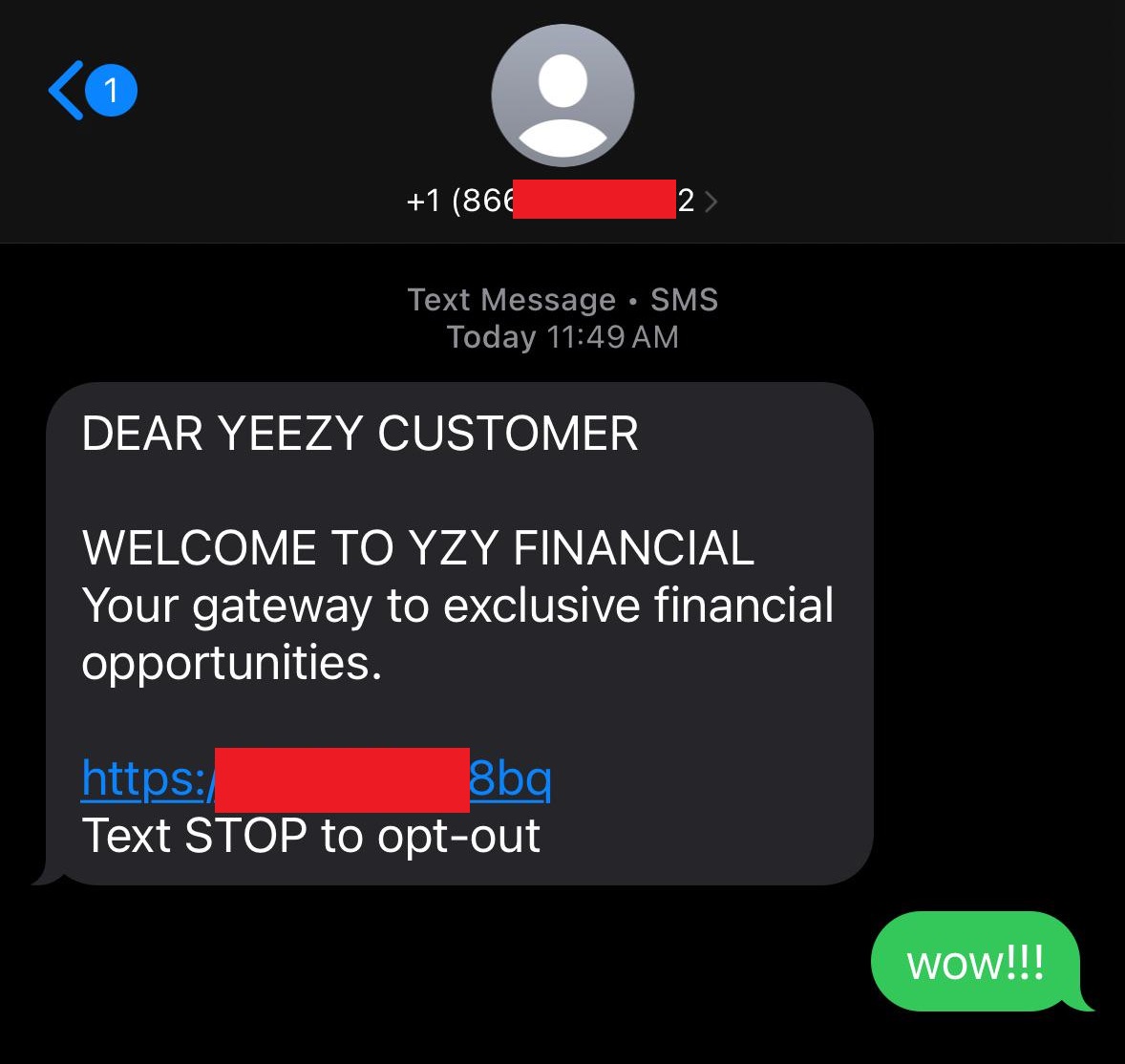
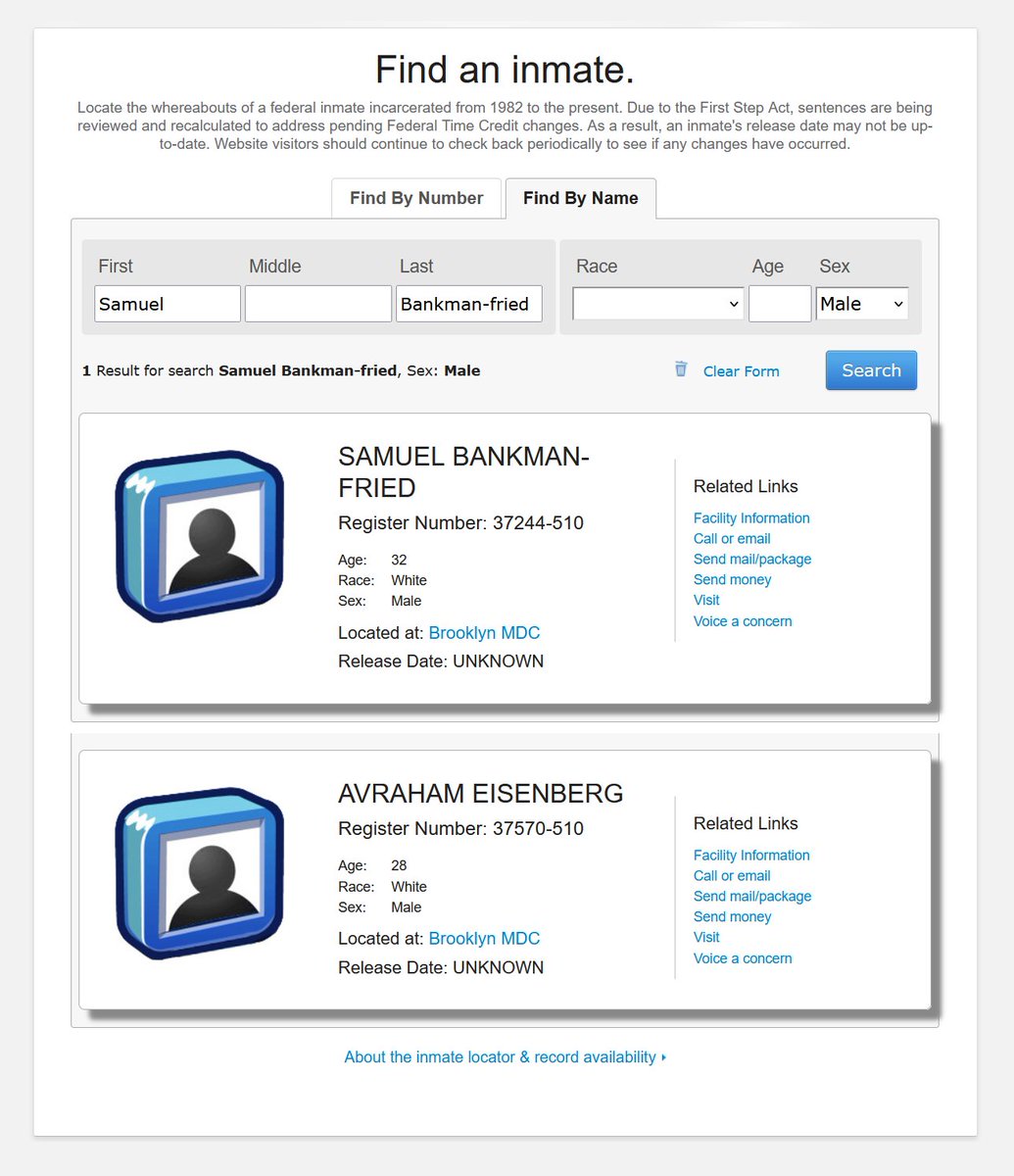
🚨 BREAKING: Possible Kanye's team leaked site and ca for his upcoming $YZY coin via customer texts. Today dozens of customers received txts from Yeezy
Is this a legit leak? Is Kanye's account hacked? Or random phishing scam?
I've investigated it all - LETS SEE
.@kanyewest revealed he was offered $2M to promote a memecoin, which involved him falsely claiming his account was hacked
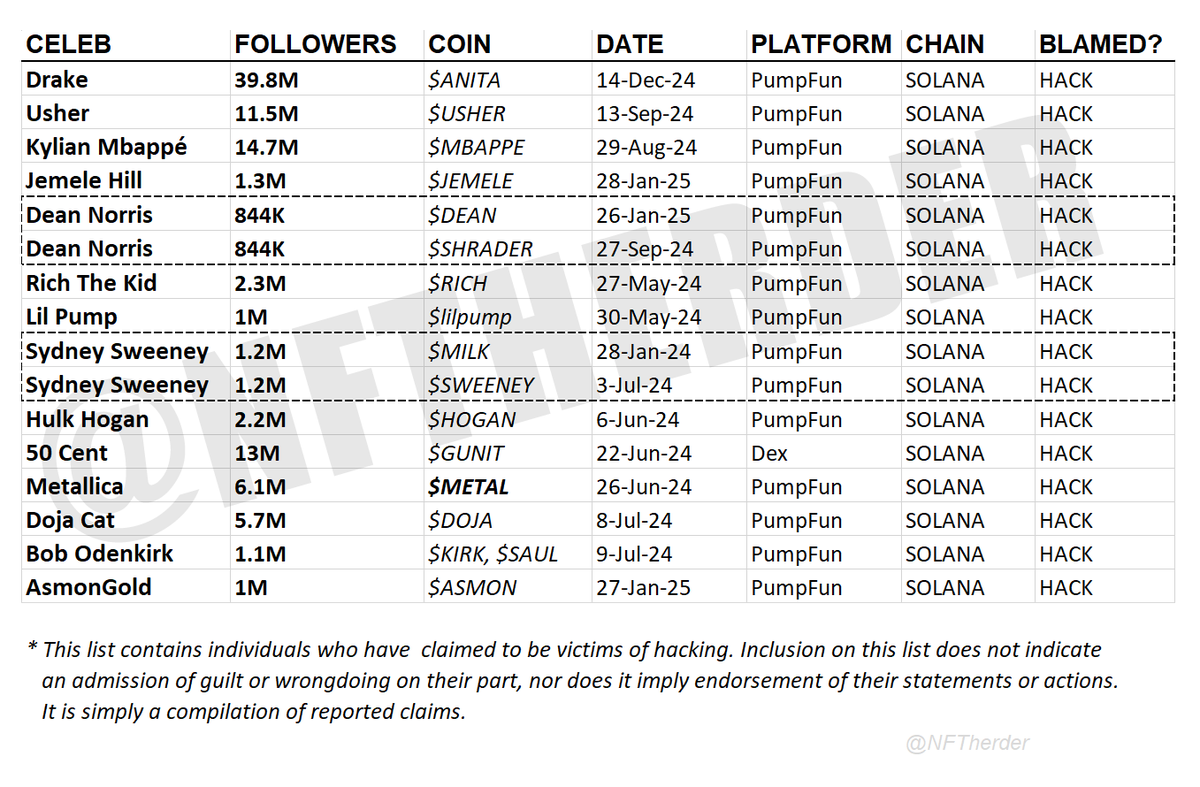
This makes you wonder if those other celebs were really hacked, or just doing paid promos $$$
SO HERE A LIST OF CELEBS CLAIMING TO BE HACKED
An investigation into how @wheres29 used stories of real cancer-stricken babies to launch multiple crypto rug pulls before spending it all on lap dances in the club
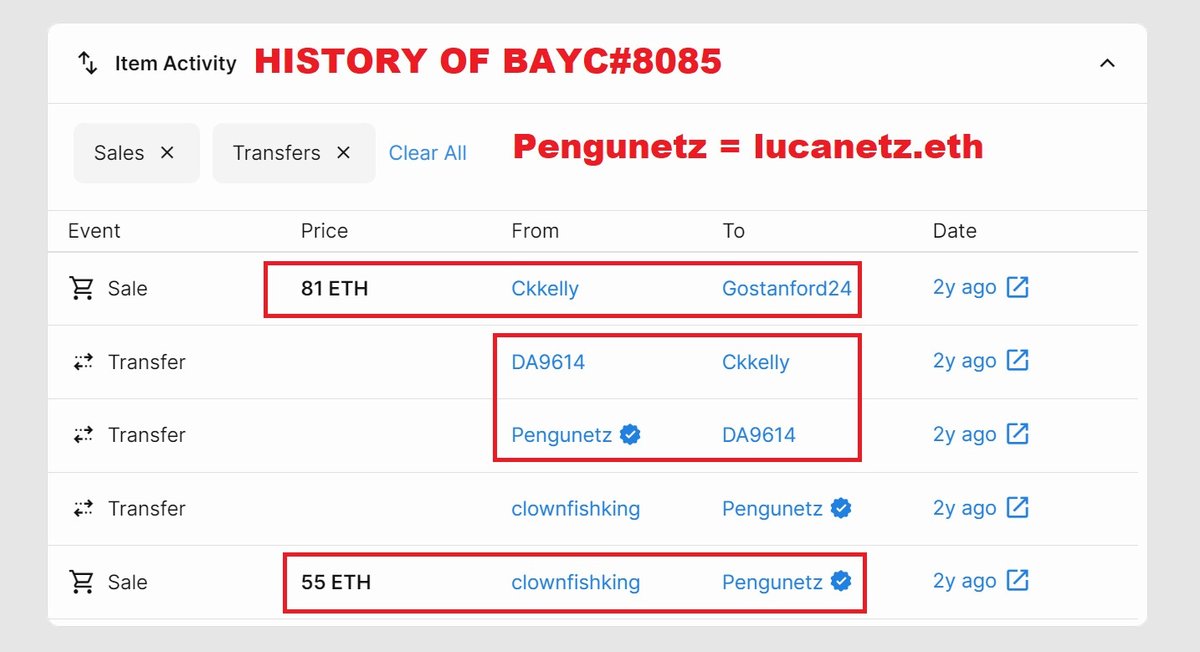
All true. Netz, LoMel (president of pudgy), CowboyUlly (ex-pudgy dev) were all involved multiple rugs; DemiGods, SBMP, CNK World, SBCC, and a fake BAYC giveaway
Netz is an ex-dropshipper who was behind the 2017 Supreme Patty free chain scam. But stfu cause free airdrop 🤫
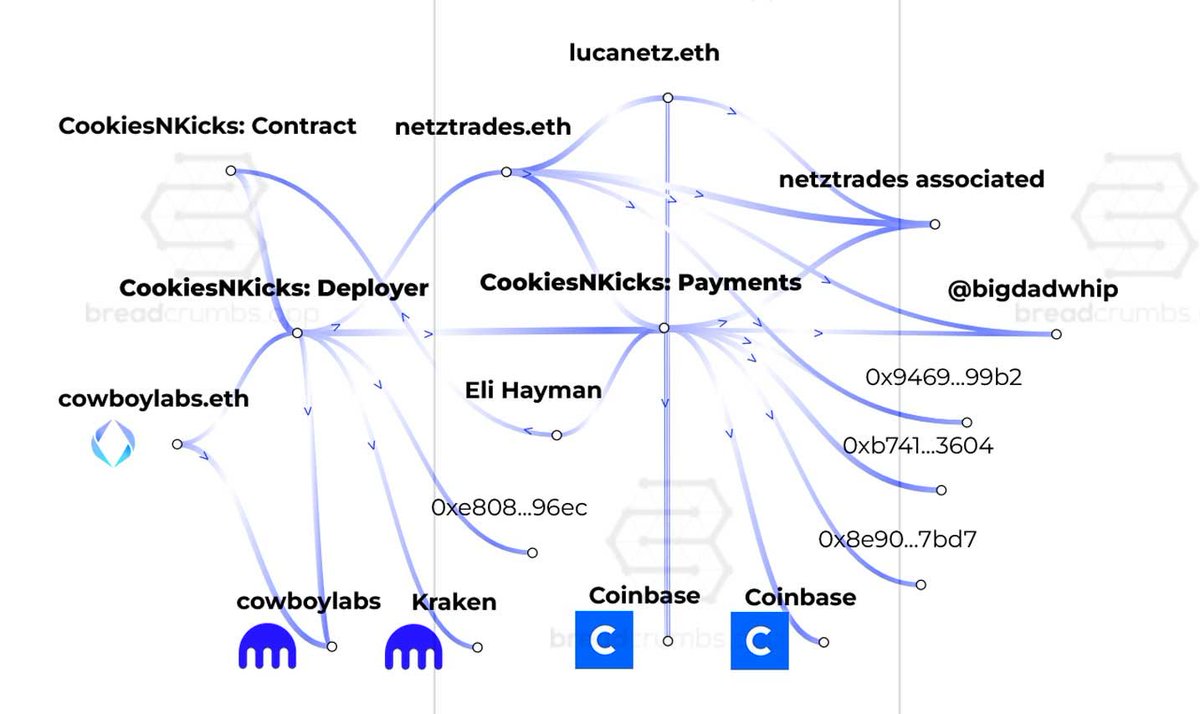
Scam reports submitted for the $718,633 usd CookiesNKicks rug pull founded by @EliHayman and deployed by @0xLoMel (Lorenzo Melendez) and @CowboyUly, with the involvement of lucanetz.eth and netztrades.eth. This resulted in significant financial losses for investors. Stay vigilant
1/ Today @0xFoobar launched a new universal name service, which might be an appropriate occasion to dox him using his universal ENS name that he once registered via an alt wallet. His role as dev allowed him to extract money from DeFi/NFT projects in often hidden ways.
WOWWWW!! Wolf in sheep's clothing
TJXLuc Scam lesson 101
Took his talents to @pudgypenguins lmao from 1 money printer to the next
#5 Luca Netz teaching how to decive customers https://t.co/1D0S6xwwFk
WOWWWW!! Wolf in sheep's clothing
TJXLuc Scam lesson 101
Took his talents to @pudgypenguins lmao from 1 money printer to the next
#5 Luca Netz teaching how to decive customers https://t.co/1D0S6xwwFk
Scam reports submitted for the $718,633 usd CookiesNKicks rug pull founded by @EliHayman and deployed by @0xLoMel (Lorenzo Melendez) and @CowboyUly, with the involvement of lucanetz.eth and netztrades.eth. This resulted in significant financial losses for investors. Stay vigilant
basically every analyst in my bounty has found, purely mechanically (while even assuming all wallets are hamas-affiliated, which we don't have confidence in), the "$130m" headline number is false, because of double-counting in wallet flow data
On 06 July, Elliptic published the PIJ had received $93.7m based on addresses disclosed in an Israel counter terror Administrative Seizure Order (ASO). They linked to NBCTF’s ASO 34/23 as the source. It lists 26 Tron wallets and 67 Binance client account numbers
Elliptic clearly stated “Since the order also involves crypto exchange wallets, it is not clear exactly how much of these funds belong directly to the PIJ.”
BitOK stated their $41m estimation was based on wallets disclosed in ASO 19/23 and 15/22. Wtih a combined total of 53 wallets
The WSJ seemingly took these estimates and came to $130m, which was used in their Oct 10th article. The WSJ article didn’t include the nuance of Elliptic’s findings
Seven days later, Senator Warren sent a letter to the White House and U.S. Department of the Treasury, writing “between August 2021 and this past June, the two groups raised over $130 million in crypto”. The letter cites the WSJ article as the source for the $130m estimate.
Note the letter only had two sources: 1) the WSJ article and 2) an ABC news article not related to crypto. Of the 13 footnotes, 11 pointed to the same WSJ article.
Over a 100 members of congress signed the letter calling for a crackdown on cryptocurrency.
Elliptic has since stated that WSJ interpretation is incorrect. Time to check the data 👇
On-chain analysis
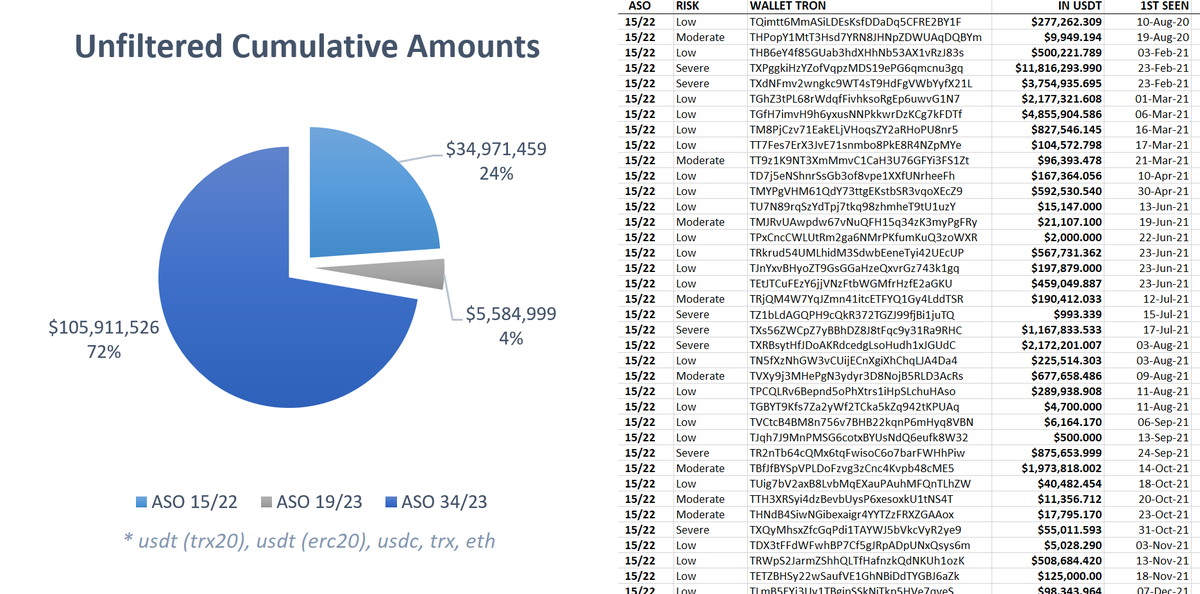
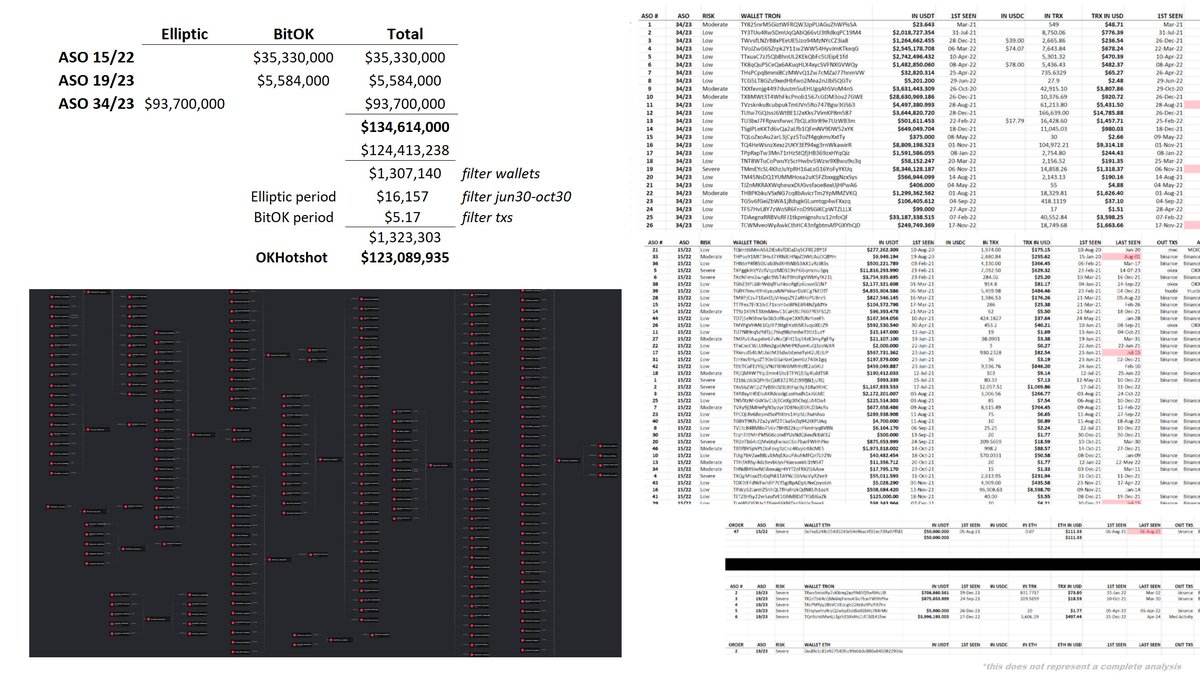
Taking the wallets from ASO 34/23, 19/23, and 15/22. We get 79 wallets: 77 tron, 2 eth wallets. These wallets received usdt, usdc, trx and eth. The majority received usdt (trx20), followed by trx. I collected the cummulative total amount received and converted it to the usd value. Unfiltered data shows us
These totals do not mean this is what actually went to the PIJ or associated groups. This is merely the unfiltered value that has passed through these wallets.
We see that a big portion directly interacts with exchanges. Volume and txs could indicate that some of these wallets are possibly related crypto services, exchanges themselves or used for aggregation
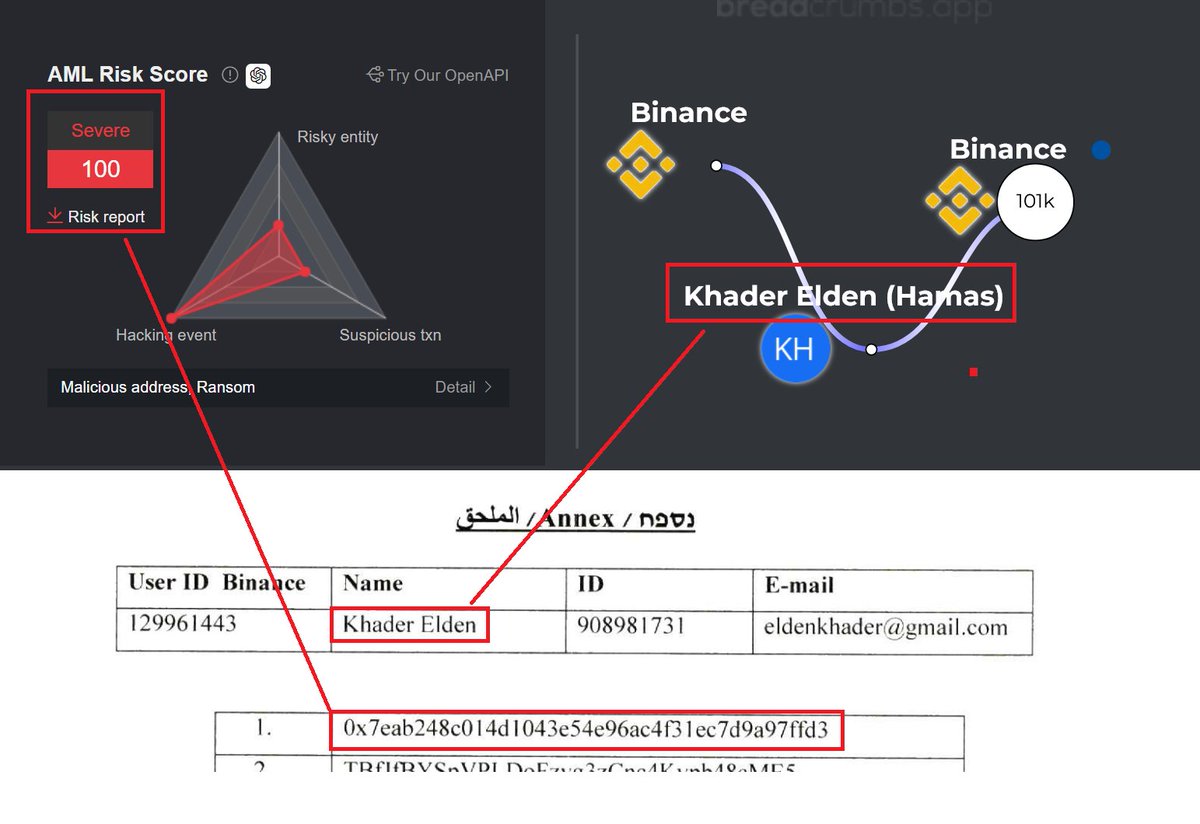
What type of wallets are we dealing with? For OSINT sake I only used publicly available labeling. However expert compliance tools and services may reveal more. AML risk profiles label at least 15 wallets as a severe risk, with others moderate to low. For example 0x7eab248c received a severe risk score in one tool, with its public label matching the ASO name in another:
However, public labeling is not always reliable. And solely relying on this method isn’t recommended
Now to filter the data. This is where differences in reporting can be attributed. The use of parameters and filters like time range, inter-wallet txs, ‘from’ wallets, removing send-back or unspent funds, and using different data aggregators for usd value for non stable coins (to name a few) all have an impact on which data is included or excluded
Filtered numbers are pretty close to BitOK’s findings. Slight difference could be explained by either different time range or conversion rates. Numbers for Elliptic’s finding come in lower
For a more precise analysis, it's necessary to examine the exchange client accounts and cross-reference them with the wallets. The exchange client accounts in the ASOs, which were used to arrive at the $130 million figure, are not directly linked in the order. In most cases, matching the client account with a wallet is not straightforward and often requires cooperation with the exchanges. Exchanges can re-use wallets to pool deposits before sending them to their exchange wallets based on those client account numbers. Therefor one must not jump to the conclusion that when same deposit wallets are used it means they belong to the same wallet owner for this reason
Without knowing the parameters of Elliptic and BitOK filtering it remains to a degree reverse engineering how they got there. As other analysts have looked at the same issue it’s clear that everyone uses different datasets and filters, which will result in different outcomes. Without having access to the exchange client accounts that link to the wallets and well-defined parameters, a reliable analysis of what exactly can be attributed to PIJ and associates will be challenging via OSINT
Analyzing blockchains is complex and nuanced skillset often misunderstood by media. One thing reporters shouldn’t do is jump to conclusions based on two blockchain reports that didn’t publicize their exact research methods – and ignoring their disclaimers to boot - especially when it involves complex issues like terror financing.
Lets look at how a self-proclaimed certified "ethical hacker" known as @solminingpunk (FFRembrandt) did a female #NFT rug pull, stole art and continues to lie and larp 👇