Africa's Energy Access Storyteller.
We provide an African perspective on the journey to universal energy access and energy transition on the continent.
What happens when unreliable electricity threatens not just a business, but the products that business depends on?
For Temitope Asore, a frozen fish and prawns trader in Sabo Market, Ikorodu, Lagos State, keeping her stock frozen meant relying on electricity available only a couple of times a week. A generator offered a temporary solution, but rising fuel costs were eating into her profits.
Today, solar is giving businesses like hers another option.
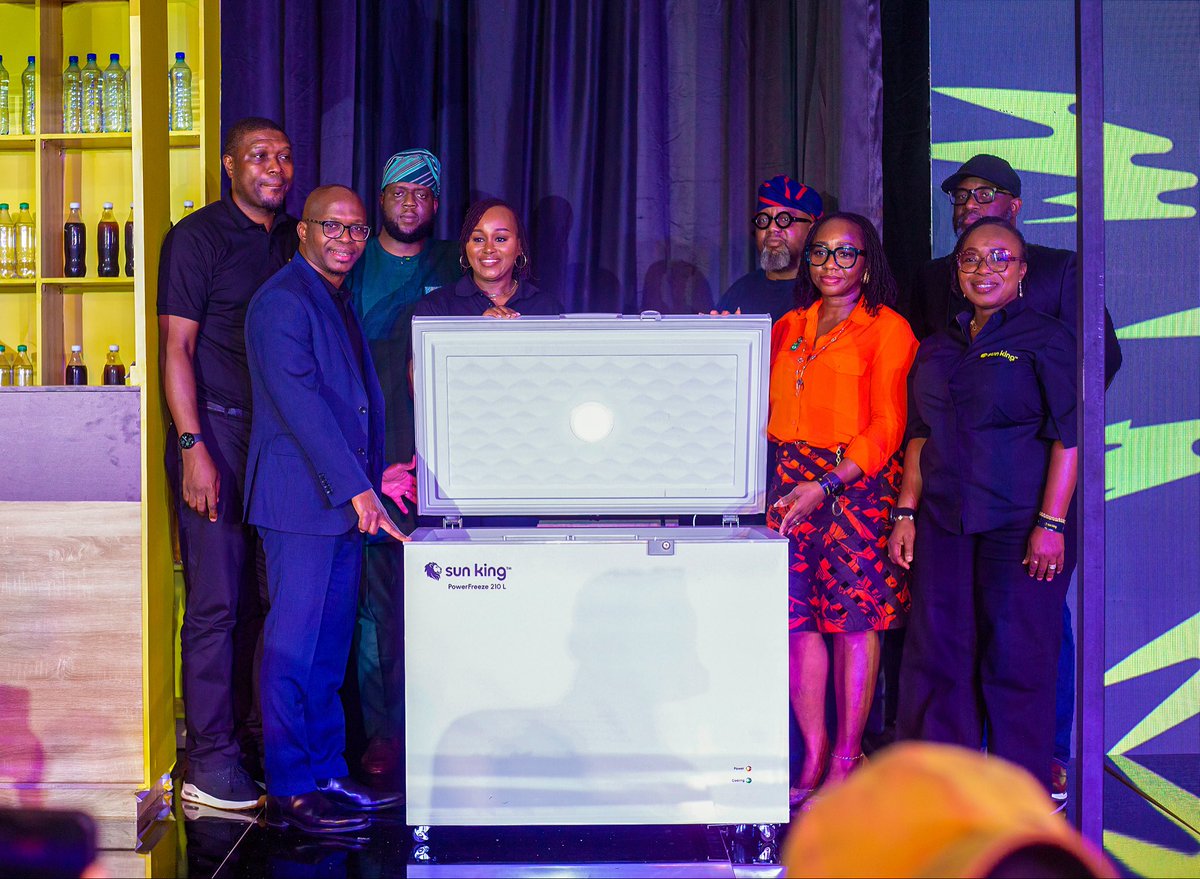
In this latest feature by The Electricity Hub, we look at how Sun King���s PowerFreeze and expanded PowerHub range are helping businesses address everyday challenges caused by unreliable power, from food spoilage and high energy costs to disruptions in daily operations.
But beyond the technology, the story is really about what reliable power makes possible: buying in bulk, keeping products fresh, reducing operating costs and giving businesses more room to grow.
As Nigeria’s distributed solar market continues to expand, the question is increasingly shifting from whether solar can complement the grid to how these solutions can reach more of the businesses and households that need reliable power.
Read the full story: https://t.co/TaTXe5qGp5
Josephine Nwaeze, FNSE, FNIM is an engineering industry leader, business strategist, and advocate for resilience-driven leadership, with decades of experience spanning rural electrification, transmission and distribution, substations, solar mini-grids, and home solar systems in Nigeria's power sector.
A non-engineer by training, she holds a degree in Language Arts, a Bachelor's and Master's in Law, a Master's in Business Administration from Ahmadu Bello University, Zaria, and a PhD. She is a Fellow of several professional bodies, including the Nigerian Society of Engineers (NSE) (FNSE) and the Nigerian Institute of Management (FNIM), reflecting a career built on continuous learning across disciplines outside her core technical field.
She is Managing Director & CEO of NEWS ENGINEERING NIGERIA LTD., a company founded in 1983 that has grown into a driving force in Nigeria's power engineering transformation. In this role, and as a Technical Board Member, she leads the company's work in rural electrification, transmission and distribution infrastructure, substation development, and deploying solar mini-grids and solar home systems across Nigeria's six geopolitical zones.
Beyond her corporate role, Lady Josephine founded the SCON Foundation to advance community development, youth empowerment, and access to scholarships. She is also a sought-after voice on leadership development, speaking at national platforms such as the GOTNI Leadership Centre's National Leadership Conference, where she shares lessons on resilience, consistency, and purpose-driven leadership drawn from her own life.
Her leadership reflects a rare blend of personal resilience, technical stewardship, and social impact, earning her recognition as one of Nigeria's "100 Most Influential Women" and as ECREEE's Rural Electrification Champion - a testament to her role in shaping Africa's power sector and inspiring a new model of leadership grounded in faith, consistency, and hope.
Join The Electricity Hub as we celebrate our Woman Icon of the Week
Finance Sector Breakout Session
Facilitated by the Federal Ministry of Finance, the session explored how to mobilise financing at scale for Nigeria’s two flagship clean-cooking pathways, LPG and improved cookstoves.
Discussions focused on the need to move beyond grants and subsidies towards commercially viable financing models that can attract sustained private capital while addressing affordability for low-income households. Participants highlighted the importance of better household and market data, fiscal incentives, de-risking instruments, blended finance, carbon finance, PAYGo and consumer financing, as well as investment in manufacturing, distribution and last-mile infrastructure.
The session also emphasised the need for differentiated financing strategies for urban, peri-urban and rural markets, stronger monitoring systems, and greater inclusion of women as consumers, decision-makers, entrepreneurs and distributors.
The key takeaway from the session is that Nigeria’s clean-cooking transition will require financing approaches that reduce affordability barriers, de-risk investment and build a commercially viable market capable of attracting long-term private capital.
LPG Clean Cooking Group Breakout Session
The LPG Clean Cooking Group explored practical pathways to scale private-sector investment and accelerate LPG market development in Nigeria.
Discussions focused on key barriers related to affordability, accessibility, infrastructure, distribution, consumer awareness, and regulatory coordination, with major contributions from REA, NERC, the Ministry of Petroleum Resources, NUPRC, NMDPRA, and TRIFINITY.
The session highlighted the need to move from recommendations to practical, market-driven solutions that strengthen supply chains, expand access, and support sustained consumer adoption of LPG and other appropriate clean-cooking solutions.
E-cooking and Complementary Technologies Breakout Session
The e-cooking and complementary technologies session explored how complementary clean-cooking technologies can work together to meet Nigeria’s diverse cooking needs.
Discussions focused on technology suitability, affordability, infrastructure, financing, and market readiness, with an emphasis on moving viable solutions from pilots to wider adoption.
Participants highlighted the importance of taking a context-specific approach, recognising that technologies such as e-cooking, LPG, improved cookstoves, bioethanol, biogas and biomass-based solutions can play different roles depending on location, available resources, household needs and market conditions.
The conversation also underscored that scaling these solutions will require more than appliances. Strong supply chains, reliable infrastructure, harmonised data, supportive policies and financing for both technology providers and consumers will be critical.
The takeaway: Nigeria’s clean-cooking transition will require a diverse mix of technologies, backed by the right policies, financing and market conditions.
🎙️ Now live on #ENN
What if Africa’s renewable advantage is about more than generating power?
With abundant solar and wind resources, Zoisa North-Bond, CEO of Octopus Energy Generation, sees an opportunity to build power systems around the consumer from the outset, combining renewables, battery storage, smarter grids and technology to deliver electricity more efficiently and affordably.
In the latest Let’s Talk Energy podcast, Zoisa discusses the $450 million ambition behind Octopus Energy Power Africa, why Southern Africa is attracting attention, and how cheaper renewable power could support the next generation of industry, including data centres.
The conversation also takes us to Sierra Leone, where Octopus Energy is developing a hybrid wind, solar and battery project designed to bring electricity to 14,000 people for the first time, with the potential to open up new economic activity on Sherbro Island.
🎧 Hear Zoisa’s perspective on #ENN: https://t.co/ilalETcym9
#GreenCircle: https://t.co/mKzs7Vm2x3
#Spotify: https://t.co/MMYlmKfpGV
Recorded at #aef26 in Cape Town for Let’s Talk Energy, hosted by ENN in partnership with The Electricity Hub.
More conversations from #aef26 are coming soon.
Getting Nigeria’s clean cooking transition right requires getting the approach right from the start.
Temitope Akinyemi of the Federal Ministry of Finance highlighted Nigeria’s $32.8 billion five-year Mission 300 financing requirement, with $1.2 billion expected to be mobilised for implementation.
He emphasised a catalytic role for government, where public financing enables greater private-sector investment rather than attempting to fund the entire transition.
His presentation also highlighted technology choices tailored to different geographies, affordability, market realities, carbon finance, and strong measurement, reporting and verification (MRV) as critical to building a sustainable clean cooking market.
“We are about to fire the arrow of clean cooking in Nigeria. We are here to aim it in the right direction. Because if we get it wrong, we will pay for it for a long time.”
How do we turn Nigeria’s Mission 300 commitments into measurable action and impact?
Mr Diran Adesua, M300 Compact Delivery and Monitoring Unit (CDMU), outlined Nigeria’s priorities under Mission 300, which is anchored on four key pillars: universal access to electricity, universal access to clean cooking, increased renewable energy in the generation mix, and private capital mobilisation.
Nigeria is targeting approximately $15.5 billion in private capital to support Compact implementation, while the CBNU continues to strengthen coordination, monitoring and delivery.
A key milestone is the development of the Compact Progress Management Platform, currently about 80% complete, which will track activities, targets and progress across the Compact’s various pillars.
Going forward, priorities include mobilising private-sector investment, strengthening collaboration with development and technical partners, learning from other countries, and sustaining stakeholder engagement to ensure Nigeria’s Mission 300 commitments translate into measurable results.
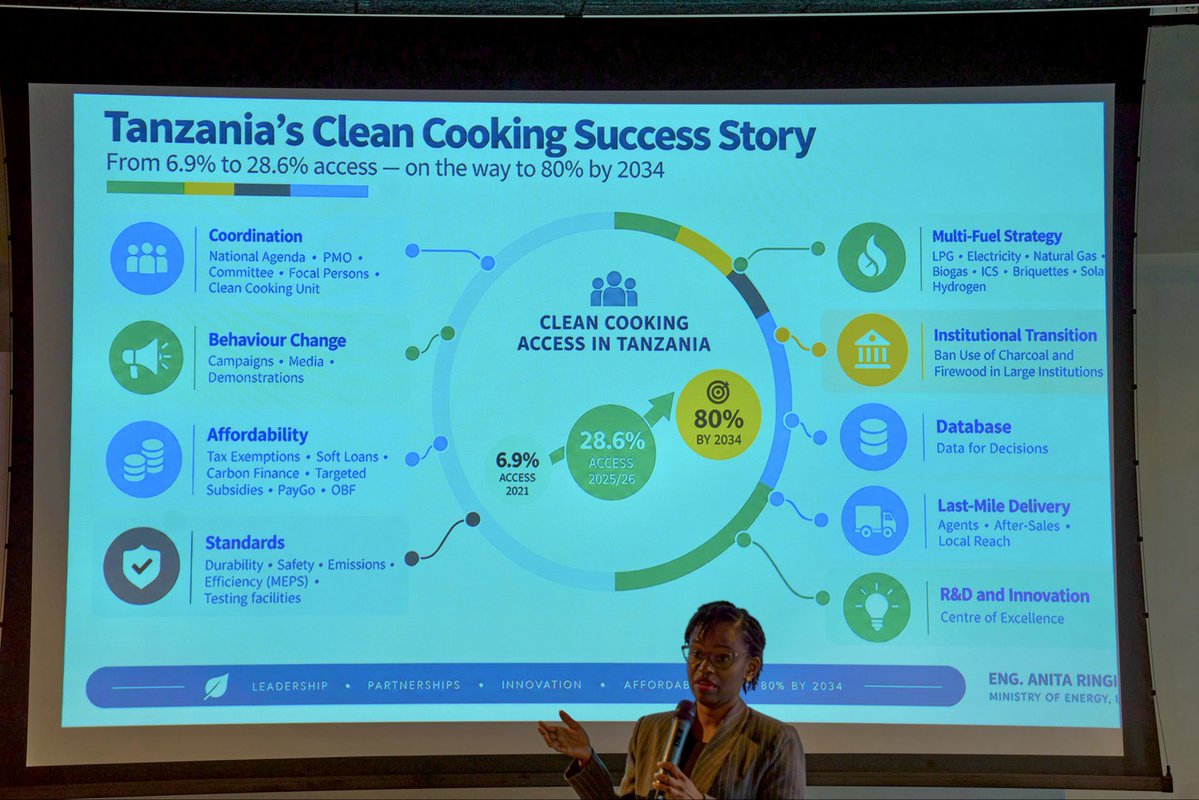
Tanzania’s clean cooking journey offers important lessons for Nigeria.
At the M300 Clean Cooking Working Group, Engr. Anita Ringia, Ministry of Energy, Tanzania, shared how the country has increased clean cooking access from 6.9% in 2021 to 28.6% in 2025/26, with an ambition to reach 80% by 2034.
However, her presentation made one thing particularly clear: access is not only about making clean cooking technologies available.
“Even if you give people stoves for free, even if the infrastructure is available, they might not use the facilities if you do not deal with their mindset.”
From behaviour change campaigns and affordability measures to institutional transition, multi-fuel solutions, stronger coordination and data-driven decision-making, Tanzania’s progress demonstrates the importance of a whole-of-system approach to clean cooking.
As Nigeria advances its own clean cooking agenda under Mission 300, these experiences provide valuable lessons on how political leadership, private sector engagement, development partnerships and practical implementation can come together to ensure no household is left behind.
The M300 Clean Cooking Working Group kicked off with goodwill remarks from key stakeholders, including Adedayo Olowoniyi (Compact Delivery Monitoring Unit, M300), Engr. Raphael Chindah (Ministry of Petroleum Resources – Clean Cooking Initiative), Dr. Asmau Jibril (Department of Climate Change, Federal Ministry of Environment), Dr. Chuka Ikejiaku (Federal Ministry of Livestock Development), Dr. Geoffrey Omedo (UNDP Nigeria), Chimereze Nwosu (Nigeria Energy Support Programme), Engr. Anita Ringia (Ministry of Energy, Tanzania) and Olamide Fagbuji (Special Assistant to the President on Climate Technology and Operations).
Anchored by Gwladys Boukpessi, discussions highlighted clean cooking as a critical component of Nigeria’s energy transition and the need to accelerate access for underserved communities.
Speakers called for stronger coordination across government, development partners and the private sector, alongside innovative financing, practical implementation and a scalable national framework to deliver measurable progress under Mission 300.
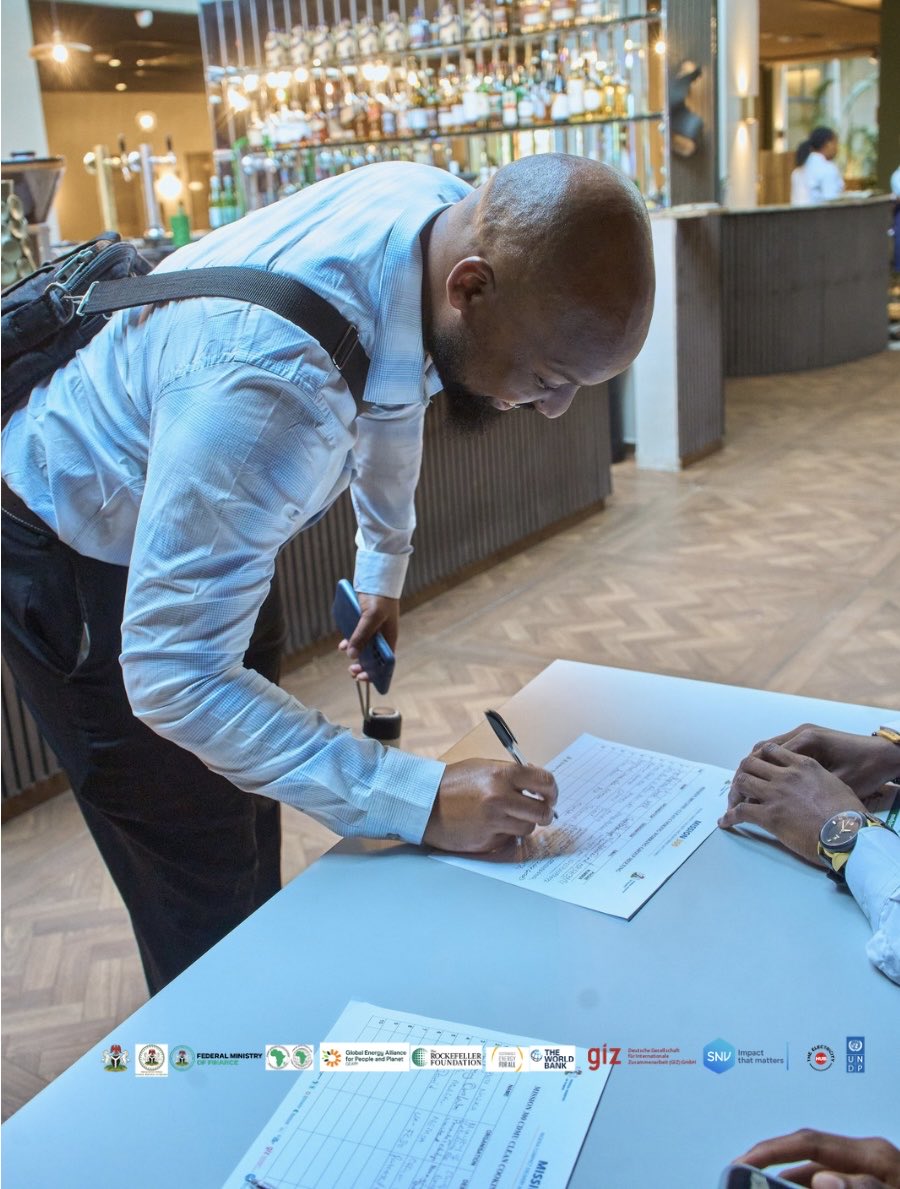
M300 Clean Cooking Working Group: Arrival & Registration
Participants have arrived and completed registration for the M300 Clean Cooking Working Group.
This marks the beginning of important conversations, collaboration and knowledge sharing aimed at advancing clean cooking solutions and accelerating access to clean cooking across communities.
Stay tuned for updates and highlights from the Working Group Meeting.
Nigeria’s clean cooking challenge requires more than individual solutions. It calls for coordinated policy, innovative financing, diverse technologies, private-sector investment and strong implementation.
On September 10, 2026, key stakeholders across government, development partners, financial institutions, civil society and the private sector will come together for the inaugural Mission 300 Clean Cooking Technical Working Group meeting.
The Working Group will provide a platform to:
* Align stakeholders around Nigeria’s clean cooking priorities and Mission 300 commitments
* Identify policy, financing, market and implementation barriers
* Explore pathways to mobilise public and private capital for clean cooking
* Examine the role of LPG and complementary solutions, including e-cooking, ethanol, biogas and improved cookstoves
* Strengthen coordination across government, development partners, DFIs and private-sector actors
* Identify practical actions to accelerate affordable, accessible and scalable clean cooking solutions across Nigeria
With millions of Nigerians still relying on polluting cooking fuels, the transition to clean cooking is not only an energy issue but also a health, economic, gender, environmental, and development priority. The conversation will bring together partners and stakeholders across Nigeria’s clean cooking ecosystem to coordinate implementation by aligning priorities, addressing critical bottlenecks, mobilising strategic partnerships and financing, and tracking progress toward Nigeria's clean cooking targets.
Event Details
Date: September 10, 2026
Location: Abuja, Nigeria
Theme: Advancing Nigeria's Clean Cooking Access Under Mission 300
The Electricity Hub is proud to serve as the Communications & Media Partner for the Clean Cooking Technical Working Group, helping amplify the conversations, insights and outcomes shaping Nigeria’s clean cooking future.
Follow The Electricity Hub for insights and updates from the Working Group.
🎙️ Now live on #ENN
Battery storage was the backup plan. Could it now become the backbone of Africa’s power system?
In the latest Let’s Talk Energy podcast, Marius Harmse, Country Director at Tecloman, discusses why BESS is becoming critical for mines, manufacturers, mini-grids and communities facing unreliable electricity.
But the bigger opportunity may be industrial. Harmse argues that Africa should move beyond exporting the minerals used in batteries and build more of the value chain at home, creating local companies, manufacturing capacity and jobs.
Hosted by Energy News Network (ENN) in partnership with The Electricity Hub and recorded at #aef26 in Cape Town.
🎧 Listen now on #ENN: https://t.co/EOBMAmw2yN
#GreenCircle: https://t.co/QeTh5OhlHW
#Spotify: https://t.co/gmmYbzEmuo
More from the Africa Energy Forum 2026 series every week. Stay tuned.
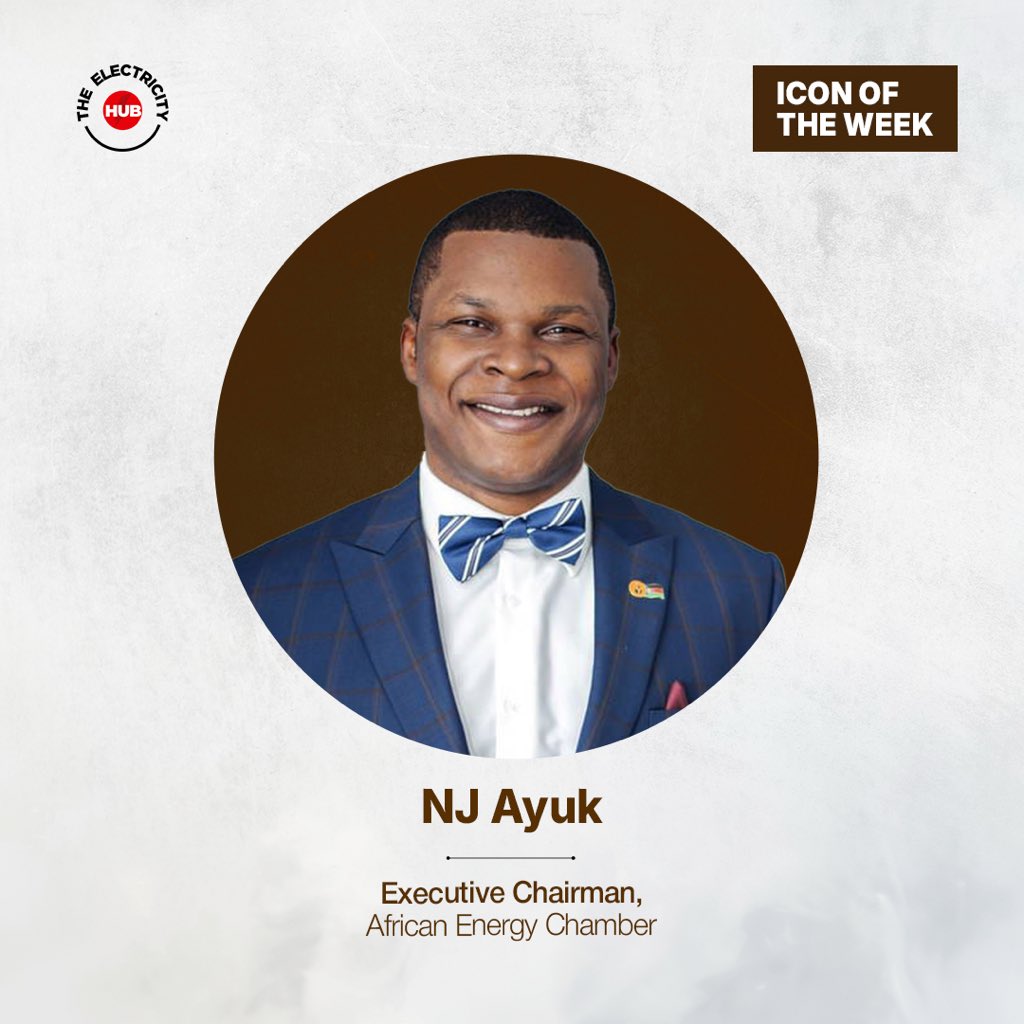
Today, we are proud to spotlight NJ Ayuk JD, MBA., a leading energy lawyer, author, and influential advocate shaping the future of African energy. As the Executive Chairman of the African Energy Chamber, NJ is a driving force behind policies and investments aimed at eradicating energy poverty across the continent by 2030. He also served as the CEO of CLG, formerly Centurion Law Group, a prominent Pan-African legal firm advising governments and corporations on energy frameworks, joint ventures, and local content development.
NJ has extensive experience structuring, negotiating, and documenting transactions throughout the energy value chain. His expertise covers the upstream, midstream, and downstream sectors, advising oil and gas producers, operators, petrochemical companies, oilfield service providers, and investors in complex transactions both domestically and internationally.
With a strong understanding of the energy sector, NJ offers both legal and commercial insights to help clients manage risks, uncover opportunities, and structure deals that support their strategic goals. His work highlights the growing importance of local content, investment, partnerships, and effective deal-making in shaping Africa's growing energy landscape.
A recognised dealmaker and thought leader, NJ has authored influential books including ‘Billions at Play: The Future of African Energy and Doing Deals’ and ‘A Just Transition: Making Energy History with an Energy Mix. Recognised by the World Economic Forum as a Global Shaper and named one of Forbes' Most Influential Men in Africa, his dedication to local content, entrepreneurship, and energy independence continues to inspire leaders worldwide.
Join The Electricity Hub as we spotlight NJ Ayuk for his contributions to advancing energy security across Africa.
Today, we are thrilled to spotlight Tony Attah, an energy leader and veteran executive who has spent over three decades shaping Nigeria’s and Africa’s oil, gas, and infrastructure landscapes.
Currently serving as the Managing Director and CEO of Renaissance Africa Energy Company Limited, Tony leads the consortium behind landmark asset acquisitions, including the historic purchase of Shell’s $2.4 billion onshore business in Nigeria, positioning local independent companies at the heart of West Africa’s upstream sector.
Prior to Renaissance, Tony served as MD/CEO of Nigeria LNG Limited (NLNG) from 2016 to 2021, where he successfully steered the company to the Final Investment Decision (FID) on the multi-billion-dollar Train 7 expansion project.
A mechanical engineering graduate from the University of Ibadan with an MBA from the University of Benin, Tony has held high-level executive positions across Shell's global gas and upstream businesses, including serving as the Managing Director of Shell Nigeria E&P Company (SNEPCo).
His dedication to domestic gas monetization, energy security, and local capacity building makes him a true icon of the industry.
Join The Electricity Hub as we spotlight Tony Attah for his contributions to advancing energy security in Nigeria and across Africa.
What is it really like working to advance wind energy in Nigeria?
At the Nigerian Wind Energy Council (NWEC), our work goes beyond policy, research, and advocacy. It is also about learning, navigating challenges, engaging stakeholders, and contributing to the conversations shaping the future of wind energy in Nigeria.
This Friday, August 21, 2026, join Adedamola Adekoya and Ojodomo Odiniya, Research & Operations Consultant at NWEC, for our X Space:
“Building Belief in the Wind: The Realities, Gaps, and Future of Wind Energy in Nigeria.”
We’ll be having an honest conversation about our experiences working in the wind energy space, what we have learned through our work at NWEC, the gaps we continue to encounter, and what it will take to move wind energy from potential to meaningful deployment in Nigeria.
Date: Friday, August 21, 2026
Time: 7:00 PM WAT
Venue:X: @NGElectricHub
Come listen, learn, and join the conversation as we explore what it truly takes to build belief in the wind.
#NWEC #WindEnergy #Nigeria #RenewableEnergy #CleanEnergyNigeria #EnergyTransition #WindPower #TheElectricityHub
Today, we are proud to spotlight Geoffrey Omedo, PhD, Technical Specialist – Climate and Energy Finance at the UNDP Nigeria, a sustainable development professional with over 18 years of practical experience working across governments and the UN system.
Dr Omedo specialises in policy, programmes, and financing across energy, climate change, and biodiversity (nature) issues in Africa. His work sits at the intersection of sustainable development, energy access, climate action, and innovative financing, with a strong focus on translating policy ambitions into investable solutions.
His technical expertise spans climate science, innovative financing schemes, and carbon markets, with particular experience in developing financing approaches to unlock investment in sustainable energy and climate-resilient development. At UNDP Nigeria, Dr Omedo is currently leading the design and implementation of the Nigeria Integrated Clean Energy Offer, an initiative focused on supporting Nigeria’s transition towards cleaner, more inclusive and sustainable energy systems.
Dr Omedo has also been an active voice in conversations around Nigeria’s evolving electricity market and energy reforms. He has written extensively on the opportunities emerging from the Electricity Act 2023, state electricity markets, renewable energy investment, climate finance, carbon markets and the role of private capital in accelerating Nigeria’s energy transition.
Beyond his professional work, Dr Omedo is the author of Africa Energy Finance Pulse, a biweekly LinkedIn newsletter in which he explores the intersection of energy, climate finance, policy, and investment across Africa. Through the newsletter, he examines emerging trends and opportunities—from battery energy storage and carbon markets to clean cooking, electricity infrastructure and Africa’s evolving energy systems—making complex energy-finance issues accessible to a broader audience.
His thought leadership extends beyond the newsletter, with Dr Omedo regularly contributing to public discussions on Africa’s energy future. His recent analysis has explored subjects including the financing of renewable energy, the development of interconnected African electricity markets, clean cooking finance, and the potential of carbon markets to unlock investment in clean energy.
Through his work across government, international development, climate finance, and the energy sector, Dr Geoffrey Omedo is a leader in a generation of African sustainable development professionals working to bridge the gap between policy ambition, climate action, and the capital needed to deliver meaningful energy transformation.
Join The Electricity Hub as we spotlight Dr Geoffrey Omedo for his contributions to advancing climate and energy finance, strengthening sustainable energy investment, and shaping conversations around Africa’s clean energy future.
Africa doesn't have a generation problem. It has a grid problem.
The latest episode of Let's Talk Energy is now live.
Recorded during the Africa Energy Forum 2026, the series is hosted by Energy News Network (ENN) in partnership with The Electricity Hub. In this episode, Hussein Shoukry, Managing Director for the Middle East and Africa, Siemens Energy, discusses why transmission, localisation and resilient infrastructure will determine whether Africa's next wave of energy investment delivers industrial growth.
🎧 Listen now: https://t.co/SlMkamuWrm
🎧 Also on #Green Circle: https://t.co/P6MHK2zBSX
🎧 Available on #Spotify: https://t.co/muaffGgaFd
More conversations from the Africa Energy Forum 2026 will be released in the coming weeks.