This vignette shares a curriculum developer’s lessons learned from designing materials for today’s science standards along with advice for educators on how to determine which existing lessons and activities can be adapted for new standards:
https://t.co/ZcTyKiaSlf
NGSS Now, our monthly newsletter, focuses on the why and how of science teaching, learning, and leadership.
Subscribe and see all past editions of the newsletter here: https://t.co/cQcQoxuD3Z
What Is “Systems Change” and how can it enhance equity in STEM?
See this @WestEd blog post, which explores the need and strategies for systems change to improve STEM education opportunities for all students:
https://t.co/3az6NEveXO
In our work supporting states and districts to move toward equitable science instruction for all students, we worked with leaders and experts in the field to identify five key takeaways important to making a big impact.
Read about those takeaways here: https://t.co/1VmcDYA5qv
This case study and infographic highlights lessons learned from a community of school and district leaders in New Mexico focused on building and implementing a shared vision for equitable science instruction:
https://t.co/0gKkfuuiSm
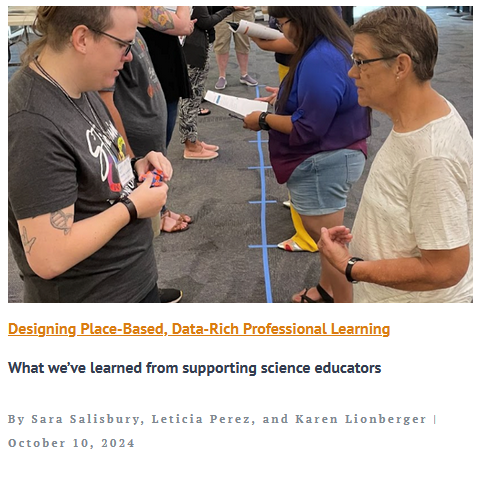
Connecting to students’ everyday lives and experiences through place-based education approaches can foster more meaningful learning experiences.
See three professional learning design considerations to support teachers to engage in these practices here: https://t.co/rOruVLrkhw
Every month, the NGSS Now newsletter shares the latest news and success stories along with proven resources to inspire, support, and improve science educator and leader practice.
Subscribe here: https://t.co/cQcQoxuD3Z
"Selection teams should articulate a vision of how they want to transform teaching and learning and then choose a curriculum to support and advance that vision."
Read more from @InstructUP here:
https://t.co/KNONYL5Gr5
In 2019, Tennessee teachers worked collaboratively across districts to develop and revise example tasks to include phenomena or problem-based scenarios, student use of multiple-dimensions, and equitable features.
See them here: https://t.co/IgPlmXvR3M
A big challenge when designing science instruction is supporting students who miss a class.
What are some strategies to catch students up quickly on the class's progress explaining a phenomenon?
See some ideas in our blog post here: https://t.co/C70XjX4Le9
“Many science classes rely on cookie-cutter science labs and rote memorization... but there’s a growing demand for science curricula to help students apply science in novel ways to solve challenging problems like pandemics or climate change.”
See more: https://t.co/nPVI7UrWq7
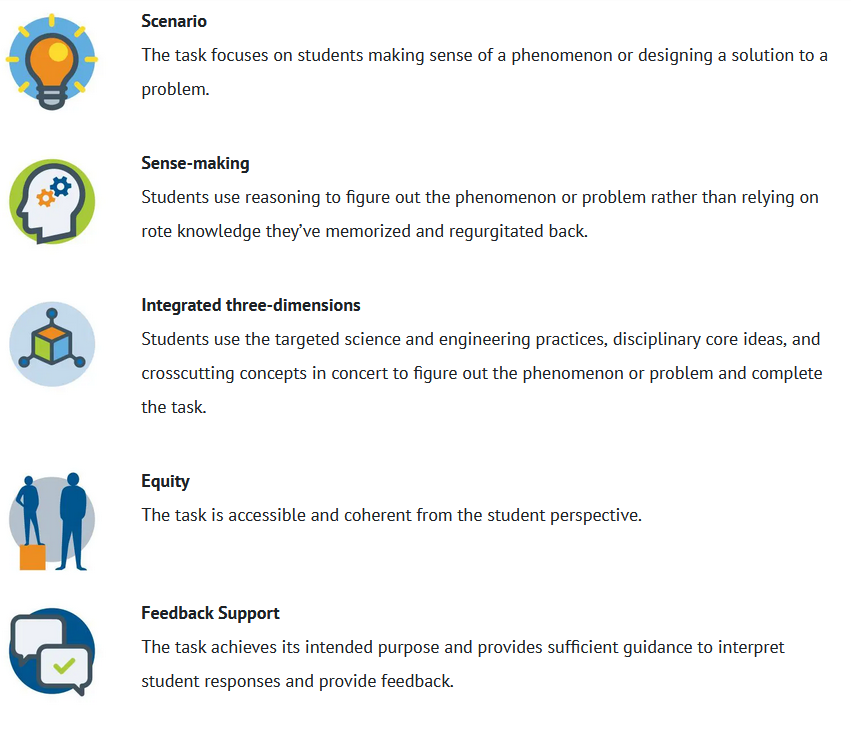
The Science Task Prescreen and Screener build off the criteria in Category III of the EQuIP Rubric for Science to more clearly specify features for assessment tasks designed for three-dimensional standards.
See them here: https://t.co/YzbZkf3Bar
This blog post shares considerations for finding resources to support effective science instruction — and what that process has in common with travel planning.
Check out our "Curating Curriculum" blog post on here: https://t.co/C6xYHZyAav
Our team works with Pennsylvania leaders to improve science education in their communities.
Read about the positive impacts for participants and stories from the field related to the #PennSEL Network here:
https://t.co/OyFjEHFtsn
A key shift in learning designed for today’s science standards is supporting students to explain phenomena and to design solutions to problems.
See examples and guidance on driving instruction with engineering design problems here: https://t.co/oUZaKoxIQD
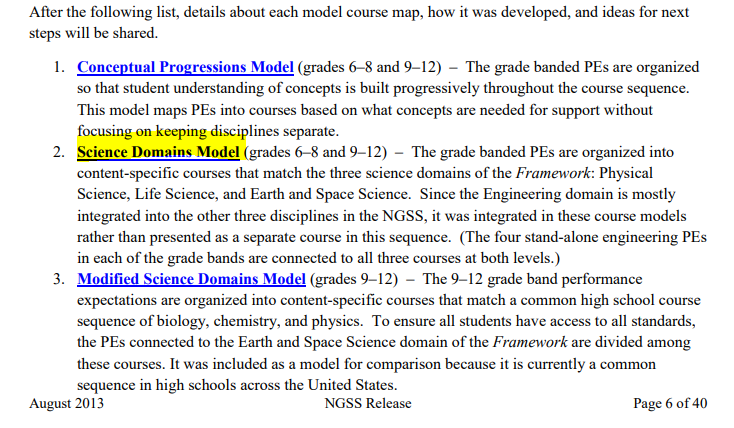
@beryl_byrdie Hi! NGSS Appendix K offers a "Science Domain Model" where Earth and Space Science standards are in a separate course. You can see it on page 22 here: https://t.co/b96tugTNNc
"Bundles" are groups of standards arranged together to create the endpoints for units of instruction.
This resource offers example bundles for each grade band, as well as a guide to bundling performance expectations: https://t.co/xIg6HUO7ps
This Literacy View episode shares insights on challenges and best practices for effectively selecting and implementing high-quality instructional materials, which is an important lever to improve student outcomes in science.
Listen and watch here: https://t.co/8zriU4K0fZ
Evaluating instructional resources can help ensure students have meaningful and equitable learning experiences.
See tools for evaluating materials for science here: https://t.co/OHzl1rEMqs
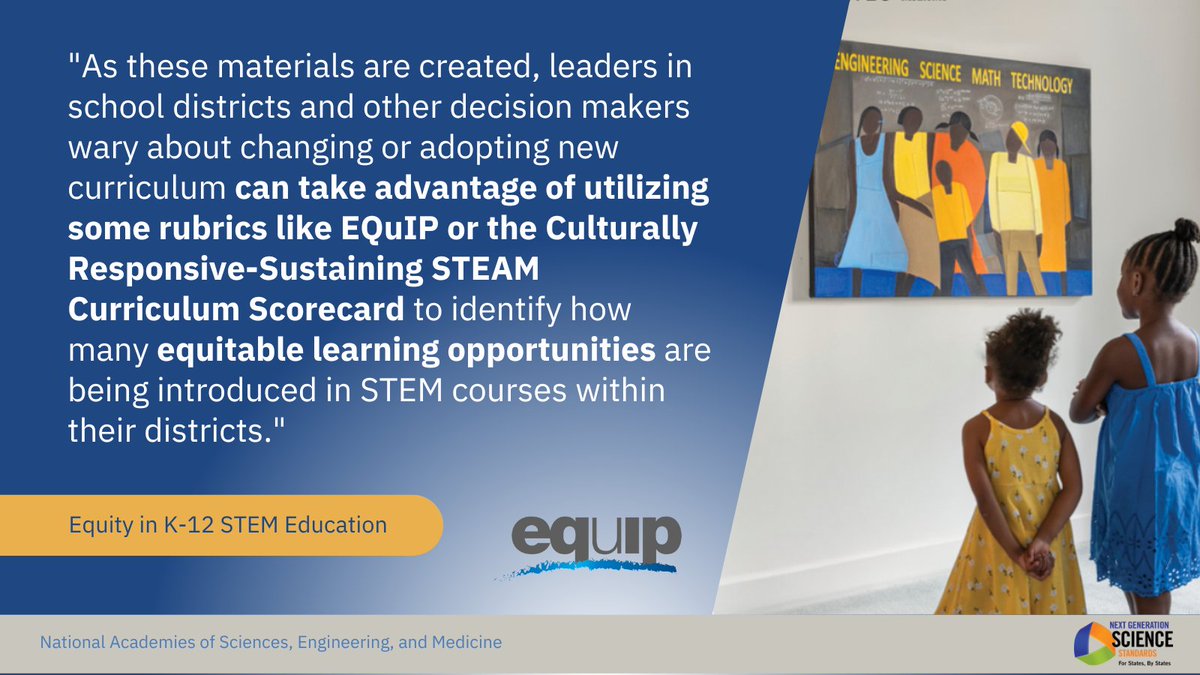
The recent @TheNASEM report, Equity in K-12 STEM Education, highlights the inequities in STEM education and offers recommendations to create a more equitable learning environment for all students.
See the interactive overview of the report here: https://t.co/ThoSJi0U8m