Climate breakthrough does this in a really interesting way: a $4M unrestricted grant to a highly vetted climate leader for them to use for whatever they think is most impactful. Sometimes they put it into their existing org, sometimes they use it to found something new... https://t.co/4glPhZ211n
In practice this *is* what happens with large, successful charities. Some % of donors give money 'unrestricted', which can then be allocated to whatever the charities leadership/governance considers most effective within their mission + operating model.
I'm with you that this could be taken even further, and there's impact to be unlocked by giving even more discretion to allocate $ towards impact unconstrained by their mission + operating model (and some degree of donor intent / expectation management), though there'd be some important conflict of interest stuff to navigate.
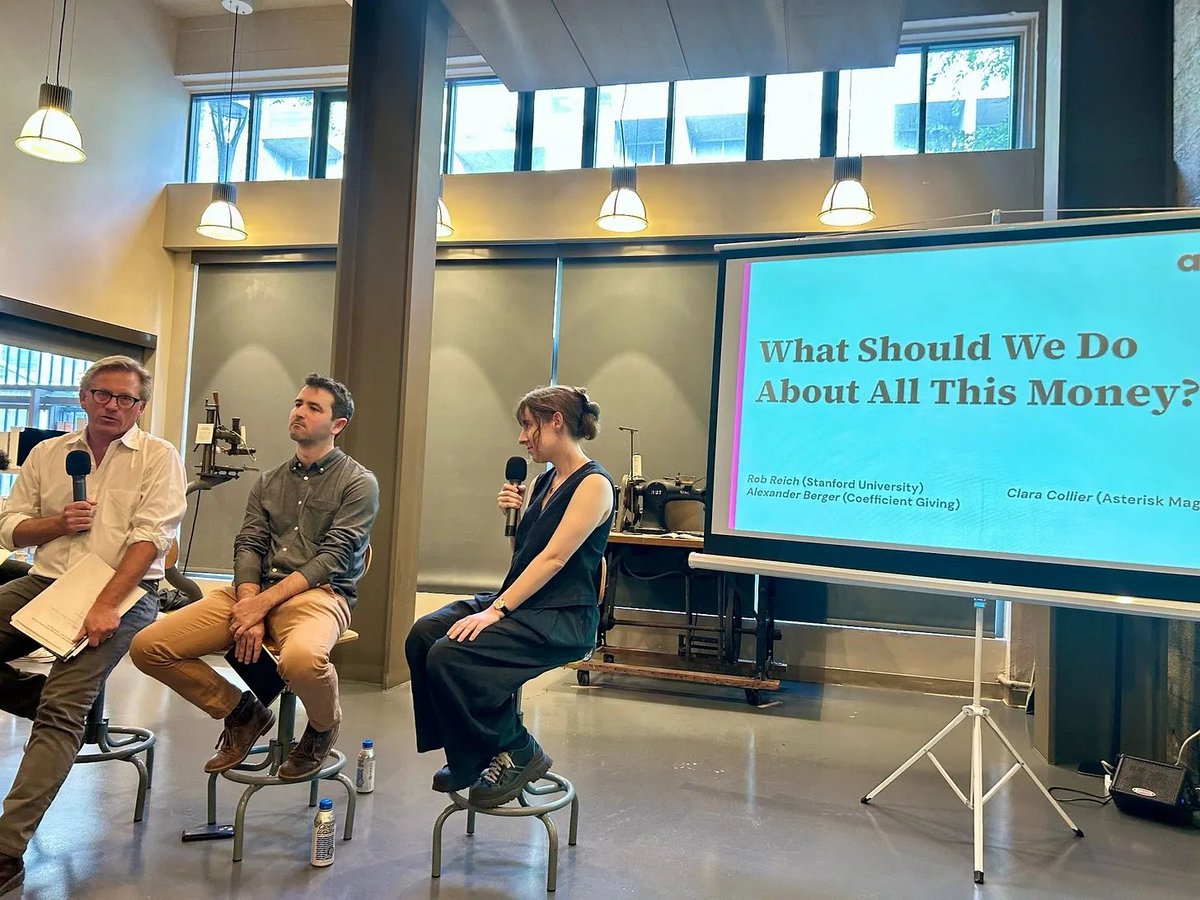
Thanks to @asteriskmgzn for hosting and writing up this fun debate I had with my friend Rob Reich about philanthropy and democracy and the coming AI giving boom (though they did me dirty with the photo choice!): https://t.co/wn9tfhyMV1
Here's the closing message I sent to everyone today.
My dear friends! Today’s my last day at OpenAI. I have been thinking a lot about what I wanted to say in my final remarks to the company. Here are a few things I hope everyone takes deeply to heart.
1. For All of Humanity. What we have been building here is an opportunity to improve the human condition unlike any other in history.
It’s easy to get distracted by the wealth and power that comes with this. It’s easy to focus on the already wealthy and powerful in the world, because they demand so much of our attention as customers or lawmakers or competitors. Nonetheless, do not lose sight of the “all” in “all of humanity.”
Our mission for everyone. Working people. People in poverty. People who dream of a better life. What we are building can help them. It is our mission to ensure that it does.
To that end, yesterday I donated a major gift to GiveDirectly, a charity that makes direct cash transfers to people in poverty in Africa and in the United States. This is a highly effective way of helping people; I encourage others to consider giving as well.
2. Risk Is Our Business. Technology changes the security equilibrium of the world profoundly and creates new risks. Some of these risks will directly result from AI; many others will result from other fields of science and engineering that are accelerated by AI.
Risk is inextricable from progress. It is not a reason to turn our back on progress. I think, from time to time, of a speech from Captain Kirk in the original Star Trek—“Risk is our business,” he says about humanity as a whole. I believe this is true.
But we should also be cognizant of the risks and we should actively manage them. We can simultaneously believe that it will require extraordinary effort to accomplish the safety and security of humanity, while committing to making that effort in support of our work to advance the technological frontier.
The question of progress and safety is not either/or. It is definitively “both.”
3. The Consent of the Governed. OpenAI, and especially the OpenAI Foundation, will be among the most important organizations in the world. The level of power concentrated here will be like the power of a state. It demands a level of accountability that exceeds that of an ordinary company.
I encourage OpenAI to pursue a path of governance innovation that makes it progressively more democratic and more beholden to the consent of the governed. All of humanity will be impacted by the work here; all of humanity should have some way to weigh in eventually.
There is no roadmap for what form this should take. This is an ideal. But I hold it entirely.
Thank you all again so much for being a part of an unbelievable nine year journey with me. To Safe AGI!
No one is stepping in for people in the world's poorest countries.
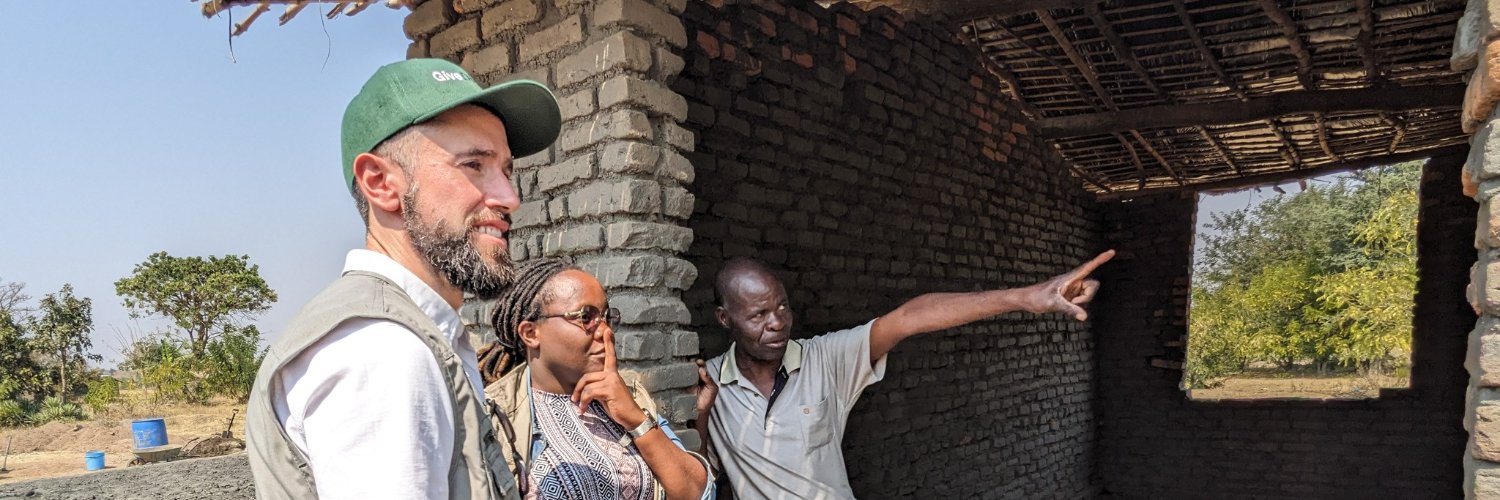
@NickAllardice and @gamblingondev argue that direct cash transfers have to fill the gap. Drawing on evidence from #Malawi, they explain why cash should be the default response as fiscal crises, aid cuts, and rising costs converge.
https://t.co/EKxHEN4ylz
There's $370B+ in philanthropic capital potentially about to be deployed, but right now that money can’t be absorbed at the effectiveness and scale this moment demands.
Scaling impact that leads to real change for people quickly and successfully is incredibly hard, and poorly understood. I see a lot of naiveté amongst leaders, operating organizations and funders - and I want that to change.