15 years formulating supplements. Then a stent at 44 with “perfect” labs. Now I audit longevity claims against the primary evidence — and name who funded them.
1/ Most of the longevity advice you scroll past was written by someone selling something.
I spent 15 years on the other side of that, running supplement companies. Then at 44, with "perfect" labs, I needed a coronary stent.
Here is what that taught me, and what I do now. 🧵
FDA advisers voted on two sleep peptides on the same day.
One had six small human sleep studies. It lost, 6 to 7.
Epitalon had none, and the FDA's own reviewers advised against it. It passed, 7 to 4.
Full breakdown in the reply.
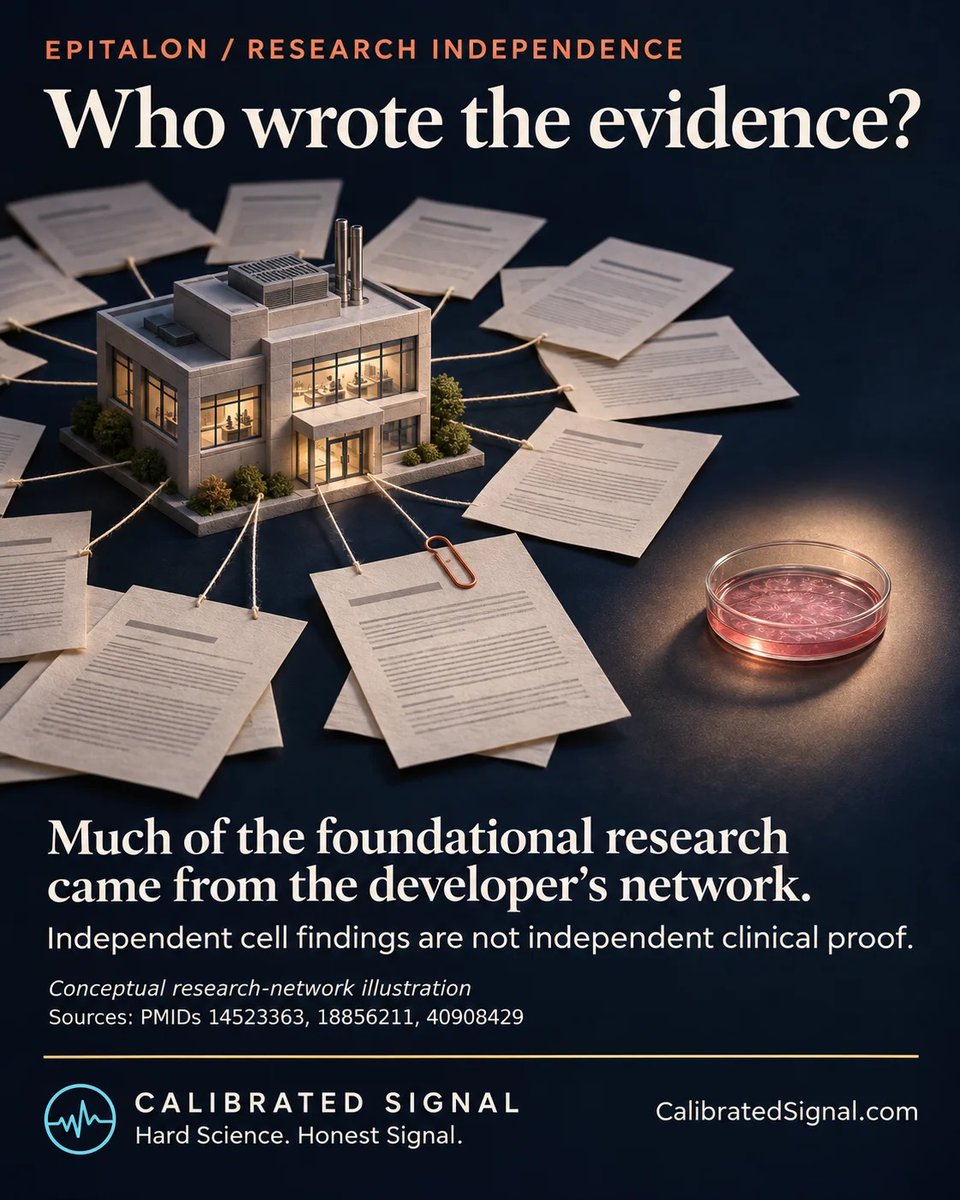
102 of 168. The inventor is an author on 102 of the 168 papers our PubMed search returned. No lab outside his network has published a mammal lifespan study. The full breakdown: https://t.co/zZQbs3AmAA
Every study we scored, with a Follow button for when the evidence changes: https://t.co/LIOCq3Zwt2
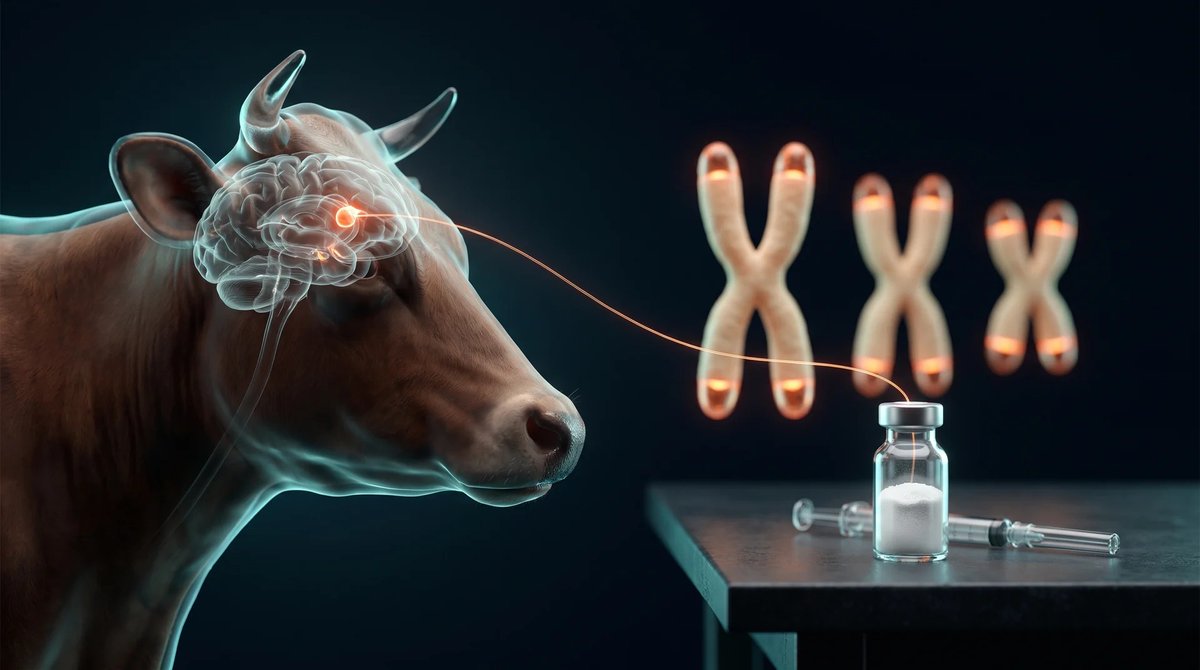
Epitalon's human longevity trials never tested Epitalon. They tested cow glands. I spent 15 years running supplement companies and years in a cancer research lab. The evidence, in seven parts.
Cancer cells in four days. Telomere shortening is one of the body's cancer brakes. In the first independent test in human cells, normal cells showed no change at four days. Breast cancer cells had longer telomeres within four days. Cells in a dish, one lab.
Supplements are often sold as "natural," which says nothing about safety.
Kava, a plant extract sold for anxiety and sleep, has been linked to rare but serious liver injury, including cases that needed a liver transplant.
When a doctor's intake form asks what you take, list your supplements too.
More in the reply.
What would it take to change my mind on Epitalon, the peptide sold to lengthen telomeres and fix sleep?
One trial: independent, placebo-controlled, using injected Epitalon, that measures the peptide in blood and measures how people sleep.
Nobody has registered that trial. The one registered study that includes Epitalon mixes it into a five-peptide skin serum, alongside pills that include metformin, low-dose chloroquine and ivermectin, with no placebo group. The record doesn't say how much of each peptide is in the serum.
Nobody will be able to say which ingredient did what. If a real trial gets run, I'll cover what it finds either way.
Hit Follow on our Epitalon page and you'll get an email if that trial ever shows up. Link in the reply.
"Drug companies ignore BPC-157 because you can't patent a natural peptide." False.
It was patented in about 25 countries starting in 1992. A drug company licensed it and ran the enema trials. The core patents died in 2012 and 2013 when the owners stopped paying the fees.
Full breakdown in the reply.
I used to be the guy trying to figure out how to market things based on the available evidence. So when a seller says "decades of research," I check whose names are on it.
In October we searched PubMed (the main index of medical research) for the longevity peptide Epitalon. Its inventor was an author on 102 of the 168 papers the search returned. Every human study of Epitalon, and every mammal lifespan study, comes from his network.
According to a St. Petersburg news outlet, he kept a significant stake in one company and was listed as a founder of several Moscow drug companies.
Before you trust "decades of research," ask whether a different lab has seen the same thing.
We're building this same check for everything in your routine. Early access. Link in the reply.
Red yeast rice is sold to lower cholesterol. It works when it contains monacolin K, the same molecule as the prescription cholesterol drug lovastatin.
In one lab analysis, all 12 products tested said 600 mg per capsule. The monacolin K inside varied about a hundredfold.
If you take it, bring the bottle to your next cholesterol visit and ask how it fits with your other medications.
More in the reply.
@Peptide_Express Good question. The 20 women took Epitalon as a spray under the tongue for 20 days. The FDA review doesn’t say how long anyone checked for side effects after the last dose. It says the study “did not report safety data.”
In October the government put a peptide called Epitalon on a list of six it won't stop licensed pharmacies from compounding. One reason it gave: "the limited controlled human exposure reported no side effects."
The FDA's own review says the one study that gave 20 people Epitalon "did not report safety data." Its reviewers found no clinical study assessing Epitalon's safety in humans.
The file is thin because almost nobody ran the human studies that would fill it.
"No side effects reported" and "tested and found safe" are different things. Ask which one you're being told.
The cautions, the dosing people use and who funded the research are on our Epitalon page. Link in the reply.