New 3' Scientific rap session, this time alongside @BenGFreeman1. About latitudinal gradients in species response to climate change.
The new article mentionned is just published in @PerspectEcolCon
https://t.co/jxwfDPhvt3
Sharing again my recent experience in reviews. What if Reviewer2 was no longer anonymous ? #AcademicTwitter#Reviewer2#PeerReview
https://t.co/1bqF53GFAQ
Happy to share our latest production accepted in Biological Invasions. See how climate data source matters (more than the scenario) in predictions of invasion risk: https://t.co/FUIqFmpOsZ
#phelsuma#invasivealienspecies#climatechange
Happy to share our new preprint: introducing remote sensing in herpetological survey. See how drone imagery is promissing either for endangered or invasive species monitoring. #phelsuma#reunionisland#invasivespecies#drone
https://t.co/AhCk5HZVpJ
Just published! See how classic SDM performance metrics do not represent well model correction. We propose better and emphasise the need for biological causalty when selecting predictors. This one felt like a PhD thesis!
https://t.co/uiNKIi7QP4
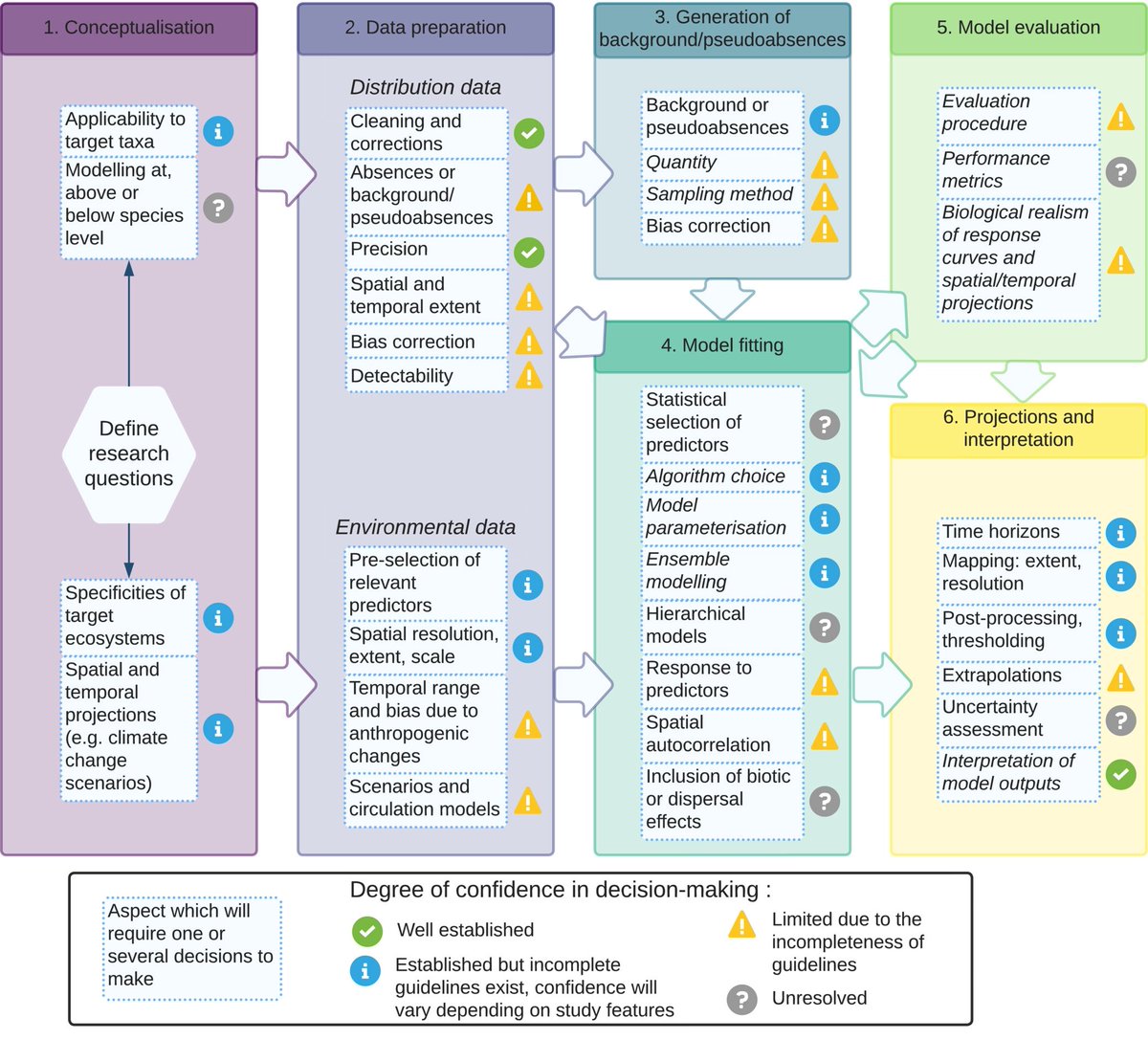
Species distribution models (SDMs) require many complex decisions which often lack best practices. @BLeroyEcology establishes new best practices for presence-only SDMs
https://t.co/Nn5WHUvLGh
Les espèces n'ont pas le temps de s'adapter à la vitesse de l'augmentation actuelle des températures. Les effets directs et indirects du réchauffement climatique conduisent le plus souvent à un déclin trop rapide, sans possibilité d'adaptation, explique @NicolasDubos@Le_Museum