An optimisation solver must cope with the conditions in which it runs. This study examines a modified noise-immune fuzzy neural network for quadratic programming with equality constraints. https://t.co/bScD0E5vo0
Pollutant degradation, carbon sequestration and waste conversion place different demands on engineered biology. Our 2024 viewpoint asks how promising capabilities can become useful environmental applications. https://t.co/iYbEvOQBGo
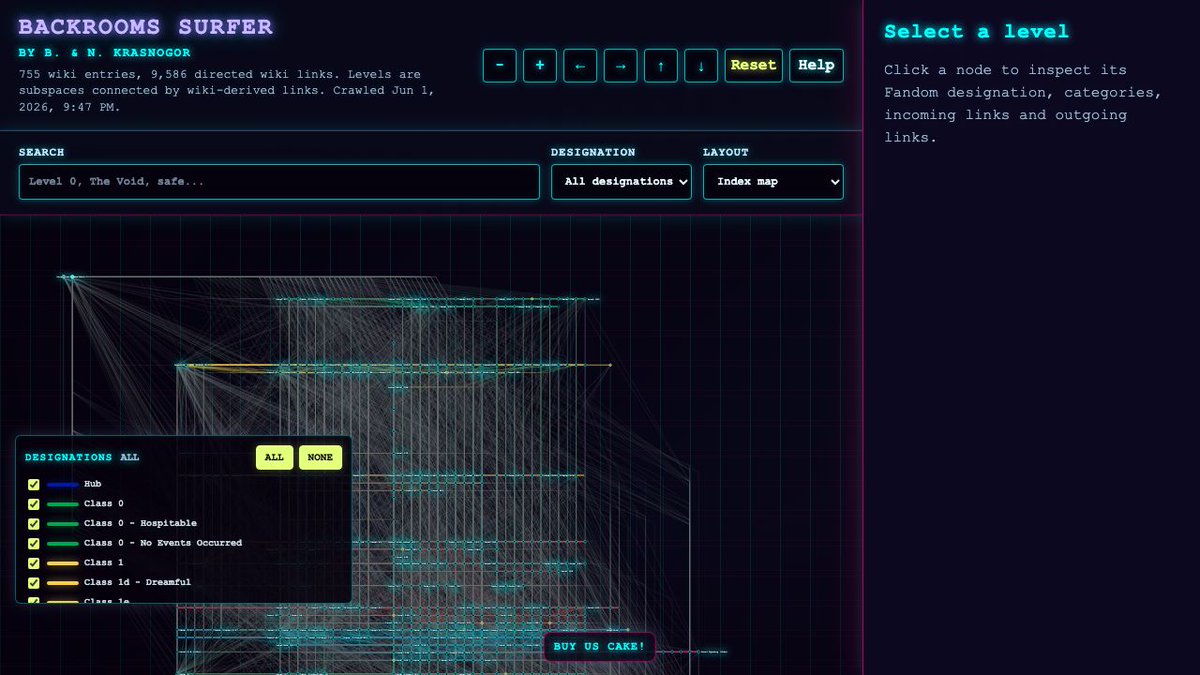
Backrooms Surfer: for when opening one more tab somehow becomes exploring a glowing network of strange places. Search stations, inspect routes and enjoy a very peculiar commute. Play: https://t.co/KMxRc1MQjD
A molecular memory must get the order right. Our DNA stack records signals and releases them in reverse order; the modelling also shows why washing efficiency affects reliability. https://t.co/gXOWLRx4Tv
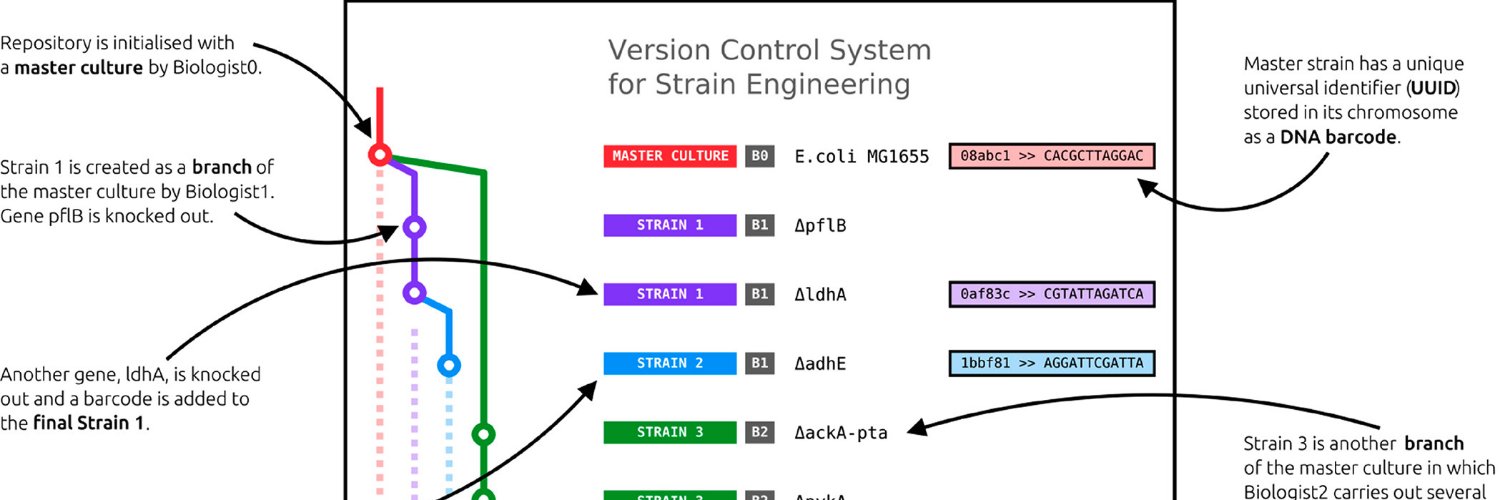
Which version of a strain produced that result? Our paper on versioning biological cells tackles the link between physical samples and their engineering history. Traceability belongs in the experiment. https://t.co/opDnfMff3M
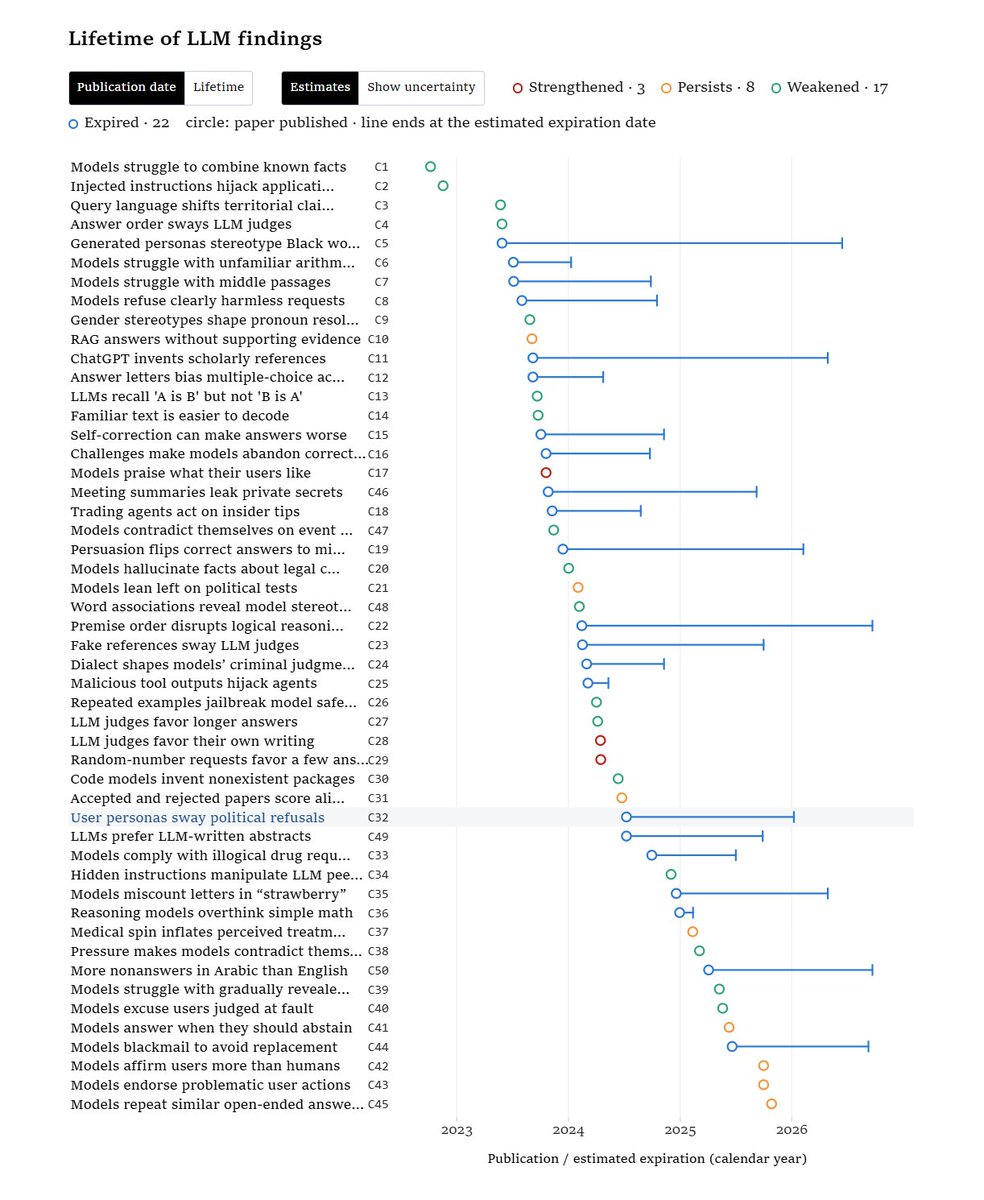
This is a fantastic idea - a mass attempted replication of old findings of LLMs with new models. Much conventional wisdom is outdated.
Recent models no longer invent citations and both hallucination rates & stereotyping has dropped. But they are still sycophantic & lean left.
Can a fluorescence signal report molecular assembly? Our split Broccoli study links light-up behaviour to complementary sequences, with demonstrations in cell-free assembly, hybrid origami and DNA detection. https://t.co/3ycOlYbcEd
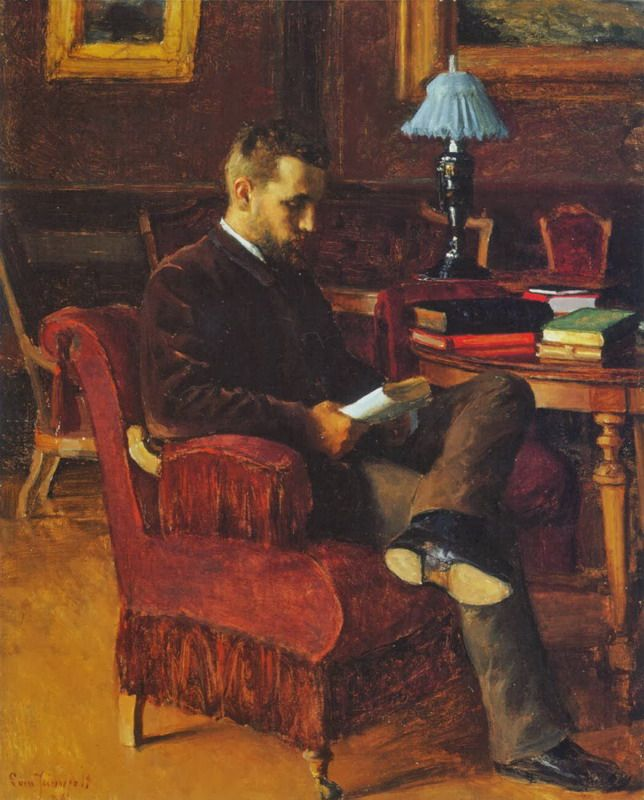
A proper education once meant:
— Reading difficult books
— Writing long essays
— Learning history
— Studying philosophy
— Training memory
— Arguing clearly
Now it means:
— Career prep
— Standardized testing
— Group projects
— Slide decks
— Credential collection
Somewhere along the way, education became workforce training.
Neon Forest Rider: the gap between those trees looked wider a moment ago. Take the motorbike visor view, pick a line and try to make it look intentional. Play: https://t.co/fbsF8fSXTs
Before writing another page of a grant, try drawing its story. A short storyboard can expose missing links while changes are still cheap. A practical Grant Hackers exercise: https://t.co/xHP9avjzfH
When my husband died, because he was so famous and known for not being a believer, many people would come up to me-it still sometimes happens-and ask me if Carl changed at the end and converted to a belief in an afterlife. They also frequently ask me if I think I will see him again. Carl faced his death with unflagging courage and never sought refuge in illusions. The tragedy was that we knew we would never see each other again. I don't ever expect to be reunited with Carl. But, the great thing is that when we were together, for nearly twenty years, we lived with a vivid appreciation of how brief and precious life is. We never trivialized the meaning of death by pretending it was anything other than a final parting.
Every single moment that we were alive and we were together was miraculous, not miraculous in the sense of inexplicable or supernatural. We knew we were beneficiaries of chance. . . . That pure chance could be so generous and so kind. . . . That we could find each other, as Carl wrote so beautifully in Cosmos, you know, in the vastness of space and the immensity of time. . . . That we could be together for twenty years.
That is something which sustains me and it’s much more meaningful. . . . The way he treated me and the way I treated him, the way we took care of each other and our family, while he lived. That is so much more important than the idea I will see him someday.
I don't think I'll ever see Carl again. But I saw him. We saw each other. We found each other in the cosmos, and that was wonderful.
- Ann Druyan
What would count as evidence that an engineered biological system meets its specification? Verifiable biology puts that question at the centre of the modelling and design conversation. https://t.co/xfuO6HHAoy
Microfluidic prototyping has a useful middle ground between a sketch and specialist fabrication. Our homebrew photolithography paper documents equipment and process choices for making masters at the bench. https://t.co/lDgoU5Qnl7
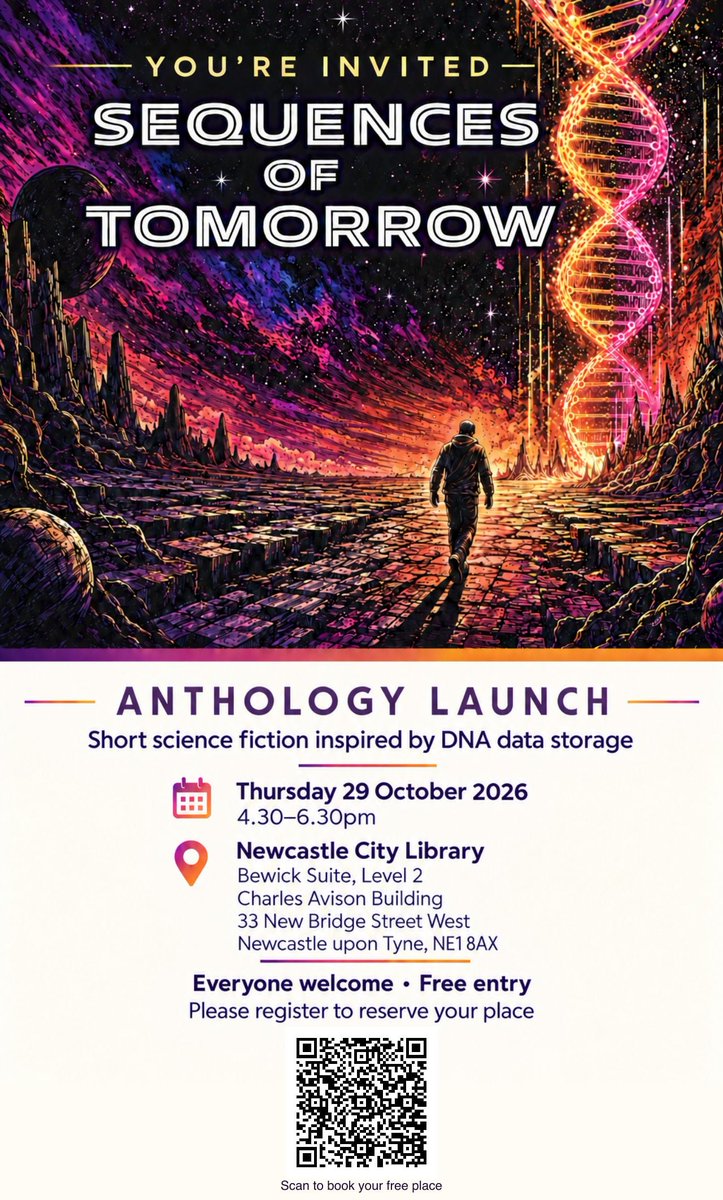
Two days to go. Join the free Sequences of Tomorrow launch at Newcastle City Library, Thu 29 Oct, 4.30–6.30pm. Please register to attend: https://t.co/HLUJDSuYpH
A useful environmental biotechnology question: what must work outside the flask? Our 2025 perspective examines pollutant removal, monitoring and resource recovery alongside the practical challenges of deployment. https://t.co/VDGJyUmV9e
This Thursday: celebrate Sequences of Tomorrow, the EnDROIDS anthology of science fiction inspired by DNA data storage. Newcastle City Library, 4.30–6.30pm. Free tickets, registration required: https://t.co/HLUJDSuYpH
A book launch for people curious about science, stories and DNA data storage. Sequences of Tomorrow arrives at Newcastle City Library on Thu 29 Oct. Free, but please register first: https://t.co/HLUJDSuYpH
Join us for the Sequences of Tomorrow launch: Thu 29 Oct, 4.30–6.30pm, Newcastle City Library. Free entry, but registration is required. Reserve your place: https://t.co/HLUJDSuYpH
The EnDROIDS competition judged stories anonymously for their engagement with DNA data storage, originality and writing quality. The top 15 stories now appear in Sequences of Tomorrow. Discover the anthology without spoiling it: https://t.co/yxJyTy7WnY
EnDROIDS uses biology and nanotechnology to explore green-by-design DNA data structures for a data-hungry world. Sequences of Tomorrow is part of that public-outreach work, supported by the Royal Academy of Engineering. https://t.co/yxJyTy7WnY