Now that it's official--starting Fall 2024, I'll start as an Assistant Professor of Psychology @Occidental! I feel monumentally lucky to land in a unicorn of a department that is collegial, has brilliant students, & actually WANTS an evolutionary psychologist who studies primates
In a few months I'll be the only tenured member of my department. Everyone from the time of my hire will be gone.
But the flipside is that we've gotten to hire @JamieAmemiya, @nicholaspalt, @zachary_silver, & @nm_grebe. I'm so excited to rebuild Oxy Psych with this amazing crew!
A monumental moment in medical history: the first gene therapy for genetic hearing loss is now FDA approved. As a former Regeneron scientist, I feel very proud. I had the opportunity to hear about this programme while it was still in development. It’s one of the few programmes that, every time you came across it, you felt the medical breakthrough in your bones and privileged just to be there while it was happening.
At this moment, it’s important that we look 30 years back when researchers mapped a locus on chromosome 2 to congenital deafness in a Lebanese family (https://t.co/o8ltjHyLNy). They named it DFNB6 (later DFNB9) with no clue about the responsible gene. Three years later, the causal gene came to light: OTOF, encoding a protein called otoferlin (https://t.co/tBGlFPzaQd). Seven years after that, in 2006, pioneering work by Christine Petit revealed that otoferlin is a calcium sensor in the inner hair cell membrane, acting as a molecular trigger that converts sound into electric signals that the brain can read (https://t.co/oxXtifPrTZ). Twenty years fast forward, we now have a successful treatment. Thirty years from discovery to medicine.
OTOF-related deafness is congenital, caused by complete deficiency of otoferlin. In these children, the cochlea is structurally intact, hair cells are there, the mechanics of sound transmission work. It’s just that final step, where hair cells hand off the signal to the auditory nerve through neurotransmitter release, that doesn’t happen. Sound arrives and dies at the synapse. It’s deafness due to a defect in the synapse caused by the absence of a single protein, which is what made this a beautiful, clean target for gene therapy.
The treatment itself is a feat of molecular engineering. OTOF is too large to fit in a single AAV capsid. The team solved this elegantly by delivering the gene in two halves separately, which then get spliced to produce the full functional protein. A single surgical injection into the cochlea, a molecular miracle unfolds. Results from the CHORD trial were striking: of 20 evaluable patients, including children as young as 10 months, 80% showed meaningful hearing improvement, and by 48 weeks, 42% had achieved normal hearing including the ability to hear whispers. Otarmeni is not only the first gene therapy for deafness, it’s also the first dual-AAV therapy to be approved by the FDA.
There are very few things in medicine that come close to giving back a sense like vision, hearing, or touch that a human never had from birth. It’s almost God’s work. A parent witnessing their child who was born deaf hearing their voice for the first time, it’s a joy that no words can describe. Multiply that by the fact that it came from a single injection, a repaired gene, and 30 years of science. We are truly in the golden era of medicine.
Regeneron press release:
https://t.co/6zvdsT2uzI
Below video is from the NEJM publication of CHORD trial (Valayannopoulos et al. NEJM 2025)
https://t.co/YvIqwQ0SDu
@evornithology@evopsychgoogle I recommend this from
@ed_hagen, which is written in an accessible FAQ format. Holds up very well--focused on the issues, not a polemic.
https://t.co/vFTDzpPFQs
Bombshell: Oliver Sacks (a humane man & a fine essayist) made up many of the details in his famous case studies, deluding neuroscientists, psychologists, & general readers for decades. The man who mistook his wife for a hat? The autistic twins who generated multi-digit prime numbers? The institutionalized, paralyzed man who tapped out allusions to Rilke? Made up to embellish the stories. Probably also: the aphasic patients who detected lies better than neurologically intact people, including Ronald Reagan's insincerity. https://t.co/77nQRF8kp6
I know I am a broken record on this but it does bug me that people make big claims like this while evincing zero interest in looking cross-culturally to see if it's actually true. Are women's groups generally the same ethnohistorically? I don't think so. If Bo looked at say women's cults and mixed-sex cults across West Africa and Melanesia and found that they were less variable, less hierarchical and more focused on promoting cohesion and equality than the comparable men's cults that would be an interesting finding and support the claim. But I doubt that's the case, and of course no one who makes claims like this are going to dig into the ethnohistorical data to see if it's correct either, since ironically such claims are more about slotting in a narrative that fits with contemporary cultural conflict than truth-seeking.
1. What's at risk by disrupting NIH? With only a bit of hyperbole: a mechanistic understanding of life itself, & therefore better treatments for cancer, dementias, autoimmune disorders, neurodegenerative diseases, birth defects, aging & more.
Notes on a revolution interrupted 🧵
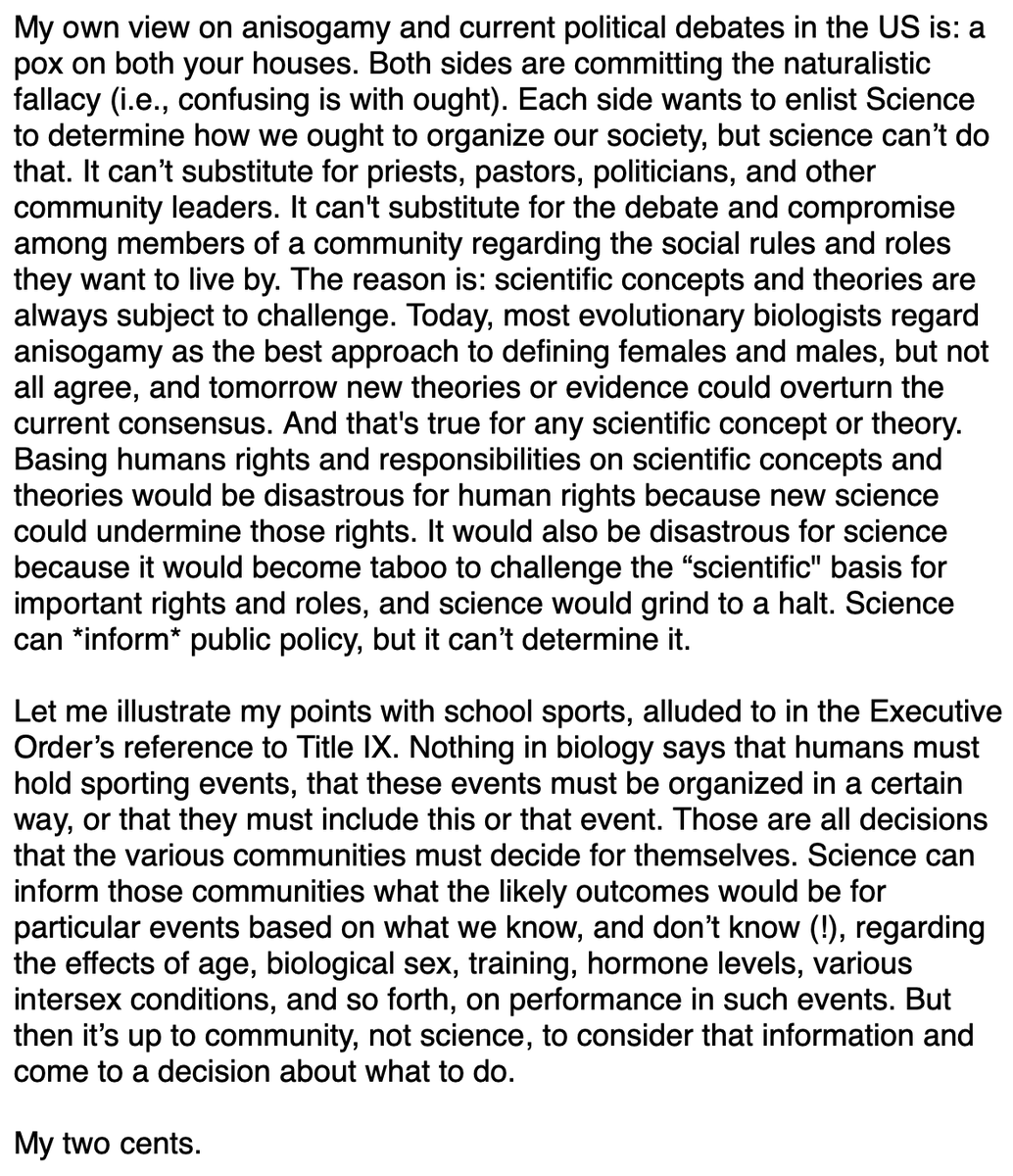
Yep. This essay from Paul Griffiths, and Ed's tweet, are part of the very, very small subset of arguments that think clearly about this issue:
https://t.co/C4LZSD4ieO
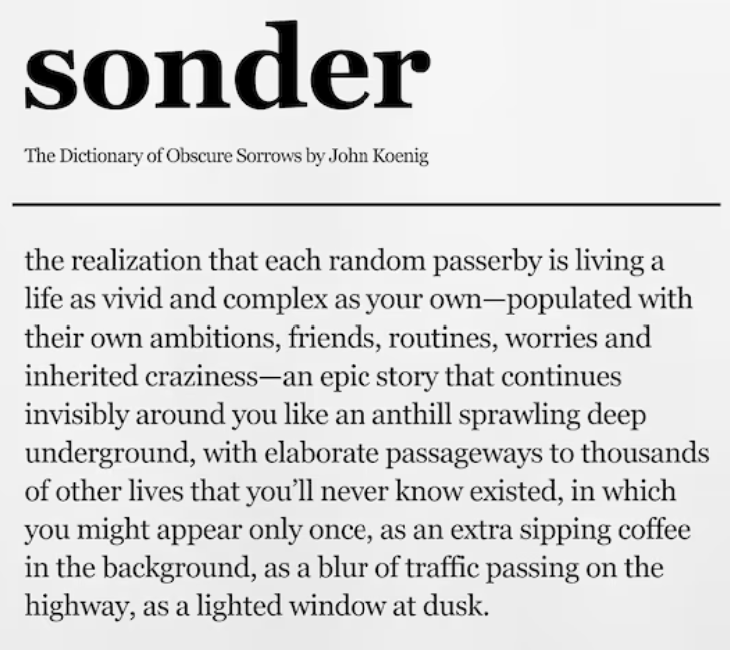
My new favorite word: sonder.
It's the profound awareness that every person you encounter has experienced a lifetime of hopes, fears, loves, and heartaches that you'll never know.
Each moment of sonder is a reminder to appreciate how little we truly grasp about others' lives.
I am recruiting a two-year postdoc. Please apply if you have a background in the evolutionary social sciences and familiarity with research on disgust, pathogen avoidance, sickness behavior, or hygiene! https://t.co/rtzdKeUlv0
The Dept. of Psychology at @Occidental College is searching for two Assistant Professors of Clinical Psychology. If you have a PhD in Psychology and do research in an area with clinical applications, please consider applying! https://t.co/lZ5Brxw29O
The deadline is October 1.
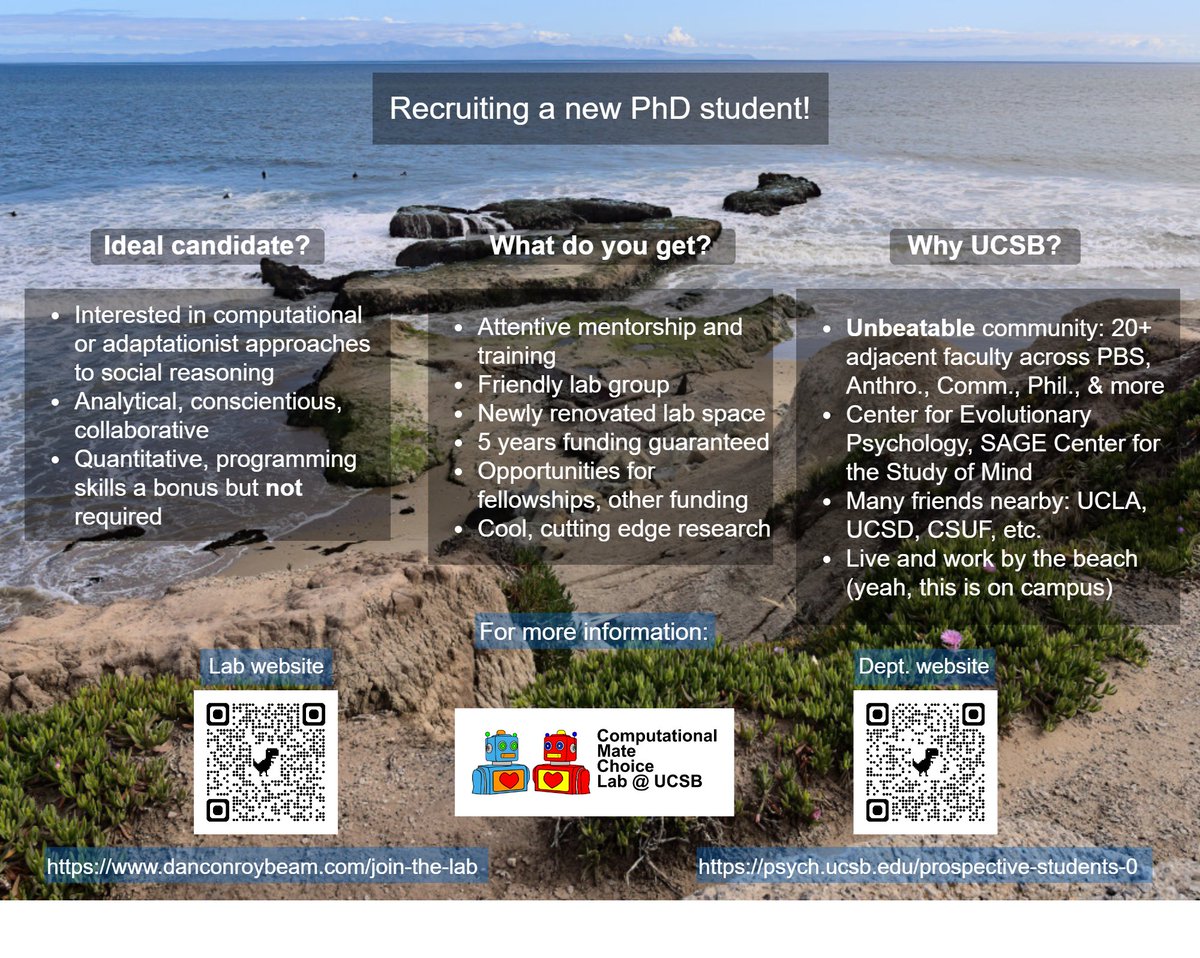
Our lab is recruiting a new PhD student for Fall 2025. Please share!
If you're interested in adaptationist/computational approaches to human social reasoning, esp. mate choice, I'd love to see your application.
More information here: https://t.co/xZE1hzJv1o
Few evolutionary psychologists engage with the modern genomic literature. Brendan Zietsch is an exception and he has a new paper out, criticising explanations for heritable variation based on balancing selection. He's pulling no punches.
@Tangl3dBank I was assuming the censoring was in the criterion, in which case yeah you would set all values below sensitivity to that threshold value & go with Tobit.
Censored predictor is different: https://t.co/nqGJOysDZp