Italy’s Prime Minister Giorgia Meloni “I believe in a Western civilization founded on Greek philosophy, Roman law, and Christian values”
I ABSOLUTELY AGREE
AMEN 🙏
You bastards really think we’re stupid, don’t you?
YOU created the housing crisis by importing millions of third worlders while simultaneously overregulating the market, printing money into oblivion and making new construction impossible with your climate regulations.
It’s all part of your replacement strategy and we are not about to forgive or forget that.
⚡🇪🇺🇳🇱 Eva Vlaardingerbroek to Ursula von der Liar:
“Do you ever think about the people who suffer because of your policies?
The mothers who cry at night because their children were raped or murdered by immigrants you let in?
I bet you don't.” MEGA
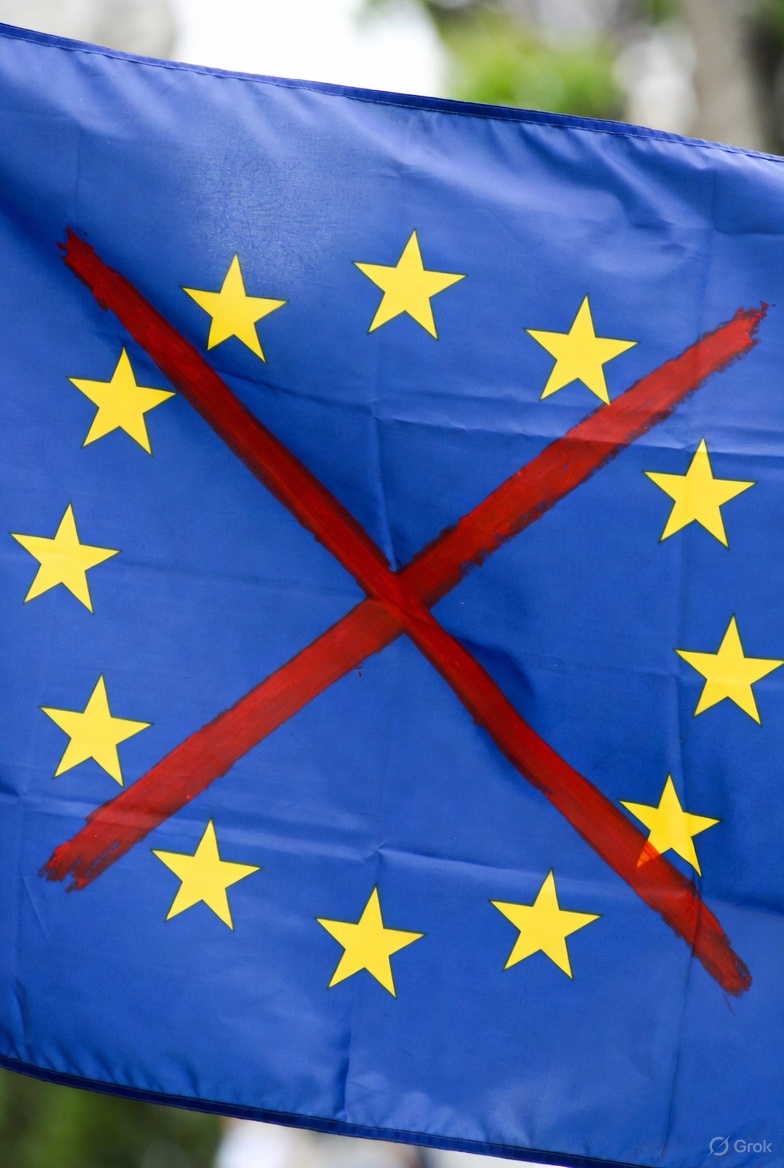
🇪🇺 THE CASE FOR ABOLISHING THE EU: UNELECTED BUREAUCRATS TELLING 450 MILLION PEOPLE HOW TO LIVE
The European Union just fined X $140 million for refusing to censor content.
VP Vance called it "a fine for not engaging in censorship." And he's not wrong.
This is the same organization that nobody in Europe actually voted for making decisions about what hundreds of millions of people can say online. Let that sink in.
Here's the problem with the EU that nobody wants to admit: it's fundamentally undemocratic.
The European Commission, which proposes all EU legislation, is composed entirely of unelected commissioners. Not one.
The European Parliament, which citizens do elect, can't raise taxes, can't sack the Council of Ministers, and historically has had limited power compared to unelected bodies.
So who's actually running Europe? A small cadre of Brussels bureaucrats that citizens have zero direct control over.
The "democratic deficit," as scholars politely call it, isn't a bug. It's a feature.
The system was deliberately designed to be unresponsive to voters.
Now these unelected officials have decided they get to regulate speech across the entire internet through the Digital Services Act.
Platforms like X, Facebook, and YouTube face fines up to 6% of global revenue if they don't remove "illegal content" fast enough.
What's illegal? Whatever any single EU member state decides is illegal, which can include vaguely defined "hate speech" and "disinformation."
A House Judiciary Committee report found the EU uses the DSA to censor "core political speech" including humor and satire.
In a May 2025 workshop, EU regulators labeled a hypothetical post stating "we need to take back our country" as "illegal hate speech" that platforms must remove.
That's a common political statement in any democracy. But in the EU's view, it's forbidden.
Here's where it gets worse: because tech platforms operate globally and can't afford billions in fines, they often just remove content everywhere rather than risk EU penalties.
So Brussels bureaucrats are effectively censoring Americans too.
The lowest common denominator of European speech law becomes the global standard.
More than 100 free speech experts warned the EU that the DSA "constructs a pan-European censorship infrastructure with loosely defined boundaries and the potential to suppress legitimate democratic discourse."
The EU's response? Ignore them completely.
This isn't about protecting democracy, as EU officials claim. It's about control.
When unelected commissioners can fine platforms $140 million for refusing to censor, and nobody who made that decision faced voters, you don't have democracy.
You have technocratic authoritarianism with nicer branding.
The EU also represents a massive sovereignty problem.
Nation states that joined gave up democratic control to an interdependent union where Brussels makes decisions national parliaments used to handle.
Citizens can't vote out the people making the rules.
They're trapped in a system where power concentrates among elites disconnected from ordinary people.
Council of Ministers meetings happen behind closed doors. Minutes aren't public.
Even European Parliament representatives can't attend.
This is the body making binding laws for 450 million people, and citizens can't watch how decisions get made.
The argument for abolishing the EU is simple: unelected bureaucrats shouldn't have the power to regulate speech, override national sovereignty, and make laws that democratically elected governments can't change.
If Europeans want cooperation, they can do it through treaties between sovereign nations where voters actually control their representatives.
The EU promised prosperity and unity.
What it delivered was bureaucratic overreach, speech restrictions, and a system where citizens have less control over their lives than before.
Democratic nations shouldn't tolerate governance by unelected elites, no matter how nicely it's packaged.
Sources: House Judiciary Committee, EUR-Lex, Deseret News, The Daily Signal, LibertyOrg
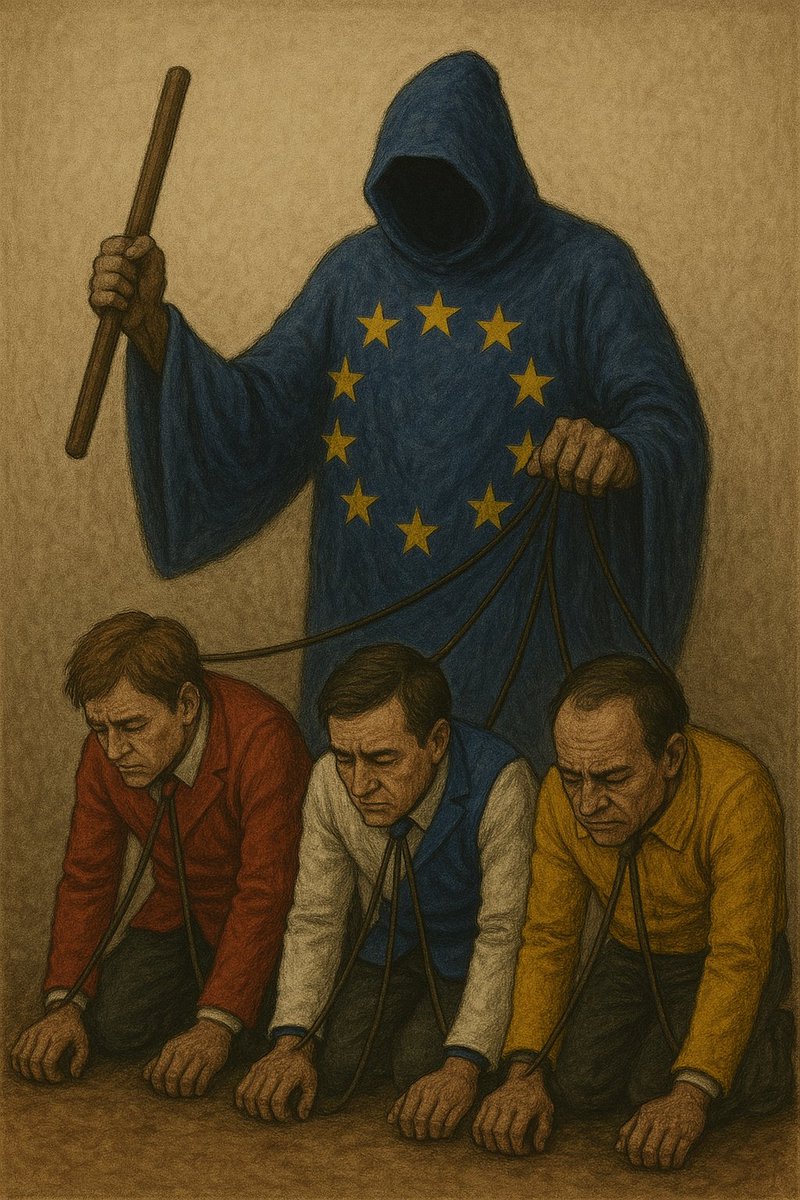
🇪🇺 WELCOME TO THE EU'S BUREAUCRATIC EMPIRE: WHERE DEMOCRACY GOES TO DIE
So, you went to the polls. You voted. Maybe you even knocked doors or argued politics with your uncle over dinner. Congratulations. You exercised your democratic right. Now let’s tell you why it doesn’t matter.
Because in the grand, gleaming halls of Brussels, someone you didn’t elect is making the real decisions. And that’s not a conspiracy - it’s the institutional design.
This is the EU: a glorious experiment in post-democratic governance. The elected leaders of your country? They get to give speeches, sure. But when it comes to setting the rules, managing trade, telling your judges what to rule and your farmers what to grow - there’s a lovely little pyramid, and guess what? You’re not anywhere near the top.
And no, the European Parliament doesn’t save you. It’s the decorative plant of EU democracy. The laws don’t start there. The real power sits with the European Commission - an unelected gang of technocrats who can outregulate, outmaneuver, and outvote your national government on everything from fisheries to fiscal policy. You can’t fire them. You can’t replace them. But don’t worry - they’re very “competent.”
This is how democracy dies: not with tanks, but with treaties. Slowly. Softly. Signed away by prime ministers chasing subsidies and photo-ops. Until one day, your country’s parliament becomes a glorified comment section on rules already written elsewhere.
Try passing a law your voters want that conflicts with EU policy. Try setting an immigration standard your people demanded. Good luck. You’ll be politely reminded that you’re bound by commitments - commitments no voter ever saw on a ballot. And if you push too hard? Out come the infringement procedures. Out come the threats. Out come the lectures about “European values,” as if bureaucracy is a moral compass.
And don’t you dare try to question the EU’s authority. That’s what “populists” do. That’s dangerous. That’s the kind of thinking that leads to... horror of horrors... sovereignty.
Because at the end of the day, this isn’t just about cooperation. This is about control. This is about centralizing power behind a wall of civil servants and calling it progress. It’s about wrapping political decisions in technocratic jargon until nobody remembers who was supposed to be in charge.
You still get to vote, sure. But the question is: for what? National elections start to feel like choosing the flavor of frosting on a cake someone else already baked. With someone else’s recipe. And someone else’s rules about how many eggs you’re allowed to use.
Call it what you want - shared governance, interdependence, modern integration. But don’t pretend it’s democratic. When your vote can’t change the law, when your government can’t defy the script, and when real power belongs to the unelected, then what you’ve got isn’t democracy.
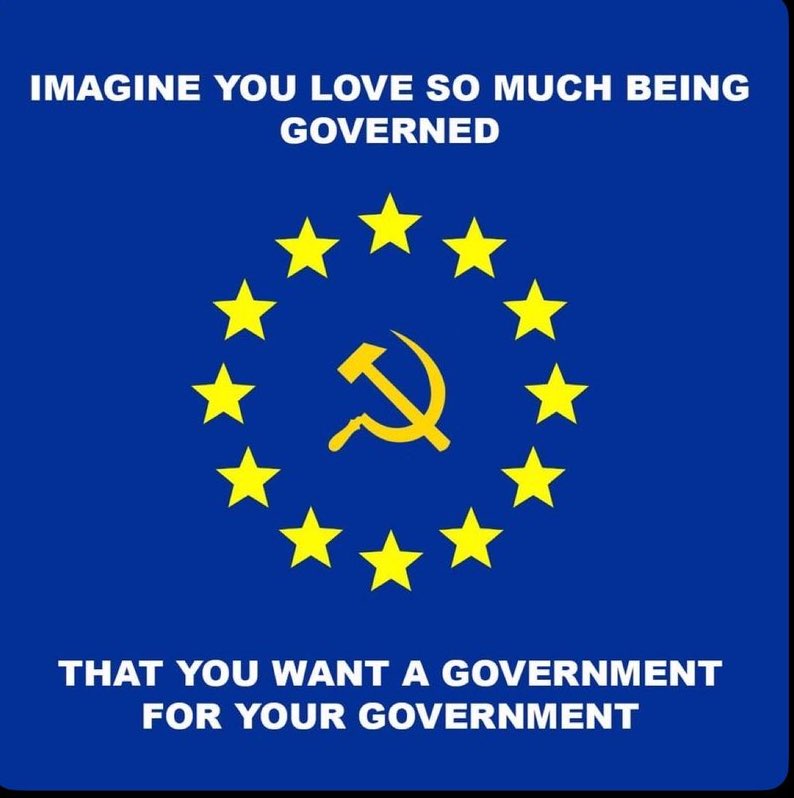
It’s bureaucracy with a flag.
🚨BREAKING: Alice Weidel ERUPTS after the EU fines X €120m:
"They want to silence critical voices by restricting freedom of speech!
That's what it’s all about!" 🇩🇪
🇪🇺 GREEN DREAM, BLACKOUT REALITY: EUROPE’S ENERGY STRATEGY BACKFIRES
Europe promised voters a green energy utopia: cheap solar and wind power, tons of green jobs, and a guilt-free carbon footprint.
20 years later, Germans are paying the highest electricity prices in the developed world and British factories are shutting down because they can't afford to keep the lights on.
Turns out replacing all your energy sources before the new ones actually work is expensive. Who knew?
Europe cut carbon emissions by 30%, which sounds great until you realize they did it by taxing fossil fuels into oblivion while building a renewable system that costs twice as much and doesn't work half the time.
Industrial electricity in the EU now costs double what it does in the U.S. Companies are fleeing.
Ineos just closed 2 German plants. ExxonMobil is threatening to abandon Europe's chemical industry entirely. The CEO of a Texas chemical company said the UK used to be the most competitive location globally. Now his staff there has shrunk from 2,000 to 70 people.
Here's the best part: Britain built a massive offshore wind farm in Scotland that's so powerful it would fry the aging electrical grid if left running.
So British taxpayers pay tens of millions of pounds annually for the wind farm to not produce electricity.
Instead, a gas plant in southern England fires up to meet demand. You literally cannot make this up.
Politicians promised renewable energy would be cheaper than fossil fuels.
Instead, Britain's energy executives just testified to Parliament that electricity bills will rise another 20% by 2030.
One consulting firm estimates the system won't actually save consumers money until 2044. By then, there might not be much industry left to power.
The problem? Europe took an "or" strategy: replace fossil fuels with renewables.
Everyone else took an "and" strategy: add renewables while keeping fossil fuels running.
China, the U.S., India, and Brazil are all building both.
Europe decided to shut down reliable energy sources before the replacements were ready, and now consumers and businesses are stuck paying premium prices for an incomplete system that still depends on imported fossil fuels anyway.
Sunshine and wind are free, sure. But the infrastructure to capture them, store them, and deliver them when you actually need power? That costs a fortune.
And all those costs were hidden behind subsidies and carbon taxes until the bills started arriving.
Industrial giants are now admitting there's no plan for competitive green electricity in central Europe.
The UK used to need 60-70 gigawatts of power capacity. Now it needs 120 gigawatts to meet slightly lower demand because renewable systems are so inefficient.
Politicians sold the green transition as inevitable progress. What they delivered was economic stagnation dressed up as virtue.
Release a half baked staking product
Dump some $LINK
Hold a conference, call it Smart con
Dump some more
Hire Eric Schmidt, play it up
Dump more
Play up SWIFT and bank integrations
Dump some more
Release a cross chain product
Hold it in limited mainnet beta
Dump some more
Open it to the public
Pump it up
Dump it
Shut down that CCIP metrics account
Release a bunch of sophisticated sounding products with acronyms
Dump more
Make a Big Mac meme
Release the Payment Abstraction
Create a token Reserve
Dump some tokens
Now buy them back in the Reserve
Put him in a suit, say play time is over
Dump it all
🇸🇪 Gotland becomes NATO’s Baltic stronghold
The Swedish island of Gotland, once a popular holiday destination, has transformed into a key NATO military base amid growing threats from Russia, Bloomberg reports.
Located in the heart of the Baltic Sea, the island holds a highly strategic position, overseeing air and sea routes between east and west, including those to Kaliningrad and St. Petersburg.
During the Cold War, Gotland hosted thousands of Swedish troops, top-secret signals intelligence stations, and submarine bases. After the Soviet Union’s collapse, it was demilitarized, but in recent years, Russia’s actions have renewed security concerns.
The tourist season on Gotland usually ends in October, when locals prepare for a quiet winter. This year, however, things differ: hundreds of conscripts are now stationed on the island, training with military equipment.
A coal-fired power plant in China's Sichuan province.
China now emits more CO2 than the USA, Europe, Canada, Japan and South Korea combined.
Meanwhile, Europe is regulating their manufacturing out of business to "save the planet". It is all ridiculous. They close their factories in Europe, move to China, then pay for the ocean shipping to transport the finished products to Europe ... that is their solution? How does that make any sense?
All they are doing is transferring their wealth to China and making everyone in Europe and the USA poor. Bring back manufacturing to Europe and the USA. Stop this insanity.
“[With] Secure Mint, the data proves that the reserves are there ... and this stops cases of overminting completely.”
At the Federal Reserve Payments Innovation Conference, @SergeyNazarov explains how Chainlink Proof of Reserve & Secure Mint programmatically prevent overminting ↓
Despite today’s widespread cloud outage impacting much of the public Internet, Chainlink oracle services operated without interruption and remain fully operational.
This reliability includes Data Feeds & Streams securing 70% of the oracle-enabled DeFi economy, CCIP enabling billions in value to move cross-chain, and all other widely-adopted Chainlink oracle services.
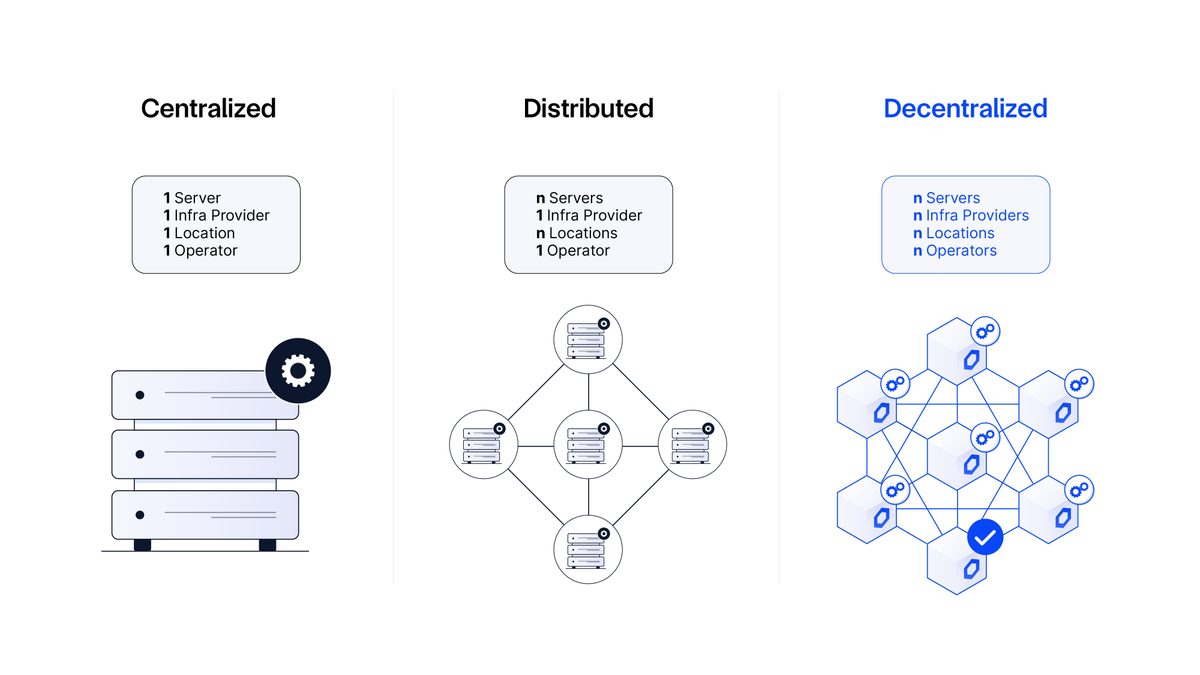
The Chainlink platform was built to withstand single points of failure, delivering the highest levels of security and reliability to ensure mission-critical applications securing real value operate without issue:
• Independent, distributed operations: Professional node operators spread across geographic regions and infra providers to avoid correlated failures.
• Native onchain deployments: Data is delivered directly on each supported chain without reliance on third-party bridges or relayers.
• Decentralized oracle networks (DONs): Decentralized offchain consensus eliminates single points of network-operation failure.
• Direct data sourcing: Operators manage their own authenticated API connections, minimizing centralized data provisioning.
• Chain-specific deployment: Deployments touch only the chains they serve, limiting inter-chain dependencies and correlated risk.
This unparalleled level performance is why Chainlink has become the industry standard, securing approximately $100B in DeFi markets and enabling $26+ trillion in transaction value.
Just use Chainlink.
The construction industry is deteriorating rapidly:
US job openings in construction dropped -115,000 in August, to 188,000, the lowest since May 2017.
This marks the second-largest monthly decline in data going back to January 2001.
Since December 2023, the number of available vacancies in construction has plummeted -265,000, or -58.5%.
As a result, the construction job openings rate fell to 2.2%, the lowest since November 2015.
Such weakness this century has only been seen during 2008 and 2001.
The construction industry needs help.
• Swift: Processes a volume of transactions equivalent to the world's Gross Domestic Product (GDP) approximately every three days.
• DTCC: Clears up to $3.7 quadrillion in transactions per year as the primary central clearing and settlement infrastructure for U.S. securities.
• Euroclear: Custodied up to €40.7 trillion in assets in 2024 as one of the dominant settlement/custody infrastructures in Europe.
• UBS: Manages over $6 trillion in invested assets, making it one of the world’s largest wealth managers in the global capital markets.
• DBS Bank: Oversees more than S$827 billion in assets, serving as Southeast Asia’s largest bank and a pioneer in digital banking innovation.
• BNP Paribas Securities Services: Safeguards over €12 trillion in assets under custody, ranking among the top global custodians for institutional clients.
• ANZ: Has over A$1 trillion in assets under management, serving as one of the largest banks driving trade and financial flows across Asia-Pacific.
• Wellington Management: Manages over $1.2 trillion in assets for institutional investors, including sovereign wealth funds, pension plans, and endowments.
• Schroders: Oversees more than £750 billion in assets as a global asset manager with a 200+ year history.
• Zürcher Kantonalbank (ZKB): Has over CHF 200 billion in assets under management as Switzerland’s largest cantonal bank and a key player in domestic capital markets.
• Vontobel: Manages CHF 220 billion+ in client assets globally, specializing in wealth management, active asset management, and investment solutions
• CTBC Bank: Manages assets of over NT$6 trillion, serving as Taiwan’s largest privately owned bank.
• Causeway Capital Management: Manages over $62 billion in global and international equity strategies, serving institutional clients across North America, Europe, and Asia.
• Sygnum Bank: Has over CHF 4.5billion in assets under administration as one of the world’s first regulated digital asset banks.
• AMINA Bank: Grew its assets under management to $4.2 billion in 2024 as a fully licensed Swiss crypto bank managing regulated custody and trading services for institutional and private clients with growing digital asset volumes.
• Zand Bank: Is recognized as the first fully licensed all-digital bank in the United Arab Emirates (UAE), offering institutional-grade digital asset custody services under its banking license.
• SIX Group: Operates Switzerland’s primary stock exchange and financial market infrastructure, clearing and settling securities transactions worth trillions annually.
• TMX Group: Runs Canada’s leading exchanges, including the Toronto Stock Exchange, with a combined listed market capitalization exceeding CAD $5 trillion.
• CEVALDOM: Provides settlement and custody for billions in securities transactions each year as the Dominican Republic’s central securities depository.
• Grupo BMV: Operates Mexico’s main securities exchange and central depository, overseeing trading volumes in the trillions of pesos annually.
• ADDX: Tokenizes private market assets, enabling fractionalized investment access to products traditionally limited to large institutions, with billions in tokenized offerings issued.
• Orbix Technology: Develops blockchain-based market infrastructure solutions, advancing tokenization and digital settlement for financial institutions.
• Marketnode: Is A joint venture between SGX and Temasek that launched Singapore’s digital bond issuance platform, facilitating billions in tokenized fixed income products.
• Wamid: Operates as a Tadawul Group subsidiary leading digital infrastructure in Saudi Arabia’s capital markets.