PostDoc at @uclcs; Passionate about communication networks, and using ML responsibly;Prev: @TechnionLive, @CseHuji, @vmwareresearch, @sonysemiconil (she/her)
Reviews can seem very detailed but in practice there's little information there. The summary is often full of fluff so it's really just hard to understand what the paper is about. They often provide long lists of issues, and it's very hard to understand if the concerns are major or minor. They often make non realistic or nonsensical suggestions.
All this without mentioning mistakes and hallucinations, which are often conveyed with such confidence that can bias the whole evaluation. The final scores are often borderline so no information there as well.
As author, it creates lots of work which is either stupid or not feasible. As AC it's a nightmare, I want to get a concrete evaluation to work with and I get this noisy not informative text. In rebuttals things become a joke.. the person who generated the review has no idea how to judge what's going on and so typically you get a short statement like "I read the response and decided to keep my score".
@zroob2@AyalaGlick@Wiser_il אמנם לא מכירה אותך אבל בבקשה בבקשה תפני! וייזר מדהימות, ממש שינו לי את חווית הפוסטדוק.
וזה פיצ'ר שרק מחזק את העובדה שאת צריכה לפנות! (ואם את פוסטדוקית תצטרפי לשיחות קפה האזורית)
The NINeS CFP is now out https://t.co/OXyxdYiykx. The submission deadline is August 6 (AoE), and we really hope to see your must fun and exciting ideas!
VLA is 95% certain about current action. Will it 95% succeed in the task?
Obviously, not necessarily. But if you’re clever, you can *calibrate* action prob. to task success.
Our #ICML2026 paper formulates this + SOTA algorithms based on new connection to RL temporal differences
There's a way out — but it requires reframing the problem.
If hallucinations == factual errors, then the only way to eliminate hallucinations is to abstain → impractical b/c of the utility tax.
But if instead hallucinations = confident errors (factual errors conveyed with high linguistic certainty) → a new path emerges: expressing uncertainty.
An incorrect answer with appropriate uncertainty expression is not ideal. But it is NOT a hallucination.
רברסים 2026 מתניע ופתוח לספונסרים 🙌
זהו כנס קהילתי וללא מטרות רווח, וההזדמנות שלכם לקדם את הברנד בקרב אנשי התוכנה הטובים בישראל.
רבקה שלנו היא אשת הקשר לכל דבר ספונסורים [email protected]
מוזמנים להתרשם מכל כנסי העבר פה
https://t.co/6abJpbkzyb
I’m attending #ICLR2026 in Rio this week to present LPWM! Friday April 24 Poster Session 3 10:30, Oral Session 4B 3:15p. Happy to chat about self-sup object-centric learning and world models. I’ll be on the job market soon and looking for exciting opportunities!
#ICLR@iclr_conf
wrote a guide on getting compute grants as a student, something I wish I did more at the beginning of my PhD. It's honestly one of the highest ROI things you can do as a student (we've gotten 100k+ gpu hrs for roughly 2 weeks of work writing).
https://t.co/U15nwau88a
I'm hiring! 📢 Come work with me on how different social pressures shape the evolution of new communication systems in the lab! Deadline for application is May 18th! https://t.co/TjbhY8ey8k
📢 The 3rd SIGCOMM Workshop on Networks for AI Computing (NAIC '26) invites submissions on emerging topics at the intersection of networking and AI systems. https://t.co/q9t7e2cRyw. Submission deadline is May 4, 2026 AOE.
🥁NSDI Mentorship Program🪘If you are attending NSDI '26 in person, you are strongly encouraged to sign up for the Mentorship Program by April 21, either as a mentor or mentee: https://t.co/SnFnOHx66u
@GalantiTomer@OpenAI I noticed it too! Though in my case it usually either answers an old prompt repeatedly, or mashes several prompts (new + olds) together. Maybe it's in overachiever mode 😅
NINeS 2026 is tomorrow! We have just posted (at https://t.co/XI9C2tPjq9) details on how to join the livestream, which starts at 1am UTC, and will let you experience what is going on at several pods and also hear our keynotes. We hope you join us.
1/2
Exploring reliable & reproducible ML/LLM systems with seed support at UCL, and how infrastructure-induced non-determinism affects medical & health ML.
If you work on ML in healthcare (or know good examples), pointers welcome 👋
#AIinHealthcare#TrustworthyAI
February 10th, and thus the inaugural edition of NINeS is just around the corner. You can participate from anywhere in the world, at times that are convenient to you. See https://t.co/lMOPLJZSRm for information on how you can participate. We hope to see you on Feb 10th!
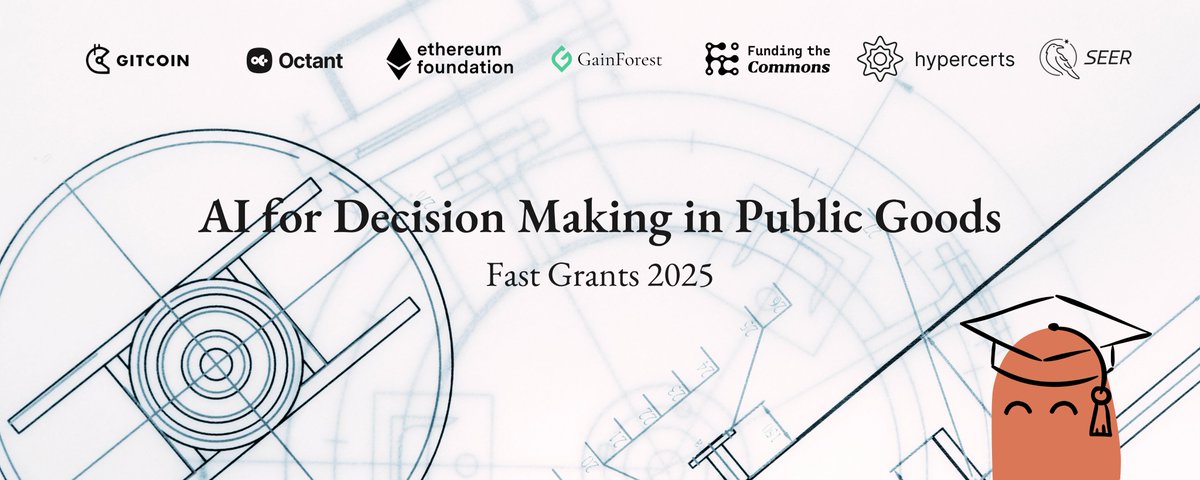
I’m on the grant committee for AI for Public Goods Fast Grants, an initiative that will distribute $150k in funds to advance critical research at the intersection of AI + public goods.
Funding: $10k for 1k-word proposals
Applications due February 28th: https://t.co/uFbbGjrfZY
Quick clarification: submitting the abstract of an ICLR 2026 submission to ICML 2026's upcoming abstract deadline does not violate double-blind policies, as long as you withdraw your ICML submission in the event that your ICLR submission is accepted.
Chhavi’s @chhaviyadav_ talk is today!
Can explanations be trusted when incentives are adversarial?
Talk explores using Zero-Knowledge Proofs to make explainability methods like LIME operational even when parties may want to manipulate explanations
@shahaf_bassan@tverven