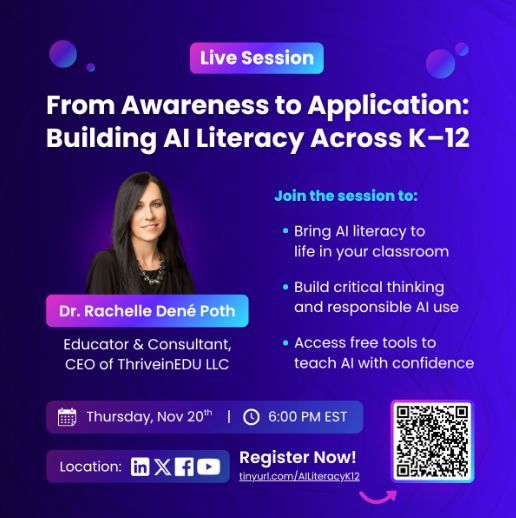
Looking forward to moderating this discussion on November 20th. Sign up at https://t.co/XbNxzKDxFS or scan the QR to join us LIVE or get the recording. Be part of the conversation around #AI#Literacy in #education#edtech#edchat@LearningGenie
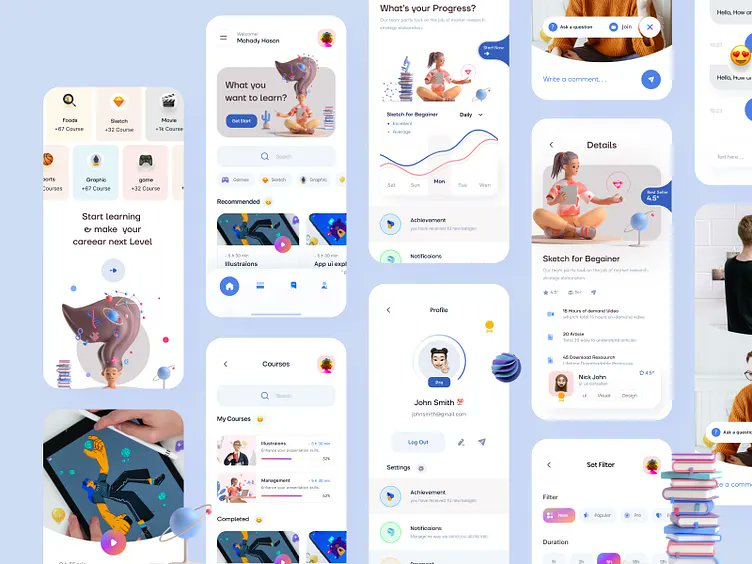
Been exploring how learning apps can actually keep people motivated.
This concept focuses on clarity, progress, and making learning feel rewarding — not overwhelming.
Would love your thoughts 👇
🔗 https://t.co/3quJzV513C
#UIDesign#UXDesign#EdTech
IPO KYC | PhysicsWallah's Rs 3,480 cr IPO opens on Nov 11
My father sold the house as we couldn't afford coaching fees - says PhysicsWallah co-founder Alakh Pandey
Co-Founders of the Edtech talk about their journey from YouTube to IPO
@reematendulkar#IPO#Listing #PhysicsWallah
Discover Musical Instruments from Around the World 🎶🌍
Explore 3D models to see how design, materials & craftsmanship shape sound & reveal the cultural & historical significance of music.
Now available in the ClassVR portal.
#Music#EdTech
#EDTECH DAY at LAVNCH WEEK 12 explored how audio innovation is shaping the future of learning and collaboration. From classrooms to conference rooms, today’s tech is redefining real-time connection and communication: https://t.co/s1LrQmn5c7
Sponsor: @USAudioTechnica#AVtweeps
🔒 Privacy > New apps.
At EdTech Week NYC, the message was clear schools need safer, smarter tech.
Privacy isn’t a checkbox anymore, it’s part of the design.
#TechInASec#EdTech#DataPrivacy
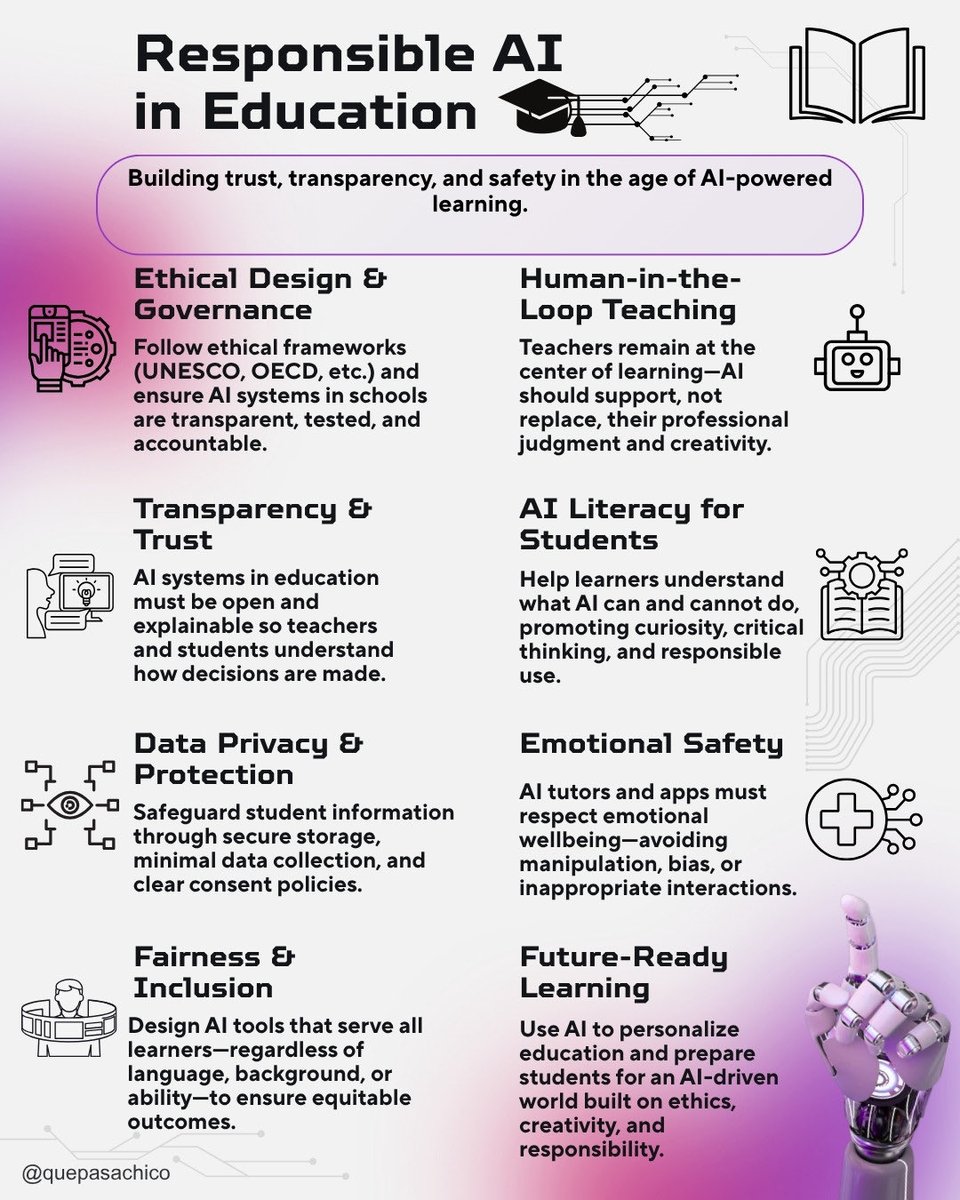
Responsible #AI in #education starts with design, data protection, and human oversight.
These 8 principles outline how to build AI-powered learning with ethics at its core.
#AISafety#AIEthics#ResponsibleAI#EdTech
Almost every VC I talk to says the same thing about Edtech: “We like what we are hearing, but the last 15 years of Edtech couldn’t do much, so we aren’t too sure about the Education domain.”
My frustration grew, and I wrote a 1-min read … Hope it’s short/quick enough ...
📚 Here is the story of 15 years of EdTech in < 1 min.
EdTechs have failed to deliver on their promise.
Why have EdTechs failed to deliver on their promise?
Because they got their strategy wrong. They focused on the wrong customer—i.e., the students—when they should have focused on the Teachers.
Teachers are the anchors in the learning process. They inspire, motivate, and engage students to learn.
Why did EdTech get its strategy wrong?
Because targeting the Teachers (root cause) wasn’t a lucrative enough opportunity for Moonshot-chasing investors.
Why was focusing on Teachers not a lucrative enough opportunity?
Because globally, there are 1.7 billion students and a meagre 76 Million Teachers. It made all the sense in the world to build for students and not for the Teachers.
So what did the EdTech founders do?
They force-fit their investment memos' market size backwards, NOT root-cause backwards, which would have left a bigger opportunity on the table. Moonshot-chasing investors wouldn’t have liked it one bit.
What happened next?
COVID really helped the case, but then, as normalcy prevailed, EdTechs weren’t the panacea anymore, resulting in a bloodbath. Seeing the sharpest decline in venture funding across any industry ever.
Where are we now?
Thanks to the AI wave, at least investors are willing to listen, but the Education industry is generally seen as a very high-risk portfolio item, often ignored at first glance.
Why is solving education problems important?
Because the world loses $7-10 trillion in GDP annually to youth skill gaps.
Facing interoperability challenges? @CoSN has two NEW resources to help you identify negative impact of interoperability on school district budgets https://t.co/RP8VFMNx3v @keithkrueger@s_bearden @paulamaylahn #edtech#interoperability