BREAKING:
🇪🇺 EU passes chat control law opening doors for governments to spy on personal conversations 🚨
👉 Here are apps to opt-out:
•Signal (@signalapp) — Default E2EE, audited protocol, public opposition to Chat Control.
•SimpleX Chat (@SimpleXChat) — No user IDs, decentralized relays, strong anti-scanning stance.
•Keet (@keet_io) — True P2P with no central servers or data collection.
•Venice AI (@AskVenice) — Private on-device AI chats with anonymized/private inference.
•Briar — Fully decentralized P2P mesh (Bluetooth/Tor/Wi-Fi), offline-capable, no servers.
•Session (@session_app) — Decentralized network + onion routing, no phone number, metadata-resistant E2EE.
•Element (Matrix) — Federated protocol with E2EE; self-host for full control.
•Threema (@ThreemaApp) — E2EE by default, explicit vow never to implement spying features.
•Bitchat — Bluetooth mesh P2P (offline-first, no internet/servers/phone numbers); ad-hoc decentralized networks.
•White Noise (@whitenoisechat) — Nostr decentralized relays + MLS E2EE; identity-free.
•Radar Chat (@RadarChat) — E2EE messaging (Signal Protocol) + private self-custodial Lightning payments.
•KakaoTalk (@kakaotalk_japan) — Centralized with optional secret E2EE chats (weaker fit overall).
•Jami — Decentralized P2P (no central servers), E2EE voice/video/text.
•Delta Chat — Email-based with strong E2EE; leverages existing decentralized email infrastructure.
•Cwtch — Anonymous, metadata-resistant group messaging on decentralized infrastructure.
•Molly — Hardened, privacy-focused fork of Signal (Android) with extra protections.
These options prioritize architectures that make mass surveillance or forced client-side scanning technically difficult or impossible. The most resistant tend to be the fully decentralized/P2P ones (Bitchat, Briar, Keet, SimpleX, Session, Jami, etc.).
Missing an app or privacy focused tool? Tag below👇
🏛️ @BULLBITCOIN_ porta DAC8 davanti al giudice: è il primo ricorso contro la sorveglianza fiscale europea sulle criptovalute.
Léonod SARL e Satoshi Portal Inc., le società francese e canadese che operano con il marchio Bull Bitcoin, hanno impugnato davanti al Conseil d'État il decreto con cui la Francia ha recepito la direttiva europea DAC8, che impone la raccolta e la trasmissione automatica alle amministrazioni fiscali dei 27 Stati membri di identità, codici fiscali, saldi e transazioni di tutti i detentori di criptovalute. Il ricorso introduttivo è stato depositato il 24 febbraio 2026, la memoria integrativa sul merito il 1° maggio. Atlas21 ha potuto visionare la documentazione legale del caso.
La posta in gioco va ben oltre le due società ricorrenti: il decreto impugnato è un atto regolamentare di portata generale, e un eventuale annullamento varrebbe per tutti gli operatori attivi in Francia. Se la Corte di giustizia dell'UE accogliesse gli argomenti del ricorso, la base giuridica dell'intera architettura di schedatura dei detentori di criptovalute verrebbe meno in tutti e 27 gli Stati membri.
https://t.co/HW6RPRiCpp
Just published https://t.co/Kw6iGwkMxv 🚀 A simple seed generator to turn your passphrase into 12-word.
Memorize your custom passphrase and derive your keys anywhere. Runs entirely offline in your browser.
Source code drops on GitHub soon! #OpenSource#Bitcoin#BrainWallet
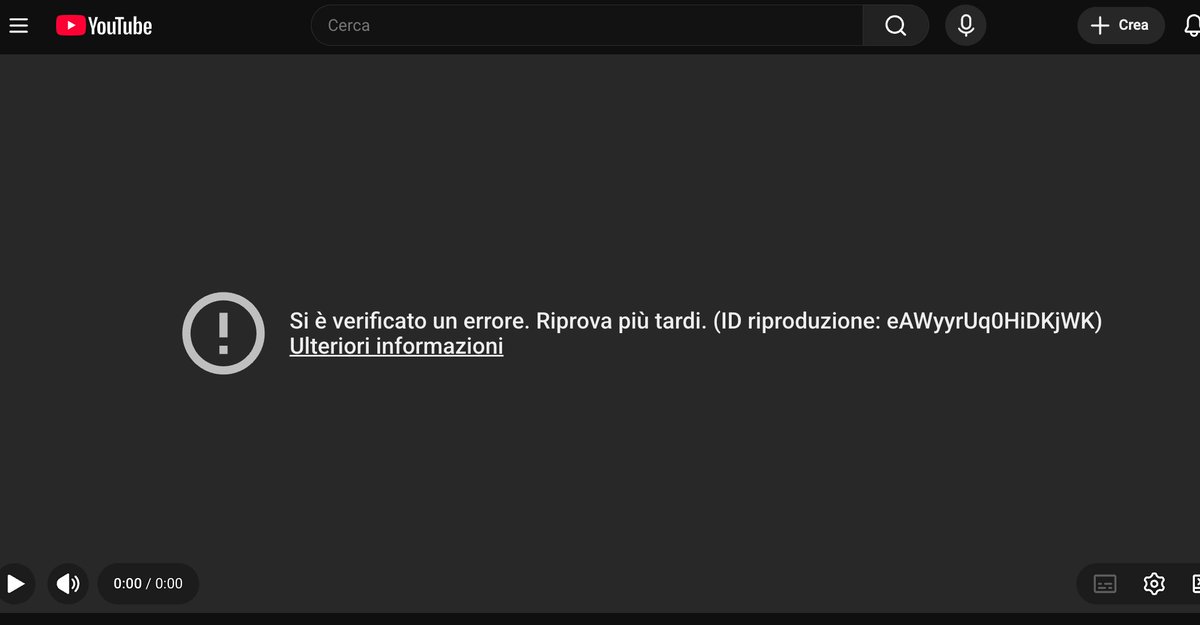
We’re aware of a new YouTube issue occurring today and have released a fix for it: https://t.co/bGYBG3nxAi
To get the fix as soon as possible, manually update the browser’s ad blocker. Here’s how to do it on each platform 👇
Desktop: Go to Settings > Shields > Content filtering and click the “Update lists” button
iOS: Go to Settings > Shields & Privacy > Content Filtering and click the “Update Lists” button
Android: Go to Settings > Brave Shields & privacy > Content filtering and click the “UPDATE” button
After that, reload your YT tabs.
If you go to Brave://components on Android and desktop after updating, you should now see “Brave Default Adblock Filters” at Version 1.0.1989 or later and “Experimental ad blocker” at Version 1.0.84 or later.
Let me know if you’re still having issues!
Al @BitcareForum solo @federico_rivi di @Atlas21_ita riesce a spiegare la noia delle istituzioni europee e renderla interessante. Perché le #CBDC sono oggettivamente inquietanti.
A regular American developer bought $1,400 worth and stacked seven Mac Minis on top of each other and connected them with metal cables.
Neighbors thought he was building a mining server. His wife thought he'd lost his mind. He just didn't want to pay $15,000 a month for a dev team.
On the screen - a diagram. Seven Mac Minis connected via Ethernet working as one machine. EXO framework distributes tasks between them automatically. 11.44 TFLOPS each. Together - more than most cloud servers that companies pay thousands for every month.
He paid $1,400 for the hardware once.
38 agents from GitHub, 156 skills. A system that learns from session to session and in two weeks writes code just like he does - but seven times faster because it runs on seven machines in parallel.
A task that took a junior dev 10-12 hours - the tower closes in 20 minutes.
One founder with this setup ships a product like a team of eight people.
For $20 a month instead of $120,000 a year.
This 7 Mac Mini setup helped him win the Anthropic hackathon and make $26,000 without a team.
Un estudiante de 21 años de la Universidad de Shanghái Jiao Tong mostró el robot de trading automático que creó con Claude Code.
Claude se encargó de la mayor parte del trabajo pesado.
Este robot monitorea los diferenciales de precios en más de 50 mercados de Polymarket, mientras sincroniza datos de Binance con OpenClaw para analizar las tendencias de ultra corto plazo de BTC.
Esa es la fuente de las ganancias exorbitantes.
Solo le tomó 2 días completar el script, durante los cuales solo usó un iPad como pantalla secundaria.
Arquitectura del sistema:
Claude Code se encarga de generar estrategias y vigilar de cerca las fallas en la fijación de precios en Polymarket.
OpenClaw se encarga de ejecutar las operaciones y sincronizar con Binance para el análisis de BTC.
0 intervención manual, ejecución completamente automática.
Instantánea de rendimiento:
De la noche a la mañana: abrió 3 posiciones, cerró automáticamente 2.
Caso de trading: short en BTC a nivel de 15 minutos, entrada a 0.31, salida a 0.79.
Ganancia neta en una noche: +$1,940
Lógica de la estrategia:
Especializado en cosechar vulnerabilidades de fallas en la fijación de precios entre mercados.
Ejecución de alta frecuencia, cada operación solo toma una ventaja mínima en la relación riesgo-recompensa.
Puro volumen de trading para hacer rodar las ganancias.
Referencia de comparación:
planktonXD
Volumen anual de trading aprox. 61,000 operaciones
Ganancias aprox. 106,000 dólares
Estrategia: arbitraje
Proceso de evolución:
Empezó con unos cientos de dólares
Al principio solo jugaba con copias simples sin cerebro
Luego directamente creó un sistema personalizado de monitoreo y ejecución
Gestión de riesgos:
Protección automática de apagado en caso de anomalías de liquidez
Liquidación de emergencia requiere confirmación manual
Caso de pérdida: en una caída repentina, retroceso aprox. 3%
Estado actual de operación:
Sistema completamente autónomo y autoalojado
Monitoreo puro por notificaciones push
Casi sin necesidad de intervención humana
Capital inicial: aprox. 1,400 dólares