Fixed income markets shifted fast in Q1 2026.
What started as a supportive environment quickly reversed as inflation fears and geopolitical risk crept back in.
How did the Northstar BCI Income Fund navigate it? Watch the full 9-min update with Sebastian Holzbach and Refiloe Modise.
https://t.co/MDumkyXRRN
#FixedIncome #BondMarkets #InvestmentStrategy
What actually drove S&P 500 returns, and what does it mean for the next decade?
Mark Seymour of @NorthstarAM unpacks the real drivers of equity returns across different eras. The conclusion: strong economies don't always mean strong market returns.
Worth reading if you're interested in long-term return assumptions.
https://t.co/AWprd1LcZW
#SP500 #Investing #AssetAllocation #LongTermReturns
Q1 2026 was a sharp reminder: markets can shift fast.
An oil price shock, geopolitical escalation, and a reversal in rate expectations made it one of the toughest quarters for quality-oriented investors in recent memory.
Our Head of Research, Donovan Stefan, unpacks it all with analyst Marang Morudu in the Northstar Global Flexible Fund Q1 update.
What's covered:
0:35 | Fund performance and key return drivers 2:43 | Themes shaping the team's forward view 5:02 | How the fund is positioned for opportunity 6:48 | Key takeaways for long-term investors
If you want to see how a disciplined, quality-at-a-reasonable-price approach holds up under pressure, this is worth 7 minutes of your time.
https://t.co/F3H4Aw2zvm
#GlobalFlexibleFund #Investing #WealthManagement #Q12026
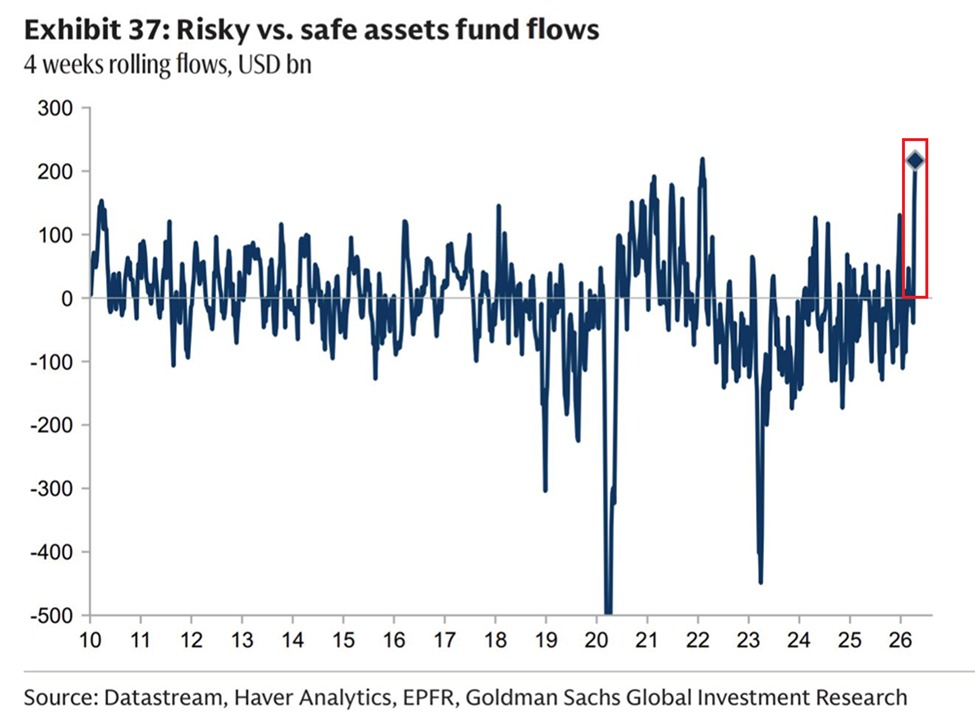
Risk appetite among investors is skyrocketing:
Risky asset fund inflows have exceeded safe asset fund inflows by a record $220 billion over the last 4 weeks.
Risky assets represent equities and corporate bonds, among others, while safe assets include money markets and Treasury bonds.
This stands in sharp contrast to 2025, when safe asset funds drew more inflows than risky funds for most of the year.
The recent surge even surpasses the highs of ~$200 billion seen during the 2021 meme stock frenzy.
To put this into perspective, during the 2020 pandemic, safe asset fund inflows exceeded risky fund inflows by more than $500 billion.
Investors are taking on more risk than ever.
The first quarter of 2026 reminded investors how quickly market conditions can shift. Rising geopolitical tensions, higher energy prices, and fading rate-cut expectations all contributed to a more volatile environment, both globally and locally. In reviewing the Northstar BCI Equity Fund over the quarter, Marco Barbieri chatted with Marang Morudu unpacking the drivers of returns for Northstar's SA Equity Fund, as well as how the fund navigated the difficulties and where the opportunities may lie. To watch the full video and discussion, click here: https://t.co/jIJk2c9Ukz
The 2026 Budget Speech came and went. Most people missed it entirely. That’s a mistake.
Buried in the fine print were nine changes that could save you thousands of rands a year if you actually know about them and use them.
Retirement contribution cap: R350,000 to R430,000. First increase in a decade. If you’re a high earner at 45% marginal, that’s up to R36,000 a year in tax savings you weren’t getting before.
Tax free savings accounts: R36,000 to R46,000 per year. The biggest annual jump since TFSAs were introduced. All growth inside is completely exempt from income tax, CGT, and dividends tax. Most South Africans still don’t have one.
CGT annual exclusion: R40,000 to R50,000. First increase since 2012. Primary residence exclusion up from R2 million to R3 million. That’s up to R180,000 in tax savings if you’re selling your home.
Offshore discretionary allowance: R1 million to R2 million. No tax clearance needed. First change since 2011.
And Treasury scrapped a planned R20 billion tax increase package that everyone expected. None of this was headline news. All of it matters.
I broke down every change, what it means in real terms, and exactly how to use it. Full article below.
https://t.co/pozFN6tDFy
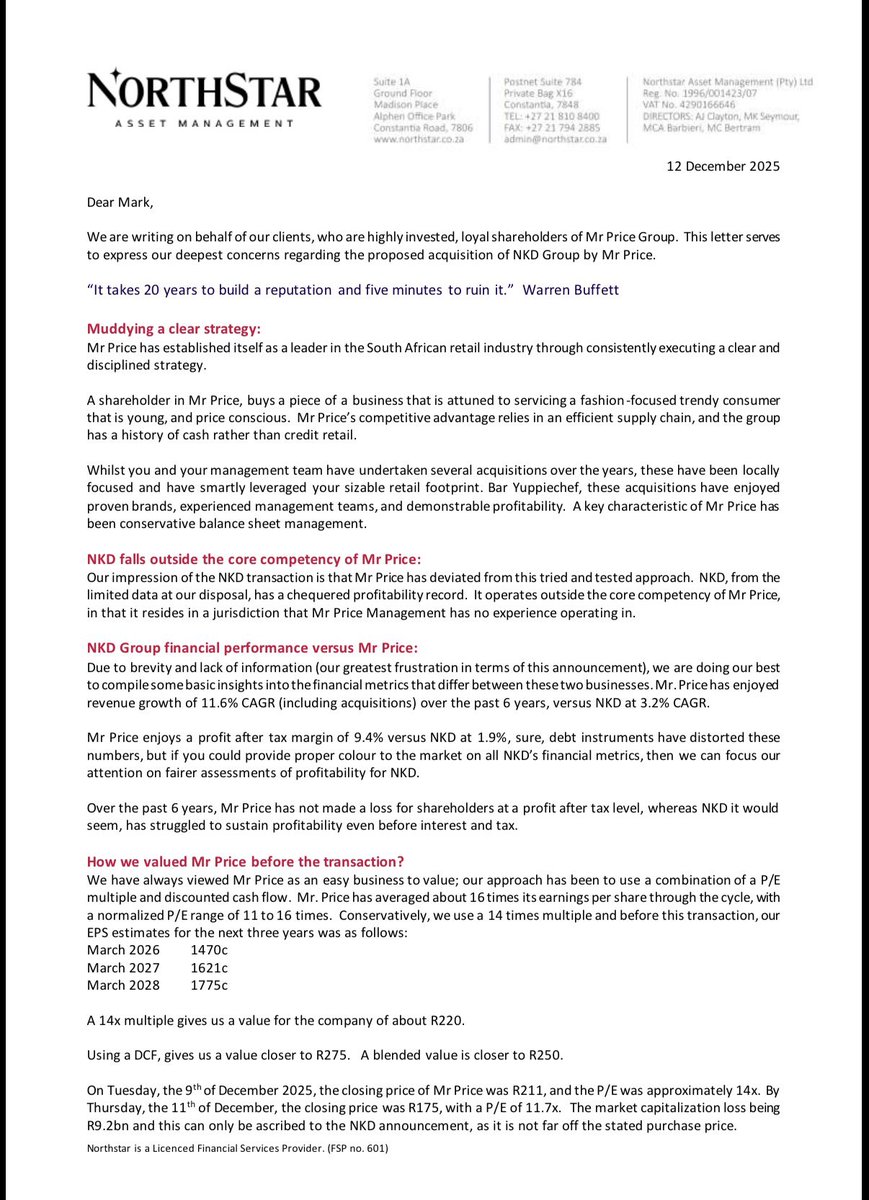
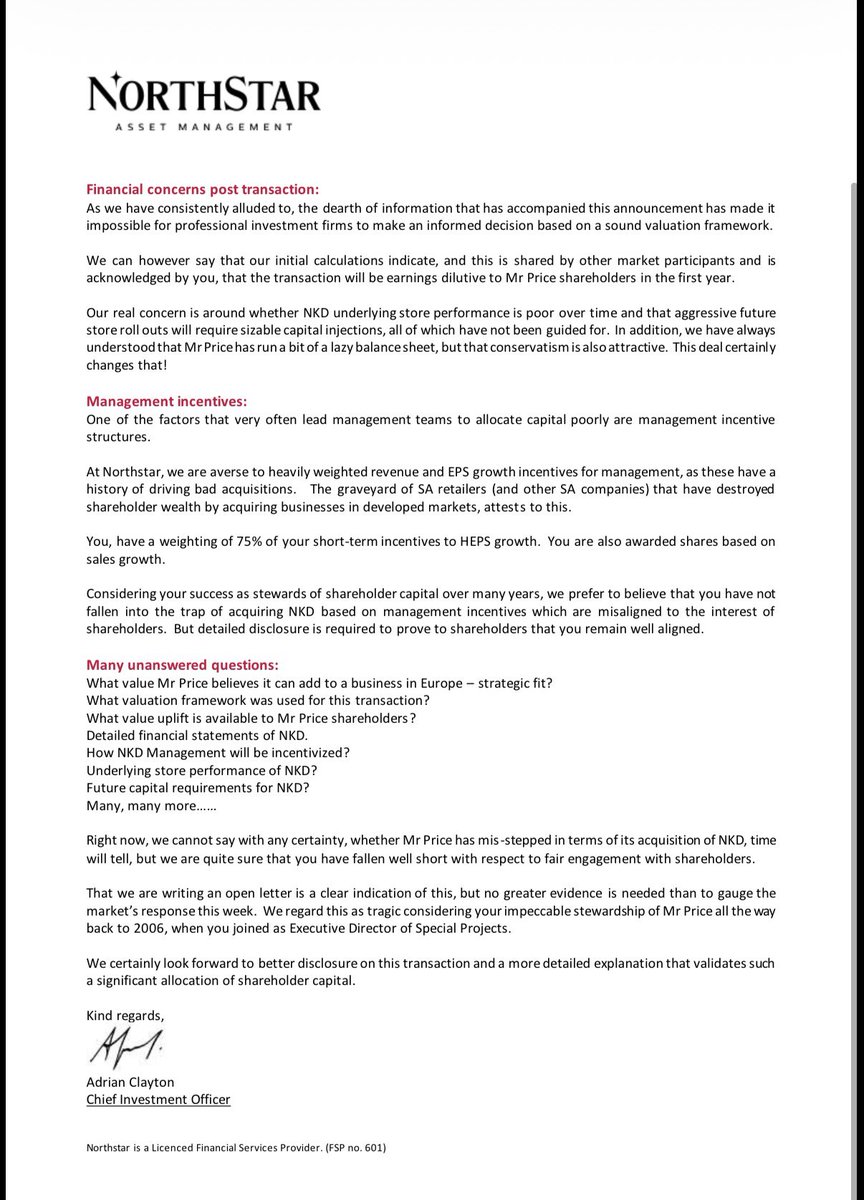
We’ve written an open letter to Mr Price’s board raising serious concerns about the proposed NKD acquisition. The deal appears off-strategy, earnings-dilutive, poorly disclosed, and has already destroyed R9bn in shareholder value. Shareholders deserve answers!
Current situation:
1. The US is preparing $2,000 stimulus checks
2. Japan is preparing a $110 billion stimulus package
3. China has approved a $1.4 trillion stimulus package
4. The Fed is officially ending QT on December 1st
5. The US is issuing~$1.9 trillion in treasures per year
6. Canada is restarting its Quantitative Easing program
7. Global M2 money supply is at a record $137 trillion
8. Global rate cuts are at 320+ over the last 24 months
In what world is another wave of inflation not on its way?
“A town is not a town without a PEP.” Pepkor’s dominance in SA retail isn’t just scale — it’s strategy. With 5,899 stores, it leads in essentials like babywear & prepaid handsets, leveraging low costs & trust to expand into financial services. A steady compounder beyond retail.
���� https://t.co/jTbaRpjgGb
Adobe’s 44% share price drop isn’t a crisis — it’s an opportunity. While markets fear AI disruption, Adobe is building the tools professionals will trust. Strong balance sheet, loyal users, proven leadership.
Read: https://t.co/OHabm2jIEw
1970s inflation. 1990s tech mania. 2025 has both.
Northstar’s latest market report, Echoes of the Past, shows how Trump’s Fed ambitions and the AI bubble could collide into the next big reckoning.
Read it here 👇
https://t.co/Vx66q1azdW
“History doesn't repeat itself, but it often rhymes." – Mark Twain
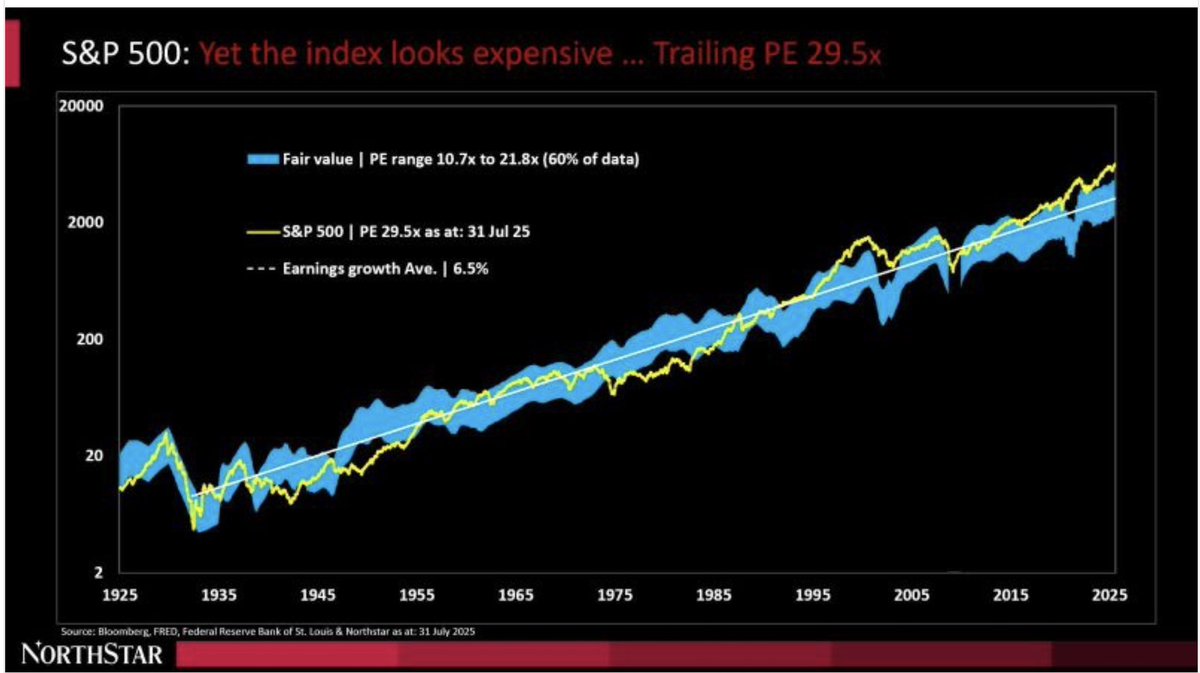
The S&P 500's trailing PE of 29.5x is a clear warning sign. As our analysis shows, this is significantly above the long-term fair value range (10.7x - 21.8x), suggesting prices have run far ahead of fundamentals supported by ~6.5% average earnings growth.
But valuation is only part of the story. History shows us the dangers when political pressure influences monetary policy:
Nixon’s pressure on the Fed in the early '70s contributed to the stagflation crisis.
Today, we see echoes of this, with calls for significant rate cuts despite inflation risks.
Our conclusion? The combination of extreme valuations, potential political interference driving aggressive rate cuts, high deficits, and geopolitical tensions sets the stage for a high-risk outcome: a return of inflation alongside a recession.
This environment demands a flexible and active investment approach.
Slide from Mark Seymour's presentation at the 2025 BCI Boutique Manager Forum. Thank you Boutique Collective Investments (BCIS) for the opportunity.
US Treasury’s upcoming bond auction: $25 billion 30-year bonds on 11 Sep 2025. Sizes held steady amid stable borrowing needs. Watch for yield outcomes as Fed policy evolves. Developing story …