They just don’t make them like this anymore.
Or do they?
Join the Infantry.
Inspire generations with your stories and songs.
Transcend time and culture.
Become the man you were supposed to be.
On June 6, 1944, a 56-year-old general with a secret walked onto Utah Beach under fire, armed with a cane and a pistol.
The secret: his heart was failing. He had hidden it from the army doctors so they wouldn't pull him from the mission.
His name was Theodore Roosevelt Jr. Son of the President. He had begged three separate times to lead the first wave ashore at Normandy before his commanders finally said yes.
When his landing craft drifted 2,000 yards off course, every instinct said redirect the following waves to the correct zone. Instead, Roosevelt walked the beach himself, alone, under artillery fire, cane in hand, reading the terrain.
His verdict: "We'll start the war from right here."
He then stood on that beach and personally greeted every regiment that landed after him, pointing them inland, cracking jokes under shellfire, steadying 18-year-olds who had never seen combat. He did this for hours.
Years later, Omar Bradley was asked to name the single most heroic act he had ever witnessed in combat.
His answer, without hesitation: "Ted Roosevelt on Utah Beach."
Roosevelt's son, Captain Quentin Roosevelt II, also landed at Normandy that same morning. He was named after his uncle, Quentin Roosevelt, who had been shot down as a fighter pilot over France in World War I.
Three generations. Three wars. One family.
Theodore Roosevelt Jr. died in his sleep 36 days later. Heart attack. The thing he had been hiding finally won. He never learned he had been awarded the Medal of Honor.
He was buried at the Normandy American Cemetery.
In 1955, his family had his brother Quentin, killed in WWI, exhumed from where he fell in France and reinterred right beside him. Quentin is the only World War I soldier buried there.
Two brothers. Two world wars. The same French soil.
Their father had once said: "Do what you can, with what you have, where you are."
Both of his sons did exactly that.
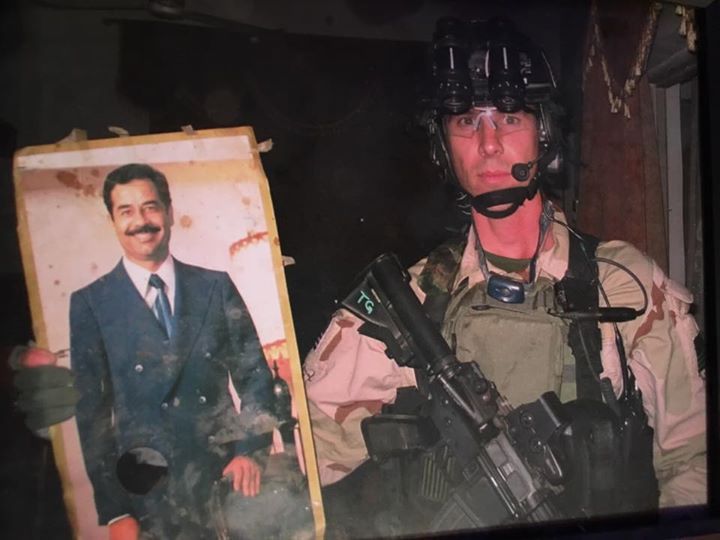
Delta Force legend Thomas Greer, better known by his pen name, Dalton Fury, was among the very first operators to write a book about the initial invasion of Afghanistan.
His 2008 book, Kill Bin Laden: A Delta Force Commander’s Account of the Hunt for the World’s Most Wanted Man, discussed the unsuccessful mission of tracking Bin Laden in the mountains of Tora Bora.
Prior to joining the Unit, Greer served as an enlisted soldier in the 75th Ranger Regiment for eight years.
Throughout his 15-year career in special operations units, he hunted war criminals in the Balkans, served as an assault force commander on direct action raids against al Qaeda and the Taliban, and tracked Abu Musab Zarqawi in Iraq.
Greer retired in 2005 after more than 20 years of military service. In civilian life, Greer consulted on strengthening the security of all the nation’s nuclear power plants and was a military consultant for the popular video games Call of Duty: Modern Warfare 3 and Call of Duty: Advanced Warfare.
He died in 2016 after a battle with cancer.
He was 52.
A Muslim passenger:
"Excuse me, can you turn off the music?"
The driver:
"Why?"
The passenger:
"Music is haram."
The driver:
"Why is music haram?"
The passenger:
"Because there was no music in the time of prophet Muhammad."
The driver:
"Well, get off then. There were no cars back then either. A camel will come pick you up."
😂🤭😂
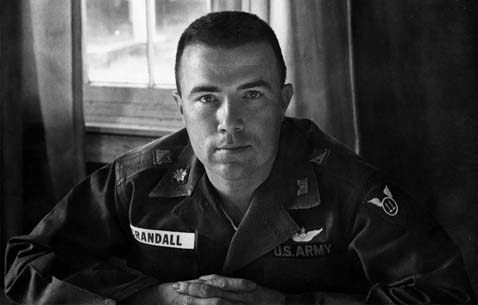
Two days ago we lost an American hero. His name was Bruce Crandall, and this is his story 🇺🇸
Before he was a legend, Bruce Crandall was a kid from Olympia, Washington, born in 1933, an All-American high school baseball player who joined the National Guard at 15. The Army drafted him in 1953, trained him as an engineer, then put him in a cockpit. His first real job as a pilot was mapping the parts of the world nobody had charted yet, flying for two years over the open desert of Libya, then over thousands of square miles of unmapped mountains and jungle in Central and South America. He married Arlene in 1956. They would raise three sons. He spent the early part of his career flying toward empty places. Then Vietnam asked him to fly toward the worst one.
Sixty years ago, in a clearing called LZ X-Ray, roughly 450 American soldiers were surrounded by an enemy force several times their size. The shooting was so heavy the medevac helicopters turned back. Landing meant dying.
Bruce Crandall made a different choice.
He was a 32-year-old major flying an unarmed Huey. No guns. No armor that mattered. Just a thin aluminum shell and a decision. He pointed the nose at the hottest piece of ground in the war and went in anyway, with his wingman Ed "Too Tall" Freeman right behind him.
Then he did it again. And again. Twenty-two times in a single day.
He flew in the ammunition and water that kept the men alive. He flew out more than 70 wounded soldiers, loading them while rounds punched through the airframe, the cargo bay slick with other men's blood. Each run he could have stopped. Nobody would have blamed him. He kept his word to the men on the ground instead: you will be resupplied, and if you fall, we are coming for you.
He never fired a shot all day. He saved dozens of lives with nothing but nerve and a helicopter.
The men called him "Snake." He went back for a second tour and was shot down in January 1968, this time by friendly bombs falling too close. By the end of the war he had flown more than 900 combat missions.
Then he did something quieter that almost nobody talks about. He went home and lived an ordinary life. He retired as a lieutenant colonel in 1977, earned a master's degree, ran a small California town as its city manager, and spent 17 years in the Public Works Department in Mesa, Arizona, fixing roads and keeping the water running. The man who once flew through a wall of fire spent his later years making sure the streetlights worked.
It took 40 years for the country to catch up to what he did at X-Ray. In 2007, President Bush hung the Medal of Honor around his neck. If you saw We Were Soldiers, that was him on screen, Greg Kinnear in the cockpit, though the real man was braver than any movie could hold.
Col. Bruce "Snake" Crandall died on May 31, 2026, at 93 years old. He outlived the war, the doubts, and most of the men who watched him come screaming back into that valley when no one else would.
Some heroes carry a rifle. This one carried the wounded home, then went back to work like it was nothing.
Rest easy, Snake. We have it from here.
In honor of Lt. Col. Bruce Crandall (1933-2026), the best of us and a true American hero. We won't forget you 🇺🇸
252 years ago today, the British Empire closed the busiest port in North America to teach one colony a lesson, and accidentally turned thirteen colonies into one country.
On December 16, 1773, a few dozen Bostonians had thrown 342 chests of East India Company tea into the harbor. The damages came to roughly £9,659. Lord North, the Prime Minister, decided to make an example. Parliament passed the Boston Port Act. King George III signed it on March 31, 1774. It took effect at dawn on June 1.
The Royal Navy moved warships into Boston Harbor and dropped anchor. Every dock was sealed. No ship could enter or leave. Not a barrel of flour, not a load of firewood, not a letter. The port would stay closed until Boston paid the East India Company in full and promised to behave.
The intent was to isolate Massachusetts and force her neighbors to watch her starve.
What happened instead is one of the strangest political miracles in modern history.
Down in Williamsburg, a 31 year old burgess named Thomas Jefferson and a few friends, including Patrick Henry and Richard Henry Lee, pulled a dusty old book off the shelf of the House of Burgesses library, a record of how the Long Parliament had once handled a tyrant, and proposed that the entire colony of Virginia observe June 1, 1774 as a day of "fasting, humiliation, and prayer" in solidarity with Boston.
The Royal Governor, Lord Dunmore, dissolved the House two days later for treason. The burgesses simply walked across the street to the Raleigh Tavern and kept meeting.
June 1 came. In Virginia, every Anglican church was draped in black. The bells tolled all day. Plantation owners shut their doors. Jefferson wrote later that "the effect of the day through the whole colony was like a shock of electricity."
The same shock ran through every colony south of New England. Wagon trains of food started rolling toward Boston from as far away as Charleston. The Marblehead fishermen offered to give the Boston merchants the use of their docks for free. A Quaker miller in Pennsylvania sent a hundred barrels of flour. Israel Putnam personally drove a herd of sheep from Connecticut to feed the city.
Three months later, 56 delegates from twelve colonies sat down together in Philadelphia. It was called the First Continental Congress. None of them had ever met under one roof before.
Parliament wanted to punish a city. It created a nation.
252 years ago today, in a harbor full of Royal Navy frigates, the American Revolution stopped being a Massachusetts problem.
B-17 Flying Fortress Under Attack by Bf 110G (WWII) 🇺🇸🇩🇪
Restored World War II footage shows a U.S. B-17 Flying Fortress taking heavy fire from a German Messerschmitt Bf 110G during an aerial engagement over Europe.
The twin-engine fighter closes in from behind and unleashes devastating cannon fire into the bomber’s fuselage, wings, and engines as smoke pours from the damaged aircraft.
Even after taking heavy hits, the bomber keeps flying, showing exactly why the B-17 became known as the “Flying Fortress.”