Many men are quiet when overwhelmed. Silence doesn't always mean anger, rejection or emotional distance. Sometimes it's his mind trying to process pressure internally. Rather than rush to conclusions, create an environment where recovery and honest conversation happen naturally.
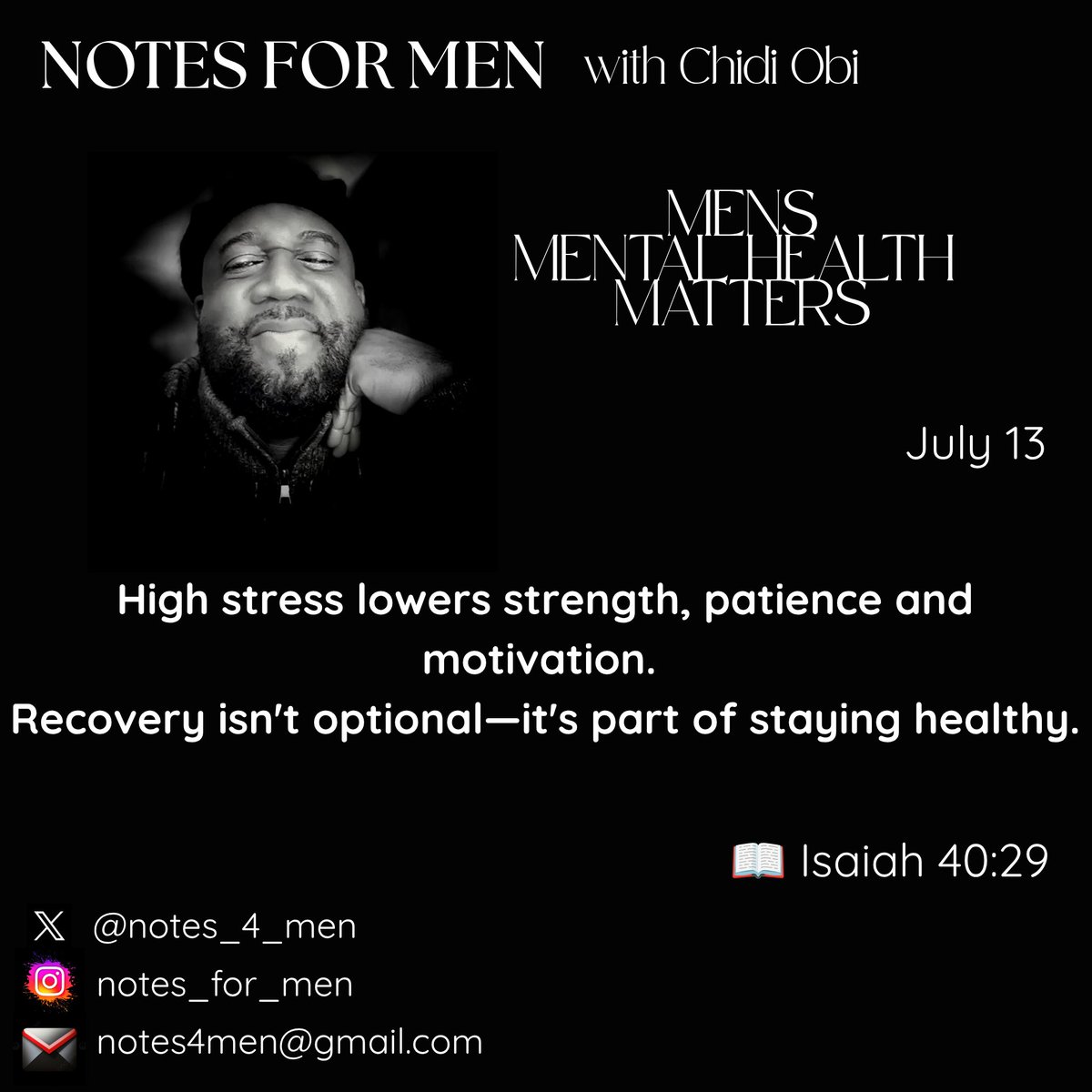
When stress remains high, testosterone often falls. This can affect motivation, patience, confidence and even relationships. Recovery isn't a reward after hard work, it is part of the work. Sleep, exercise, prayer and quiet moments help restore what constant pressure takes away.
Stress usually affects men physically bef emotionally. Low energy, poor concentration, irritability or emotional withdrawal may all be signs that the body has been under pressure for too long. Paying attention to these early signals can prevent deeper mental health struggles.
Many men are more alert and confident in the morning because testosterone is at its highest. As the day progresses, energy often declines. Instead of fighting your body's rhythm, schedule hard tasks when you're at your best and allow yourself grace when your energy drops later.
Men have cycles too. Our hormones fluctuate daily, affecting energy, focus and emotional resilience. Understanding these rhythms isn't making excuses—it's recognising God's design. Self-awareness helps men recover better, live healthier and relate more intentionally. #NotesForMen