alright - just got Jev deployed for a real production use case, which now performs at fable level quality but 10x faster and saves a ton of money
context - a powerful capability of firstmate is that as an orchestrator it intelligently routes each task to an appropriate agent (permutation of harness, model, and reasoning effort) based on custom user preference
by default, that's done by the firstmate agent and the LLM would have to do some thinking, make tool calls to read dispatch rules, quota data etc and then do the dispatch. this is slow and does cost a bit of LLM tokens
i just replaced this dispatch process with Jev. it makes the same decision with no thinking or tool calls, done in ~200ms, and for the 25 tasks i evaluated this with, it gives the exact same answer fable would have given...
there's still a tool call needed to invoke Jev, done by the firstmate agent which uses an LLM. but even with that counted, the saving from Jev still resulted in a -71% reduction in cost and -90% reduction in wall time of completing the whole dispatching process
Jev API calls themselves are almost free.. i made 100+ calls, and my usage dashboard still shows $0.01 (which i think means "haven't reached $0.01 yet"). if we just look at the part Jev replaced and not the whole system, then the saving is on the magnitude of ~100x
if you also have Jev and you use firstmate, set TYPESAFE_API_KEY in your .env file in your firstmate repo to activate this
exciting times! i think this is starting to enable a whole new architectural paradigm for software. LLMs are just a small part of it. more on that soon
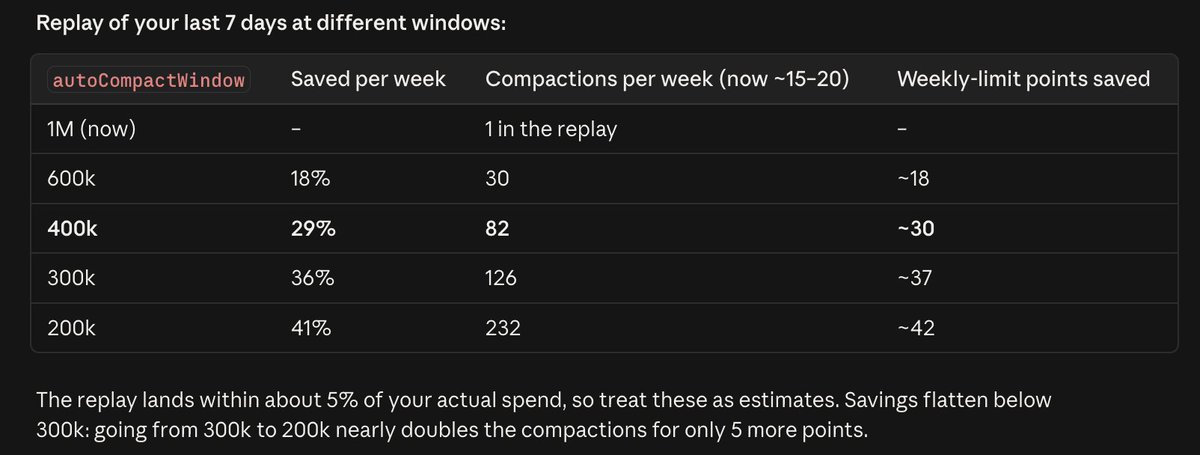
Okay Codex Astra orchestration and use of sub agents is broken for now.
But if you still want to use then run the below prompt. Otherwise you will burn through your rate limits in a few hours.
“Keep Astra focused on planning, milestone reviews, and blockers. Delegate routine commands, coding, testing, log checks, and polling to Luna Max agents. Give workers complete tasks and have them report concise results only when a milestone is finished or they’re blocked. Wait for their reports instead of repeatedly checking status. Reuse existing workers and avoid duplicating their work. Apply this to the current task and preserve it in future handoffs.”
It worked for me. I used 8% of pro 20x in 20 odd minutes and after this for 30 minutes didnt move a %
𝗖𝗼𝗱𝗲𝘅 can feel worse over time. I check the workspace before blaming the model.
I don't wipe everything. I keep the skills, MCPs, and AGENTS.md rules this project uses, then 𝗿𝗲𝗺𝗼𝘃𝗲 𝗺𝗼𝘀𝘁 𝗼𝗳 𝘁𝗵𝗲 𝗿𝗲𝘀𝘁.
My prompts name the outcome, boundaries, and checks. Codex picks its own steps.
Give this to any coding agent:
𝗽𝗿𝗼𝗺𝗽𝘁:
Audit every persistent configuration in this workspace that shapes how you work: project instructions, skills, MCPs, and memory.
Find anything redundant, outdated, conflicting, or irrelevant to this project. First give me a KEEP / REMOVE list with one sentence per item. Do not edit any files.
Wait for my approval. Remove only approved REMOVE items. Keep every safety rule, secret-handling rule, and configuration this project explicitly requires.
After cleanup, reread my current task. Focus on three things: the final outcome, the boundaries you must not cross, and the checks that prove the work is done.
Choose the implementation yourself. When finished, show the diff and run the project's existing checks. If anything is unclear, ask. Don't guess.
𝘀𝗮𝘃𝗲 𝘁𝗵𝗶𝘀. Use it when Codex, Claude Code, or Cursor suddenly starts feeling dumber.
OpenCode Go is now wired into Codex!!
The pricing is insane. $10 gets you 10,000 DeepSeek requests every 5 hours (no weekly limits).
I converted that into DeepSeek API dollars because I thought I was reading it wrong, and the same 5 hours of usage would run somewhere between $10 and $30 depending on how big your context gets.
So one afternoon of use already covers the whole sub.
It comes with Kimi K3 as well. Both sit in the picker next to my other models now.
Next time we hit a limit in the middle of a loop, we can grab it and keep going.
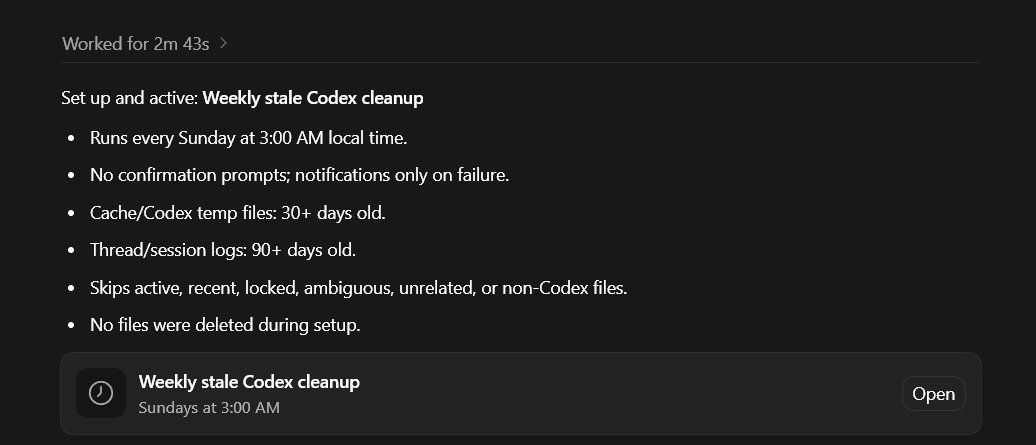
codex tip: let codex clean up after itself.
codex itself generates a lot of stale cache, old thread logs, and temp files over time. here's how to automate the cleanup.
prompt: "set up a weekly automation that clears out old codex cache, thread logs, temp files that are safe to remove. don't touch anything active or recent. only stale data that's just sitting there taking up space. run this automatically every week without asking me each time."
just copy paste this prompt into codex and it will set it up.
codex runs this automation every week.
this is f**king insane
i cancelled my $200/mo claude subscription for this. gpt-5.6 with sol-advisor genuinely stops you from hitting codex usage limits.
sol-advisor is real, open source, built by the same person behind fable-advisor. the actual architecture: sol high runs the primary session, requirements, architecture, routing, and final acceptance. luna max handles routine, fully specified implementation. terra max takes the harder, context-heavy builds. a fresh sol instance, read-only, reviews the final diff before anything ships.
luna at max reasoning reportedly performs close to sol medium or opus 5 medium, at around a sixth of the cost.
setup, genuinely 3 minutes:
codex plugin marketplace add DannyMac180/sol-advisor --ref main
codex plugin add sol-advisor@sol-advisor
save this and give it to your agent now.