We will soon be closing this account. Thank you for your interest in the mathematical provocations, possibilities and delights we have posted over the last 11 years.
#MTmonth24 In the first of our series of classic articles from the Mathematics Teaching Journal, we have made Relational understanding and instrumental understanding by Richard Skemp available for everyone to read during June. Read the full article https://t.co/Kd0xpJFTuY
Here's a 3-minute video looking at developing a problem-solving task sequence: https://t.co/JZKIHMnBOK
Help all children to access the task, reason and move beyond trial and error!
Early numeracy approaches in #EYFS can add up to seven months' progress in #maths. Download the new 2-page summary here: https://t.co/8NNOZ4WQ97 #edutwitter
Celebrate that 2024 is a leap year! Steve Wyborney’s NEW “Leaping Number Pattern Challenges” create a pattern to be solved each day. But wait…the answer to each of the 29 patterns creates its own new pattern on its own! Fun! https://t.co/1ayF1XDcJt
@SteveWyborney@SunriseSDMB
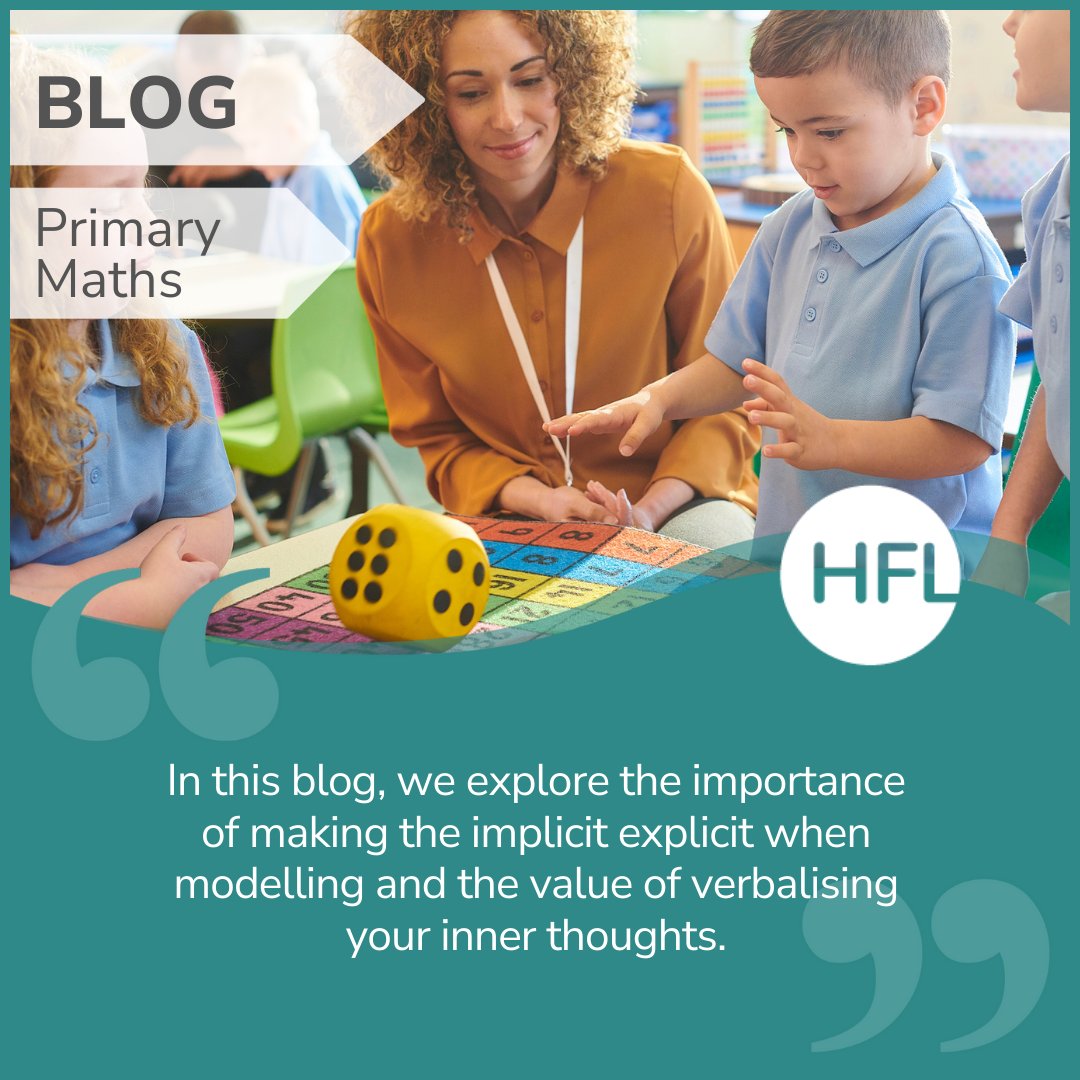
Grab a cuppa and explore modelling in the maths classroom with @FoxShearsby.
- Videos to exemplify strategies
- Simple scaffolding ideas
- 5 things to remember when planning modelling
@HFL_Education
Day 92
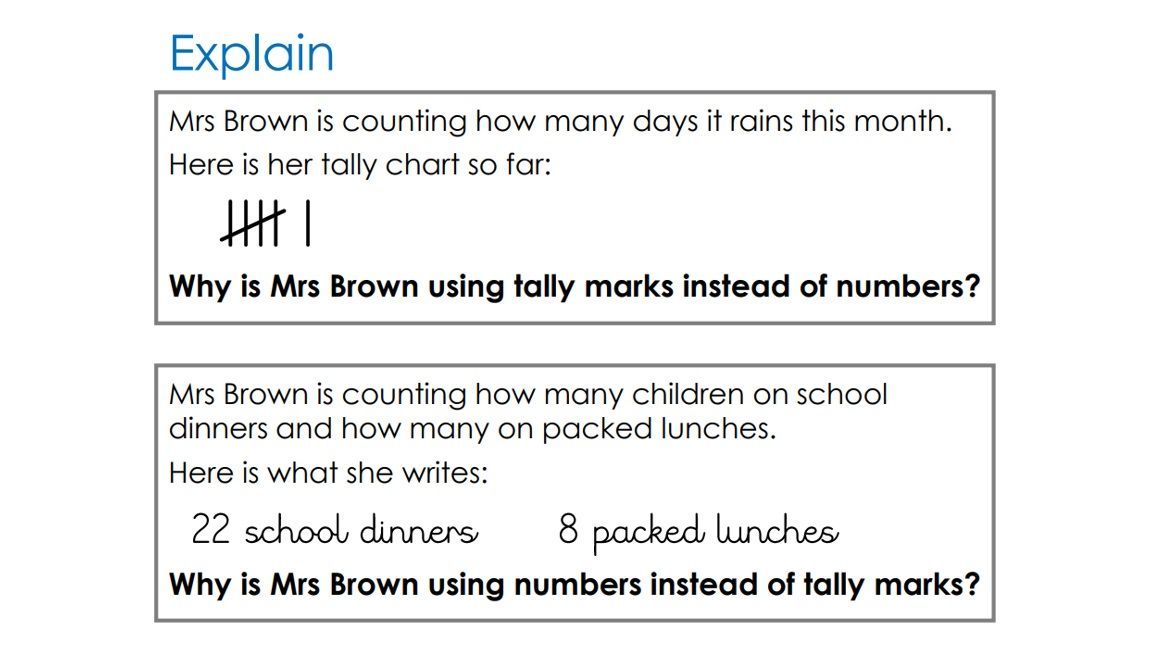
Had some great discussions based on this prompt from I See Reasoning - KS1. Often ask children to think about situations where they use tally marks (a count over time) and contrasting that to when we use numbers
One of my Gr 2 students keeps reminding me that 36 is both a square number and a 'step squad' number (@Numberblocks way of saying a triangle number).
So we made a stop-motion animation together.
Day 73
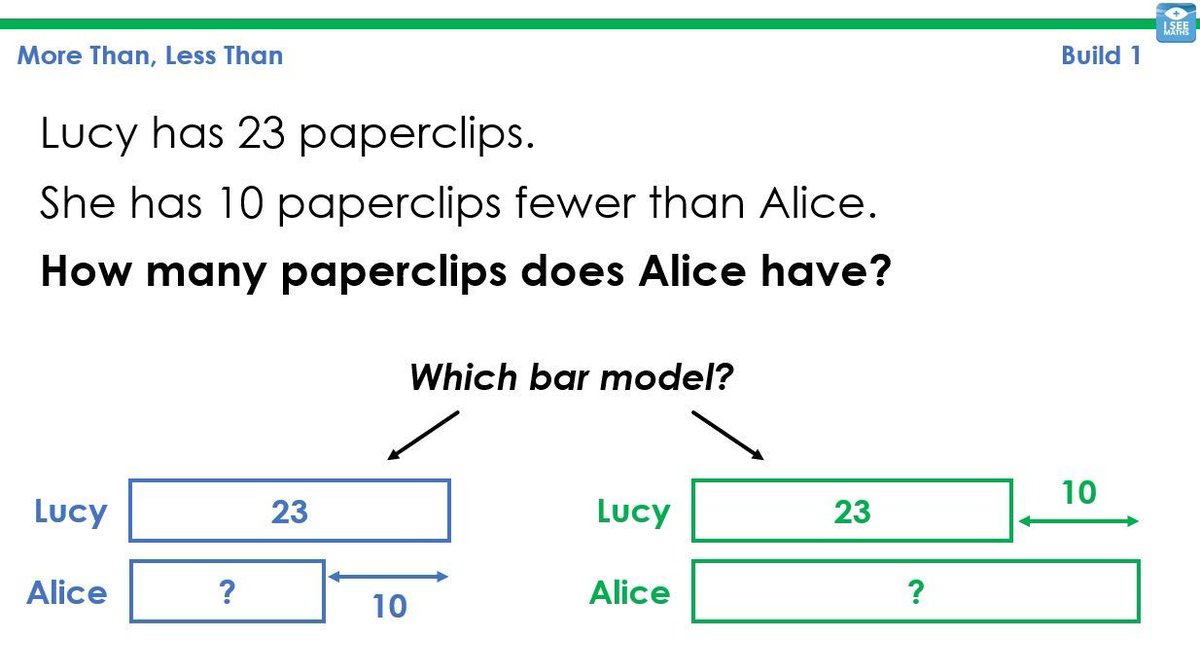
In Deconstructing Word Questions, there will also be many 'part-complete bar models', scaffolding the process of using the bar model to break questions down
Day 72
Huge amounts of progress has been made on Deconstructing Word Questions for Y2, Y3, Y4 & Y5. It will help children to read questions with precision. The 'Which bar model?' prompts feature heavily in the task build-ups.
Check out this mathematical chef! 🧑🍳
After placing his “chicken” in a toy microwave he serves as his own timer - counting aloud to ten. (His articulation and number knowledge are still developing, but there’s little question what he’s saying.)
My favorite part is what happens when he gets to ten. There appears to have been an explosion in the microwave - something we’ve all experienced a time or two.
I just love how he spontaneously incorporates both his growing mathematical skill and life experience into his dramatic play.
This clever little guy was shared to IG by danieljamesharter.
5, 6, 7, 8…. 5, 6, 7, 8…
Teaching your child to count? This video illustrates two important early math skills you’ll want to know.
The first is rote counting, which is the process of memorizing and reciting numbers in their correct order.
Rote counting can be done anywhere - and doesn’t require any materials. It’s just counting out loud (think of it like the numerical equivalent of the Alphabet Song). You can practice it in the car, in the tub… anywhere.
Obviously, this little one is fixated on a particular sequence (5 through 8) at this point in her development, which she repeats over and over.
More will come.
Impressively, she’s also showing an early knowledge of one-to-one correspondence.
This is the skill of counting one - and only one - object as you count/say each number.
Watch as she counts off the individual paving stones in her path… reciting a new number each time she lands on one with her left foot.
Both skills are important, but one to one counting is the more conceptual ability.
You can help to nurture it by demonstrating it as you count together with your child.
To do so you’ll need to be counting actual, physical objects.
Count slowly, touching each object as you go and connecting each number spoken with a single item in the sequence.
One to one correspondence leads to number sense… which is a connection between number and quantity. (Knowing that the number “three” is applied to a set of 3 - and only 3 - objects.
Happy counting!
This little mathematician was shared to IG by gunnertheketokid.
Love this free app from mathspad. Building solids, intro to volume of prism, understanding the plan and elevation views, building shapes given the plan and elevations.https://t.co/pGdSTKloBT