Tech enthusiast navigating the digital wilderness. 🚀 Father of three, fueled by curiosity and caffeine. Upgrading pixels and spreading good vibes. #TechLife #
I respectfully have a different take...
A major vendor, @UnionPacific, decided to paint one of its locomotives in patriotic colors to celebrate America’s 250th birthday as it transports components of a NASA rocket. They also decided to paint “45 47” on the train to recognize the sitting President during this important anniversary. Now, I understand if someone served in a different administration, from a different political party, there may be a bias, but through my lens, what Union Pacific is doing is patriotic.
We also happen to be celebrating a lot of NASA’s “meaningful achievements,” including the giant Saturn V, the Moon landing, and other historical moments projected on the Washington Monument during America’s 250th birthday. We similarly have those accomplishments displayed at NASA centers to recognize these historic and world-changing achievements, but it is unlikely we can ask vendors to paint them on every locomotive.
@NASAAdmin@Erdayastronaut Had rickets blow up as a kid. Apparently it happens to everyone, at any scale. Space is hard. There will be lessons learned and eventual success.
@NASAAdmin@NASAStennis Love how engaged you are! Can’t wait till you visit Marshall. Supported inspiration4, SLS and ISS. So excited to see nasa getting such great PR! Keep it up!
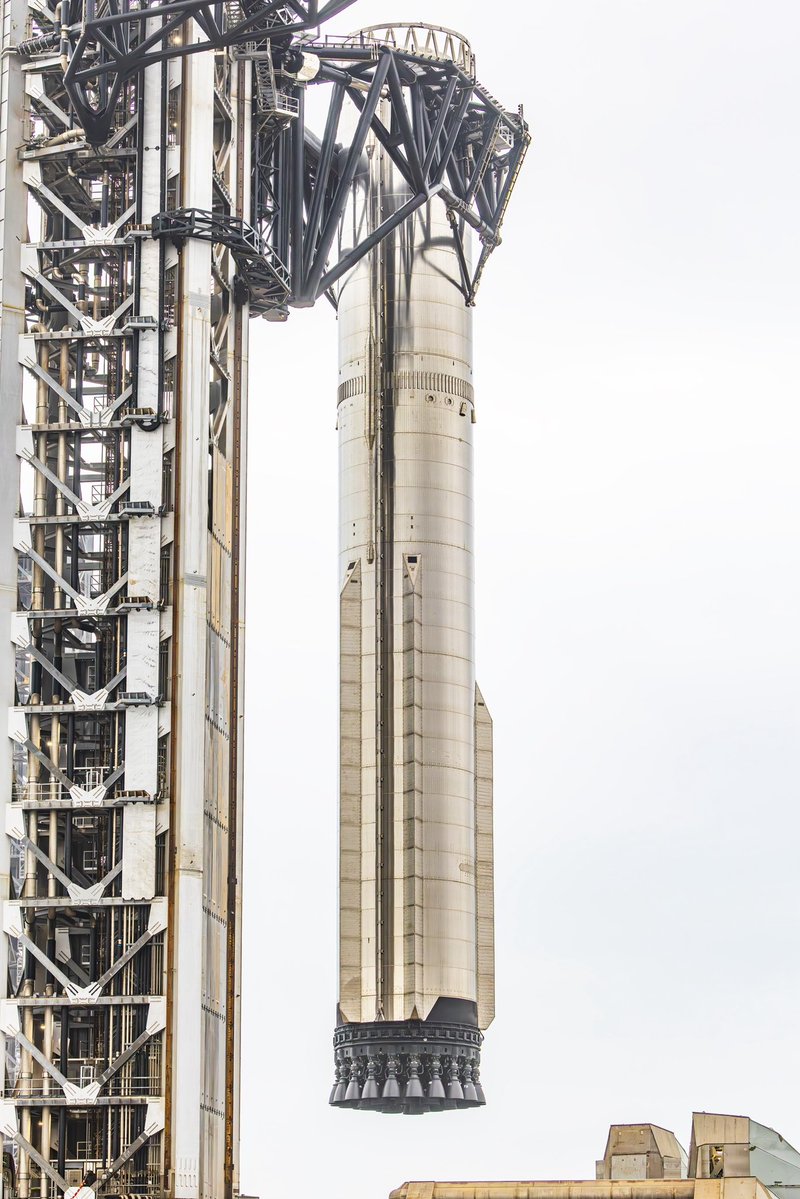
There's nothing better than seeing an SLS rocket stage vertical! 🏗️
Technicians at @nasakennedy have completed operations of lifting the largest section of the core stage for NASA’s Artemis III SLS rocket into High Bay 2, where it will be connected to the engine section.
Learn more about SLS: https://t.co/4KofTtzsiK
One of the problems engineers had with recovering Voyager 1 was there was no emulator or assembler for the computer they had to reprogram.
Vintage computer fans had wanted to document this hardware for years, but when we asked NASA for info they said no.
Finally someone tracked down some old JPL memos in a filing cabinet in Kansas and got all the information needed to build and emulator for the hardware.
Imagine how much easier the Voyager 1 recovery would have been if NASA had just said 'Yes' to those inquisitive vintage computer nerds a decade ago.
https://t.co/Nvnf7QU3fO
@NASAAdmin@SteveScalise Any plans to visit Marshall? You’ve really been inspiring for the folks in the control rooms. People are excited again about space and exploration.
@NASAAdmin@johnkrausphotos@NASAWatch@NASAKennedy@NASA This is such a good move. It will lower cost, decrease the brain drain, reduce risk. I have over 10 years supporting ISS and space force. I can’t wait for these changes to happen.
Most of the time, too much voltage is a bad thing.
…except in early ICBMs.
In the late 50s, you literally had to fry the targeting system to make it work.
At the time, US Air Force generals were extremely skeptical of computerized targeting:
"Where are you going to put the five Harvard professors you'll need to keep it running?"
The traditional method of storing guidance constants was to solder an individual board with the right values. If you wanted a different target, you would have to build a different board.
Wen Chow, a computer engineer, proposed a really (clever? weird?) solution.
Have everyone assemble the same board (a universal diode matrix) with every possible targeting configuration. Then, send a high reverse voltage across particular leads to burn out the junction…
By frying individual diodes with high voltage, you “program” individual bits!
If you’ve ever heard of the term, “burning the PROM”…now you know it comes from working on Atlas ICBMs!