In 2015, I built an AI that detects early cancer.
It’s still running across hundreds of hospitals in the US today.
It was the most fulfilling work of my life, and I was building in AI years before everyone called it “AI”.
Building in AI then was a dream.
Now It feels like we’ve taken a turn for the worse.
It started when i was in undergrad.
I built my first company: AI models that made the political data transparent to voters.
At 21, I was offered six figures for it, but the buyers wanted to use it for reasons I couldn't ethically support.
So we turned down the offer and shut down the company instead.
In 2014, I moved into deep learning research on language models, for the Intelligence Community and Goldman Sachs.
Then HCA Healthcare came to us.
They put me in a competition against 10 people from IBM Watson. It was just me and the tools I’d built.
Our job was to build an AI model that can catch the cancer that slips through the cracks in hospitals.
It was the most intense 30 days of my life. Multiple all nighters.
My models won. That turned into a $5M deal, and later its own company, Azra AI.
Then the world caught on.
ChatGPT and Claude arrived, and AI costs exploded.
Building in AI in 2015 felt novel.
We were using it to find cancer tumours and save lives.
Now the biggest tech companies have turned AI into a money extraction machine.
That’s when I decided to make a change.
We raised $8.5M to build a better future for AI.
On Wednesday, we’re launching Rayline.
AI shouldn’t be locked inside a few labs’ models, prices and clouds. It should be open, transparent and decentralized.
More on Wednesday.
The story keeps getting crazier. To recap everything that has been reported so far:
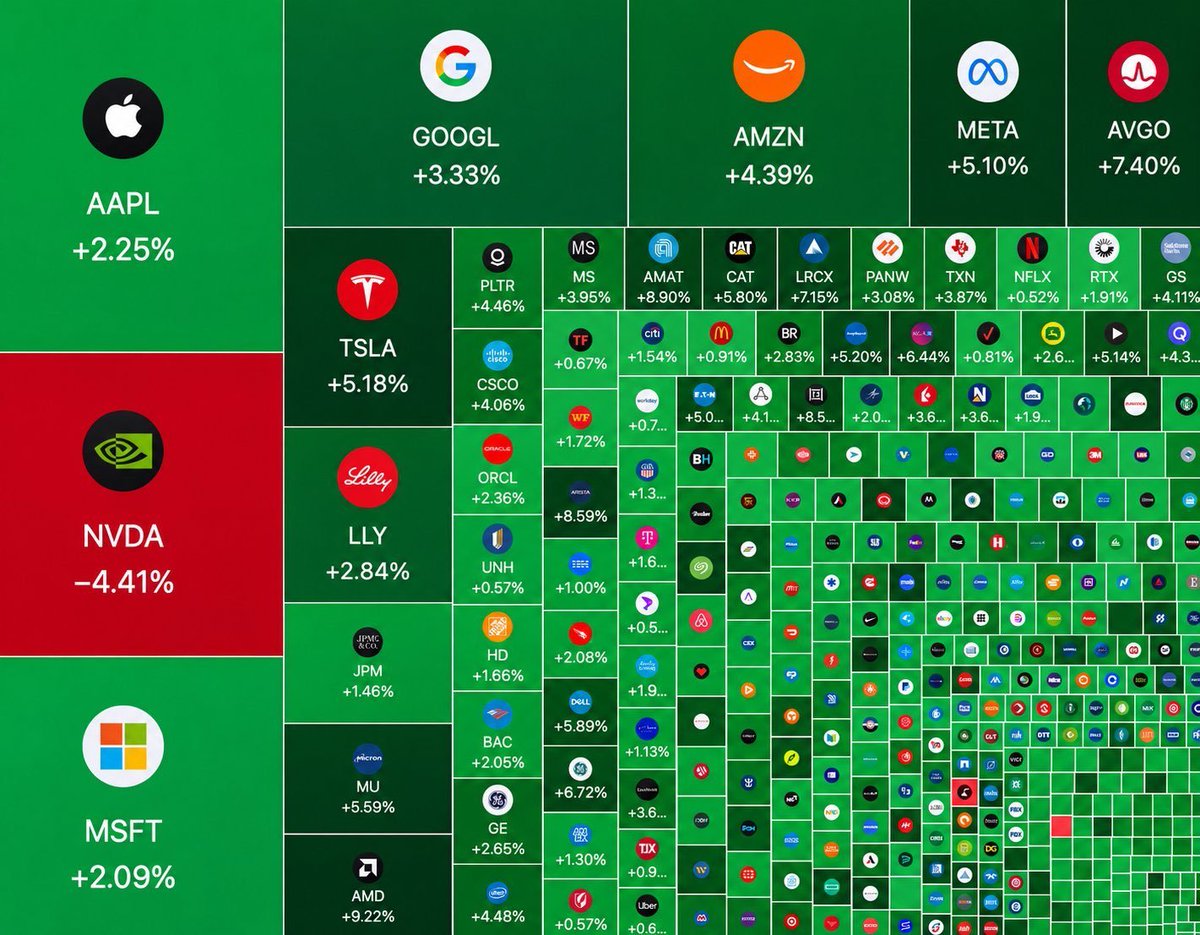
- The US intelligence community discovered that Jensen Huang, the CEO of the largest company in the world, was sleeping with Alice Huang, a Chinese spy and an executive at Megaspeed. (FT)
- Multiple independent investigations have concluded that Megaspeed is likely a Chinese cutout, which helps Chinese companies access AI chips or circumvent export controls. (NYT and Bloomberg)
- The US intelligence community also concluded that Alice Huang’s goal was to convince Jensen to lobby the U.S. government to loosen export controls on advanced AI chips. (NYT)
- The intelligence community relayed this information to “a small group of top US government officials” earlier this year. (FT)
- Over the last year, Jensen Huang has repeatedly lobbied the U.S. government to loosen export controls on advanced chips. @BISgov has done so, not only by permitting the export of H200 chips to China, but also not enforcing export controls that would have required a license for exports of the most advanced Blackwell chips to Megaspeed and Southeast Asia.
- Although @CommerceGov leadership was presumably briefed on this information by the U.S. intelligence community, @BISgov has taken no actions to tighten controls on Megaspeed or Southeast Asia.
- Megaspeed remains a preferred cloud partner of Nvidia, and continues to receive Nvidia Blackwell chips despite employing a Chinese spy who reportedly is romantically engaged with the CEO of Nvidia.
- Tens of billions of dollars worth of AI chips have been exported to Southeast Asia this year alone, and Malaysia and Singapore are now two of the four largest importers of AI chips in the world.
What is going on here??? We need answers. The question of who gets the most advanced AI chips in the world is literally the defining strategic question of our time. And not only does it seem like the MSS may be directly influencing the debate on export controls in the United States, but also @CommerceGov is refusing to listen to the warnings of the IC on this issue. What is a POSSIBLE good explanation for why Megaspeed is still receiving chips? Why is there not a license requirement for AI chip shipments to all of Southeast Asia? This is beyond strange at this point.
The fallout from this story will be massive. Obviously, the motivations underpinning Nvidia’s policy views opposing export controls must now all be questioned. But also, how did @BISgov sit on this information and has still taken no actions? We need answers.
At the end of the day, programming, mathematics, engineering, science, almost everything we do is fundamentally an exercise in critical thinking.
Programming languages, frameworks, compilers, abstractions and tools are representations. They're different ways of expressing and manipulating ideas. Knowing the syntax or being able to produce an implementation is only one part of the process.
Every time we automate something, we also change how people learn to do it and understand it.
Agents don't emerge from a vacuum. They operate on decades of accumulated human knowledge: programming languages, algorithms, compilers, operating systems, databases, distributed systems, mathematical abstractions and engineering principles.
To create something genuinely new at the frontier, you need to understand those foundations deeply enough to see where existing abstractions break down, identify unexplored constraints and reason about possibilities that don't already exist in the training data or established implementations.
This is why critical thinking matters so much. You cannot outsource the ability to recognise an unsolved problem, question the assumptions behind existing solutions or determine whether an entirely different approach is necessary
Great read, btw. Honestly, every engineer should read this, regardless of their experience level. It's a must-read for anyone in engineering.