NYSORA QUADRA™ - A 360° Immersive Learning Experience
3D anatomy. Live ultrasound.Probe positioning. RUA animations + LA spread.
Experience it live in Leuven - register today for the Regional Anesthesia Summit 2026: https://t.co/84r3SaiExx
Two arteries on ultrasound during a femoral nerve block? You’re likely too distal.
The profunda femoris has branched → both vessels appear.
Tip: slide proximal until only the femoral artery is visible.
https://t.co/sxmgKhmuJy
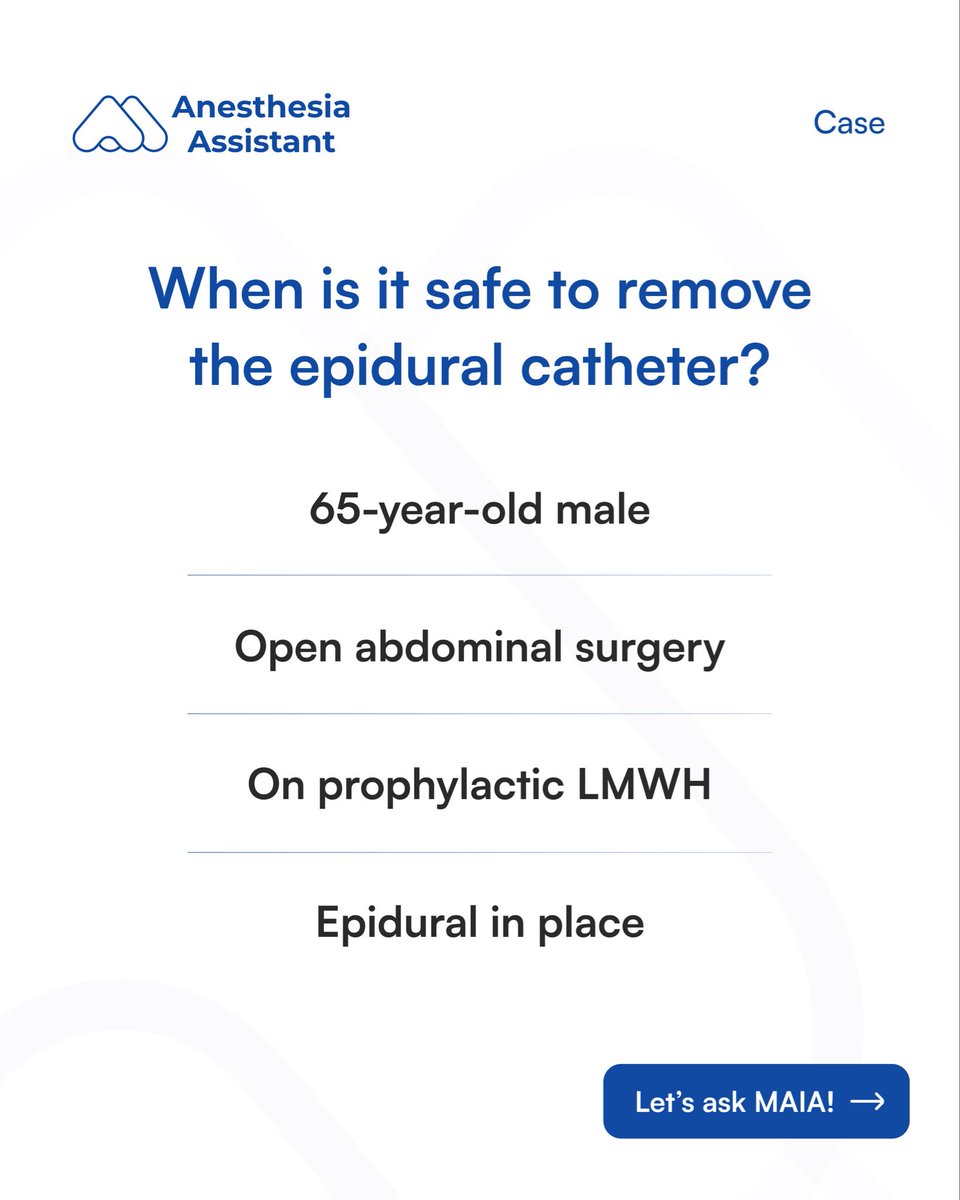
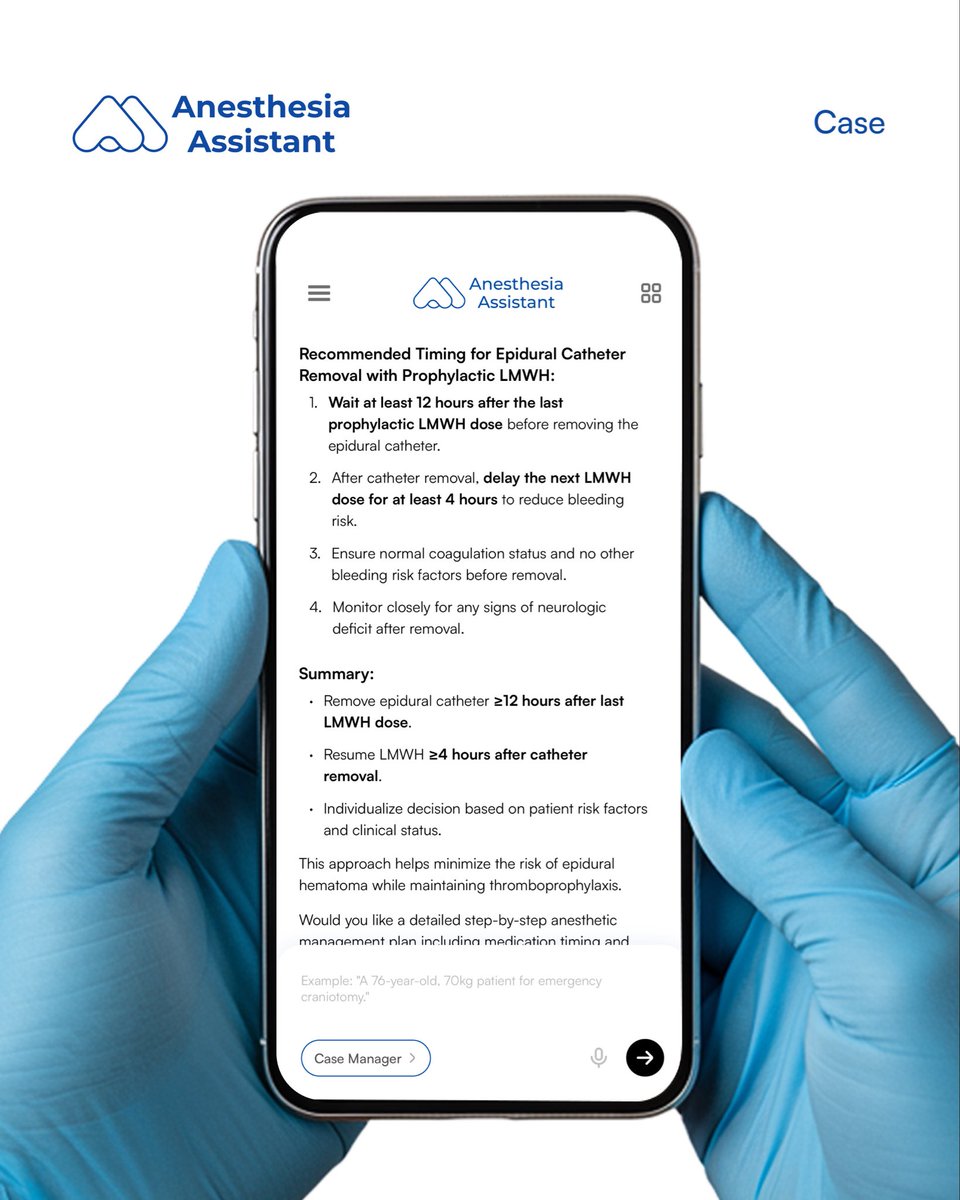
This is where timing matters. Too early increases the risk of spinal epidural hematoma. Too late complicates anticoagulation.
The NYSORA Anesthesia Assistant App, provides instant clinical support when seconds matter.
https://t.co/qwcTPk7EYU
You’ve got a trauma patient, a compromised airway, and seconds to act. What’s your move?
More in NYSORA’s Anesthesiology Manual: https://t.co/dLLoYjkKKZ
Smart cannula selection isn't about "bigger is better"; it's about matching the patient's needs and clinical context to the right gauge for optimal flow, minimizing discomfort and complications.
More on the NYSORA IV Access App: https://t.co/Eyx5mprWPK
Does mixing local anesthetics enhance nerve blocks?
Yousef et al. 2025 in EJA investigated if adding lidocaine - epinephrine to ropivacaine in infraclavicular brachial plexus blocks affects block characteristics?
https://t.co/u3jFeBewPN
Epidural anesthesia remains one of the hardest skills to teach because it relies entirely on tactile feedback. Unlike ultrasound-guided blocks, there’s no shared screen.
Watch the video on NYSORA’s YouTube Channel. See the difference.
https://t.co/BKjdtMfw0h
The usual options are gone.
Right arm amputated. Left arm off-limits for surgery. IV access still needs to happen.
In the video, you see the decision shift - from guessing to ultrasound-guided saphenous vein cannulation.
https://t.co/Eyx5mpsuFi
Behind the rectus abdominis lies a distinct fascial plane - home to the anterior branches of the intercostal nerves.
Injection of local anesthetic into this plane results in reliable analgesia of the midline anterior abdominal wall.
https://t.co/u3jFeBewPN
That plane between the internal oblique and transversus abdominis isn’t an empty space. As shown in the video, it’s packed with fibrous connective tissue that can limit anesthetic spread.
So how do you work around it?
https://t.co/u3jFeBewPN
You’re not injecting into a space, you’re opening a plane between the internal oblique and transversus abdominis muscles.
This video shows how that plane guides the local anesthetic to the anterior intercostal nerves (T6–L1).
https://t.co/u3jFeBf4Fl
NYSORA Nerve Blocks App: Greater Occipital Nerve Block
The greater occipital nerve sits deep, with subtle landmarks and little margin for error. Success depends on reading ultrasound correctly - and knowing exactly what you’re looking at.
https://t.co/u3jFeBf4Fl
Sometimes TAP blocks fail, not because of your needle placement, but because of the anatomy.
This video shows why: The plane between the internal oblique and transversus abdominis muscles isn’t an empty space.
https://t.co/u3jFeBf4Fl
In this video, you’ll see exactly why technique counts: The inferior epigastric artery lies just posterior to the rectus muscle, right where your needle goes.
Using a larger needle here means more trauma and a higher bleeding risk.
https://t.co/u3jFeBf4Fl
Lowering very high blood pressure quickly? Rapid MAP reduction can lead cerebral hypoperfusion due to the impaired autoregulation or under anesthesia.
In neuro-risk patients, nicardipine/labetalol are often prefered over nitrates (caution!).
https://t.co/qwcTPk8cOs
Ever had that moment where you’re staring at an arm full of veins… and none of them look quite right?
We’ve all been there.
If you want more practical videos like this, plus tips and step-by-step flowcharts, they’re all inside the NYSORA IV Access App.
https://t.co/Eyx5mprWPK
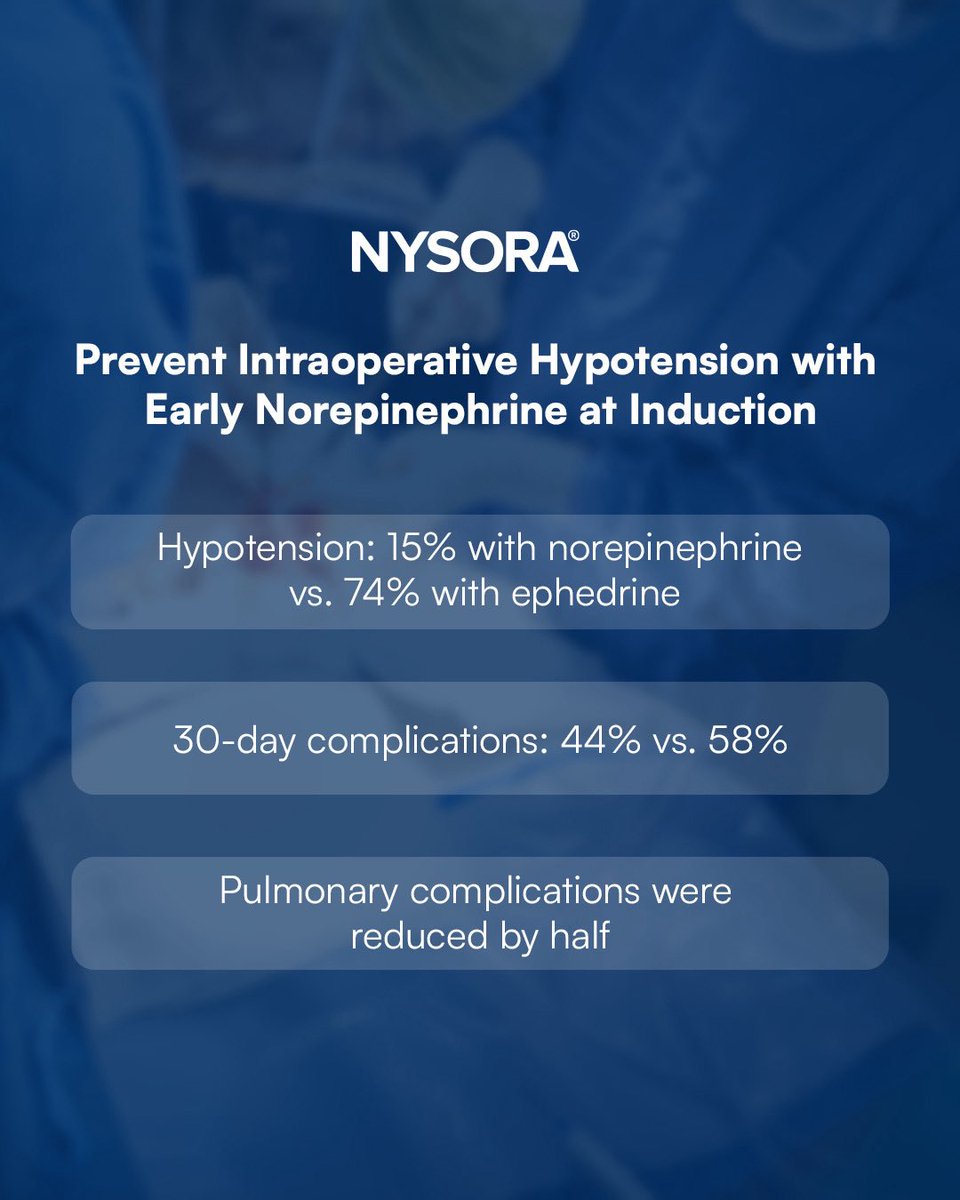
In 473 high-risk patients, starting a continuous norepinephrine infusion at induction - instead of ephedrine boluses - was associated with:
- Much less hypotension: 15% vs. 74%
- Lower 30-day complications: 44% vs. 58%
- Fewer pulmonary complications
https://t.co/PgFcJ3MU0I
After laparoscopic colorectal surgery, pain management goes beyond comfort; it drives outcomes.
A procedure-specific, multimodal strategy means less opioid use, quicker recovery, and higher patient satisfaction.
https://t.co/qwcTPk7EYU