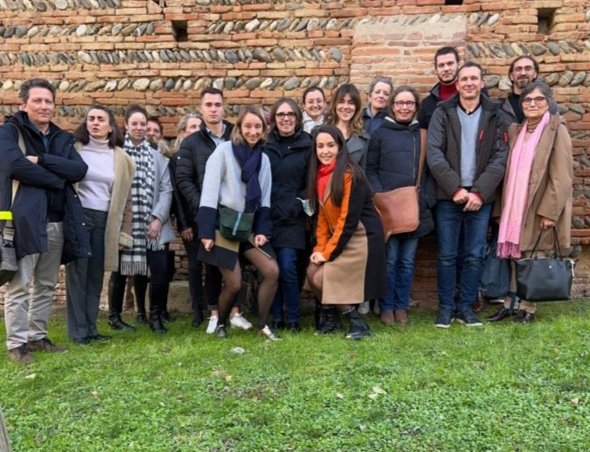
@VillenaLab has participated in the IV Nutraceutics Workshop in Tarragona, where we presented our work on the mechanisms behind the health benefits of nutritional interventions based on #Calorierestriction.
Moltes gràcies @BegonaMuguerza@nutraceuticaURV per la invitació a participar en les IV Jornades en Nutracèutica. Ha estat un enorme plaer compartir el treball del nostre laboratori @VillenaLab sobre els mecanismes implicats en els efectes saludables de la restricció calòrica.
Last week, thanks to #AmgenTransferCiència & @fundaciorecerca, we introduced high school students from Institut Jaume Huguet to #immunology & #diabetes through hands-on ELISA to detect insulin. Guided by @JuliaZednanreh, they didn't just learn about it, they did it themselves! 🚀
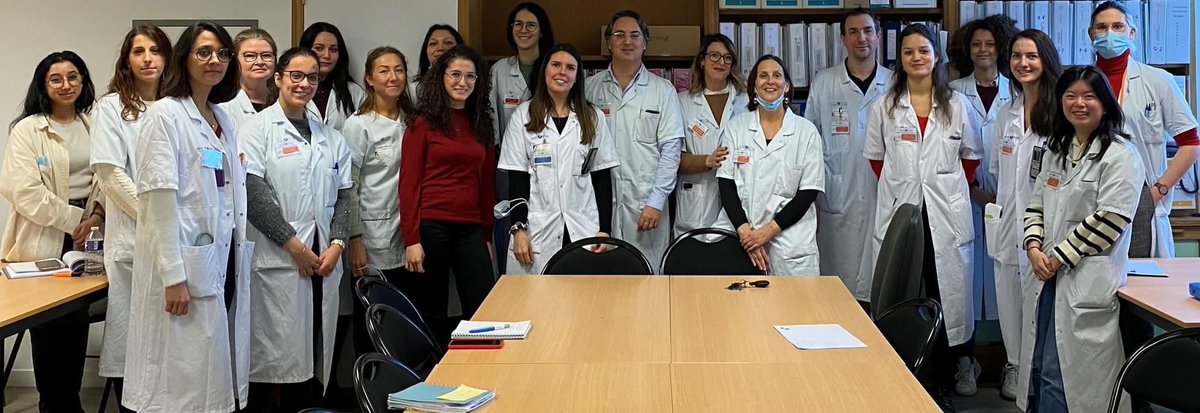
Last week, we held the mid-term @JPI_HDHL Nutrimmune symposium in Paris. Engaging discussions on very exciting projects and a great opportunity to foster future collaborations!
What a great meeting! Excellent talks and discussions on new challenges in research on adipose plasticity. A pleasure to share some of our work @VillenaLab on calorie restriction, adipose tissue and glucose metabolism.
🔊 16 i 17 gener 2025
SIMPOSI ADIPOBROAD
coordinat pel Prof Francesc Villarroya del grup de recerca Metabolisme Molecular i Patologies Associades https://t.co/6tK6lsve06
@BQBiomedMolUB@BiologiaUB@IBUB_UB@CIBERobn
https://t.co/vQm0Pxc3HB
The Metabolism & Obesity Lab wishes you all a Merry Christmas! 🎄🎊⛄.
May 2025 bring you tones of projects and the nicest reviewers for your papers 😊
It might all be for a greater good: by pausing peripheral tissue regeneration (i.e. hair growth), the body would conserve energy and nutrients for the proper function, including the regeneration, of critical organs.
Time-restricted feeding and intermittent fasting have proven to offer numerous health benefits. However, this article shows potential downsides: they inhibit hair growth by inducing the death of activated hair follicle stem cells. https://t.co/D9xNbZOzq4
The @metadiab projects focus on the mechanisms underlying insulin resistance, lipid droplet and metabolic dysfunction in skeletal muscle and adipose tissue, as well as their crosstalk in metabolic regulation and diseases.
2. @metadiab team.
Led by @CedricMoro_I2MC
& Nathalie Viguerie, in Toulouse, it aims at understanding the biological determinants and mechanisms of metabolic disorders. It uses an integrative bedside-to-bench approach to find novel targets in cell/mouse models and humans.
The Department of Nutrition is committed to clinical research, pioneering trials on innovative obesity treatments. Prof Czernichow also coordinates the FORCE Network, a major collaborative initiative dedicated to #obesity across France.
We are excited to announce that patient recruitment for the @Obesimm study has begun. Funded under the @JPI_HDHL Nutrimmune program, it aims to unravel the effects of time-restricted feeding on health by using a multi-omic approach.
Eating less can lead to a longer life: massive study in mice shows why https://t.co/12XiiBgskw
We already knew that calorie restriction extends lifespan. The striking finding of this study is that life extension by CR is not always necessarily coupled to physiological health.
Don't miss the 10th @MetNet_Bcn International Meeting! Excellent talks by outstanding researchers in the field of mitochondria and metabolism.
#mitochondria#metabolism
Interesting study showing that the effects of calorie restriction on glucose homeostasis is heavily influenced by the time at which the assays (GTT, ITT...) are conducted.
Another variable to take into account!
#obesity#diabetes#calorie_restriction
https://t.co/ooJdkS16cI
A much-needed revision to clarify the terminology for nutritional interventions based on different forms of fasting/dieting
International consensus on fasting terminology: Cell Metabolism https://t.co/tsnUQD4pJc
#TimeRestrictedFeeding#IntermittentFasting#CalorieRestriction