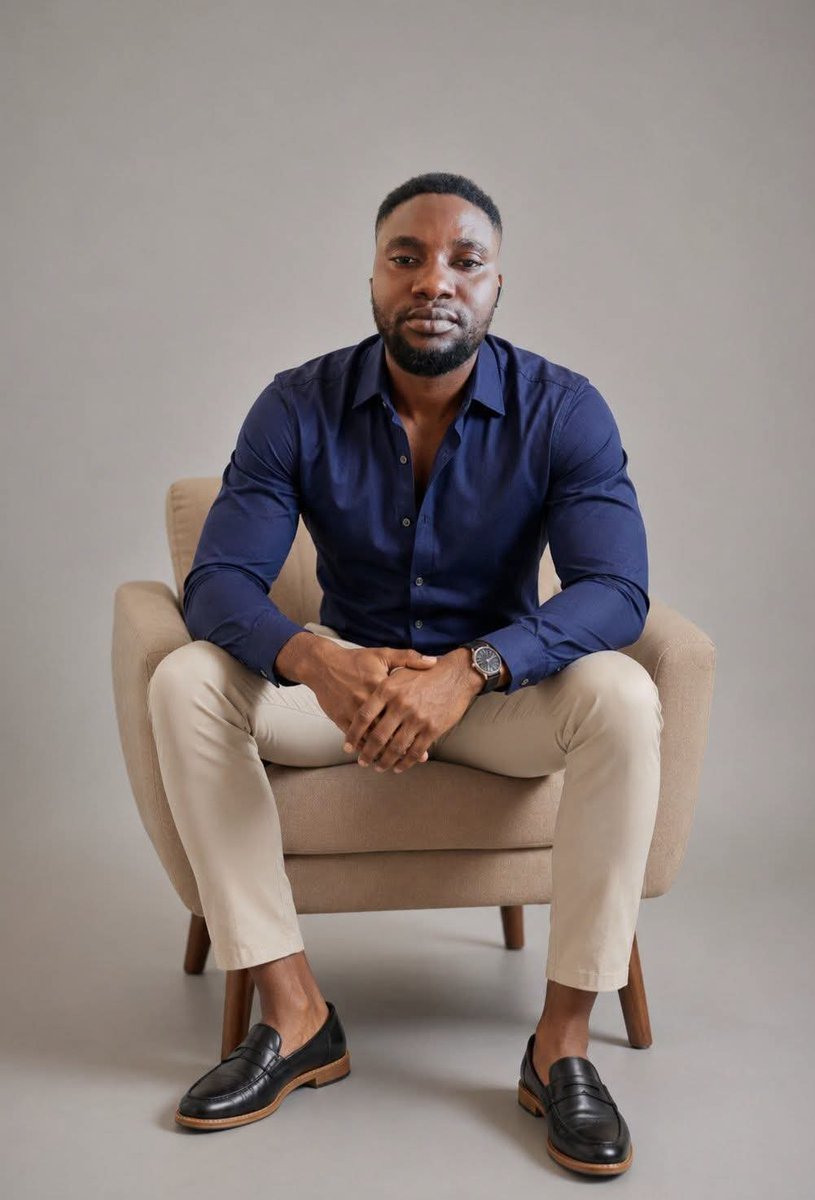
Learning data analytics in public has taught me something deeper than Excel or SQL. 📊
You can start from somewhere completely different and still build something meaningful.
I studied Animal Science.
I taught in classrooms.
I worked in customer service and sales.
Now, I'm learning data analytics.
And honestly, starting over isn't always easy.
There are days when you feel behind.
Days when you wonder if you're learning fast enough.
Days when the people around you seem miles ahead.
But I'm learning that progress doesn't require you to have everything figured out.
It starts with asking better questions.
1. Start with the question, not the tool.
Before opening Excel, ask:
What decision will this analysis help someone make?
2. Understand your data.
Where did it come from?
What does it leave out?
Can you trust it?
3. Learn the fundamentals.
Tools will change.
AI will get better.
But the ability to think clearly will always matter.
4. Learn to communicate.
Finding an insight is one thing.
Explaining it clearly enough for someone to act on it is another.
5. Build by solving real problems.
Don't just learn formulas.
Don't just watch tutorials.
Take a messy problem.
Work through it.
Make mistakes.
Figure it out.
Share what you learned.
AI can write a formula or SQL query in seconds.
But knowing what to ask, what to investigate, and what the answer actually means is the skill I'm building.
I'm Obinna.
I'm learning data analytics in public, one real problem at a time.
If you're learning a new skill, changing careers, or starting over too, you're not alone.
We're building from where we are.
What are you currently learning that could change your career?
This is why I love your journey. You didn’t wait until you had everything figured out before you started. You simply started, kept learning, and kept showing up. You’ve helped so many people see tech differently along the way. Congratulations on 100K, Annie! ❤️
I wasn’t going to do this…
But I changed my mind at the last minute because I looked back and realized that this journey has not been an easy one.
And I think what is worth celebrating is worth celebrating.
Sometimes, we get so focused on the next goal that we forget to appreciate how far we’ve come.
So this is me reminding myself to appreciate every little effort, every small win, and most importantly, the people who have been part of this journey.
I was literally just a girl who graduated from Microbiology, moved to teach, started creating content with absolutely no idea what I was doing.
I just knew that every time I put a video out, I wanted someone to take something away from it.
And somehow… we’re here.
100,000 people.
100K Instagram Followers!!
To everyone who believed in me, followed me, liked my videos, commented, shared, reposted, sent me messages, or simply watched silently
thank you. Truly.
This milestone means so much to me.
And I just want to say…
goodbye to the 100K era. 🥹❤️
Because we’re not stopping here.
We’re just getting started.
#fyp #100kfollowers
Talent development starts with knowing what you have and where the gaps are. An assessment like this can give the region useful data to better understand its students and build the skills needed for the future workforce.
Good News: PISA Assessment Will Be Coming to the South East Soon
After I wrote about my desire for the South East to participate in the PISA assessment, I received a message from Raj.
He flew in from the United States, and we met in Toronto to discuss extensively how the assessment could be conducted across the region.
This assessment is very important to me because if the South East performs strongly on the global stage, it could significantly boost the region’s international reputation and help demonstrate the quality of talent we are developing. This could strengthen our case for attracting world-class companies such as Apple, Texas Instruments, NVIDIA, Tesla, and others to invest in the region.
We are deliberately nurturing a large pool of exceptional talent, and the world needs to see what is happening here.
In 10 years, our ambition is for the South East to become a major source of talent for the global workforce.
And we are very serious about it.
@onyekanwelue There’s some truth in this. At the end of the day, you’re the one who has to live with the consequences of your financial decisions. Listen to advice, but don’t hand over that decision to other people.
A good product really does make selling easier. When people can see that it solves a real problem for them, you don’t have to work so hard to convince them.
If you build a great product:
• It's easier to get customers
• It's easier to keep customers
• It's easier to make customers happy
The better the product, the less you have to convince people.
Make it so good people feel stupid for not getting it sooner.
You don't need to have your entire life figured out this Monday morning.
Just know what needs to be done today.
Then do it.
One good week can change a lot.
Here’s a data skill I think more analysts need to take seriously:
Build an audit trail for your analysis.
If an AI tool, dashboard, or SQL query gives you an important business number, don't stop at the number.
You should be able to answer:
Where did this data come from?
What transformations happened?
Which rules or calculations were applied?
Who changed the data?
Can another analyst reproduce the result?
This matters because AI is making it easier to produce analysis at scale.
But when analysis becomes faster, mistakes can scale faster too.
A strong analyst doesn't just produce an answer.
They make the answer traceable, reproducible, and explainable.
That's the kind of analytics I want to keep learning and teaching.
Because when you work with data that affects people's decisions, accuracy is a responsibility.
The interview question "where do you see yourself in 5 years" and my brain immediately buffering like a bad wifi connection when he said he would be at my position.
😂 That “own emergency contact” part is too real. Independence comes with freedom, but it also comes with a lot of responsibility you can’t pass to anyone else.
I deliberately don’t want to use AI to automate everything I do.
So I don’t become dumb and useless…🤣🤣🤣🤣
I still do few things manually, so I can at least take credit that I contributed to the project.
What an AI time to be alive.
Building a founder-led business:
Trust is 80% consistency, 20% talent.
Leads are 80% distribution, 20% offer.
Margin is 80% deletion, 20% pricing.
Freedom is 80% systems, 20% headcount.
Work the 80.
This is so real. Remote work can be great, but after a while you start missing those random conversations and just being around people. You really have to make an effort to stay connected.
Remote work can be lonely.
No colleague beside you.
No office gist.
No random “Have you eaten?” 😂
If you work remotely long-term, create a routine that keeps you connected.
Talk to colleagues.
Join professional communities.
Leave the house sometimes.
Working from home shouldn't mean living in isolation.
That part about access to the right knowledge is so important. A lot of young people are curious and willing to learn; sometimes they just need exposure to what’s possible and a chance to explore it.
Still reflecting on such an amazing experience in Ebonyi @ebonyiskillssummit.
I had the opportunity to speak with young people, students, entrepreneurs, and innovators about Al, the changing world of work, and the skills we need to stay relevant in this new era.
What stood out to me the most was the energy in the room, the questions, the curiosity, and the willingness to learn and explore what is possible with technology.
Al is moving fast, and I truly believe conversations like these are important because access to the right knowledge can open doors to opportunities people may not even know exist yet.
Grateful to have been part of this conversation and to have shared a little of what I know.
The part about judgment really stands out. AI can handle a lot of the heavy lifting, but understanding the problem and knowing what to do with the output is where the real value comes in.
Considering a career in Tech? Anything that has to do with number crunching will never be completely replaced by AI -- Finance, Data Analysis, etc.
If you're also a creative, AI will enable your work in UI/UX, Motion Design. AI output will never be up to par in these areas.
Let's talk about the part of data analytics people don't discuss enough:
Who should be accountable when an important business number is wrong?
The analyst who reported it?
The team that produced the data?
The person who defined the metric?
The manager who made the decision?
Or should accountability be shared?
With AI becoming more involved in analytics, who owns the final responsibility for a decision made from an AI-generated insight?
What do you think? 👇
This is the part people underestimate: focused practice compounds. You don’t need to master everything; you need to stay with one valuable skill long enough for your effort to become undeniable.
Most people underestimate what 1,000 focused hours can do. Put them into one valuable skill instead of scattering them across entertainment, distractions, and endless consumption. You'll barely recognize yourself afterward.