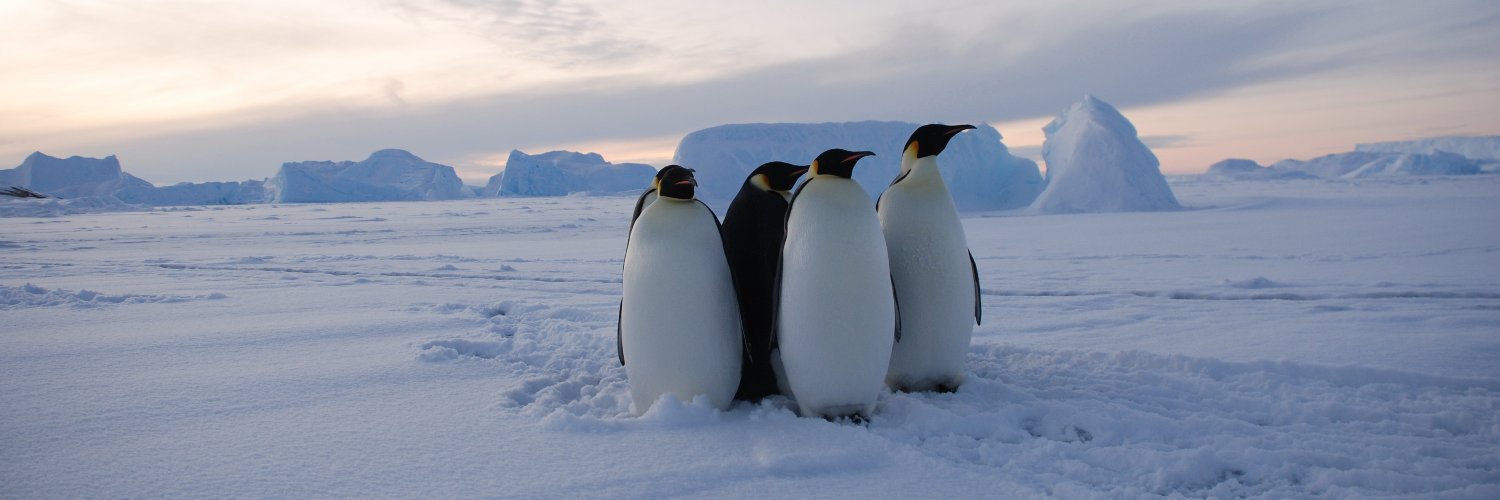
We are excited to announce that our newest e-book is now available for download! Ron Camps With Penguins in Antarctica is perfect for anyone to read, educate and enjoy. Click this link or visit our website to get your FREE copy today! https://t.co/Ft22dHjH3h
Check out “My Penguin Friend” — in theaters only on August 16, the extraordinary story of DinDim the Penguin. A ‘must see’ for all of us penguin-o-philes:
https://t.co/CcS1poKk5n
"Oceanites has been visiting Antarctica and counting penguins for 30 years, sharing the reality of climate change through the lens of penguin population dynamics." https://t.co/bru2ySZAs4
Dramatic #climate changes in #Antarctica: "The potential impacts of a slowing and warming Antarctic current could be dramatic, even impeding the flow of the Gulf Stream and rendering Arctic conditions to northern Europe." https://t.co/XGrdEJPbcI @JiminAntarctica
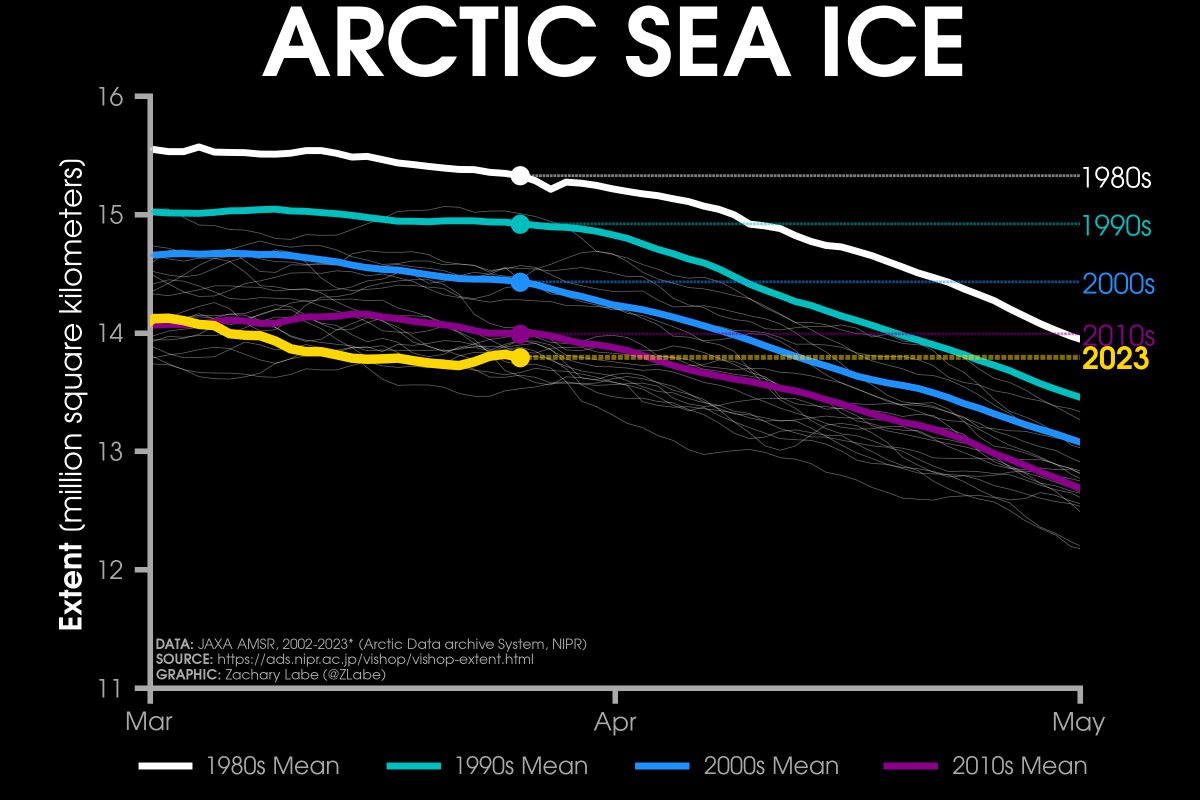
#Arctic sea ice extent is currently the 6th lowest on record (JAXA data).
• about 200,000 km² below the 2010s mean
• about 640,000 km² below the 2000s mean
• about 1,130,000 km² below the 1990s mean
• about 1,530,000 km² below the 1980s mean
Plots: https://t.co/tBkW5GBOxd
The latest #IPCC report released this week is a final warning to us all on climate action. This thread shows just a few reactions to the report across SEAI staff members which we hope will inspire you to act now, before it’s too late. (1/16)
"Globally, February 2023 set a record for the lowest February sea ice extent (coverage) on record. Antarctic sea ice extent ranked lowest on record at 460,000 square miles below the 1991-2020 average" https://t.co/0gXsyHQocM
After decades of talks UN agrees to protect biodiversity in the high seas: “Comprehensive protection of endangered species and habitats is now finally possible on more than 40 percent of the Earth’s surface.”@pxwhittle @larsonchristina @AP https://t.co/OJEXqg7cEC
At the start of February I went to #Antarctica with @Oceanites to collect important #penguin data. We visited Chinstrap colonies on the Tetrad Islands carrying out counts & #dronesurveys. Check out my @CesiumJS story board for info & 3D models I created
https://t.co/PgJAidDJbn
In #Antarctica, sea ice melt has accelerated in the past decade: "melting of the Antarctic ice sheet... will continue to contribute to sea level rise for a long time, which will test the adaptive capacity of humanity." https://t.co/BA8uNDlaft @LaConvCA#StandWithPenguins
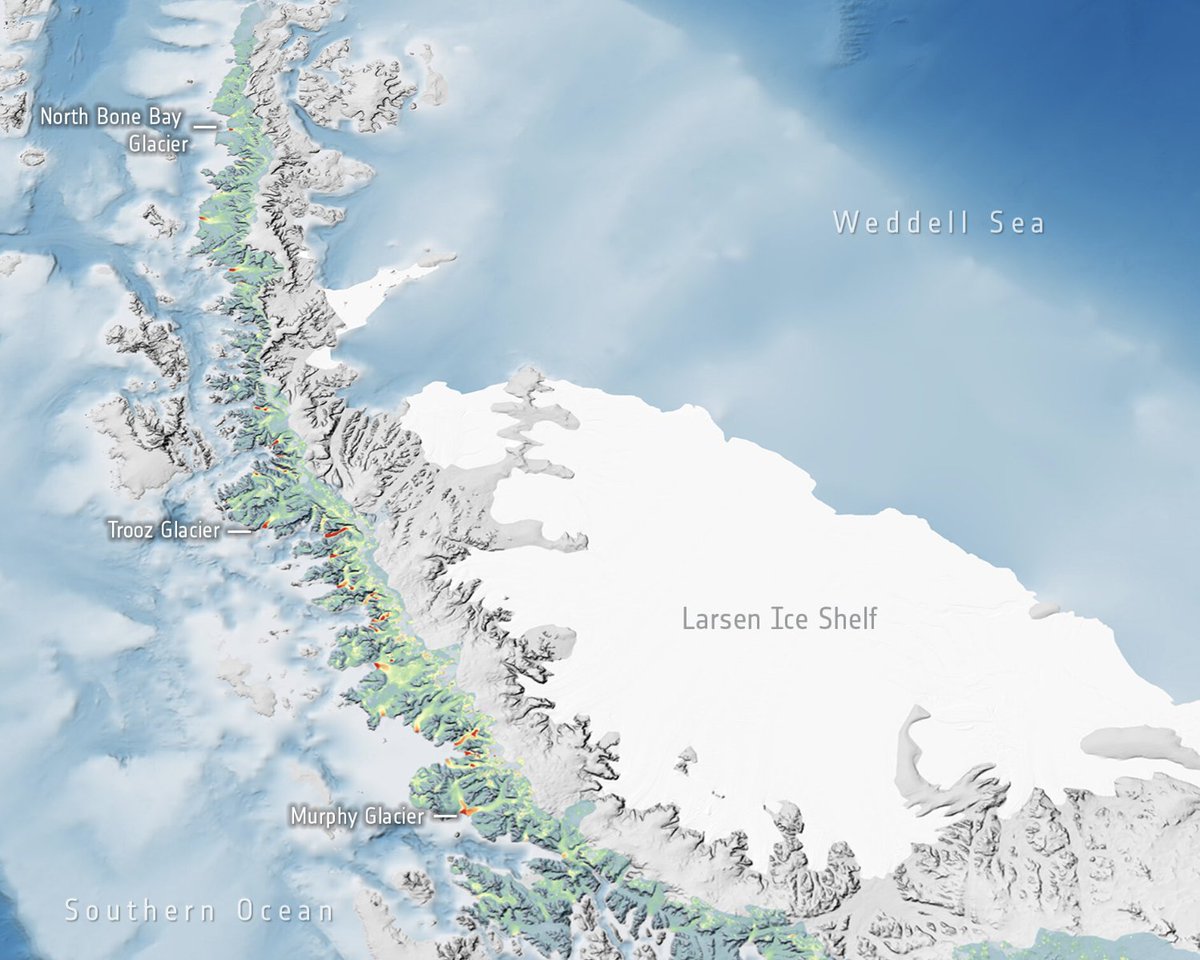
Study: #Antarctic Peninsula's glaciers melting faster in warmer summer months. “The Antarctic Peninsula has seen some of the most rapid warming of any region on Earth." https://t.co/cnso3Zby04 @esa
Stronger El Niños could increase Antarctica melting and have a “double whammy” effect "worsening extreme weather – heat, drought and bushfire risk in eastern Australia and floods in California, Peru and Chile – and accelerate sea level rise."
https://t.co/i1q0kNm6DV @adamlmorton
3/3 With three extreme sea-ice loss events in the last six years, a regime shift is under way in the Southern Ocean. What does this mean for food webs and ice shelf stability? We’re here to find out.
⚠️ Read more at https://t.co/vqnmr1NHdJ
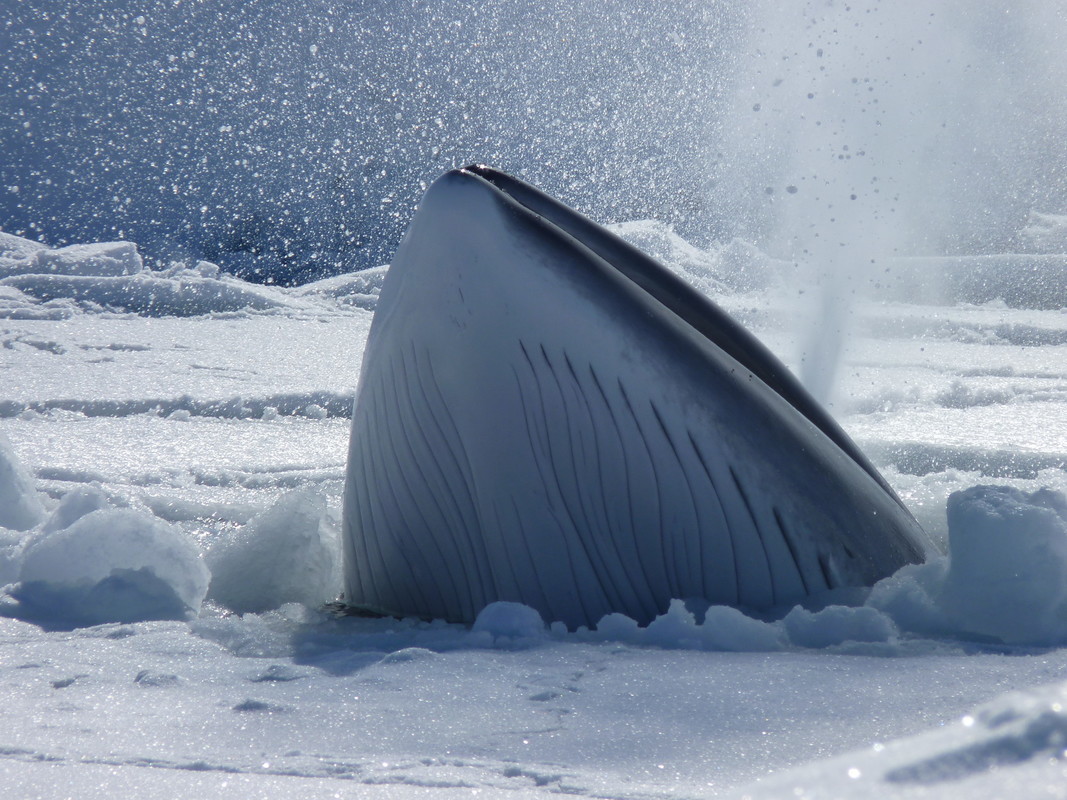
📸 minke whale in sea ice, Patti Virtue
2/3 But there’s a skip in the beat. Right now in the Southern Ocean there’s less sea ice and more exposed coast than ever. ⬇️ Monthly sea ice concentration Sep 21 - Dec 22, with wind patterns. Red for loss, blue for gain. Purple is avg ice edge, green actual.
(anim: Will Hobbs)