Yesterday, Canada released its new Arctic Foreign Policy, a document that will guide the country’s approach to a place that is key to its identity and prosperity and connects it to four other circumpolar nations.
Read our statement:
https://t.co/bXwp4oRyre
Last week, we shared the news of a Memorandum of Understanding being signed that made a step toward conservation in the Torngat Mountains area.
We’re looking back at a project from 2020 in that same area: removing 600 used fuel drums.
https://t.co/7St899NxPG
Many fisheries continue to use paper logbooks to track their catch data—a slow & cumbersome process that inhibits fisheries management.
We're applauding an announcement that electronic logbooks will be mandatory in some Atlantic Canadian fisheries.
https://t.co/IxCf20fUpT
Over the past several years, there has been a significant increase in the number of sightings and interactions with sharks in Nunatsiavut waters.
Tag, you're it! Find out how researchers, including members of our team, are tracking these sharks:
https://t.co/fFTdn5A8rc
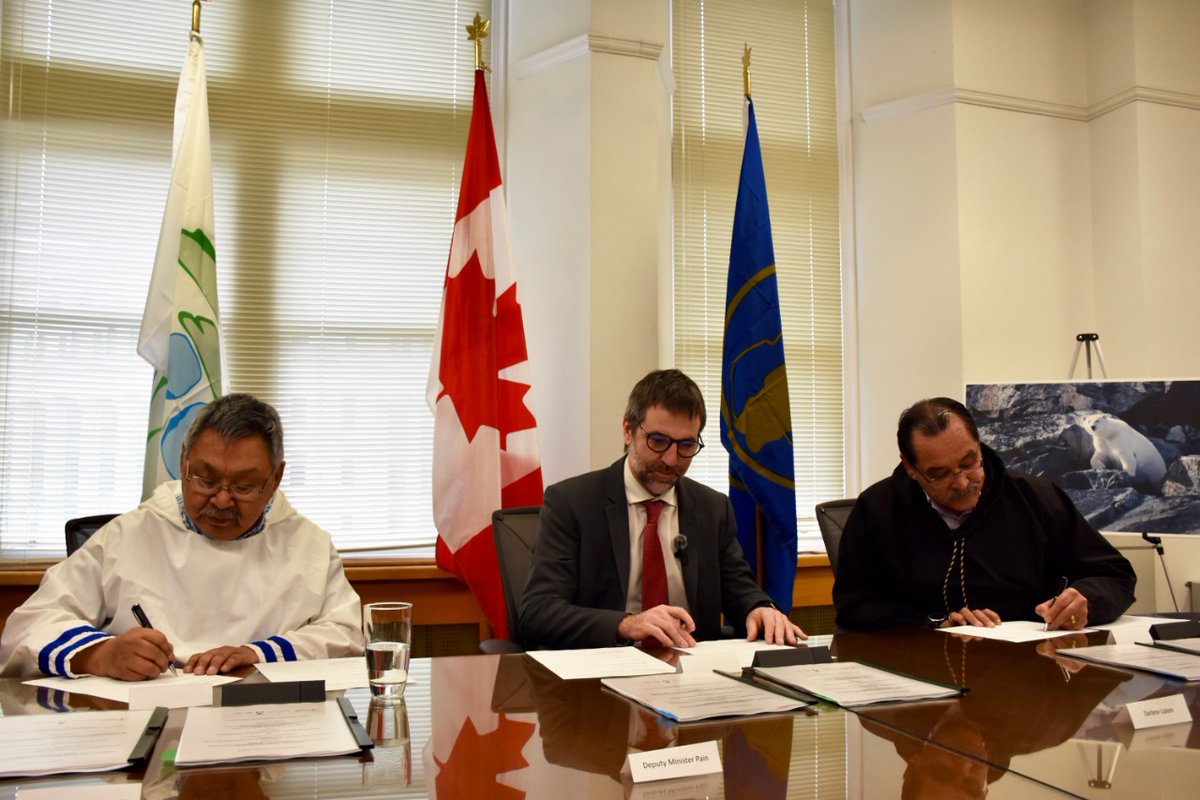
Yesterday, the @NunatsiavutGov signed an MOU to work in partnership with the federal government and Makivvik to begin negotiations to establish a new Inuit Protected Area in the waters off the Torngat Mountains.
Read more:
https://t.co/B4KHUThrgV
Last month, Canada’s clean energy future took a leap forward. With the passage of Bill C-49, the East Coast could become a hub for offshore wind power, creating a new pathway to reduce fossil fuel reliance while safeguarding our oceans.
https://t.co/FuYqzItrH8
Our website, https://t.co/wGvsfXM9us, will be temporarily offline for approximately two hours (starting at 12pm Eastern) today for some exciting updates and maintenance.
We appreciate your patience and apologize for any inconvenience while we're out!
🌊Over 50 EU Parliamentarians from 15 countries urge 🇳🇴 Norway to stop #DeepSeaMining in the #Arctic! Norway plans to open 106,000 km² of seabed (bigger than Portugal!) for exploitation by 2025. Unresponsible as we know so little about this fragile ecosystem. @emma_frr
.@FishOceansCAN released a new assessment of cod in the 3Ps zone today & the stock is still in serious trouble.
While there's been some growth, the ecosystem is changing—many fish aren't surviving to maturity. We need a plan that keeps more in the water.
https://t.co/Q8r8HIB80M
Big progress Wed. night at #CBDCOP16!
Canada joined Chile, the U.S., Belgium, Nigeria, Palau and Australia in a collaborative effort to advance high seas protected areas as the #HighSeasTreaty is ratified and comes into force.
Our own @sdfuller was attending in Colombia.
As nations gather at #COP16Columbia, we and @OurOcean call attention to the Central Arctic Ocean.
It's vital for climate regulation & supports Indigenous communities, but the Arctic is warming 4x faster than the rest of the planet.
Take the pledge: https://t.co/yttmKmVRkg
A recent decision by a federal court acknowledges the conservation risks posed by reopening the commercial fishery for northern cod, which was under moratorium for over 30 years. https://t.co/PM4wVXy0xg
Take a close look at Nunatsiavummiuk artist Chris P. Sampson's Knowledge Keeper series: considering the roles geography and prior experience play in skills like printmaking and berry picking, as well as the Elders who carry knowledge.
From @InuitArtFdn:
https://t.co/R9IRSUcINO
"Serving a full seal on the floor of Toronto’s largest downtown art gallery would concurrently be a celebration of Inuit culture and an act of rebellion against the structural barriers that stigmatize our use of meat."
https://t.co/enkZcgRzJF
The Arctic’s largest polynya is rapidly changing. As sea ice shifts, experts like Paul Myers study how these changes affect local and global ecosystems. “What happens in the North Water region impacts the southern climate."
Read our blog for more:
https://t.co/tlA8e1oykq
The North Water polynya is one of the most productive #Arctic regions on Earth. A recent report in Canadian Science Publishing showed the first representation of its food web using the Ecopath modelling framework:
https://t.co/PXxUmdiHaP
Countries met at the IMO in London to discuss reducing #emissions from ships, which account for 3% of global emissions—more than aviation. Canada is part of a high-ambition coalition pushing for strong solutions.
Our Amy Nugent shares some insights:
https://t.co/XWzLd9ySmh
The invention of so-called ropeless fishing gear is a bid to reduce the number of ropes dangling in the ocean. But the first step to overcoming resistance to the new #conservation-focused technology is building trust.
From @MoiraDonovan:
https://t.co/Xgyk2mxdPc
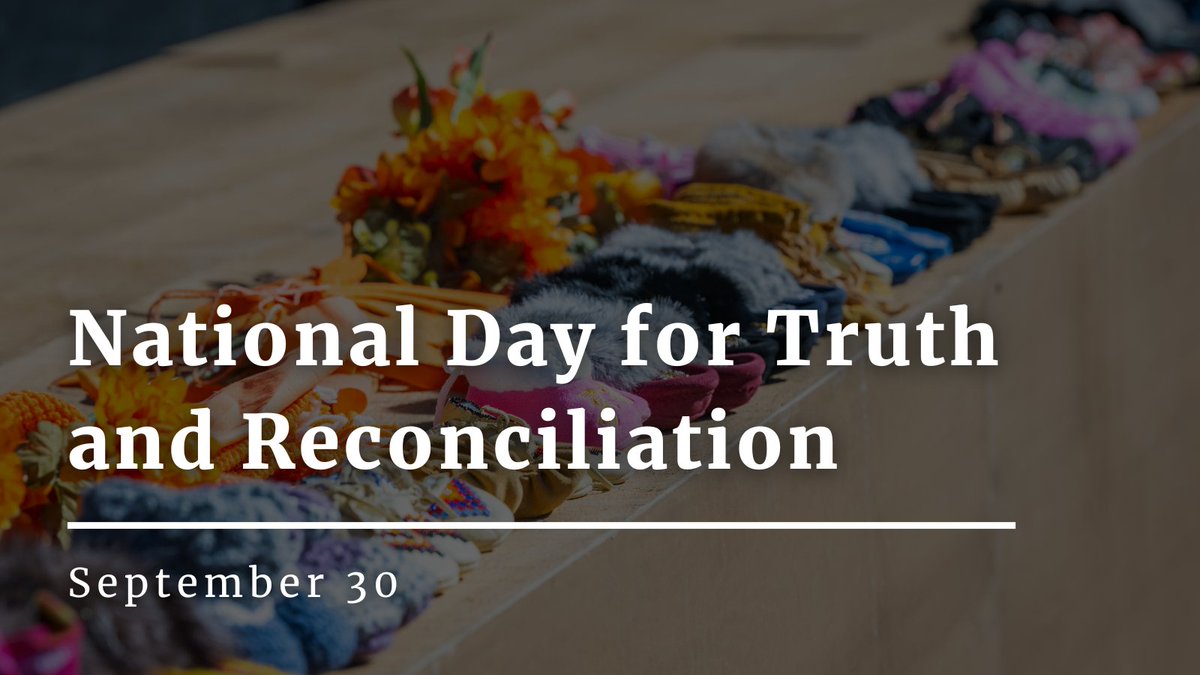
“Reconciliation is a shared pursuit. We all have a responsibility to take steps, collectively, to right the historic wrongs that continue to impact the present.”
Message: https://t.co/Arp8xtcSN8
#NDTR