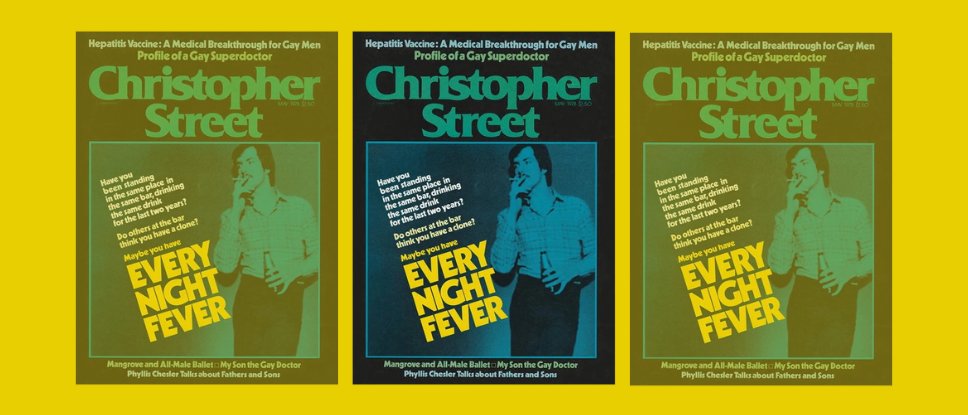
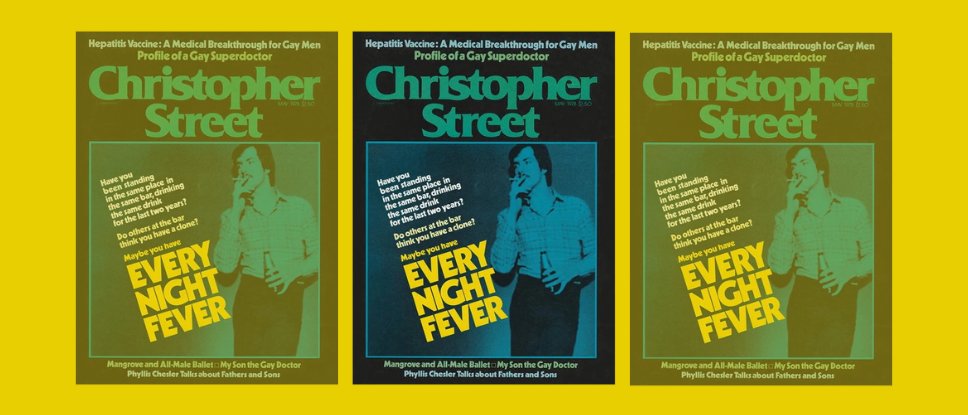
Historians @DavidSess & Blake Smith dive into the archives of Christopher Street as a window onto the gay life of the past and the gay discourses of the present
I honestly hate gay dating standards so much. I haven’t read Deleuze and Guattari. I don’t go to salons all the time. I hardly ever can identify the Lacanian objet petit a. I read Kant and Russell. I prefer concrete notions. I don’t understand the semiotic triangle.
🎧 NEW EPISODE 🎧 We look back at a 1970s critique of gay clone culture and the about the long-running false dichotomies between masc and femme, macho and camp.
🎧 NEW EPISODE 🎧 We look back at a 1970s critique of gay clone culture and the about the long-running false dichotomies between masc and femme, macho and camp.
Full episode summary here. And don’t forget to subscribe to our newsletter for longer episode summaries, sources, and bonus content! https://t.co/xlkWPLxoc6
Did gay men invent cancel culture?
Even before it was filmed, William Friedkin’s gay serial-killer thriller Cruising (1980) attracted massive publicity and protests from gay writers in New York, who feared it depicted the gay men of the city’s leather bars as sex degenerates in a moment of rising homophobia and right-wing politics.
In EPISODE SIX, we talk about Christopher Street editor Charles Ortleb’s strange screed against the film, which also served as a political statement for the magazine’s desire for gay men to become a “people” with a collective identity. We talk about how the controversy over a film now seen as a cult classic foreshadowed contemporary debates about representation and cultural appropriation, the long history of gay men analogizing homophobia to fascism and the Holocaust, and whether there’s a kind of identity politics that might be less dumb than what we experience on social media today.
https://t.co/hzZdgwedPo
I’ve seen way too much negative discourse about the gay community recently that I only want to highlight the best parts about being gay for pride month.
What’s everyone’s favorite part about being gay/gay community? ⬇️⬇️
@coreytimes You’re not supposed to encourage POSITIVE sentiments! If too many people get that idea we won’t have any material for our episode about insane Pride discourses 🤨
In 1979, the gay novelist Andrew Holleran heard tell of a gay man in New York who made someone go on 19 dates before he would even kiss them.
“How marvelous that in 1979 someone would still refuse his person to another!” Holleran wrote. “For people aren’t refusing their persons much anymore. In fact, grabbing a body is about as easy as going downstairs and buying a hamburger—which is why in San Francisco they call it “fast-food sex.”
The “man who dated 19 times,” as Holleran goes on to call him, becomes an avatar for his ambivalence about gay promiscuity and yearning for domesticity. Cheap and abundantly available, sex has supposedly lost its power to thrill or even to signify. Already at the peak of post-Stonewall gay life, we see the outlines of discourses that persist today in the perpetual rants against @Grindr, “hookup culture,” and open relationships, as well in revived reactionary critiques of the sexual revolution and a yearning for a type of eroticism imagined to be lost. Promiscuity is held to blame for an alleged shallowness of gay relationality, for preventing the establishment of deeper intimacy and coupling, and on and on.
We love Holleran and his witty, queeny columns in Christopher Street, but we’re not having it. In this episode of @OffCSPod, we talk about how promiscuity is made into yet another questionable binary: casual sex vs. intimacy and coupling, for example, instead of seeing sex as something that signifies differently in different contexts, part of different modes we move between in different spaces and seasons of life.
https://t.co/jk7SIJ0WGO
Did gay men invent cancel culture?
Even before it was filmed, William Friedkin’s gay serial-killer thriller Cruising (1980) attracted massive publicity and protests from gay writers in New York, who feared it depicted the gay men of the city’s leather bars as sex degenerates in a moment of rising homophobia and right-wing politics.
In EPISODE SIX, we talk about Christopher Street editor Charles Ortleb’s strange screed against the film, which also served as a political statement for the magazine’s desire for gay men to become a “people” with a collective identity. We talk about how the controversy over a film now seen as a cult classic foreshadowed contemporary debates about representation and cultural appropriation, the long history of gay men analogizing homophobia to fascism and the Holocaust, and whether there’s a kind of identity politics that might be less dumb than what we experience on social media today.
https://t.co/hzZdgwedPo
New @OffCSPod: We talk about Michael Musto's 1978 trend story about gays going to the disco every night of the week, and the perennial tension between going out as a central part of gay social life and the anxiety that it's a form of shallow self-evasion. Link below!
🎙️NEW EPISODE: GOING OUT AND THE PLEASURES OF IMPERSONAL INTIMACY: The long history of gays loving the club, and loving to worry that they love it too much. Link below!
📰Read the full interview from Christopher Street here: https://t.co/2icDTsXrsV
🎧You can also listen and get new episodes of the pod here:
Spotify: https://t.co/P5PtsZljjF
Apple: https://t.co/zSLroGFcac
Substack: https://t.co/aRES5Lv26w
YouTube: https://t.co/aRES5Lv26w
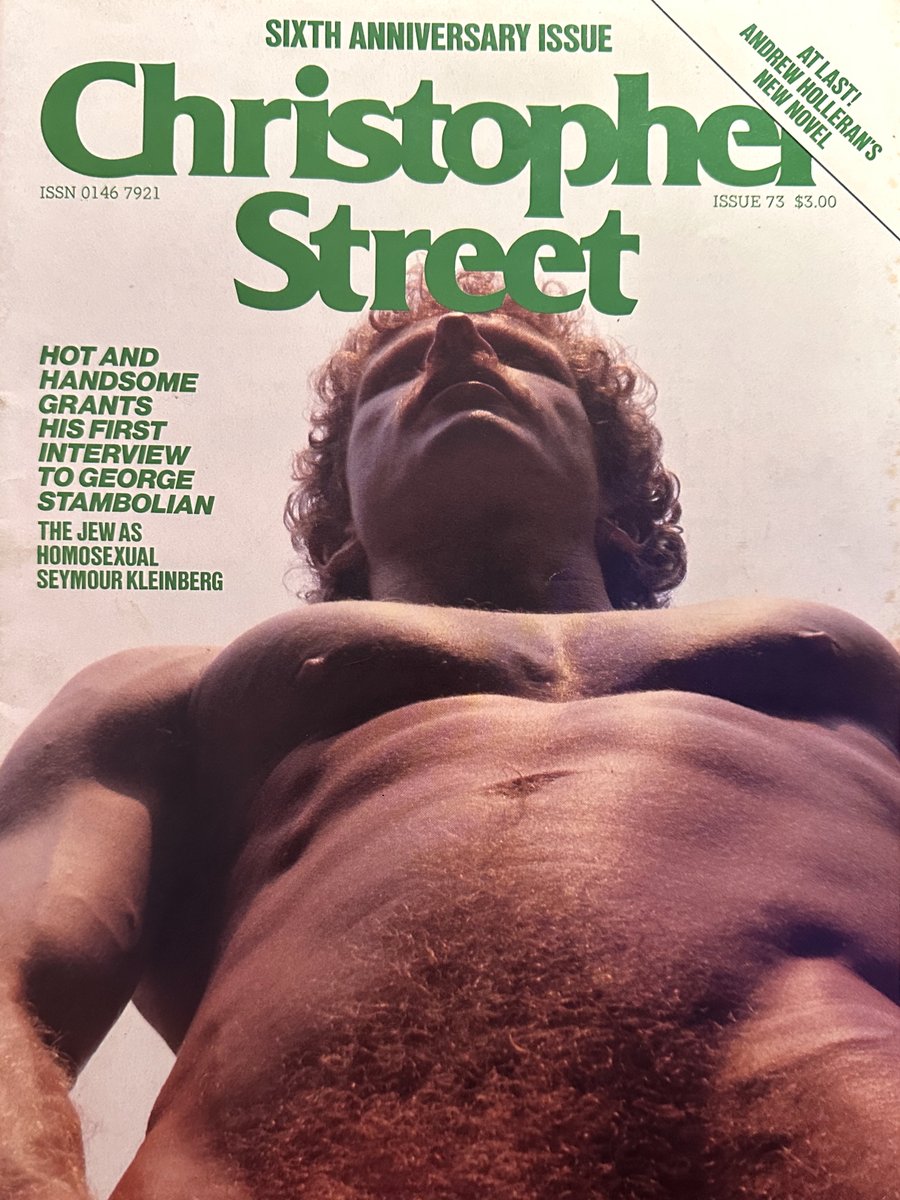
In our first episode, we read George Stambolian's "Interview With a Hot Man" from the February 1983 issue of Christopher Street and talk about the central, yet perennially controversial, role that physical beauty plays in gay culture.