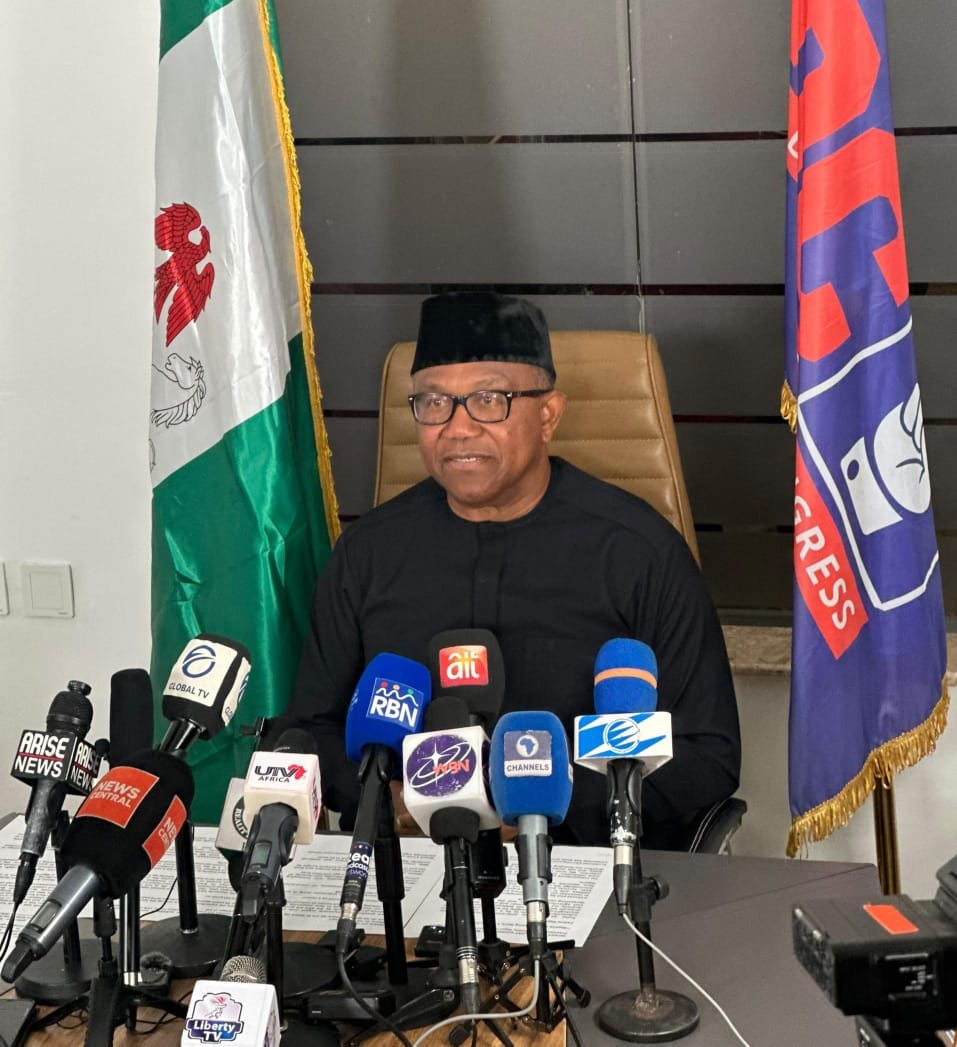
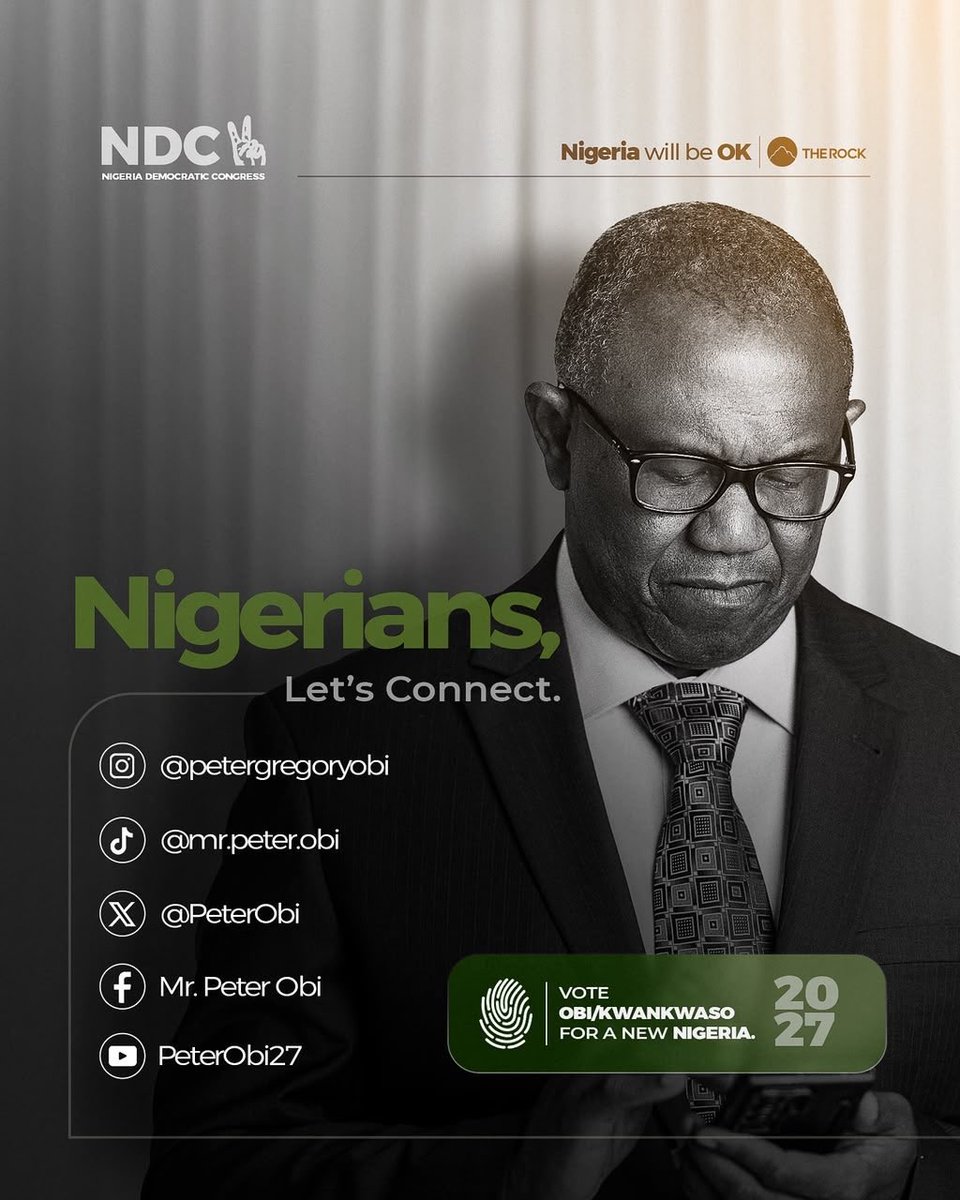
For what it's worth, the NDC seem to be more prepared to win the next elections than the labour party ever were during the 2023 elections. Still early days but I like what I see, more ground to cover though but a good start. Making SERIOUS in-roads in the North for the OK ticket.
For what it's worth, the NDC seem to be more prepared to win the next elections than the labour party ever were during the 2023 elections. Still early days but I like what I see, more ground to cover though but a good start. Making SERIOUS in-roads in the North for the OK ticket.
She: Why do men think a woman should do wifely duties prior to marriage?
He answered: If u are trying to be a wife, the best way to know if you’re wife material is to show wife qualities.
He then asked her: Why does this logic never apply on the flip side?
Watch what she said👇😂
Protecting Every Vote. Winning 2027. Together.
My fellow Nigerians at home and abroad,
Over the past months, wherever I go and in your many messages, two questions keep coming up: How will our votes be protected in 2027? And how will we win?
These are fair questions, and you deserve direct answers.
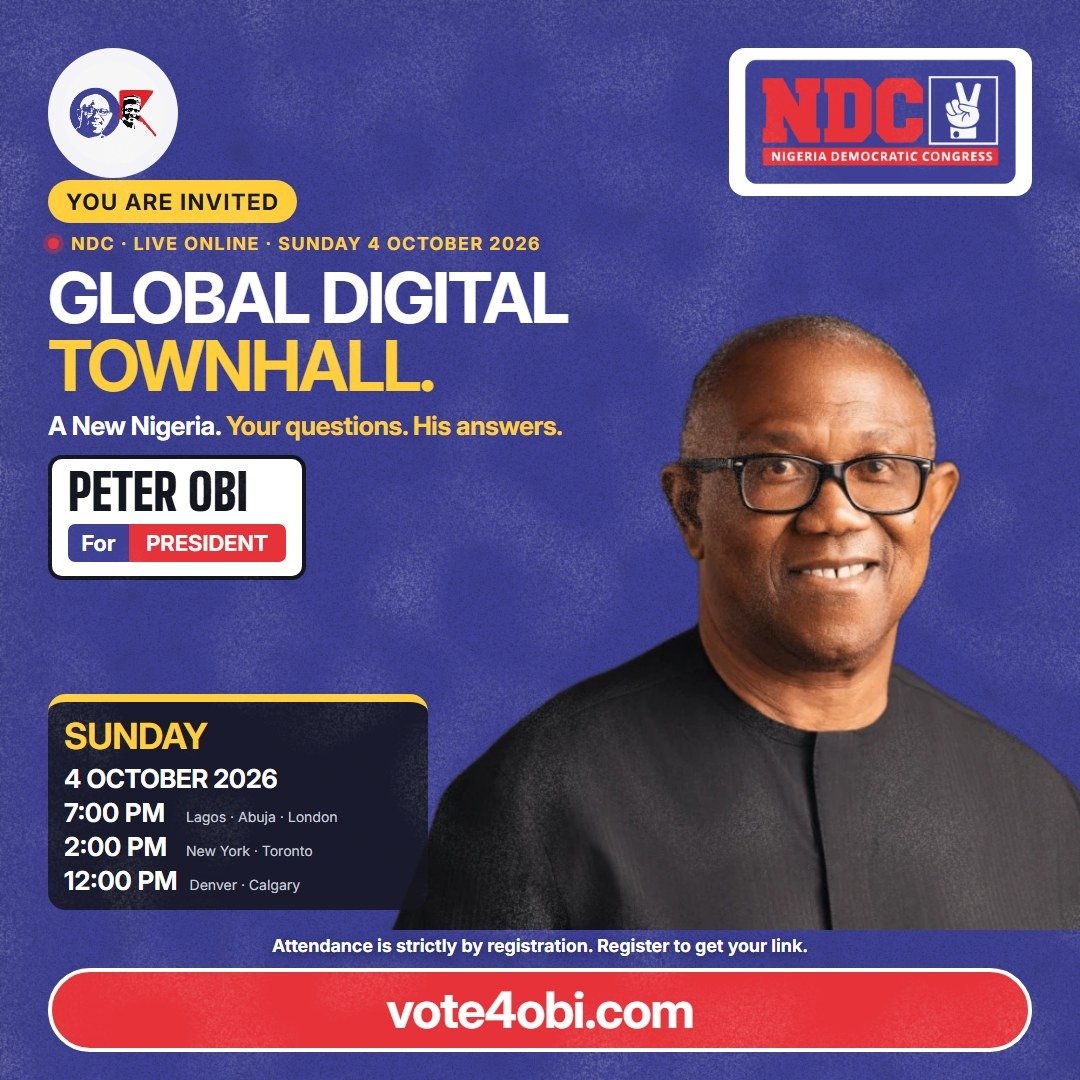
This Sunday, I will answer you directly, and more importantly, listen to you. I will join you for A New Nigeria Global Digital Townhall. We will speak plainly about protecting every vote and the path to victory.
But this is not only about speaking to you. It is about listening to you. I want to hear your concerns, your insights and your strategies. This movement has always been built by you, and your ideas will shape what we do next.
Sunday, October 4, 2026
7:00 PM WAT/GMT | 2 PM EST | 12 PM MST
Attendance is by registration: https://t.co/tBtGQWtcun
Let us continue this conversation together. A New Nigeria is POSSIBLE. -PO
Peter Obi said nothing but truth, every four years they come back or come in to start rebuilding roads. For how long are we going to remain in that loophole???
Nobody comes in to do better, just to come restart afresh and end up doing nothing different from others.
Independence Is Meaningless Without Real Freedom
As we continue to reflect on Nigeria’s Independence, we must remember that independence means very little if citizens cannot freely express themselves, within the bounds of the law, without fear.
Reports that some Nigerians in Akwa Ibom were arrested simply for identifying with the Obidient Movement should worry every Nigerian who believes in democracy and freedom, especially when such identification is a constitutional right.
One of the greatest tragedies of our society is that people who once described themselves as freedom fighters can become defenders of oppression when they eventually occupy positions of authority. Those who once complained about injustice can become comfortable with injustice when it is being perpetrated against people they disagree with. That must not be the Nigeria we accept.
Our independence must ultimately mean freedom from fear, injustice, intolerance and abuse of power.
Nigeria must belong to all of us. -PO
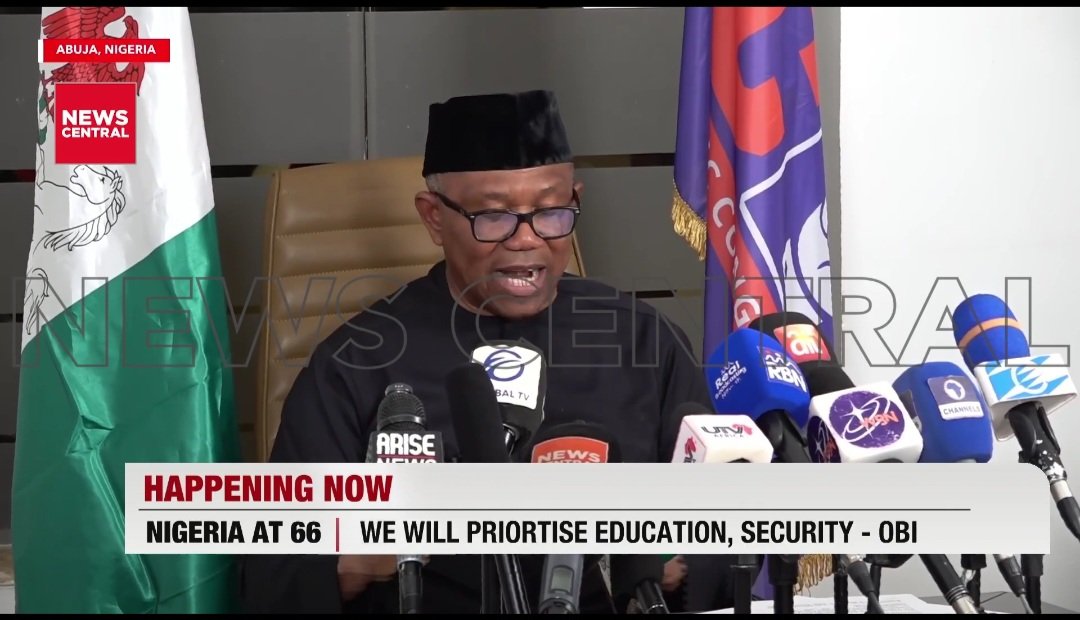
Nigeria at 66: Looking Back, Looking Forward
Fellow Nigerians,
Today we mark the sixty-sixth anniversary of our independence. It ought to be a day of celebration and thanksgiving to God Almighty for the gift of life and for the immense blessings He has bestowed on our nation—our diversity, our abundant human and natural resources, our vast agricultural potential, and the relative absence of devastating natural disasters.
It should also be a day of appreciation and patriotism: a day to remember our founding fathers and all those who made selfless, and in many cases supreme, sacrifices for the birth, survival and growth of our dear nation. We must acknowledge the efforts of past and present leaders who have laboured, however imperfectly, to build a better Nigeria.
Yet independence anniversaries must never be reduced to mere celebration. They are moments for honest national reflection. We must look back, examine where we stand today, and ask ourselves whether we are moving in the direction our founding fathers envisioned.
In national planning and strategy, every serious nation must continually ask three fundamental questions:
Where are we today?
Where do we want to be?
How do we get from where we are to where we want to be?
These questions are especially urgent now. Despite the enormous promises made by the APC-led government in 2023, our nation continues to face deepening challenges across virtually every critical sector of national life.
Today we stand before the world as a nation:
With an extraordinarily large population living in poverty and severe hardship; over 140M
With one of the largest populations of out-of-school children in the world; over 18M
Where insecurity, terrorism, banditry and kidnapping continue to threaten lives and livelihoods, just recently 37 young Nigerians in their productive age lost their lives
Where millions of Nigerians struggle with hunger and food insecurity; over 40M Nigerians will be in extreme hunger by the end of 2026.
With unacceptably high rates of infant and maternal mortality; Nigeria today is the worst place to be born.
Where youth unemployment and underemployment remain alarmingly high; over 35M
Where drug abuse and substance misuse increasingly threaten our young population; today 14% as against global average of 6%
Where life expectancy remains among the lowest globally, today 54 years against global average of 74 years
And the list goes on.
This reality demands serious, sober and honest reflection. Socrates taught that “the unexamined life is not worth living.” By the same principle, an unexamined nation cannot successfully chart its future. We must therefore ask ourselves: Are we cursed, or have we become the curse through the choices we have made and the failures we have tolerated?
The answer cannot be that Nigeria is cursed. We are a nation immensely endowed and blessed. Our greatest problem is not a lack of resources; it is the failure to convert our enormous resources into human development, productivity, security and shared prosperity.
Only yesterday, Senator Rabiu Kwankwaso and I returned from a two-day visit to Sokoto State. We held extensive consultations with people from different parts of the state on insecurity, out-of-school children, poverty, youth unemployment, drug abuse and other challenges confronting our people.
In concluding the visit, we went to the Internally Displaced Persons camp at Ramin Kura within Sokoto metropolis. What we saw was deeply troubling. Thousands of women and children live in deplorable conditions, displaced from their homes and deprived of the basic necessities of life. Many of the children have no access to education. Mothers and children have limited access to basic healthcare. These are Nigerians who should be living in their communities, going to school, farming their land, conducting their businesses and contributing to the economy. Instead, they live as displaced persons in their own country.