Igboland Is Not Landlocked: The Post-War Lie That Refuses To Die
(Episode 1)
One of the most persistent lies repeated on Nigerian social media is that Igboland is landlocked. It is a falsehood so casually thrown around that many Nigerians of Iyoruba origins now repeat it without thinking, exactly as it was designed to be repeated.
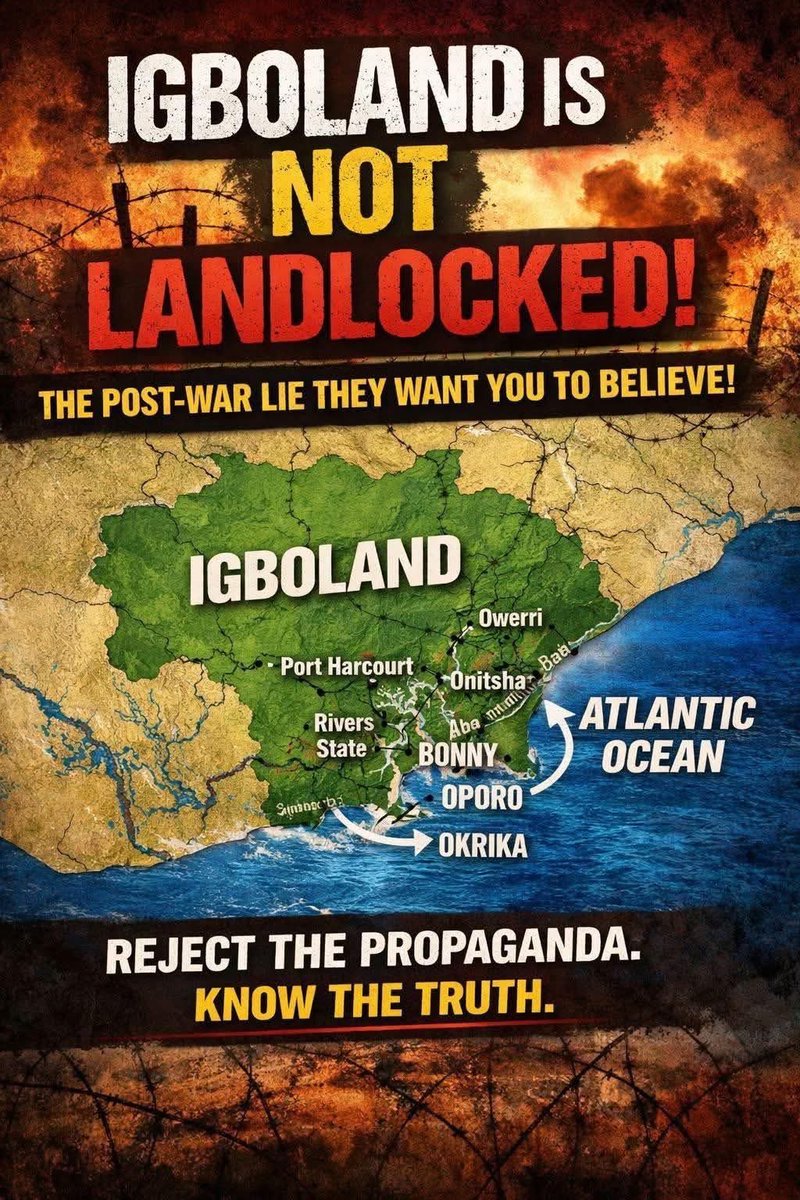
Let it be stated clearly and without hesitation: Igboland is not landlocked.
The claim did not arise from geography. It arose from political engineering championed by haters of ndị Igbo and land grabbers.
Here is the Geography they hope we forget:
Igboland stretches directly to the Atlantic Ocean through historic coastal territories such as Bonny, Opobo, Andoni, Okrika, and parts of today’s Rivers State, all of which were economically, culturally, and commercially integrated into the Igbo world long before colonial borders were drawn.
Igbo traders dominated coastal commerce centuries before Nigeria existed. Igbo merchants moved goods through the Niger Delta into the Atlantic trade network long before Lagos became prominent. A land that historically controlled inland-coastal trade routes cannot suddenly become landlocked by propaganda championed by Iyoruba people.
Maps do not lie. History does not lie. Only narratives by those whose only inheritance from their hardworking ancestors were brown roofs do lie. They will sit under their leaky brown roofs and because we allowed them control the media during and after Nigeria flag independent, they think it is still the same.
The “Igboland is landlocked” story was deliberately pushed after the Biafran War, not before it. Its purpose was psychological, not educational.
After failing to destroy the Igbo spirit militarily, the Nigerian state turned to mental warfare:
To convince Igbos they are geographically trapped
To suggest economic dependence
To discourage thoughts of self-determination
To implant fear about survival without Nigeria
This narrative was taught indirectly through school texts, political rhetoric, and media repetition until it became “common knowledge.”
That is how propaganda works.
When people repeat this claim online today, they are not proving intellectual superiority, they are repeating a federal talking point created decades ago.
Mockery does not change geography. Insults do not rewrite history. Viral tweets do not erase coastlines. Dance on TikTok from morning to night, you are not pressing anybody's neck rather, you are showing how dubious and lazy your people can be.
What is ironic is that many who repeat this line do so while claiming to be “woke,” unaware they are echoing post-war psychological warfare scripts almost word for word.
The bigger truth is that Igboland’s challenge has never been lack of access to the sea. It has been political exclusion, economic strangulation, and deliberate boundary manipulation.
And yet, despite all of this, Igboland remains one of the most commercially active regions in West Africa without oil-state privileges, without federal protection, and without coastal propaganda. That alone should raise questions.
Igboland is not landlocked. It never was. The idea was manufactured. The lie was strategic. And repeating it today by the Iyorubas only serves the agenda that created it.
History is stubborn. Geography is permanent.
Propaganda only survives when people refuses to think.
Culled from
Biafra Historical Facts
@Nuel7885@Bara_IE_ Igbo Land isn't LANDLOCKED since Bonny River which runs to Port Harcourt is an ARM of d SEA jst like Anthwerp, Belgium. Port Harcourt belongs to the Diobus who are descendants of Ọbia(Obiaturugo), father of Evo & Apara(Akpara) AKA Ekwubuogu Wọlu. Ọbia owned NwaAkpu Deity.
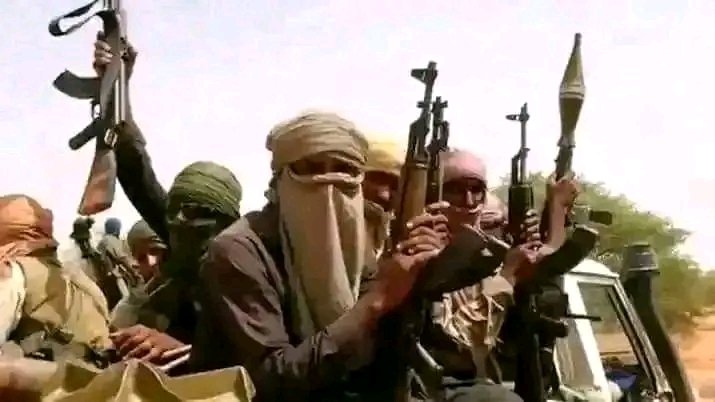
SAD NEWS: Yesterday evening in Danjibga community of Tsafe LGA, Zamfara State, a group of bandits entered a local shop and attempted to take Rufaida Yoghurt worth ₦3,500 without paying. When the shop owner insisted on payment, the group became angry, abandoned the yoghurt and left. Less than an hour later, they returned with weapons, firing shots, causing the deaths of three people, forcing residents to flee and looted the shop.
Locals often face intimidation, threats and constant fear, as bandits move from place to place disrupting daily life, forcing people to abandon their routines and making them feel unsafe in their own homes and markets.
@daudalawal_@BBCAfrica@ReutersAfrica@cgtnafrica@___Bils@MFaarees_@flexiblenancy@_hafsat_paki
SAD NEWS: Yesterday night, Armed bandits raided Sundu and Biresawa villages of Tsanyawa LGA in Kano State, abducting several women and girls. The communities lie along the Katsina–Kano border, a corridor frequently exploited by armed groups.
With attacks now shifting to border communities despite the recent peace deal involving Ingawa, Kankia, and Kusada LGAs in Katsina State, what tangible impact has the agreement had on security in the northwest? Has it improved safety overall or merely shift the violence to previously unaffected areas?
@Kyusufabba@___Bils@AM_Saleeeem@flexiblenancy