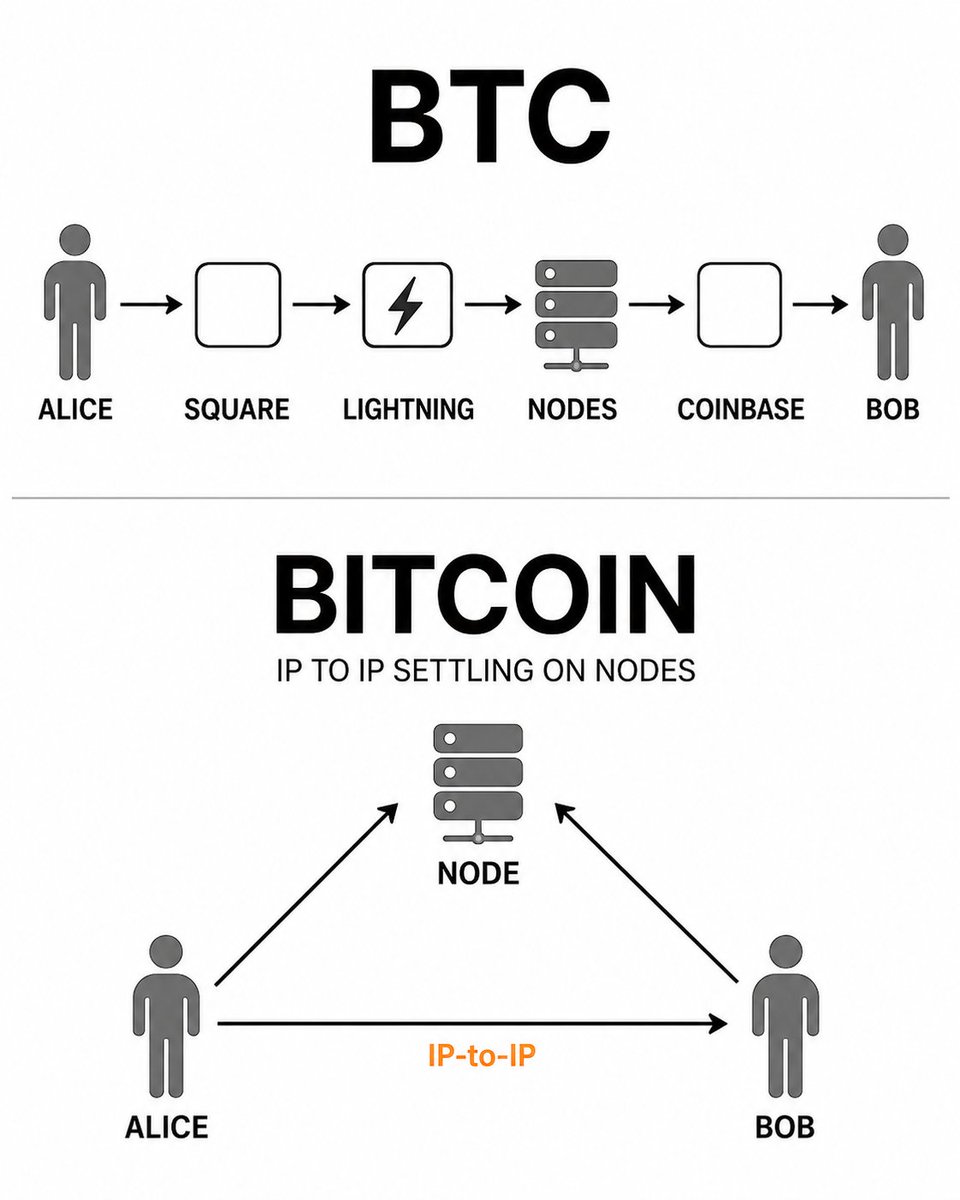
Think about the inversion for a moment.
I am the one who has been villainised for defending the individual—for insisting that Bitcoin must have a fixed protocol so that no developer, corporation, exchange or foundation can seize control of it.
I put tens of millions of my own family’s money into that fight. I threw everything at building the technology, restoring the protocol and releasing the tools. I dealt with compromised systems, intrusions, litigation and years of organised public hostility.
Then look at what stood against me.
COPA was backed by interests connected to Meta, Jack Dorsey, Coinbase and some of the largest corporate players in the world—organisations collectively representing trillions of dollars in capital and influence.
Yet many of you convinced yourselves that they represented the small individual, while I represented centralised control.
Think about that.
I argued for rules that even I could not change. They defended a system directed by a small group of developers and supported by exchanges, custodians and corporate infrastructure.
I argued that anyone should be able to build, compete and accept payment. They supported restrictions that pushed ordinary users back towards middlemen.
You were told that concentrated corporate power was decentralisation, while the person demanding a protocol beyond anyone’s control was the villain.
If you genuinely care about the small individual, stop repeating the branding and examine the structure of power.
Strategy says it will continue selling Bitcoin and no longer allocate all new capital to BTC purchases
Strategy said during its Q2 earnings call that it will continue selling Bitcoin when advantageous to replenish its USD reserve, fund preferred dividends and interest payments, and support share buybacks. Management also said future capital raises will no longer be allocated entirely to Bitcoin purchases, with proceeds dynamically split between BTC and USD reserves based on market conditions. The company added that Bitcoin-backed borrowing is not currently under consideration due to counterparty and margin risks.
There’s a lot of focus right now on the US Senate’s struggle to pass their digital asset market structure bill. I suspect they’ll succeed, although possibly not until the wee hours of the morning on the final day of the session before the midterm break (like the online gambling law that passed in 2006).
America’s legislative struggles have overshadowed regulatory advances in other countries, but politicians everywhere are belatedly realizing that blockchain tech can be so much more than just crypto grifters preying on desperate people looking for instant riches.
Memecoin hypers, platforms promising ‘yield’ of dubious origin, the extractive middlemen calling themselves digital asset treasuries... A plague on all their houses for the time and reputational damage they’ve cost us all.
The online gambling sector was in its own ‘wild west’ period when I joined, but guys like me (with MBAs rather than a history of making book by the payphone at the back of the bar) helped usher in its more mature phase. It was a necessary change, without which the sector wouldn’t have grown to the extent it has today. The same phenomenon is now happening in blockchain.
The time for tokens and price speculation is over. The time for protocols, ones that offer utility and can expand to accommodate whatever the market requires, is nigh. Hence my belief that the BSV Blockchain’s future has never looked brighter.
BSV has utility in its DNA, honouring the living, breathing, expanding platform described in Satoshi’s white paper. BSV kept its eye firmly on the horizon, anticipating what the world will need decades from now and designing its foundation accordingly.
The ‘V’ in BSV stands for vision but it could also mean ‘versatile.’ Boundless scaling capacity. Fast settlement times. Cost-effective transactions. An immutable protocol offering certainty to developers that the ground won’t suddenly shift under their feet.
For those BSV supporters who sometimes feel like they’ve been waiting in the desert for their ship to come in, may I remind you that sea levels are on the rise? Cometh the hour, cometh the protocol. This is BSV’s hour.
@BitcoinFeniks O joj, ale spokojnie -- trudności sie dostosuje i reszta bedzie zarobiąc sryliardy dolarow. A gdy zostanie tylko jeden górnik w garażu maika, to to juz zarobi pierdyliard dolarow :) moje BTC zakopałem w słoiku wlesie za 500 lat jak ktoś znajdzie bedzie przebogaty
COPA’s action against me is itself proof that BTC has institutional governance and control.
A supposedly leaderless system somehow coordinated corporations, developers, exchanges, funders, lawyers and industry bodies around a common objective: determining who may define Bitcoin, which history is accepted, which rules prevail and who is excluded.
That is governance. It is control exercised through law, capital, institutions, reputation and access rather than merely through code.
Without that governing structure, there could have been no organised action against me. COPA did not disprove institutional control over BTC.
COPA demonstrated it.
Strategy Sells $466.7M in MSTR Shares, Makes No Bitcoin Purchases
According to a July 13 SEC filing, Strategy sold 4.82 million MSTR shares for $466.7 million in net proceeds between July 6 and July 12. The company made no Bitcoin purchases during the week, leaving its holdings unchanged at 843,775 BTC, while its USD reserve rose to $3.0 billion.
@Andrzej_BTC Dzięki temu można później udowodnić, że dokument nie został zmieniony oraz wykazać, że istniał w danym momencie. To działa podobnie do notarialnego poświadczenia daty i integralności dokumentu, bez ujawniania jego treści.
@Andrzej_BTC Możesz umieścić dane w OP_RETURN, ale nie powinny to być dane wrażliwe, takie jak imię i nazwisko, PESEL, hasła czy numery kont, ponieważ byłyby publicznie dostępne. Zamiast tego umieszcza się skrót kryptograficzny (hash) dokumentu lub danych.
@Andrzej_BTC@ocean_mining@LukeDashjr Bardziej skłaniam się ku temu, że po forku BTC-BCH każdy Bitcoin poszedł własną drogą. Nie ma „prawdziwego” ani „fałszywego” Bitcoina, bo kto miałby o tym decydować? Każdy reprezentuje pewną ideę. To, czy okaże się słuszna i pozwoli projektowi przetrwać dekady, pokaże czas.
@adam3us Co ty piepszysz ośle
1) sztywny limit bloków + SegWit (2017) zamiast prostych P2P płatności;
2) fokus na "digital gold" i HODL zamiast taniego electronic cash; 3) OP_RETURN/data spam (v30/BIP-110) zamiast czystych transakcji. Immutability to mit, gdy core zmienia architekturę.
Michael Saylor is what happens when Idiocracy gets a Bloomberg terminal.
“BTC is valuable because it is scarce.”
So are my missing socks, Mike.
“BTC is digital energy.”
No, electricity went into a machine, the machine guessed numbers, and now you are selling the smoke as civilisation.
This is finance for people who think a battery is a religion.
Every cycle the speech is the same:
Number go up.
Therefore wisdom.
Number go down.
Therefore conviction.
Number goes sideways.
Therefore institutional adoption is secretly happening.
Number fails as cash.
Therefore it is a store of value.
Fees spike.
Therefore security.
Fees collapse.
Therefore efficiency.
Nobody uses it.
Therefore early.
It is perfect. A theory so padded with excuses it could survive a fall from a conference stage.
BTC does not scale, does not work as digital cash, and needs a second network that only works at scale if the first network scales, which they refuse to allow because that would ruin the little priesthood.
So they renamed failure “monetary policy.”
Saylor is standing there like President Camacho of spreadsheet theology, shouting that the orange rock has energy in it while everyone nods because the candle was green once.
This is not economics.
It is Idiocracy with laser eyes.