Going by the trend in this image and the fact that they never declared a massive drop in revenue, they engaged in this sham design to date. This club should not exist!
He has officiated in 60 times matches involving Manchester City and given them 0 red cards. Total of ZERO red cards in 60 matches. Until Foden which is probably to cover face.
And he works for a company owned by the owners of Manchester City who pays him £30k for a single match. Compared to the £1500 per match the EPL pays.
Nothing suspicious at all.
What possible sanctions could Manchester City face after being found guilty of all charges related to serious breaches of Premier League financial rules by an independent commission?
Manchester City intend to appeal the decision.
Prophetic from Arsène Wenger speaking in 2011 - “We face rivals who do not respect the financial fair play, and instead of us being accused, maybe people should look somewhere else” 🎥
Elliot Anderson: “For as long as I've known Manchester, City have been the KINGS of Manchester”.
Blud barely started his Etihad career, committed his first cheating act, and now has to eat his own words. 😭
🚨💣This is something else. Read this.
Ferran Soriano, CEO of Man City. But he is also the guy who represents English club football in Europe.
He was vice president of Barça during 2003-2008. During this exact time (it’s Laporta’s first tenure) — Barça’s notorious payments to the — then CURRENT — VP of the referee organization, Negreira, increased significantly, from about €100k per year to €500k per year. The payments are not denied, they are not a rumor. Everything has been exposed. Barca officials withdrew the money in cash from one bank, walked over the street to another bank and deposited it on accounts controlled by Negreira. Untraceable — until Negreira lost it when Barça stopped paying him and started to black mail them. A ton of traces was left. During a tax audit — everything was uncovered.
From Barca’s POV, it’s like say Chelsea had paid Howard Webb €700,000 a year under the table. Barça claimed that they paid Negreira to write reports on refs and record games on VHS from the Euros and the World Cups. No coach have ever seen any ref reports. It will have no consequence in Spain. To get a sporting sanction for bribing a ref — it must be discovered within 36 months (absurdly short). Laporta has explained that Barca was just paying for what Real got for free — ie “fair” refereeing. It’s funny, because when you add up like red cards received/given — Barca had +43 and Real -5 (2003-2018).
Did Soriano know of this? He was Laporta’s closest guy. Responsible for finances. But just to be clear — there is no evidence of it.
That is just the start of it. Soriano left Barça involved in a big spy scandal which led to him being prosecuted in court. Soriano had allegedly engaged a security firm to spy on people to find leaks from the Barca organization. He was cleared of the charges. It’s funny, plenty of Laporta’s pals are prosecuted in court for crimes, but never convicted by the Catalonian courts.
So what happens next, there is a 3 year gap after leaving Barca accused of crimes and joining City. Was he occupied by the court proceedings?
Nope, Ferran Soriano became the chairman of Spanair. A top job. Three years later — Spanair was no longer. Spain was an airline shorter. It went bankrupt. New court proceedings followed. Ferran Soriano was ordered to pay a €10.8m to creditors and he was disqualified as acting as a director for any company. Both of which he later was acquitted on appeal.
So he goes to City and becomes one of the main persons in Project Longbow (the plan to fake sponsor income). City gets fined by UEFA, in steps Ferran Soriano and makes a deal with Gianni Infantino (circumventing the UEFA body that was in charge of the proceeding). Infantino always knew how to make friends and gain favors.
Since Man City have been the best English club in Europe, they got to nominate England’s representative at the European Club Association (ECA) — the most powerful organization next to UEFA, with whom UEFA cooperates very closely regarding club football. It is one of the most powerful roles in football.
At a recent meeting in Copenhagen with the ECA, Ferran Soriano in relation to City’s being convicted of 114 charges, took time to declare that “it has taken eight years to reach this point” for the Premier League, and that “it will still take much more time” before anything is final.
City, the club he has been a CEO for, for over a decade, was just found guilty of 114 of 115 charges.
Can anyone tell me why the heck this guy is representing English football in Europe? He hasn’t been convicted of anything — but honestly, is he suitable? What other prominent positions in football are held by City nominees like this?
@Grok Please let me know if I got any facts wrong in this text. 👇
Across the nine seasons they were accused of not providing accurate information, Manchester City spent £1.943billion on wages, over £100m more than any other English club. In 17 Abu Dhabi-controlled years to the end of 2024-25, their combined wage bill was £4.963bn.
At Manchester United and Chelsea, the next-highest combined bills in England, the figure is around £600m lower. It is a staggering difference.
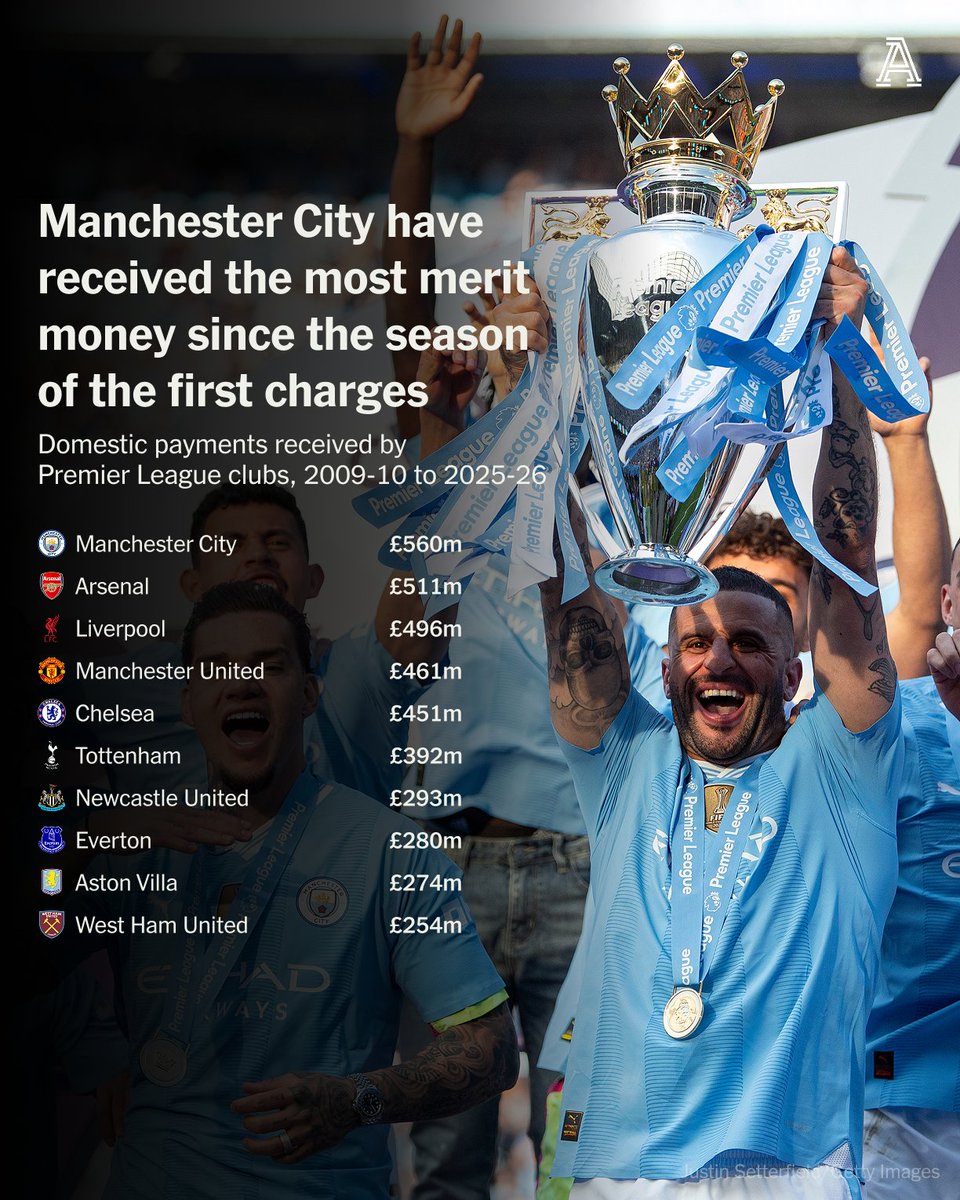
Since 2009-10 (the first season the charges relate to), the Premier League has dished out more than £6bn in merit payments to 42 different clubs. City received £559.6m (9%).
They have played in the Champions League every year from 2011-12 onwards, achieving qualification in eight of the nine years the charges spanned.
Such qualification naturally means others missed out. On that particular measure, Tottenham Hotspur were worst hit, landing one spot outside of the Champions League on four occasions during that spell. Their Europa League earnings from those occasions totalled a combined £28.8million; City made £141m from the Champions League in the same seasons.
It is not just those fighting for titles or European spots who may feel they’ve missed out. What of the beaten cup finalists? What of the clubs who might have avoided relegation if City’s results were scrubbed out?
📝 @CWeatherspoon_
https://t.co/dn2EFw7AUp
Mike Dean was the referee for that game - Man City vs QPR: “Once QPR found out they were safe… I still can get my head around why they (QPR) kicked the ball straight back. I couldn't get that.”
JUSTICE MUST BE SERVED!
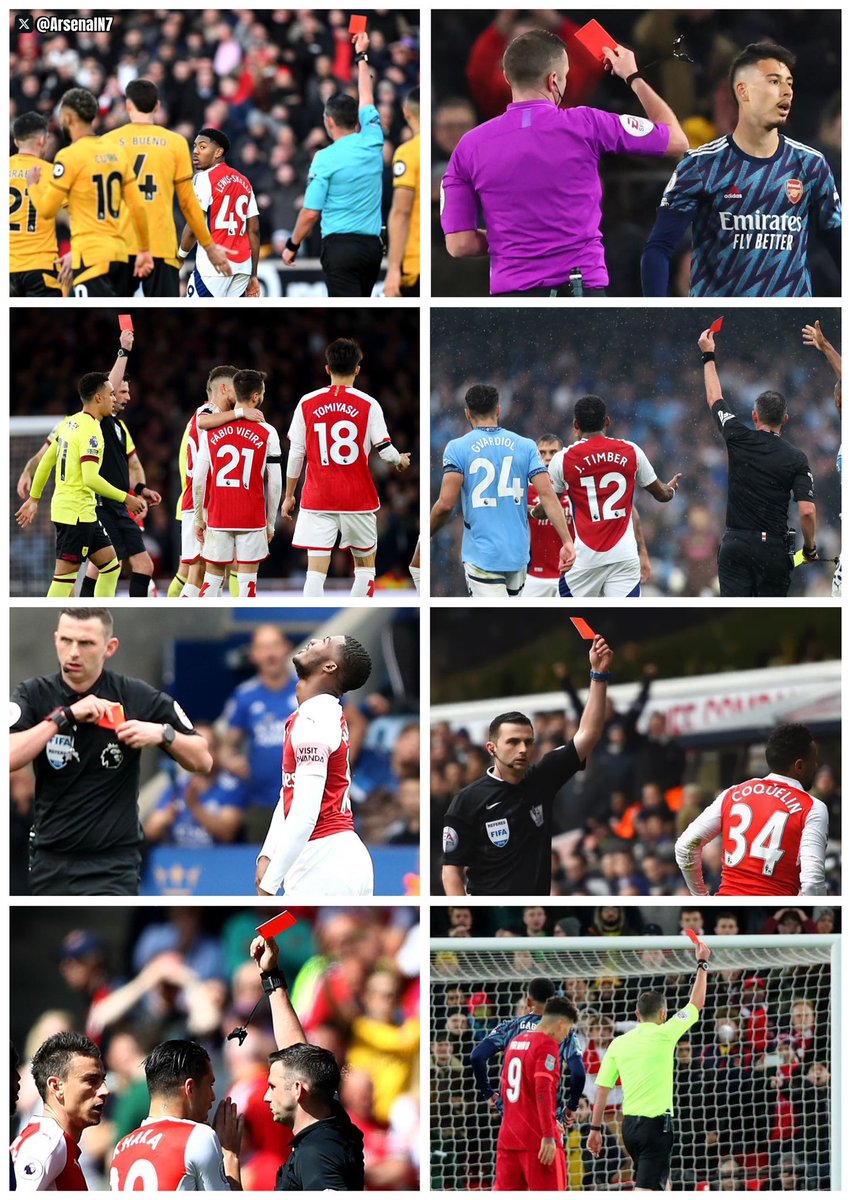
Michael Oliver has sent off Trossard, Myles Lewis-Skelly and Fábio Vieira in Arsenal games, with all three decisions attracting controversy.
Trossard at the Etihad. Lewis-Skelly against Wolves, whose red was later overturned on appeal.
Then there’s the charity-payment controversy involving Oliver and a Manchester City-linked source.
Is it really a coincidence that when Michael Oliver makes important “mistakes”, they so often seem to be either against Arsenal, in favour of Manchester City, or in a match where the outcome benefits City?
He’s always somehow involved when Man City are concerned. 🤔
Could Michael Oliver be on their payroll?
With City’s 114 charges hanging over them, this is exactly the kind of thing that deserves proper investigation.
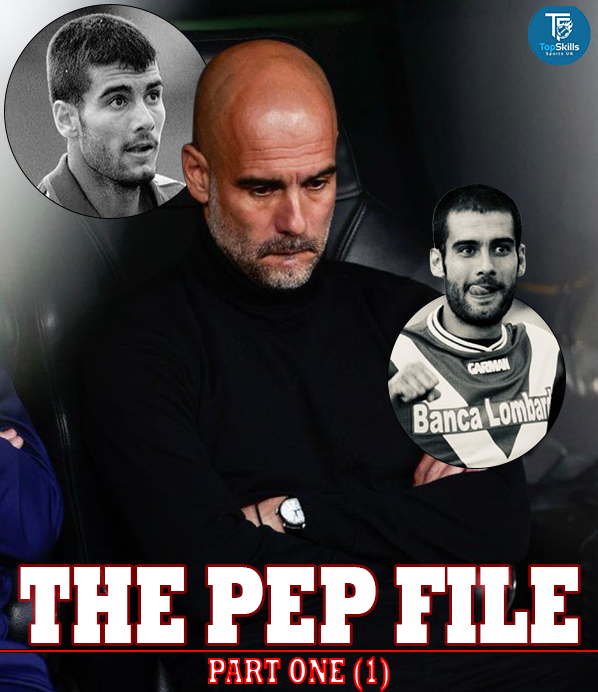
🚨💣 𝐌𝐀𝐉𝐎𝐑 𝐁𝐑𝐄𝐀𝐊𝐈𝐍𝐆: THE PEP FILES. ⤵️📰
Pep Guardiola left Barcelona in 2001 after 11 seasons, 382 matches, and 16 trophies with a completely clean testing record.
Two games into his new life at Brescia, Italian testers flagged his sample for nandrolone, an anabolic steroid used to speed recovery and add strength.
He immediately denied taking anything banned and blamed contaminated multivitamins from his long-time physiologist. The Italian federation still handed down:
🚫 — 4-month ban
💸 — €50,000 fine
A court in Brescia later added a seven-month suspended prison sentence.
The key difference was the system he walked into. Italy ran tighter thresholds, surprise tests and treated doping as a criminal matter.
Spain at the time relied mostly on predictable post-match checks and had no real out-of-competition programme.
An appeal court acquitted him in 2007 after accepting arguments that heavy physical strain can produce tiny amounts of the same metabolites naturally, or that the testing margins of that era left room for error.
A later attempt to reopen the case was thrown out on procedural deadlines.
The file was closed. The questions around that summer of 2001 have never quite gone away.
Mike Dean, the Referee that officiated Man City vs QPR that day:
“Once QPR found out they were safe.. I still can get my head around why they [QPR] kicked the ball straight back. I couldn't get that.”
CITY ARE NEVER GETTING OVER THIS😂😂😂
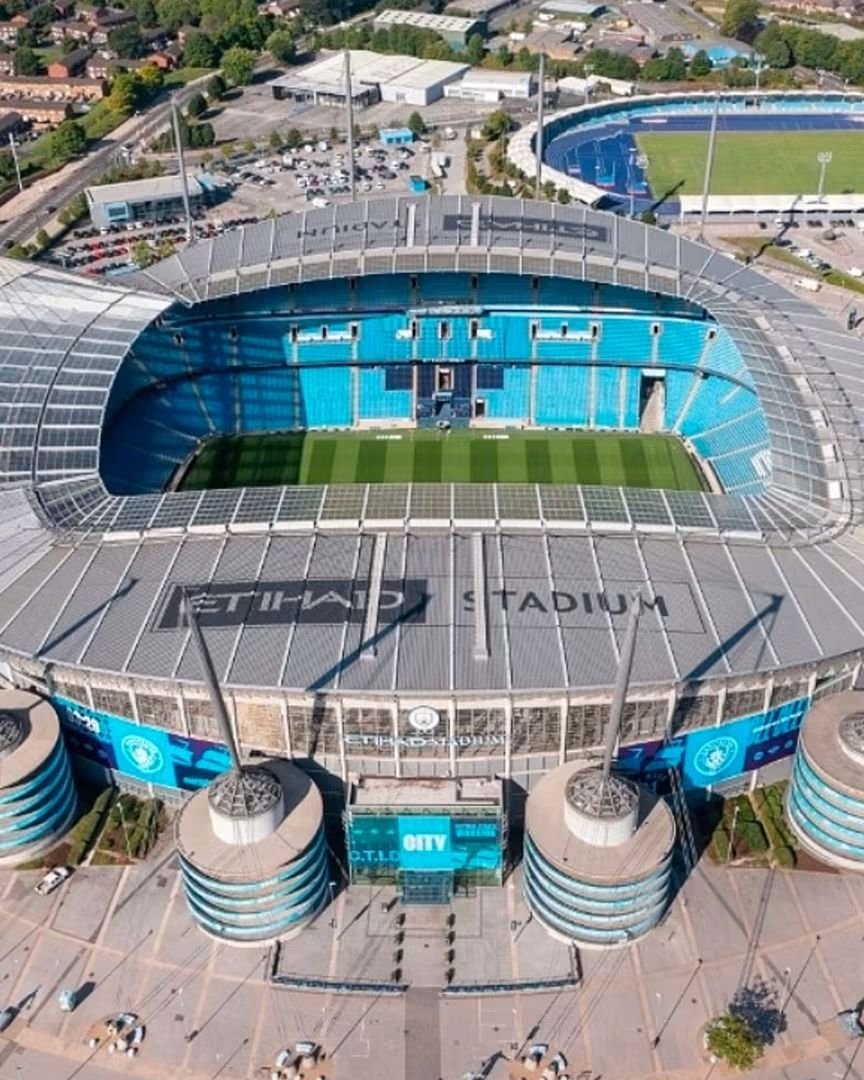
🏟️🔵 HOW MANCHESTER CITY GOT THE ETIHAD STADIUM IS A STORY MANY PEOPLE DON’T KNOW.
Manchester City do not own the Etihad Stadium. Manchester City Council does.
And the stadium wasn’t originally built for Manchester City.
It was built for the 2002 Commonwealth Games, after Manchester’s failed Olympic bids. The council wanted an 80,000-seat athletics stadium on the old Bradford Colliery site in Eastlands.
Construction began in December 1999. Tony Blair laid the foundation stone.
The stadium cost £112 million to build — including £77 million from Sport England lottery funding, with the rest coming from Manchester City Council.
It opened in July 2002 for the Commonwealth Games.
After the Games, the athletics track was removed and the stadium was converted into a football ground. The pitch was lowered and around 23,000 permanent seats were added.
That conversion cost more than £40 million, with around £22 million coming from Manchester City Council and about £20 million from Manchester City for bars, restaurants and corporate facilities.
Then City moved in for the 2003/04 season.
The club signed a 250-year lease from Manchester City Council on a fully repairing basis — meaning City became responsible for running, maintaining and developing the stadium while retaining the revenue generated from it.
The original rent was based on ticket income above 35,000.
Then came the Abu Dhabi takeover.
In 2010, the arrangement was renegotiated. City secured the right to sell the stadium naming rights, eventually leading to the Etihad Airways deal, while agreeing to pay Manchester City Council a fixed £3 million per year, rising with inflation.
In 2011, the stadium officially became the Etihad Stadium.
Since then, City have funded further expansions themselves, taking the capacity from around 47,000 to more than 61,000.
So no, Manchester City weren’t simply handed a stadium for free.
But they also didn’t build the original £112 million stadium themselves.
Public lottery money helped build it. Manchester City Council helped build it. The council funded much of the football conversion. And City obtained a 250-year lease.
That’s the history of how Manchester City ended up at the Etihad. 👀
🚨Rui Pinto: The Portuguese Computer Hacker Behind the Leaks That Sparked Manchester City’s Financial Investigation:
- Before the hearings, the lawyers and the arguments over Manchester City’s financial charges, there were the emails.
- In 2015, Portuguese computer hacker Rui Pinto founded Football Leaks, a platform that brought confidential football documents into public view. Among the material he supplied were Manchester City’s internal emails and financial records. City said its emails had been obtained through hacking, while Pinto initially denied acquiring them illegally.
- Operating under the name “John”, Pinto and his platform ‘Football Leaks’ often supplies confidential data on hard drives to Rafael Buschmann, a journalist at German magazine Der Spiegel. The magazine shared the material with the European Investigative Collaborations network, allowing journalists across several countries to examine the documents and investigate the transactions they described. The European Investigative Collaborations network was examining more than 70 million documents, with almost 80 journalists from 13 countries involved.
- In November 2018, Der Spiegel published findings about City’s sponsorship arrangements and finances, bringing the allegations to public attention and helping trigger the investigations that followed.
- One report examined a £67.5 million Etihad sponsorship arrangement, alleging that only £8 million came from the airline itself, with the remaining £59.5 million supplied by Abu Dhabi United Group. These were contested allegations, and their treatment in the later UEFA appeal is an essential part of the story.
- In March 2019, UEFA opened a formal investigation. The Premier League publicly confirmed its own inquiry the following day, on 8 March. City denied wrongdoing and argued that hacked emails had been published without their proper context.
- UEFA’s case initially delivered a dramatic outcome. In February 2020, it imposed a two-season European competition ban and a €30 million fine. City appealed.
- In July 2020, the Court of Arbitration for Sport overturned the ban, explaining that most of the alleged breaches were either unproven or outside UEFA’s applicable time limit. A finding of failure to cooperate remained, with the fine reduced to €10 million.
✯ The Premier League investigation continued separately.
- On 6 February 2023, the Premier League sent Manchester City’s “115 charges” case to an independent panel. City was accused of providing inaccurate financial records between 2009/10 and 2017/18, not fully reporting payments to managers and players, breaking UEFA and Premier League financial rules, and failing to cooperate with the investigation up to the 2022/23 season.
- The case focused on whether City had correctly reported its income and payments and cooperated with investigators. It also tested whether the Premier League could enforce its own rules.