Sanjay Subrahmanyam on Carlo Ginzburg (1939-2026):
'It was of little help to try and console the perfectionist historian with a reference to Horace’s adage about how even Homer nods...'
https://t.co/k5JefePQnX
The Buddha created the sangha as a monastic order open to men and women of all castes.
According to the Paharada Sutta, “just as rivers lose their former designations when they flow into the ocean, when people from any of the four varnas enter the monkhood they lose their former names and clans and become bhikkus.”
Sri Lankan Buddhism did not simply drift away from the Buddha’s teaching; it was gradually transformed by power, patronage, caste and politics.
Caste began to creep into the sangha around the 5th century CE. By the 18th century, this drift had become institutional. King Kirthi Sri Rajasinha issued a royal decree limiting monkhood to the dominant Govigama caste.
Read the full piece by Tisaranee Gunasekara to know more: https://t.co/pwxH85HinI
‘I urge you to talk to us about the historian as a living archive. The complexity of personal ethics while sifting through evidence without falling prey to bias or prejudice, or the injustice of the times we live in.’
https://t.co/VpKWfGEXBy via @scroll_in
Delighted - and frankly surprised - that Muslims Against the Muslim League: Critiques of the Idea of Pakistan is still in demand almost ten years after it was published. It says a lot about how much interest there still is in this subject. There’s so much more to be written here, about so many other leaders and political thinkers to be covered.
@najamsethi was always keen to get it published in Pakistan, and now Vanguard has finally brought it out.
PS: I wish I had known a little earlier - I would have loved to fix a couple of embarrassing errors in the text!
“Foucault was obsessed by power, which certainly helped him to find something. But in my view he overrated this to the point of not listening to the voices of the oppressed.”
https://t.co/TWYhO3VQEo
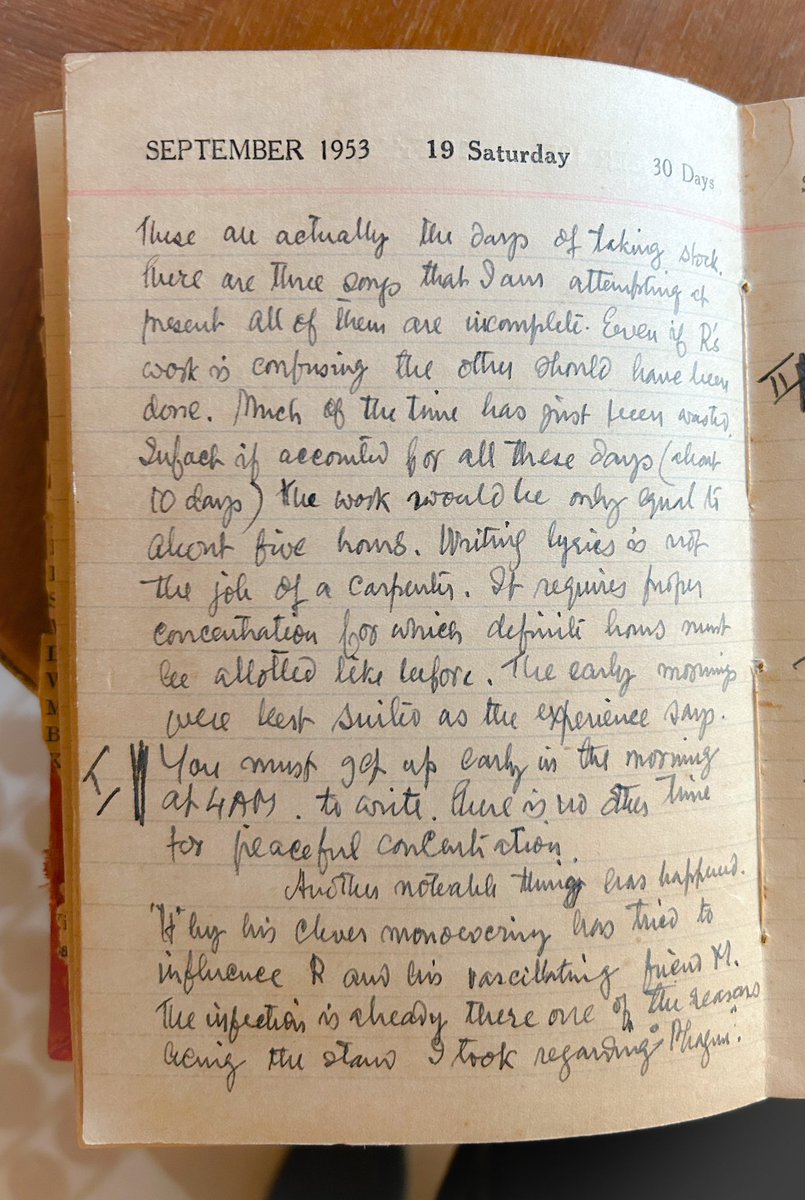
Day well spent with Dinesh Shailendra, son and archivist of the great film lyricist Shailendra. We went through Shailendra’s journal entries, and discussed his Dalit background, Communist years and his immeasurable body of work despite a short career.
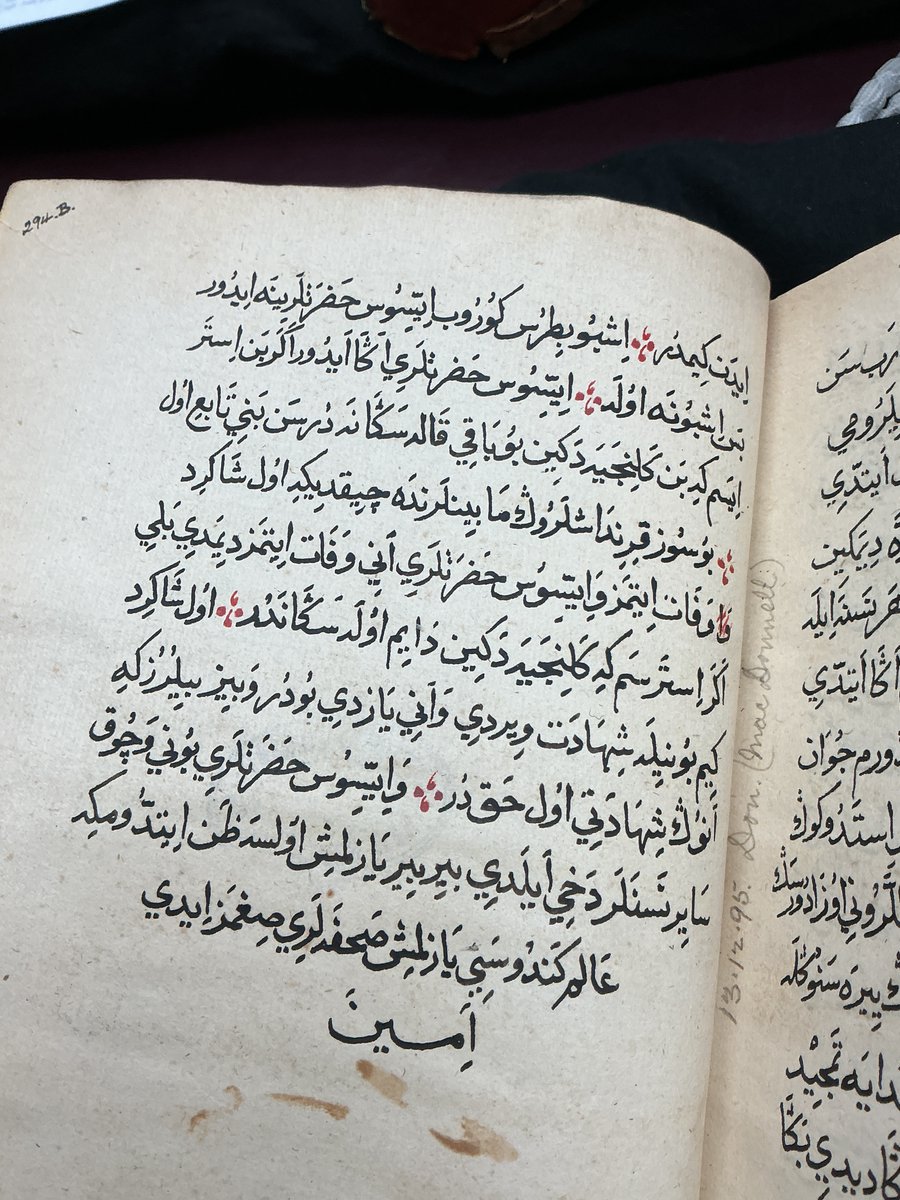
A Turkish manuscript translation of the Gospels at the State Library of New South Wales in Sydney, which appears to be independent of the ʿAlī Ufḳī/Kieffer translations. Notably, it uses both Coptic and Vulgate chapter divisions, and renders “Jesus” as ايسوس (Īsūs). ms L1/B.
I am excited to announce the publication of my new monograph, Terrorism in Question: Decolonizing Anthropology & the Study of Islam. On its hardcopy, the publisher. Berghahn, offers 50% discount valid until 31 July [ code Ahma5368]. Details in the comment.
https://t.co/WXDNxJjZqm
Book's Description
"Terrorism in Question crafts a political anthropology of post-9/11 “new terrorism” by investigating who needs the category of terrorists and offering a global framework to understand anthropology, Islam and terrorism. In contrast to their depiction as antimodern, barbarian and fanatic, this study theorizes “Muslim terrorists” as radical friends of equality and visionaries of an unrecognized ethical politics. Marshalling fieldwork with media practitioners and refugees, participant observation of counterterrorism conferences in India and Oslo, and encounters with terrorists, it reorients anthropology to elevate its public voice. This book shows how fieldwork, poetry and political theory come together to exemplify decolonized knowledge."
Free-spirited political anthropology at its imaginative best: brilliant and brave.
• John Keane, University of Sydney
This is a paradigmatic book; hardly one comes across such an outstanding scholarly work.
• Pralay Kanungo, Leiden University
Deeply original. There is nothing else quite like this powerful book.
• Faisal Devji, University of Oxford
Brilliant. If I had to recommend one book that challenges the reader to think critically about “terrorism,” this would be it.
•Talal Asad, CUNY, New York
Indispensable.
• Joseba Zulaika, University of Nevada
Irfan Ahmad’s Terrorism in Question confirms my belief that anthropologists write the best books about terrorism...Erudite, wide-ranging, endlessly fascinating, genuinely illuminating, and ultimately empowering, this is a book that anyone interested in (counter)terrorism simply must read.
• Richard Jackson, University of Otago
A crucial and timely contribution to assessing the political labor effected by the concept of terrorism today. Essential reading!
• Charles Hirschkind, University of
California, Berkeley
Front matter, with TOC, and more available for free here:
https://t.co/owi0LDOLBC
#NewPublication
Music in the Safavid Era (1501-1736)
Four Texts and Their Translations
ed/Transl. Amir Hosein Pourjavady, BRill, 2026
https://t.co/7Y1lSY8Zee
To atone for letting AI-generated stories abt cheating fruits consume my algorithm, I wrote about 15th & 16th c. edible kingdoms where foods, reimagined as kings & villains, waged battles for supremacy. Click on the 🔗 to enter the world culinary warfare. https://t.co/WSYRn5zqzd
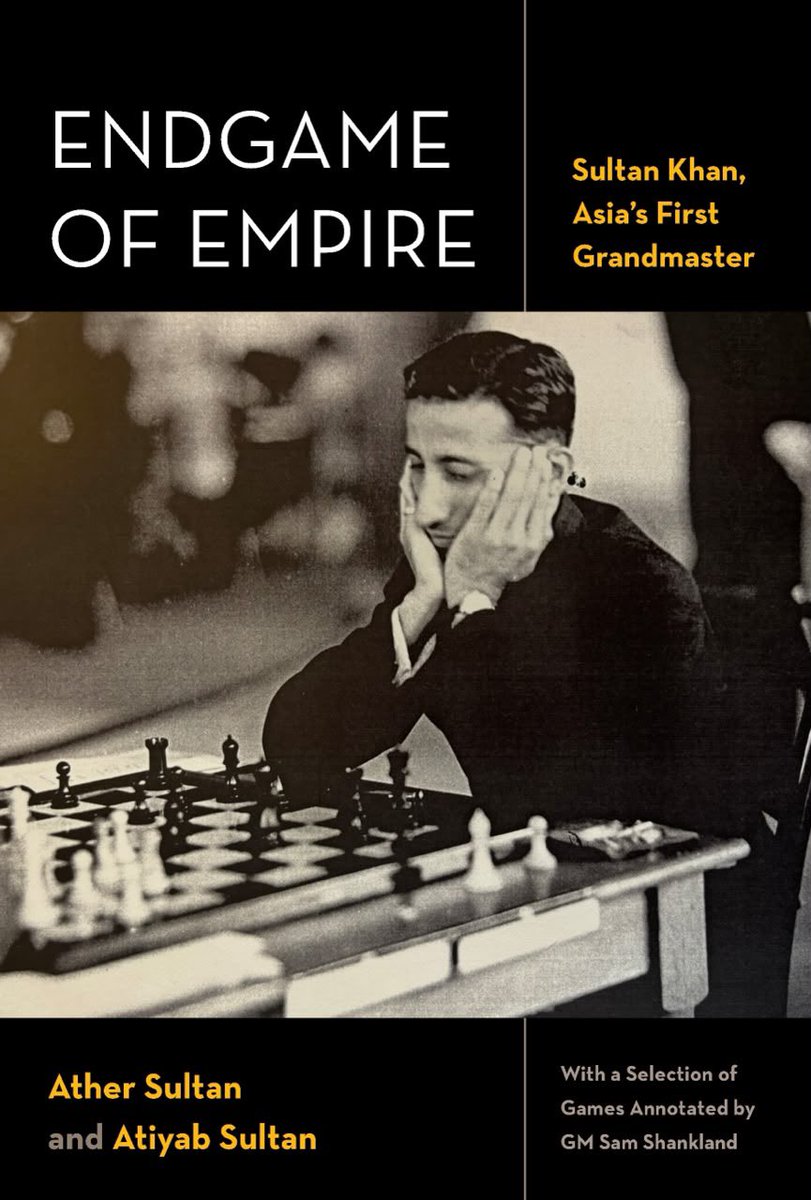
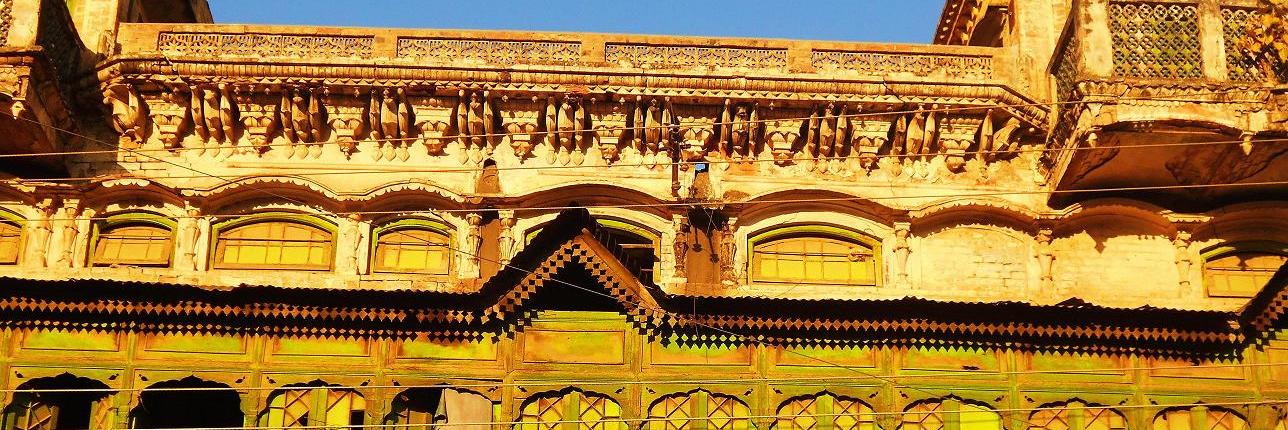
Sultan Khan - a chess genius from Mittha Tiwana in Punjab’s Khushab-Sargodha region - is a name history largely forgot. This brilliantly written biography brings him back.
Not that it’s the best way to praise an academically rigorous work, but it’s worthy of a Netflix biopic!
Superbly written by his son Aftab Sultan and granddaughter @atiyabsultan, this book needs to be read by historians, students, and chess enthusiasts alike.
https://t.co/88s7p0k8nh
#grandmaster #chessgenius
My latest article on the philosophical and mystical dimensions of Qawwali and some remarks on the political economy which will eventually lead to the end of this art.
It is slightly less scholarly and more popular. Let's see how it works out.
https://t.co/kO2u0klKDM
“The ‘micro’ in Ginzburg’s microhistory refers to procedure rather than objects, indicating how ostensibly small historical traces, minutely studied, may disclose unsuspected realities of considerable significance.”
‘Machiavelli, Galileo and The Censors’ https://t.co/JKNsx10894
In an interview with Maktoob’s Ashikha N, historian Sarah Waheed discusses her book Chand Bibi: The Lives and Legends of a Warrior Queen, exploring how archives, folklore, and oral histories helped reconstruct the life of Chand Bibi and what her legacy reveals about power, resistance, memory, and women's authority in the Deccan.
https://t.co/UzjzlcIfzn






![IrfanHindustan's tweet photo. I am excited to announce the publication of my new monograph, Terrorism in Question: Decolonizing Anthropology & the Study of Islam. On its hardcopy, the publisher. Berghahn, offers 50% discount valid until 31 July [ code Ahma5368]. Details in the comment.
https://t.co/WXDNxJjZqm
Book's Description
"Terrorism in Question crafts a political anthropology of post-9/11 “new terrorism” by investigating who needs the category of terrorists and offering a global framework to understand anthropology, Islam and terrorism. In contrast to their depiction as antimodern, barbarian and fanatic, this study theorizes “Muslim terrorists” as radical friends of equality and visionaries of an unrecognized ethical politics. Marshalling fieldwork with media practitioners and refugees, participant observation of counterterrorism conferences in India and Oslo, and encounters with terrorists, it reorients anthropology to elevate its public voice. This book shows how fieldwork, poetry and political theory come together to exemplify decolonized knowledge."
Free-spirited political anthropology at its imaginative best: brilliant and brave.
• John Keane, University of Sydney
This is a paradigmatic book; hardly one comes across such an outstanding scholarly work.
• Pralay Kanungo, Leiden University
Deeply original. There is nothing else quite like this powerful book.
• Faisal Devji, University of Oxford
Brilliant. If I had to recommend one book that challenges the reader to think critically about “terrorism,” this would be it.
•Talal Asad, CUNY, New York
Indispensable.
• Joseba Zulaika, University of Nevada
Irfan Ahmad’s Terrorism in Question confirms my belief that anthropologists write the best books about terrorism...Erudite, wide-ranging, endlessly fascinating, genuinely illuminating, and ultimately empowering, this is a book that anyone interested in (counter)terrorism simply must read.
• Richard Jackson, University of Otago
A crucial and timely contribution to assessing the political labor effected by the concept of terrorism today. Essential reading!
• Charles Hirschkind, University of
California, Berkeley
Front matter, with TOC, and more available for free here:
https://t.co/owi0LDOLBC](https://pbs.twimg.com/media/HLlYgs_X0AEdPCY.jpg)