The answer is B. In North Korea, 일 없다 means "it's okay, no problem".
In South Korea, the same phrase has come to mean "none of your business". Same three syllables, warm on one side of the border and a flat brush-off on the other.
Korean quiz.
In North Korea, someone says 일 없다 to you. What have they just told you?
A. It's broken
B. It's okay, no problem
C. None of your business
Can you write your answer without looking at other people's comments?
The best thing I ever did for my Cantonese was give up on it.
Burned out, forcing a session every evening, getting nowhere. So I stopped and watched a Hong Kong drama instead. Eighty-odd episodes, subtitles on.
Months later my teacher said my pronunciation had got much better.
Portuguese for having no idea what you are doing: Viajando na maionese. Travelling in the mayonnaise.
Russian: Сесть в лужу. To sit in a puddle. An awkward spot you put yourself in.
French: Chercher midi à quatorze heures. Looking for noon at 2pm. Overcomplicating things.
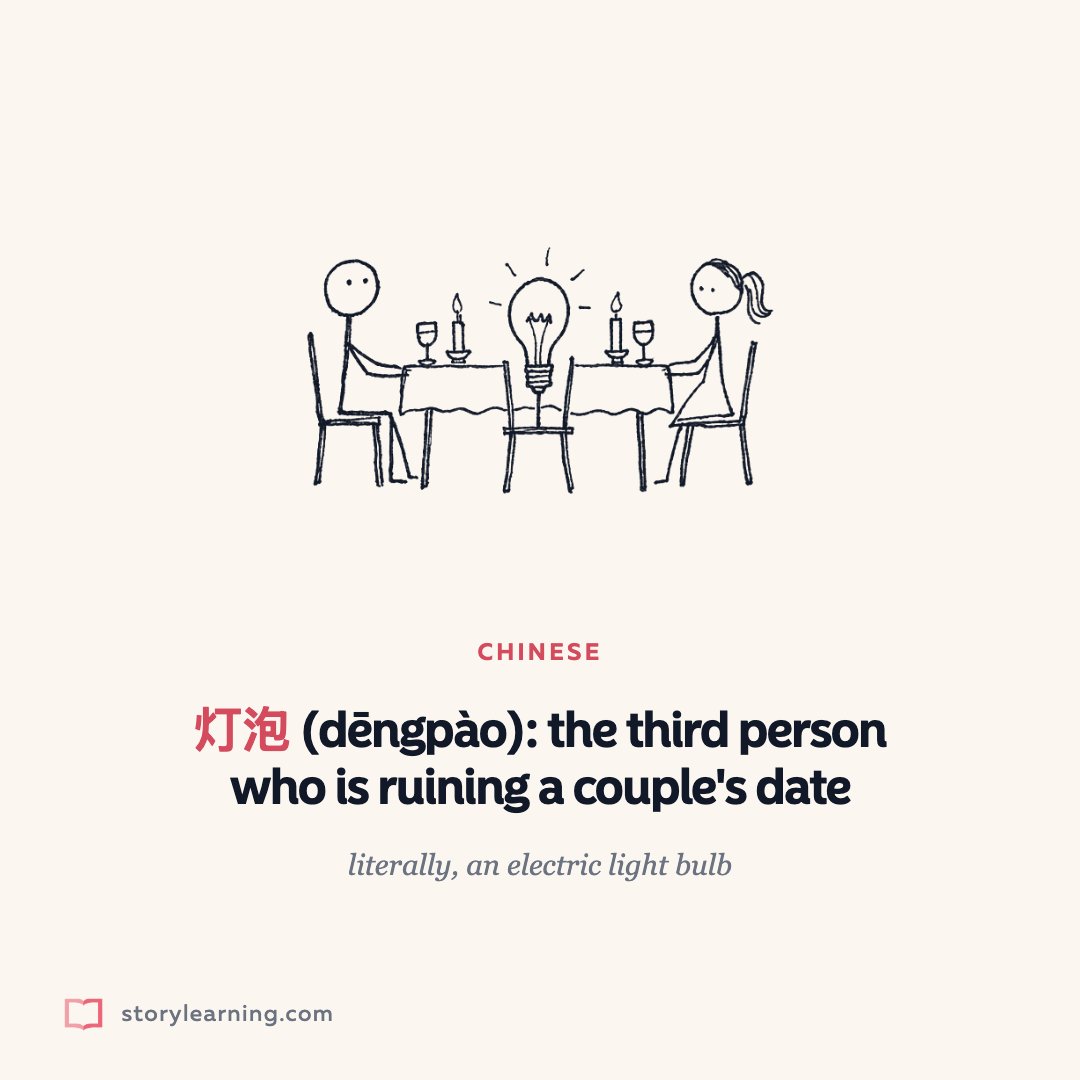
In Chinese you are not a third wheel on somebody else's date.
You are 灯泡. Dēngpào. A light bulb.
Sitting there. Glowing. Lighting the whole thing up when nobody wanted the lights on.
Mexico has over 3,000 German language schools, and about 200,000 people speaking Standard German.
Namibia, which actually was a German colony, has up to 30,000 native speakers.
A language is not the same shape as the map of the country it came from.
What was the person ahead of you in the queue wearing yesterday?
Gone. Your brain binned it without even asking you.
But the thing you said at a dinner party in 2014 is still ambushing you at 2am. The one that stuck had a scene attached.
Forgetting is your memory working.
Open a Japanese verb table and it looks like a wall.
Then you find out the irregular list is two words long. Suru, to do. Kuru, to come.
The catch: suru is the most common verb in the language, so you trip over the exception constantly. Which is how it stops being one.
Three languages, three images, one idea.
Turkish: drop by drop makes a lake.
Italian: he who goes slowly goes safely and goes far.
Chinese: a journey of a thousand miles starts with a single step.
I have yet to find the proverb that celebrates the heroic weekend.
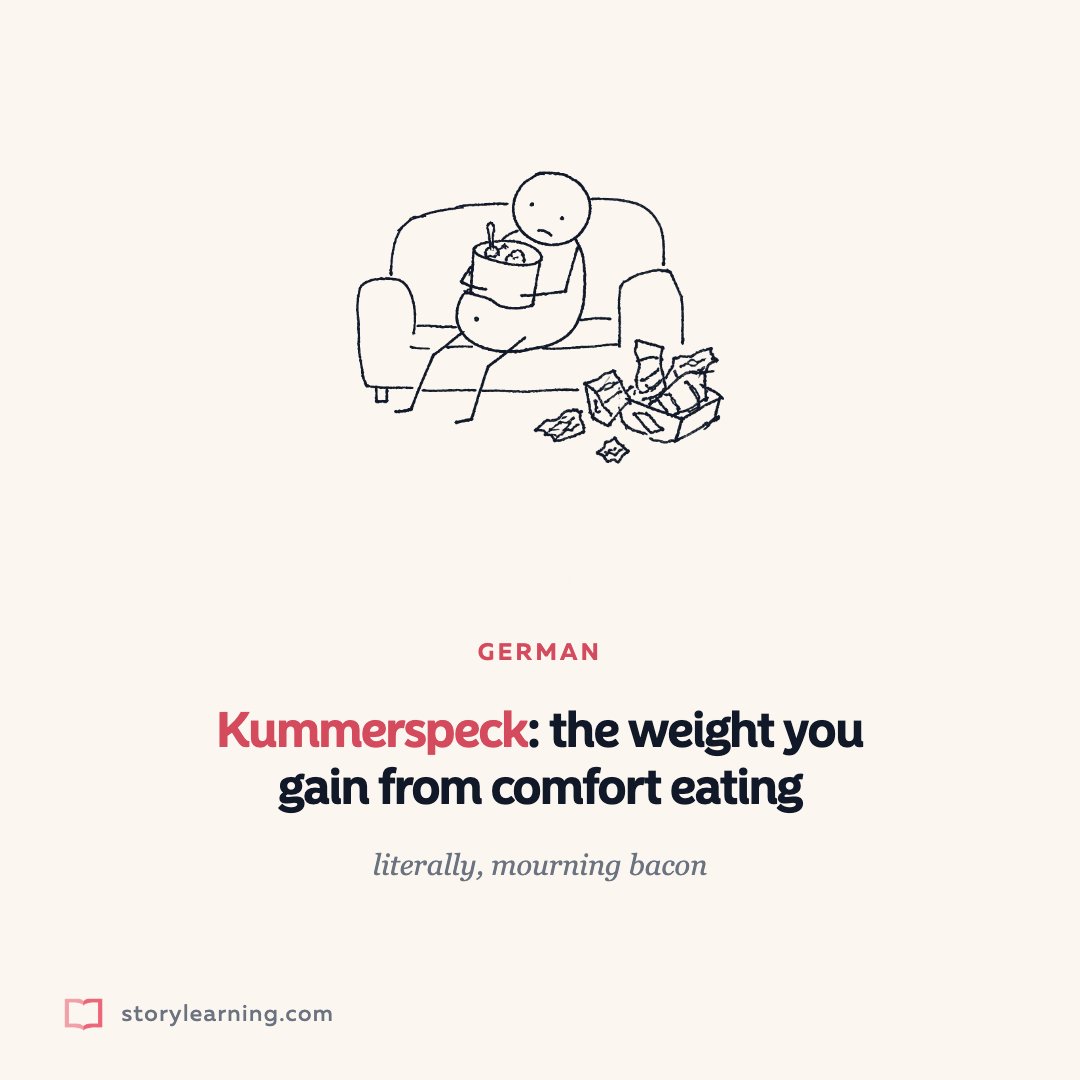
German has a single word for the weight you gain from comfort eating.
Kummerspeck. Literally, mourning bacon.
Ich habe zehn Kilo Kummerspeck zugenommen.
You will still have that word tomorrow, and you didn't study it. That is not an accident.
Two institutions that cannot afford to fail at teaching a language.
Mormon missionaries: six to nine weeks, then they put you on the plane.
US military linguists: thirty-five to sixty-four weeks, seven hours a day.
Seven times the clock. They are not buying the same thing.
I have never particularly enjoyed studying a language.
What keeps me going is using it. Speaking to people. Doing things I already love, in the language.
Motivation is fickle. Waiting to feel it before you start is a long wait.
Use the language for real purposes right away.
Spanish quiz.
Quemarse las cejas. Literally, to burn your own eyebrows.
A. To lose your temper
B. To raise your eyebrows in surprise
C. To stay up half the night studying
Can you write your answer without looking at other people's comments?
Most people chasing fluency go looking for more words.
The thing that actually joins your French up is a handful of small ones you already half know.
Alors. Quand même. Donc.
Nothing new to say. Just the joins between the things you were already saying.
It was raining in Cairo, which basically never happens, and I was in a shop.
I didn't know the word for umbrella.
So I said “the thing you hold so you don't get wet”.
He nodded. He got it. We ended up talking for ten minutes.
Listening is one of the hardest skills at the beginning, and it has NOTHING to do with intelligence.
When people speak, you don't control the speed.
So don't fight it. Listen with the transcript open. The text fills in the gaps your ear misses.
It's B - do you fancy a drink?
Ça te dit de is a chunk meaning "do you fancy". What follows swaps freely: ça te dit d'aller au ciné, ça te dit de manger dehors.
The other two are what you get translating word by word.
Ça te dit de prendre un verre ?
A. Are you telling me to have a drink?
B. Do you fancy a drink?
C. Did you take a glass?
Can you write your answer without looking at other people's comments?
Something easy in English is a piece of cake.
In Spanish it is pan comido, eaten bread.
In Japanese it is 朝飯前, before breakfast. So simple you could get it done before you had eaten.
You will still remember one of those tomorrow.
German has fewer irregular verbs than English.
About 200 in German. Nearly 300 in English. French can run past 500.
And the German ones mostly follow one of five vowel changes, which is why they stop feeling irregular sooner than you expect.