Whenever Nigerians gather to discuss the country’s problems, one phrase is almost guaranteed to come up:
“We just need a functional system.”
I hear it everywhere. In interviews. On social media. In taxis. At conferences. In political conversations. At some point, I stopped listening to the phrase itself and became more interested in the people using it.
So one day, I asked someone a simple question:
“What exactly is a functional system?” And he couldn’t give an answer.
That conversation proved that many people use the phrase because it sounds intelligent, not because they truly understand what it means.
A system is not magic. A system is simply a structure made up of rules, institutions, processes, incentives, consequences, and people who consistently make those things work.
A functional system is one where the rules are largely predictable, institutions perform their responsibilities, excellence is rewarded, incompetence has consequences, and the average citizen understands that there are standards that cannot be negotiated.
Now let me say something uncomfortable.
Many Nigerians say they want a functional system, but the truth is, many are not yet prepared to live in one. If you think I’m lying think about it.
The same people who complain about corruption but become excited when they know someone “at the top” who can bend the rules for them, they are also the same people who will make excuses for fraudster and yahoo yahoo.
They criticize politicians for nepotism but call their uncle to secure jobs they are not qualified for. They want law and order until the law applies to them. They want accountability until they are the ones being held accountable.
That is not a desire for a functional system, that is a desire for a system that works only in your favour.
In a truly functional system, you do not drive against traffic because you are in a hurry. You do not skip queues because you know someone. You do not evade taxes while demanding world-class infrastructure. You do not bribe your way out of offences. You do not submit fake certificates. You do not forge documents. You do not throw refuse into drainage and then complain about flooding. You do not expect electricity without paying for it. You do not ignore building regulations and then blame government when buildings collapse.
A functional system is expensive, not necessarily because of money, but because of discipline. It demands that everyone, rich or poor, connected or unknown, submits to standards. It inconveniences everybody equally, and that is why many societies appear orderly, not because they have angels living there, but because the cost of breaking the rules is often higher than the benefit.
Sadly, many of the people who loudly demand a functional system have built their own success around dysfunction. Some businesses exist only because of these loopholes , some careers thrive because merit is absent, some fortunes were built through regulatory loopholes.
Ironically, if Nigeria suddenly became completely functional tomorrow, many people currently celebrating their success would struggle to maintain it.
This is why I believe our conversation must mature. Yes, government has enormous responsibilities, institutions must improve, and leadership matters.
But systems are also strengthened, or weakened by the everyday behaviour of citizens.
A nation where millions of people constantly look for shortcuts cannot magically produce world-class institutions.
The same values that destroy homes eventually destroy organisations. The same attitudes that weaken organisations eventually weaken nations.
A functional Nigeria will require functional citizens.
Perhaps we should start asking:
“Are we becoming the kind of people who can sustain a functional system?”
Because systems do not exist independently of people. People build systems. People protect systems. And ultimately, people either strengthen them, or destroy them.
#Tadé
#iyawooga
#refinedlady
Why Our Idea of Empowerment Is Not Working.
For decades, Nigeria has pursued empowerment as a development strategy. Every year, governments at all levels distribute grants, sewing machines, tricycles, grinding machines, motorcycles, fertilizers and various forms of financial assistance. Yet poverty remains stubbornly high, unemployment remains a challenge, and millions continue to struggle at the margins of economic survival.
The question therefore must be asked: Why is our empowerment model not producing the transformation we seek?
The answer may be uncomfortable. We have largely mistaken empowerment for development.
Too often, our approach to poverty eradication and job creation has been rooted in tokenism rather than transformation. We measure success by the number of items distributed, the number of beneficiaries photographed, or the number of people who receive one-off support. What we rarely measure is how many people have successfully moved from one economic level to the next.
Nations are not built by distribution. Nations are built by ideas, institutions and structures that enable continuous economic advancement.
The akara seller, tailor, welder, carpenter, mechanic and market trader should not be viewed as recipients of government generosity. They should be viewed as participants in a deliberate growth ladder. The objective should not merely be to help them survive today. The objective should be to help them become more productive tomorrow.
A woman frying akara today should be able to become a supplier to schools and offices tomorrow. The supplier of tomorrow should become a food processor next. The processor should become a manufacturer. The manufacturer should become an exporter. The exporter should become an innovator.
That is what development looks like.
The most successful economies in history understood that prosperity is created when millions of people are assisted in moving upward through structured stages of productivity. Growth occurs when economic actors are continuously upgraded, not when they are continuously subsidized.
Unfortunately, much of our empowerment architecture has no scaling mechanism. We hand out resources but provide no pathway for progression. We celebrate beneficiaries but rarely track transformation. We focus on access rather than advancement.
The result is predictable. Every year new beneficiaries emerge to replace old beneficiaries because the system has not fundamentally altered their economic position.
What Nigeria needs is not another empowerment programme. Nigeria needs a national scaling framework.
Such a framework would identify the lowest rung of economic activity and deliberately create pathways upward through training, financing, market access, technology adoption, business formalization and industrial integration. Every intervention should answer one question: How does this move the beneficiary to the next level of productivity?
The true measure of success is not how many people receive assistance. It is how many people no longer need it.
Until we shift from a culture of empowerment to a culture of economic progression, poverty reduction will remain elusive. The future belongs not to programmes that distribute opportunity in small doses, but to systems that systematically scale human potential.
The difference may appear subtle, but it is the difference between managing poverty and creating prosperity.
Otunba Segun Showunmi
The Alternative.
N:B When I tell you this man(Oko Iya Alakara aka President @officialABAT)is in a class of his own I kid you not! Look at how he took ownership of what many might consider a vexing issue. I greet you.
Nigeria’s Forgotten Security Institution: The Family.
As part of the broader effort to refocus Nigeria, we must be willing to revisit and reexamine the idea of the Nigerian family. If the concept proves too broad or complex, then we should return to the foundational cultures that make up our nation and examine the family through the lenses of our various ethnic traditions.
What does family mean to the Yoruba? To the Hausa? To the Igbo? To the Fulani? And to the many minority ethnic nationalities that enrich the Nigerian federation? These are not merely academic questions. They go to the heart of our values, our responsibilities, our sense of community, and the moral expectations that guide individual conduct.
There is also a pressing national reason for this conversation. Despite enormous investments in security infrastructure, personnel, intelligence gathering, and law enforcement, Nigeria continues to grapple with levels of criminality that often appear resistant to conventional solutions. This suggests that the challenge is not solely one of policing or security architecture. It is also a question of social values, cultural orientation, and the institutions that shape human behaviour long before an individual encounters the criminal justice system.
Historically, the family served as the first school of citizenship. Within the traditional Yoruba family, a child’s conduct reflected on the entire lineage. Among the Hausa, Fulani, Igbo, and numerous other ethnic groups, communal expectations imposed obligations that discouraged antisocial behaviour and rewarded character, industry, and responsibility. Families, elders, age grades, community associations, and traditional institutions all played active roles in shaping conduct and enforcing social norms.
Today, many of these institutions have weakened under the pressures of urbanisation, economic hardship, migration, and the rapid pace of social change. The result is that society increasingly relies on formal security institutions to solve problems that were once addressed at the family and community level. Yet no nation can police its way out of a moral crisis. Security agencies can deter and punish crime, but they cannot by themselves instill values, build character, or create a sense of duty to one’s community.
This is why a national conversation about the family is essential. If we can better understand how our various cultures defined responsibility, honour, accountability, respect, and communal obligation, we may recover tools that help prevent criminality before it begins. The objective is not to romanticise the past or reject modern realities, but to identify enduring principles that can strengthen social cohesion in the present.
The states should take the lead in this reorientation effort. Through schools, cultural institutions, traditional rulers, faith-based organisations, youth programmes, and public enlightenment campaigns, states can help reconnect younger generations with values that have historically promoted social order and communal responsibility.
The fight against crime cannot be won solely with more weapons, more checkpoints, or larger security budgets. It must also be fought in homes, schools, communities, and cultural institutions. A society that succeeds in raising responsible citizens reduces the burden on its security agencies. A society that neglects the formation of character will find that no amount of security expenditure is ever enough.
If Nigeria is to stem the tide of excessive criminality that has defied logic and consumed vast security investments, then we must look beyond enforcement and return to the foundations of social order. The family remains the most important institution in that regard. Rebuilding it through the best values of our diverse cultures may be one of the most consequential investments we can make in the security, stability, and civilizational renewal of our nation.
Otunba Segun Showunmi
The Alternative.
Sunday Stock Teaching: PART 1: THIS CREDIT ALERT, you must benefit oooo
1: Penny Stock: are shares of companies trading at relatively low prices, typically below N5 per share on @ngxgrp
-(a): with a small amount of N10,000 even N5000, investors can buy thousands of units if a single company.
-(b): High growth Potential: bcos the share is low, it is easier for a N1 stock to double in value to N2 than it is for a heavily priced blue-chip stock to double.
2: Major risk: low liquidity, high volatility and lack of consistent dividends, pump and dump schemes.
3: advice: buy small and buy blue chip too. At least, start.
🚨 🚨 🚨 Breaking News: Sources close to the Met Police say they’ve stopped counting at 3.5 million because the remaining 500,000 people are just Manchester United and Chelsea fans snuck in wearing red to see if the trophy was real.
If you’re not in North London right now, you’re essentially missing the historical center of the universe.🏆
COYG
I’m not completely a fan of AFTV or all the things they do but I can’t lie, this song slaps. Don Robbie had to remind everyone he was a reggae artiste back in the day.
In my personal life, I win quietly. That habit was set early, I have been expected to succeed since the first signs of consciousness. I move on quickly from setbacks and victories. They aren’t boring but there’s never a reason for me to be loud about these things.
But I now understand why some people win loudly. This Arsenal victory is the lesson. No matter how I try, I cannot celebrate it quietly. Not this one. Not ever.
Bear the pain quietly or cry out loud, but you must take it 😂😂😂😂
Reasons why Arsenal Premier League has always been unique and different from others
1. In 2025/26 season, Arsenal won the League without conceding a single penalty throughout the season
2. In 2025/26 season, Arsenal won the League without a red card given to any of the players.
3. In 2003/24 , Arsenal won the League without losing any match. The only club to do that in Premier League and the only club to be given gold for their achievement.
4. In 2025 /26 season, Arsenal produced the youngest player ever to win the Premier League, Max Dowman.
5. At Arsenal fc, we do it a unique way. We just don't win it. We do it in a way that people will forever remember.
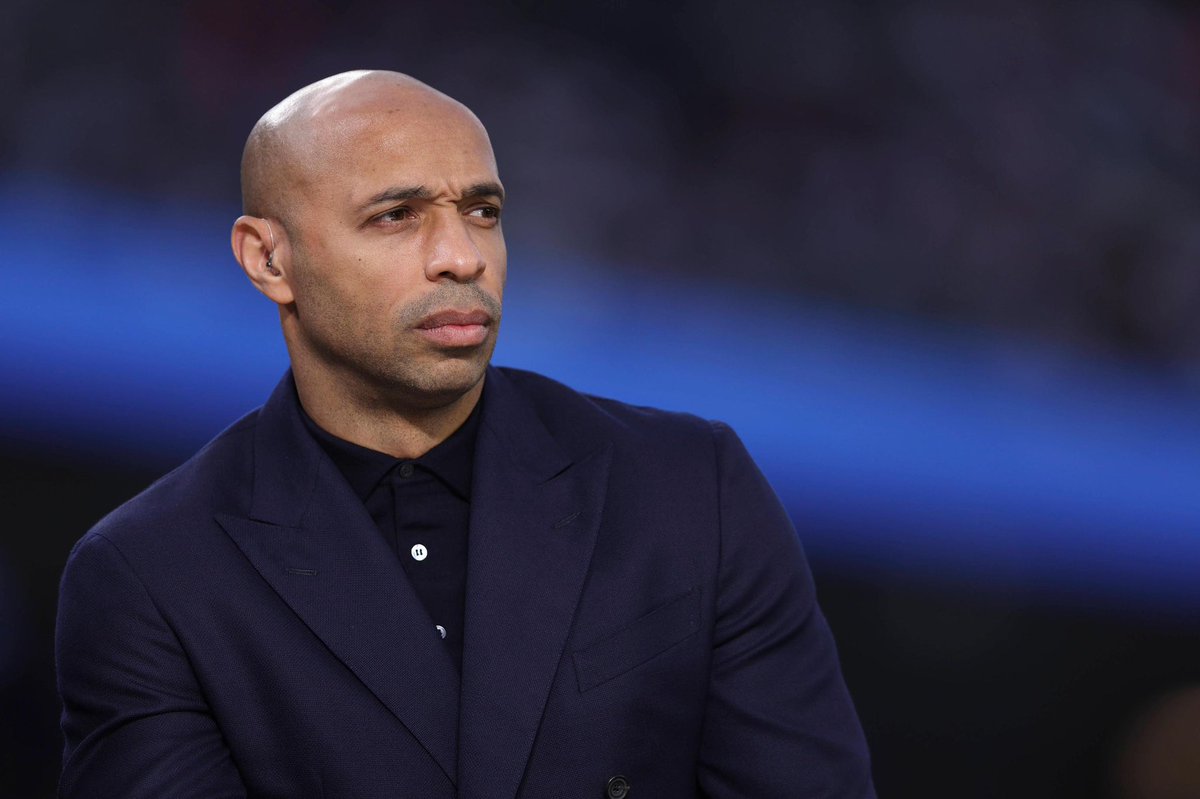
🚨🎙️Thierry Henry on Arsenal becoming Champions of England:
Arsenal didn’t ‘get lucky’, they took the crown from Manchester City. There’s a difference. For four years everyone in England acted like the Premier League belonged to City permanently, like the rest of the league were just guests waiting for permission to compete. Arsenal changed that.”
“After that defeat at the Etihad, the media buried Arsenal. Pundits folded instantly. Fans were laughing, rivals were posting memes, and suddenly the title race was ‘over’. But champions don’t panic after one defeat. Weak teams do. This Arsenal side responded like real winners.”
“And let me say something that will upset people, this Manchester City side is not the City machine people pretend it is anymore. The fear factor is gone. Teams go to the Etihad now believing they can survive. A few years ago opponents were beaten in the tunnel before kickoff. Arsenal smelled that weakness before anyone else.”
“What impresses me most is the mentality. Arsenal have been mocked for YEARS. Banter club. Soft. Bottle jobs. ‘Trust the process’ jokes every single season. Yet now look at everybody. Silent. Because the same club people laughed at just dethroned the most dominant English side of the modern era.”
“And for the rival fans crying already, no, this is not a ‘one-off’. That’s the scary part. Arsenal are young, hungry, aggressive, and they play without fear. Liverpool fans won one league and called it a dynasty. Chelsea fans spent billions and still can’t build an identity. United fans live in nostalgia. Tottenham fans celebrate finishing above Arsenal like it’s a trophy parade. Meanwhile Arsenal are champions of England again.”
“People wanted Arsenal to fail so badly because they know what this club looks like when it rises. The atmosphere changes in football. The arrogance returns. The belief returns. And the rest of the league starts getting nervous.”
“So congratulations to Arsenal. They didn’t back into the title. They earned it. And the funniest thing? The tears from rival fans have only just started.”