I wrote a short story under an hour, and honestly I think it is one of my best work. The idea came out of nowhere and I immediately started writing it.
I want to bring another puppy home, i just doubt my parents would let me do it, and im also concerned that Brownie likes being the sole owner of the family’s attention. She knows she means the world to us, introducing another puppy might cause her discomfort.
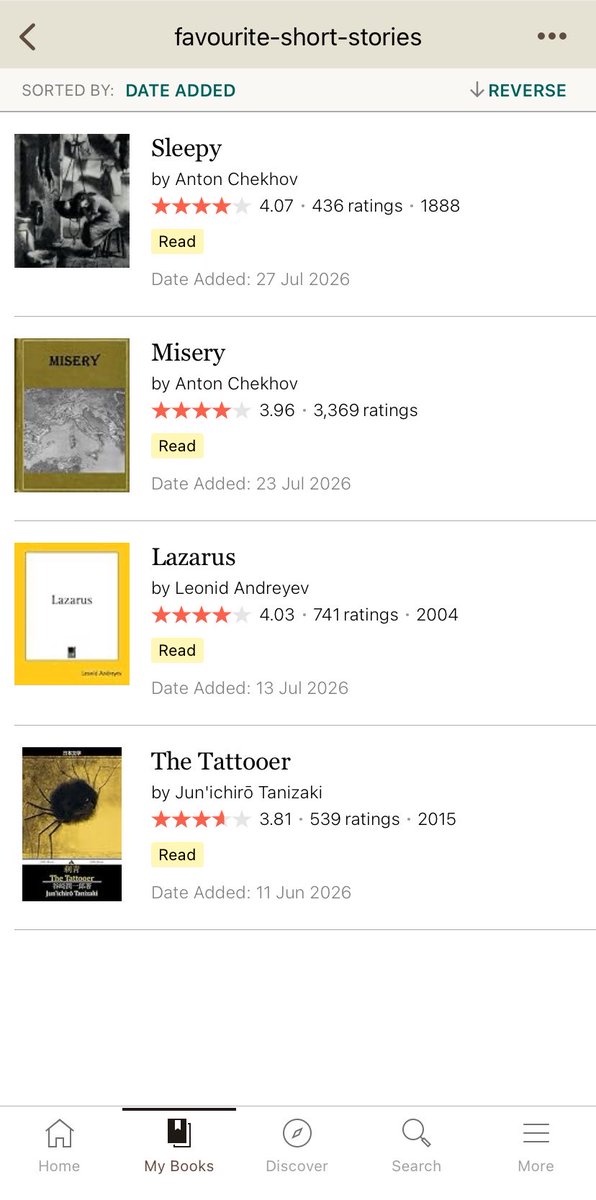
I’ve created a list, but it’s early days, since I plan on rereading all the short stories I’ve read to make an all-time list. So far I’ve only added these because I read them recently.
I think I’m becoming a Kierkegaard nerd. I’m not going to lie, Either/Or is one of the hardest books I’ve read. But It’s slowly becoming one of my favourite philosophy books. But my ultimate favourite is forever will be The Myth of Sisyphus.
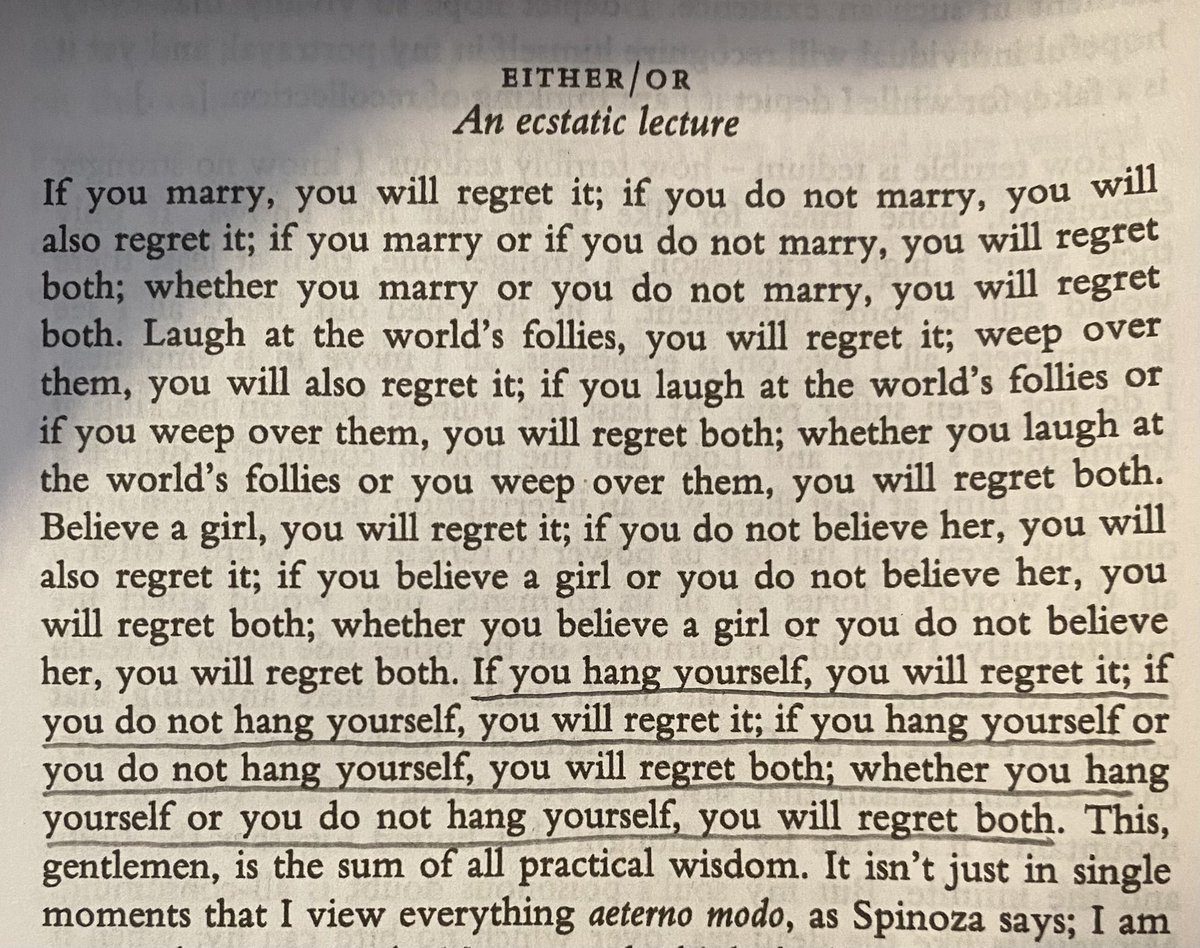
I love this passage. My interpretation is this: it tells you to not overthink your choices. If regret is unavoidable, stop waiting for certainty, you will regret it either way anyway, so just decide and commit to a choice. It’s kind of an absurd and strangely funny paragraph.
Here is the brilliant “you will regret it” paragraph from Either/Or. I specifically highlighted these lines instead of the entire paragraph because it seems that, to the aesthete A, life and death are both futile: regret follows each choice. That is the aesthete’s point of view.
My head is going to explode from the amount of thoughts I have on Either/Or. I can’t wait to start the second part tomorrow, in which Kierkegaard, through another pseudonyms, counter the aesthete’s way of looking at life.
It asks difficult question: can we live as the aesthete? In my opinion, no. Life is meaningless, fine, but one must try and make one’s meaning. This how you create your own foundation and build upon it.
I finished the first part of Either/Or’s (Either). My favourite section was the opening: Diapsalmata. I loved the ideas that were explored in it. The aesthete A’s inner life was strikingly familiar to me: life is empty and meaningless, with melancholy as the foundation.
Then came The Seducer’s Diary which made my eyes open wide. Because it takes the aesthetic ideas of Diapsalmata and applies them on a living person. Johannes’ methods are almost diabolical, and that’s precisely what makes the work so unsettling.