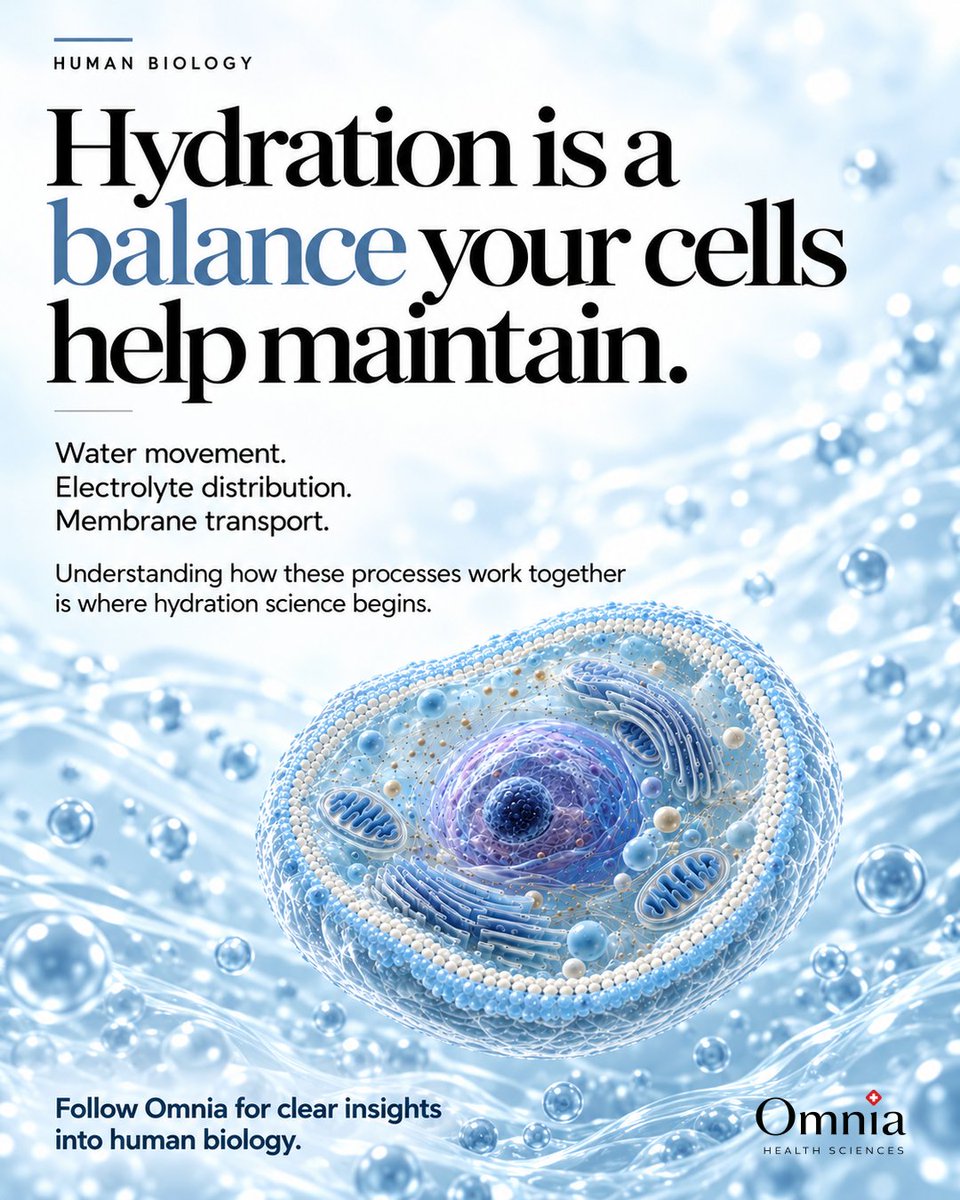
Water movement. Electrolyte distribution. Membrane transport.
Together, these processes show how cells help maintain fluid balance.
Learn more: https://t.co/00mUSC2vjx
#HumanBiology#HydrationScience
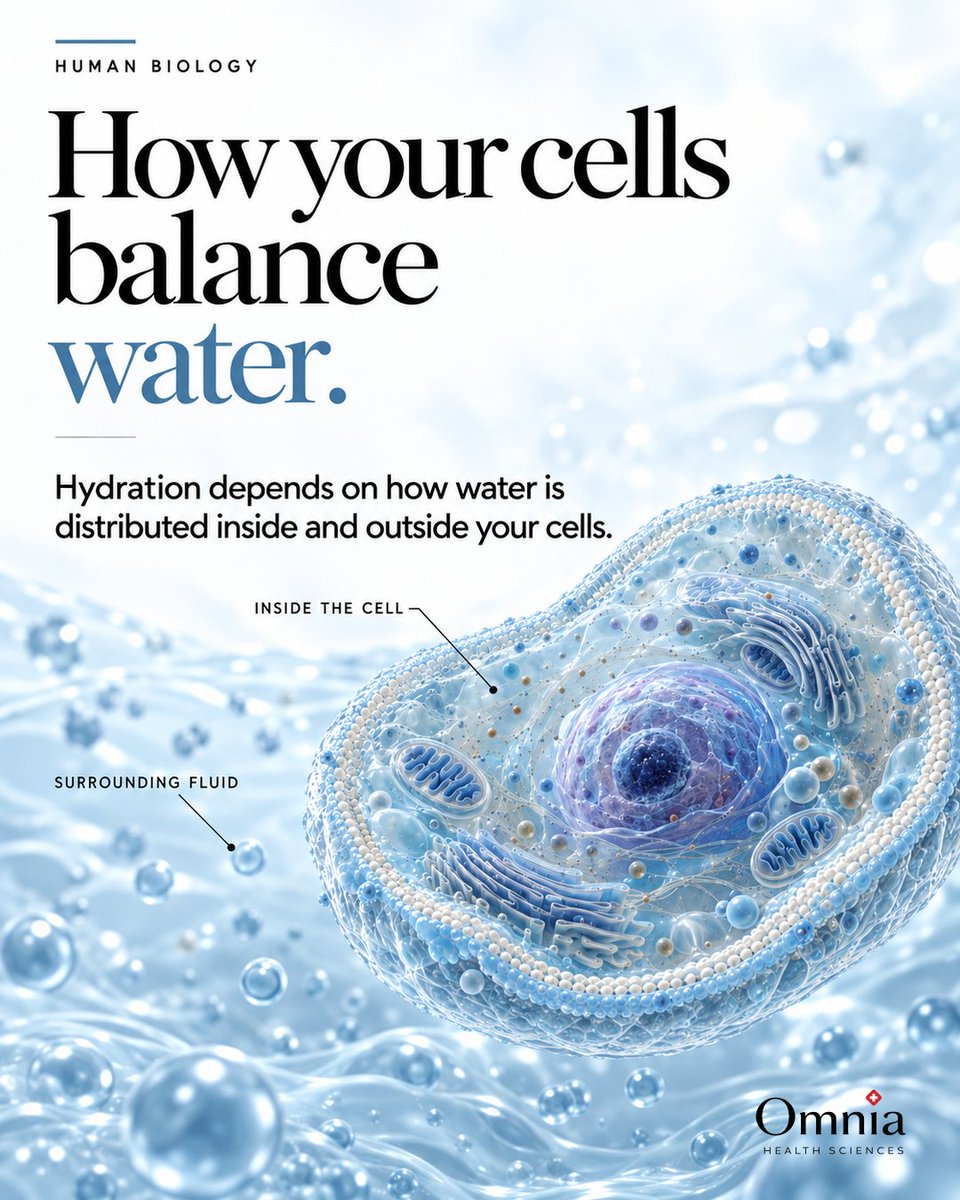
Hydration depends on how water is distributed inside and outside your cells.
That balance begins with water movement across the cell membrane.
Learn more: https://t.co/00mUSC2vjx
#HumanBiology#HydrationScience
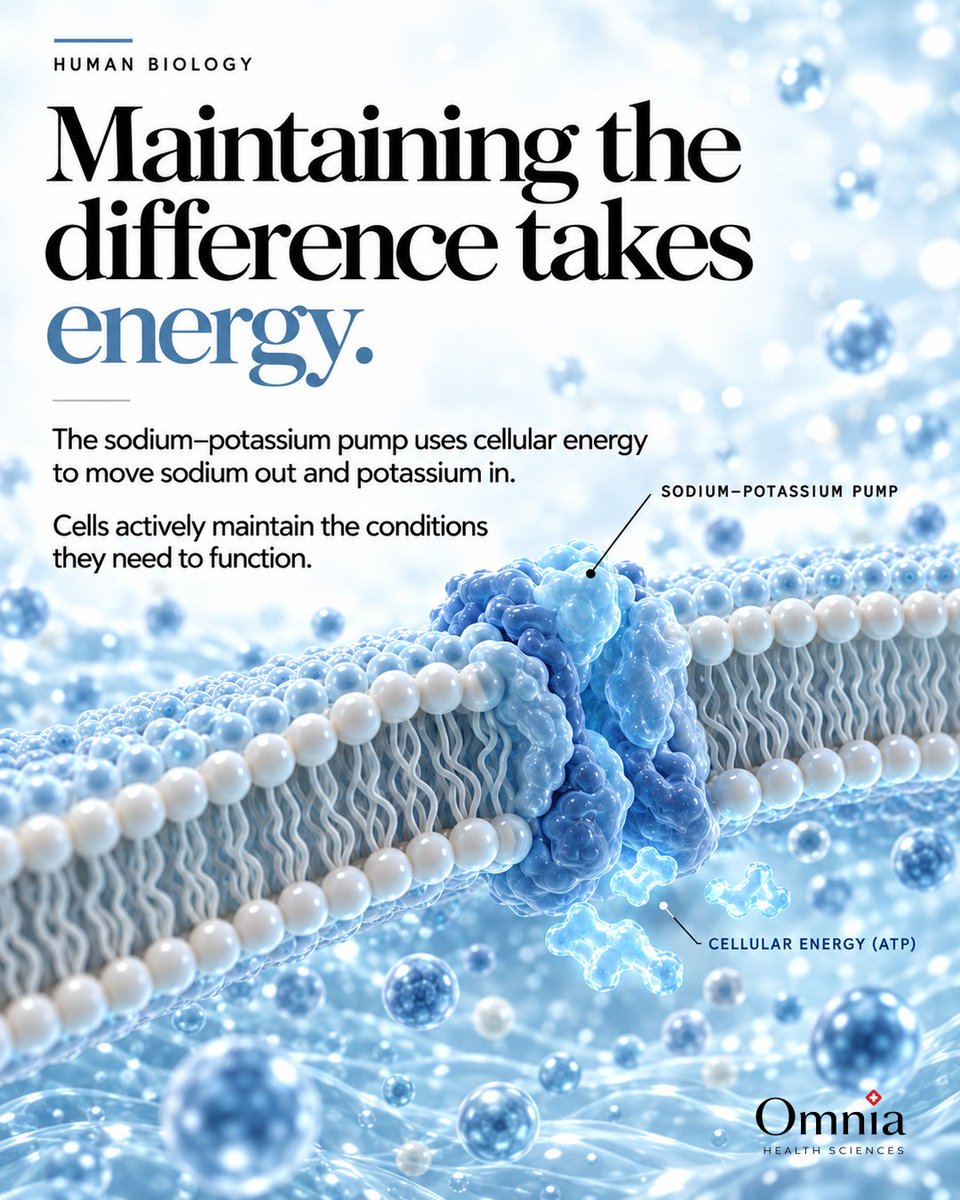
Maintaining these gradients takes energy.
The sodium–potassium pump uses cellular energy to move sodium out of the cell and potassium in.
Learn more: https://t.co/00mUSC1XtZ
#HumanBiology#CellBiology
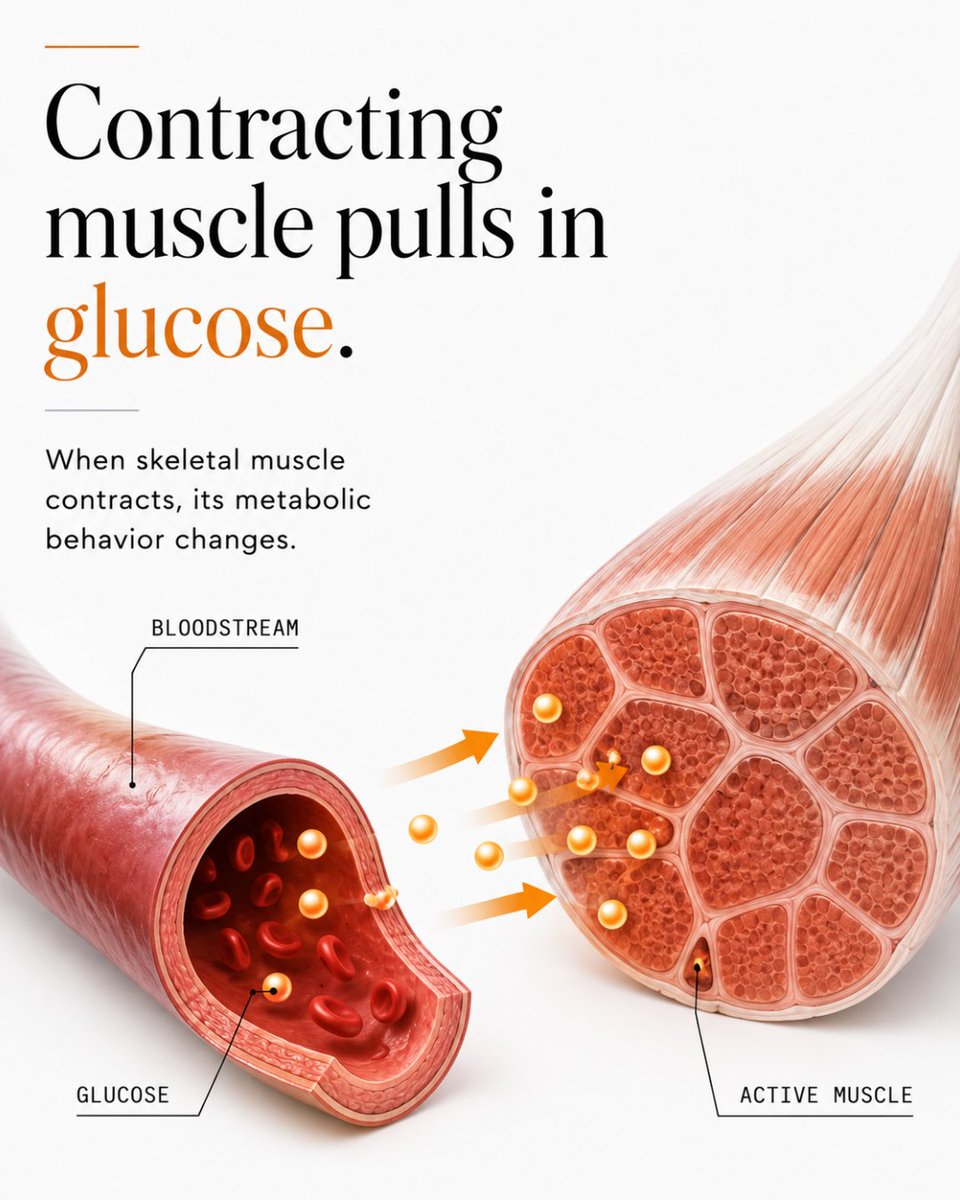
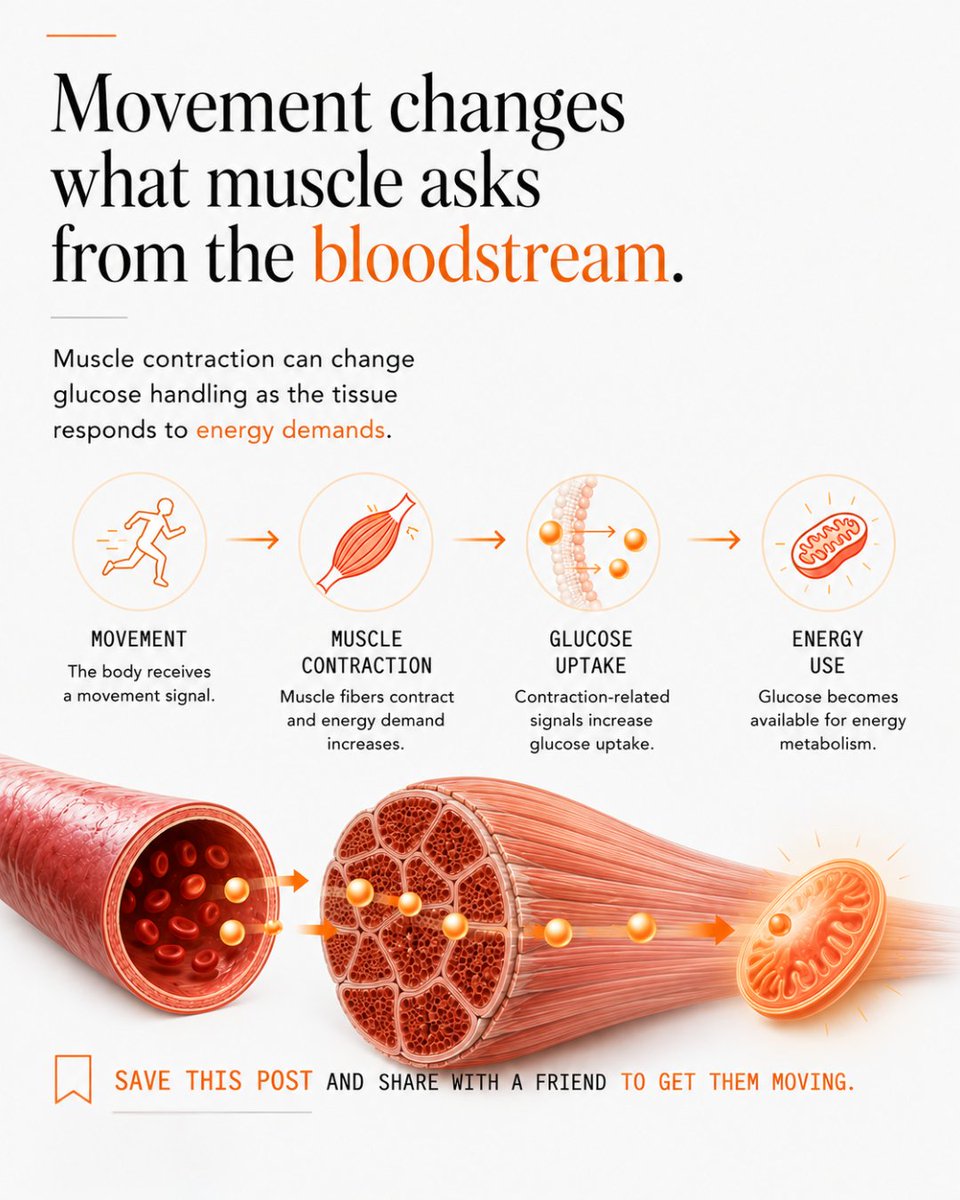
Muscle contraction is also a metabolic signal.
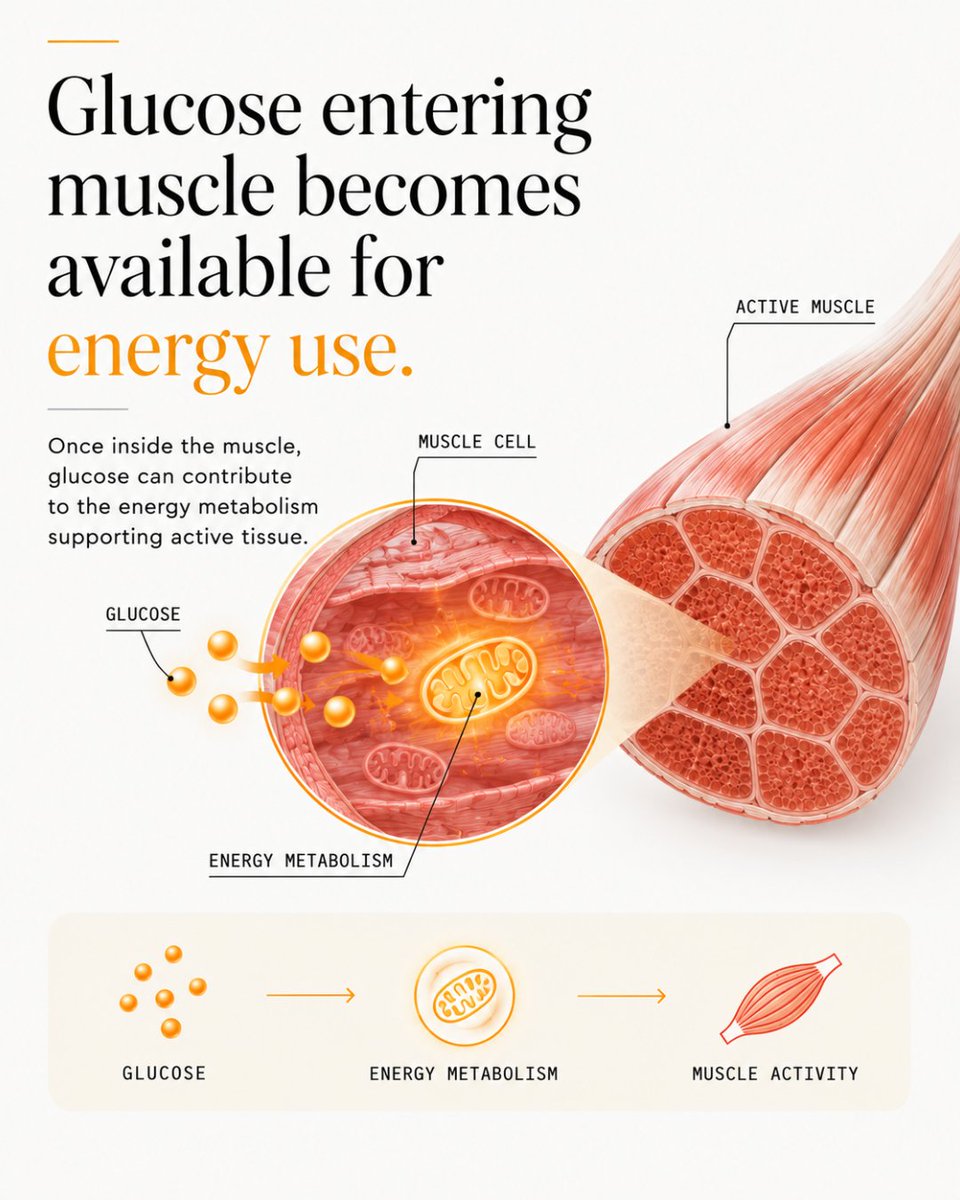
It activates pathways that can increase glucose uptake from the bloodstream into working muscle, helping fuel activity.
Movement changes how muscle handles fuel.
Movement changes what muscle asks from the bloodstream.
That is part of what makes a contraction a metabolic event.
Save this thread and share it with a friend to get them moving. 5/5
A muscle contraction does more than produce movement.
It also changes how muscle takes up fuel from the bloodstream.
Here’s the metabolic side of movement. 1/5
Increased muscle glucose uptake does not guarantee a fall in blood glucose during exercise.
The overall response also depends on glucose released by the liver and the intensity and duration of activity. 4/5
5/5
Movement changes what muscle asks from the bloodstream.
That is part of what makes a contraction a metabolic event.
Save this thread and share it with a friend to get them moving.
4/5
Increased muscle glucose uptake does not guarantee a fall in blood glucose during exercise.
The overall response also depends on glucose released by the liver and the intensity and duration of activity.
Good formulation starts before ingredient selection.
Define the biological need → understand the mechanism → examine the evidence → formulate.
A plausible mechanism is not proof. Formulation should be the output of the reasoning.
6/6
Put the system together:
Local sensing → enteric processing → digestive responses ↔ communication with the CNS.
Digestion is neural as well as mechanical.
1/6
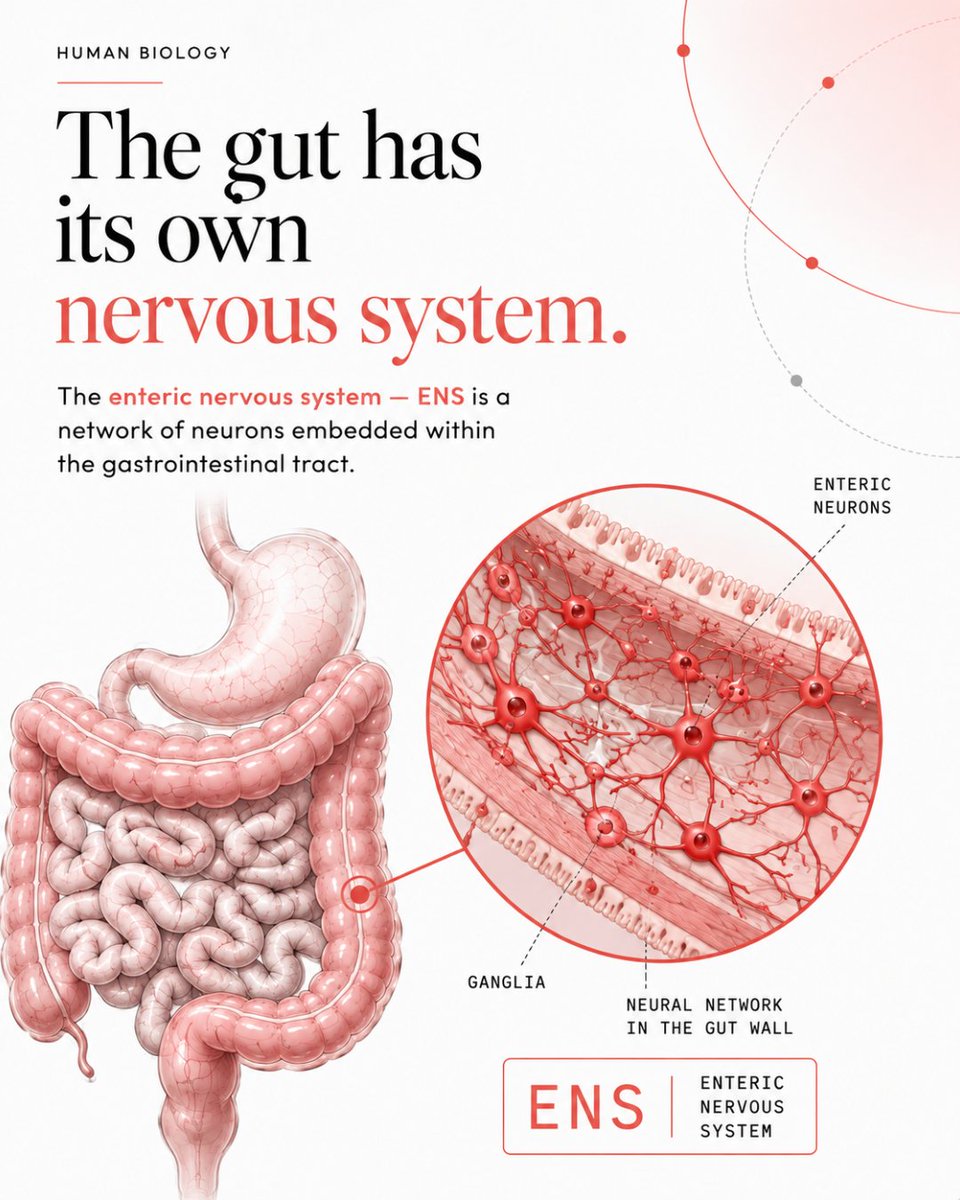
Your gut has its own nervous system.
The enteric nervous system (ENS) is built into the gastrointestinal wall — not simply made of nerves arriving from the brain.
5/6
“Local” does not mean isolated.
The gut also communicates with the central nervous system through extrinsic neural pathways, including vagal sensory routes.