Late-disclosed pricing is the single biggest cause of cart abandonment. Show the full cost earlier, cut required fields, add a payment method shoppers use. Nexus shows what a recovered order is worth before you cut margin for it.
A machine buyer reads your store instead of browsing it, judging you only on published facts: price, stock, delivery, returns, never on layout. The session disappears. Nexus tracks profit at the order, not the visit.
A spiking bounce rate is often a broken tracking tag, or a page that doesn't deliver what the ad promised. Check tracking first, then compare the page to the ad. Nexus tracks product margin, not vanity metrics.
A customer who buys once is paid for out of one margin. One who buys twice is paid for out of two, so repeat rate sets what you can afford to spend to get them. Nexus prices acquisition against cohort contribution, not this week's ROAS.
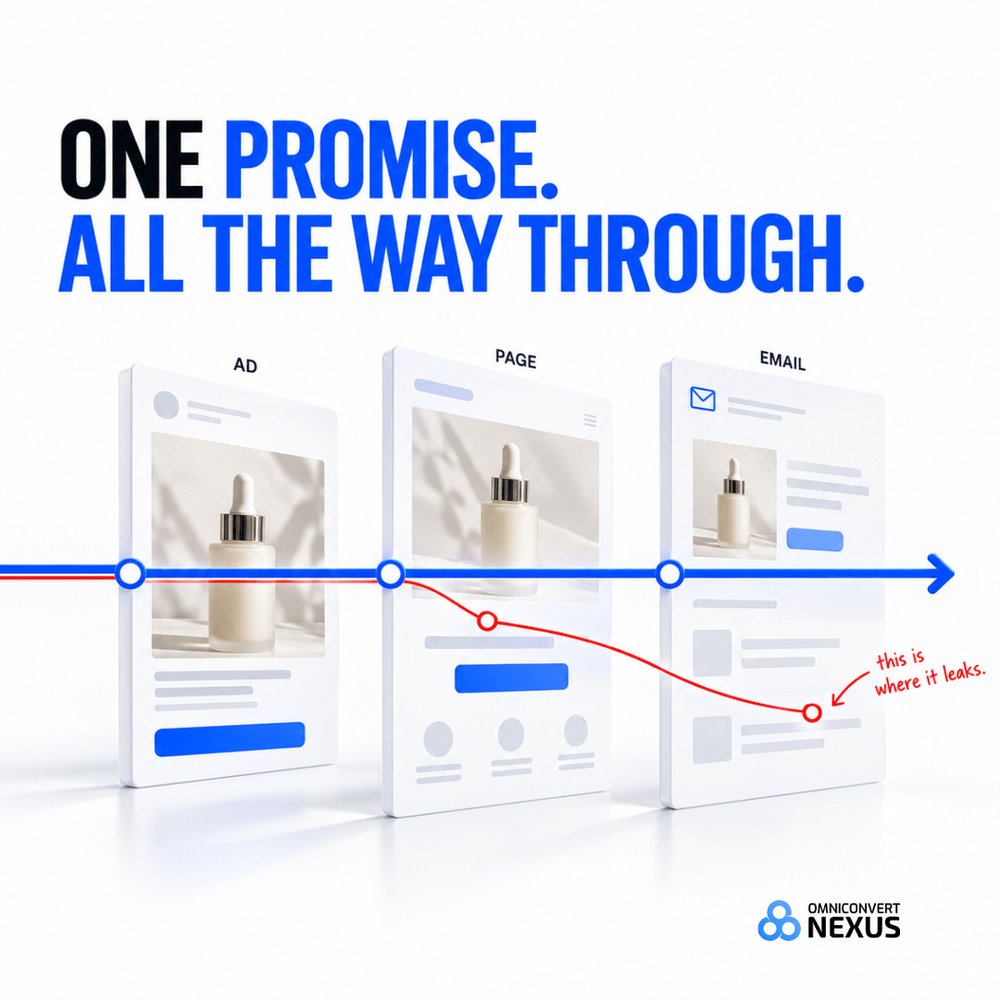
A lot of campaign leakage starts when the message changes mid-journey.
The ad sells speed. The landing page sells features. The email sells a discount.
Pick one core promise and carry it through the full path.
Your two cheapest conversion levers cost nothing to build: hidden costs revealed late, and one unneeded form field. Most teams fix speed and discounts first because those look like work. Nexus ranks levers by True Profit, not effort.
Cheap paid acquisition stopped carrying DTC growth years ago. Growth now gets assembled from five parts, starting with retention economics. Nexus ranks experiments by True Profit, so you know which ones actually pay.
Your conversion rate hides five separate failures in one slow number. Alert on checkout completion rate instead, it can silently collapse from a bad deploy. Nexus tracks product-level margin, not a rate built to hide it.
Every tool in your stack inherits a ceiling from the steps it doesn't touch. It stops, not slows. A tool is purchasable. The join between two tools isn't, so stacks grow while results don't. Nexus joins the steps, not the logos.
Pick a campaign that ran six months ago. Which customer claim was it testing? Most teams can't answer, because the result got reported and nobody wrote it back. Nexus closes that loop: it decides what's profitable before a single ad runs.
Your conversion rate says less about your site than about your audience mix, since brand traffic share alone can swing it more than any site change. Compare composition, not the rate. Nexus tracks product margin, not a rate that hides it.
A month later, it's confirmed: search CPCs are up ~20% since Google's Aug 17 tCPA/tROAS crackdown.
It pushed your account back toward a target typed in once, not today's margin. Nexus builds that real number first.
Multiple advertisers describe the same loop: turn off Meta's AI features, duplicate the ad, they're back on, silently.
A toggle that reverts itself erodes trust in the whole account. Nexus goes the other way: nothing ships live without your sign-off.
Your approval queue didn't shrink when you added AI tools, it grew. Approving each proposal by hand is the same bottleneck with an AI label on it. Nexus proposes inside limits you set, and never publishes on its own.
An industry average describes a population, not your store. It can fall while every store in it improves. Use it to bound a target, never to know what to change. Nexus works from your own margin per order, not someone else's average.
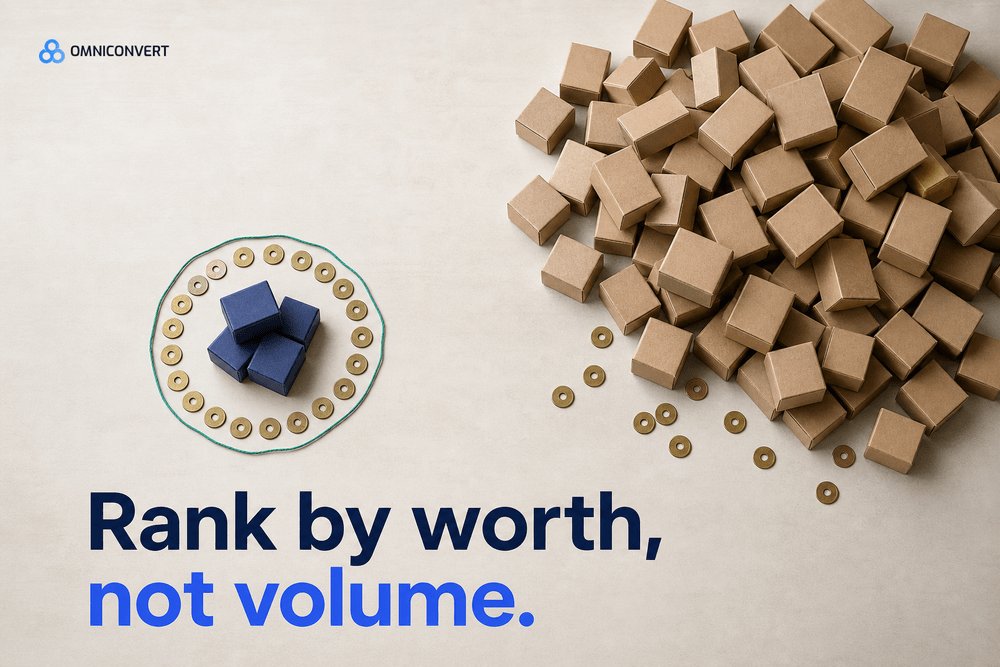
Your best-seller is rarely the product that creates your best customers. Growth tools default to volume because it shows up fast. Rank by what a customer is worth instead. Nexus ranks products by customer worth, not by units moved.
Dropping your prices isn't always the solution to slow sales. If customers aren't buying, find out why the demand isn't there first.
🍅 Granny can teach you some marketing wisdom.
When did a test last change because retention told you something? If you can't name it, you're running three good programs that don't compound. Nexus tells you which customers were worth keeping, so you know what's worth testing next.
Advertising to everyone is the fastest way to waste your marketing budget. When your message targets everybody, it resonates with nobody.
Learn how to narrow your audience, reduce customer acquisition costs (CAC), and scale your eCommerce marketing efficiently.
8,000 sessions, 8 purchases. That pattern, high add-to-cart, near-zero checkout, is showing up across two different Shopify communities this week.
The cart already proved demand. CROBenchmark's free audit finds exactly where checkout breaks it.