Last week, 15 PhD students & 7 post-docs presented at our DocMIT & PITF events at IBFD, with topics ranging from nexus to innovation in tax law-making. Both events were a huge success, offering valuable mentorship and debate with IBFD Academic. More info: https://t.co/8WRKwz2bLx
Studying in a developing country? Apply for a short-term research grant at IBFD!
Network with top tax experts, contribute to international tax law, and access IBFD's top-tier library. First deadline: 15 March 2025. Apply now: https://t.co/ZXRY49Dqni #TaxResearch#IBFD
Win a travel grant to research at the IBFD library!
Applications for our Student Travel Grant Programme for 2025 are open! This grant will cover travel costs (maximum applies) to visit & research in the IBFD library in Amsterdam, Netherlands.
Apply now: https://t.co/4D2lzGBJ2z.
Hi friends, exciting announcement 🚨
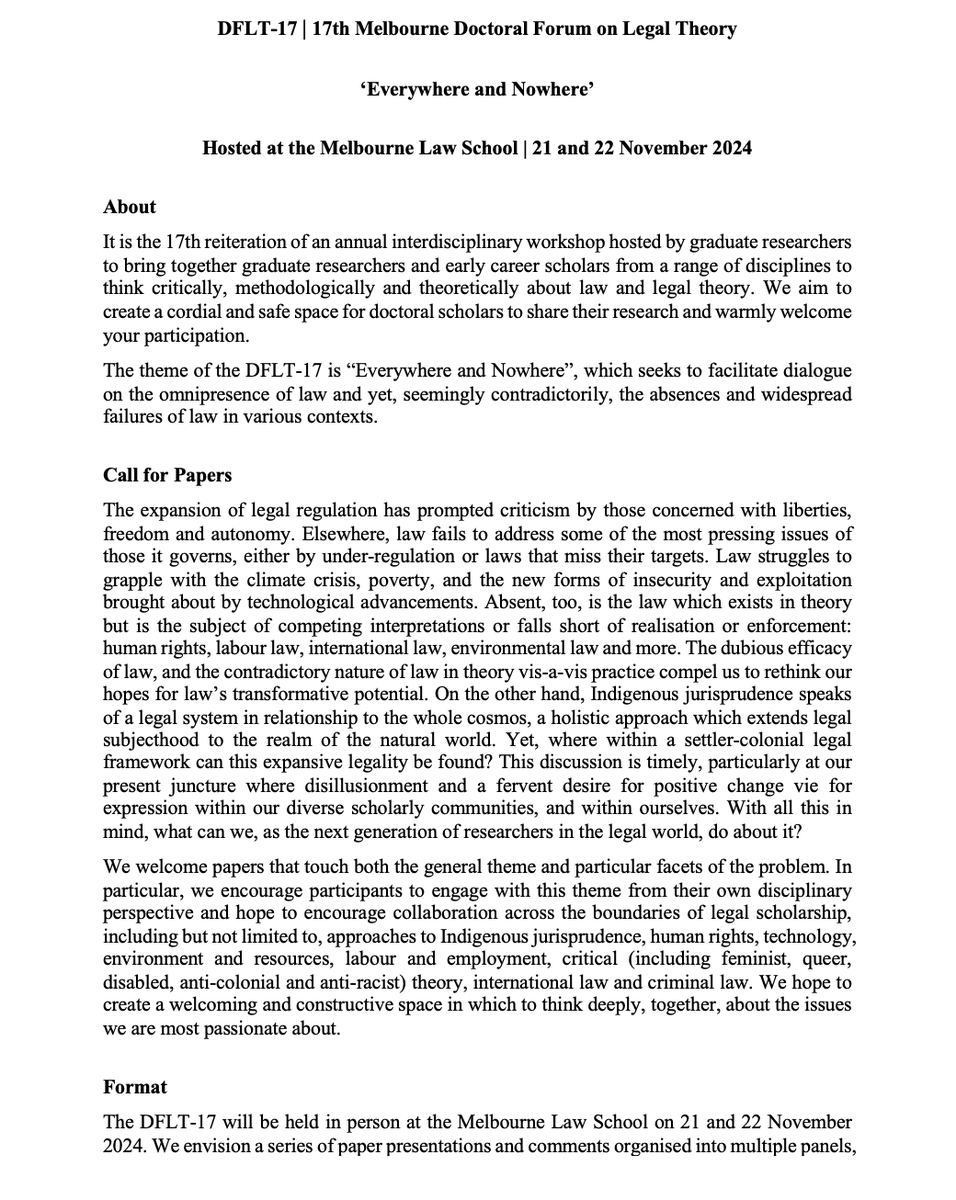
The CfP for the 16th Melbourne Doctoral Forum on Legal Theory is out
EVERYWHERE AND NOWHERE
The #DFLT17 will take place between the 21st and 22nd of November, 2024 @UniMelb @MelbLawSchool
🚨 There's only two weeks left to enter this year's Tax Notes Student Writing Competition!
Every year we recognize superior student writing on unsettled questions in #TaxLaw or policy.
Enter your paper today: https://t.co/PRCXaOPQSV
In our latest blog, Catherine Brown describes how developing countries face significant legal limitations that will prevent them from collecting the Pillar Two tax, while they also stand to lose the benefit from the tax incentives they provide.
Read👇
https://t.co/r3NBuiMJa5
Impactful or not impactful? Feels like I need to consider whole things and should not be as easy as running the data. Is my data sufficient? Representative? Reliable? 🥴🥴🥴
This morning's thought: If taxes would not solely influence investment decision, why does maintaining (or not) tax incentives these days become so problematic? This is a question to any relevant perspectives🤔
Letter to the Editor: Richard Krever and Kerrie Sadiq clarify the distinction between tax avoidance and tax competition, which recent commentary on the #OECD has often ignored. https://t.co/jTw8DJeW3D