I have been thinking about something lately, and the more I think about it, the more disturbing it becomes.
A lot of Nigerians became poor without doing anything wrong.
They didn’t stop working. They didn’t become lazy. They didn’t suddenly become irresponsible.
They simply woke up one day and realised that the money they had worked for could no longer buy the things it used to buy.
Think about someone earning ₦100,000 a month.
The person still wakes up early every morning, goes to work, puts in the same hours, probably works even harder, gets promoted occasionally and does everything society says a responsible person should do.
Yet every year, that person seems to be able to afford less.
At some point, ₦50,000 could buy a reasonable amount of food for the house. Today, you can enter the market with the same ₦50,000 and genuinely wonder where the money went.
Nothing happened to you.
The economy happened to you.
And I think this is something we don’t talk about enough.
Imagine working hard for years, only for circumstances completely outside your control to quietly reduce the value of everything you have worked for.
You didn’t lose your job.
You didn’t lose your salary.
But somehow, you lost your standard of living.
That is poverty too.
And this is why I struggle with the way we sometimes discuss palliatives.
Of course, when people are hungry, you must find ways to help them immediately. There is nothing wrong with providing temporary relief.
But surely, the bigger question should be:
Why did millions of working Nigerians suddenly need palliatives in the first place?
If a man could comfortably buy a bag of rice from his salary a few years ago and today he needs government assistance to buy that same bag of rice, giving him rice may solve today’s hunger.
But it has not solved the actual problem.
The real problem is that his labour has lost value.
And perhaps that is what we should be obsessed with fixing.
How do we make the Nigerian worker’s income valuable again?
How do we make ₦100,000 buy more next year, rather than less?
How do we make food cheaper by producing more?
How do we reduce the cost of energy and transportation?
How do we build an economy where salaries can actually keep up with the cost of living?
Because when I think deeply about it, perhaps one of the greatest things a government can do for its people is not to keep giving them money.
It is to build an economy where the money they earn has value.
There is dignity in being able to take care of yourself from the product of your own labour.
There is dignity in a teacher being able to feed a family from teaching.
There is dignity in a nurse being able to pay rent from nursing.
There is dignity in a young person working an honest job and gradually seeing life improve.
People should be able to look back after five years of hard work and say, “My life has become better.”
Not, “I earn more money today, but somehow I can afford less.”
That is the part that keeps bothering me.
Millions of Nigerians are not asking to become millionaires overnight.
They just want hard work to make sense again.
And maybe that should be one of the simplest ways we measure whether our economy is actually working:
Is the ordinary Nigerian who works hard becoming progressively better off, or progressively poorer?
Everything else is secondary.
A guy meets you, you exchange numbers, and he texts you when he gets home.
You ignore him.
The next morning:
HIM “Good morning. How are you doing today?”
YOU “Fine.”
HIM “What are you up to?”
YOU “Nothing.”
Then you wonder why men “don’t pursue women anymore.” Why give out your number if you had no interest?
Men are not chasing women who make basic conversation feel like a job interview.
Reciprocate the energy. Be kind. Be interested. Be polite. Be respectful.
“Good morning. How are you doing today?”
“I’m fine, thank you. How are you?”
It really shouldn’t be that hard.
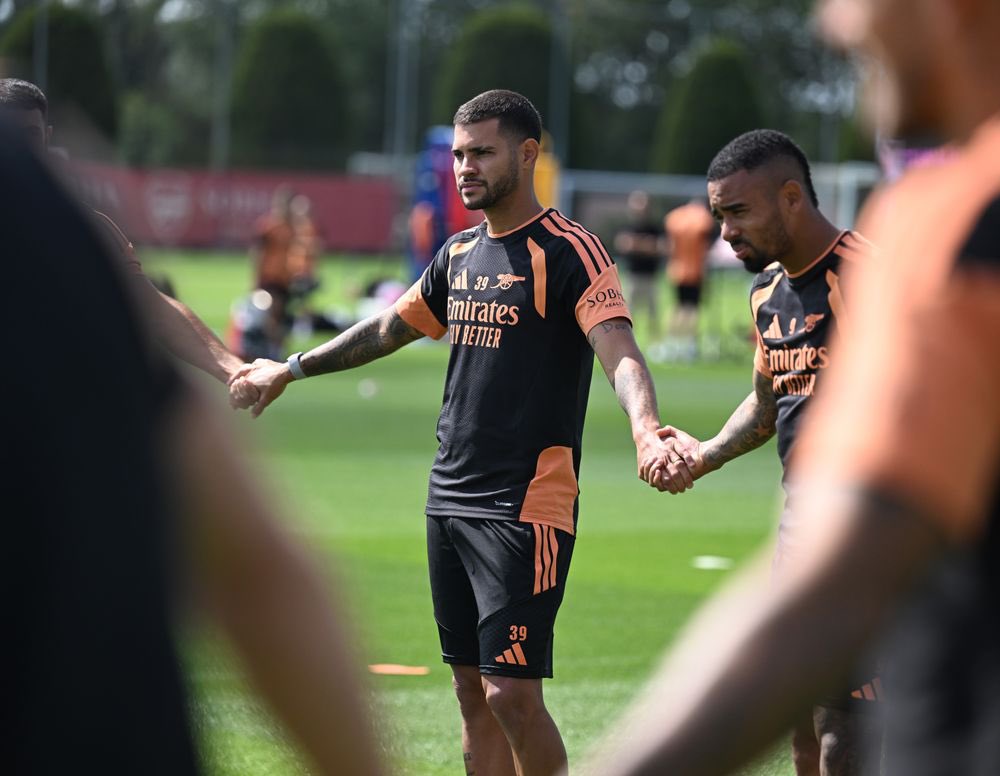
@hammed_rasaq1@GreatmenArs Why dem no compare Bruno G to other players when he was at Newcastle? Why is everyone suddenly comparing him to man united, chelshit, Tottenham, man city, Liverpool players since Arsenal signed him?
I’ve already seen United fans comparing Tielemans to Bruno Guimaraes
Why is it that you lot hardly compare City or Liverpool players with everyone else? It’s always Arsenal players
Saka vs Salah
Saka vs Palmer
Saka vs Doku
Saka vs Amad
Saka vs Foden
Saka vs Mbeumo
Saka vs Madueke
Rice vs Rodri
Rice vs Caicedo
Rice vs Enzo
Bruno Guimaraes was at Newcastle for years and I barely saw anyone comparing him to other players . Now he’s an Arsenal player, the comparisons have already started
Since Elliot Anderson went to Man City, how many times have you seen people comparing him to every midfielder in the league?
Once you wear that Arsenal shirt, suddenly everybody wants to compare their player to you
Another £120m on another midfielder after already spending £100m on Bouaddi and £130m on Anderson.
They’re about to spend close to £500m on midfielders alone in one summer.
This is what we’re up against. Competing with financial cheats with 115 cloud hanging on their head and endless pool of oil money is an extreme sport.
"Lewis Skelly is an unreal baller"
"Lewis Skelly is better than Kobbie Mainoo"
"Lewis Skelly can teach Bruno and Caicedo how to win the league"
"Lewis Skelly is a no brainer"
We saw all the PR you ran for our boy today.. Thank you and God bless. Now go back to Hendo and Ugarte.
Muhammad, near death: “May Allah curse the Jews and Christians”
Jesus, on the cross: “Father, forgive them”
One leaves a curse. The other leaves forgiveness. That contrast speaks for itself.