#OnThisDay 1986, one of the most catastrophic nuclear accidents in history occurred at the Chernobyl nuclear power plant near the city of Pripyat, in northern Ukraine, then part of the Soviet Union. The disaster began during a late-night safety test in Reactor 4 of the plant, which simulated a power outage to ensure the reactor could safely shut down until backup generators were operational. However, due to a combination of reactor design flaws and operator error, the test resulted in an uncontrollable reaction that led to a massive explosion and fire.
The explosion blew the heavy steel and concrete lid off the reactor, and the fire that ensued lasted for 10 days, releasing a substantial amount of radioactive isotopes into the atmosphere. The plume of contaminated materials spread over much of Europe, with Belarus, Ukraine, and Russia being the most affected. This widespread contamination led to the immediate or eventual evacuation and resettlement of over 350,000 people from the most heavily contaminated areas.
The immediate aftermath of the explosion was disastrous. Two plant workers died on the night of the explosion, and 28 emergency workers and plant operators succumbed to acute radiation sickness in the following weeks. However, the long-term health effects, including cancer, genetic mutations, and psychological impacts, have affected thousands more, making it one of the most devastating environmental catastrophes of the 20th century.
The response to the disaster was a massive undertaking. Initially, the Soviet government delayed the release of information about the accident, both internally and to the outside world. However, once the extent of the release of radioactivity was realized, a massive effort involving over 500,000 workers, often referred to as "liquidators," was undertaken to contain the contamination. This included the construction of a sarcophagus, a massive steel and concrete structure, to encase the reactor and limit the release of further radioactive material into the atmosphere.
Today, the Chernobyl Exclusion Zone, a 30-kilometer radius around the power plant, remains one of the most radioactive areas in the world and serves as a grim reminder of the disaster.
#OnThisDay 1972, in Shandong Province, China, construction workers unearthed ancient tombs containing a treasure trove of bamboo slips. Among these slips were texts of monumental historical and cultural significance, including Sun Tzu's "The Art of War" and the long-lost military treatise by Sun Bin, a purported descendant or follower of Sun Tzu.
The bamboo slips, preserved for over two millennia, were found in the village of Yinque Hills near the city of Linyi. These slips were used in ancient China before the widespread availability of paper and were the primary medium for writing documents, books, and correspondence. The texts inscribed on these slips covered a wide range of subjects, but the discovery of military treatises by Sun Tzu and Sun Bin was particularly significant because of their historical and strategic importance.
Sun Tzu's "The Art of War" is one of the most famous and enduring works of military strategy in the world, believed to have been written in the 5th century BCE. Prior to this discovery, the oldest known manuscripts of this work were dated to the Han Dynasty (206 BCE – 220 CE), several centuries after Sun Tzu's time. The newly discovered bamboo slips provided a version that was potentially much closer to the original, offering new insights into the text’s evolution and its historical context.
Even more groundbreaking was the discovery of Sun Bin's military treatise. Sun Bin was thought to be a descendant of Sun Tzu, and his work had been lost for centuries, known only through references in other historical texts. The recovery of his treatise on bamboo slips filled a significant gap in Chinese military literature and provided historians and scholars with an invaluable source to study ancient Chinese warfare, strategy, and thought.
The excavation and subsequent studies of the bamboo slips required meticulous care due to their fragility and the importance of preserving the inscriptions. Researchers spent years cleaning, conserving, and interpreting the slips, which involved reassembling thousands of fragmented pieces into coherent texts. The content of these slips has since been translated and analyzed, shedding light on various aspects of Chinese society, government, and military theory during the Warring States period (475-221 BCE).
#OnThisDay 1820, The Venus de Milo, an ancient Greek statue that would become one of the most famous and admired works of sculpture in the world, was unearthed by a local peasant named Yorgos Kentrotas on the Aegean island of Milos, part of the Cyclades archipelago in Greece.
The statue was found in two large pieces (the upper torso and the lower draped legs) along with several herms (pillars topped with heads) and fragments of the upper arms. The Venus de Milo was carved from Parian marble and is believed to have been created by Alexandros of Antioch, dating from around 130 to 100 BCE during the Hellenistic period of Greek art. This period is noted for its dramatic and emotional style, as evidenced in the sensuous curves and elegant pose of the statue.
The Venus de Milo depicts Aphrodite, the Greek goddess of love and beauty, known to the Romans as Venus. Unlike other representations of the goddess, the Venus de Milo is somewhat shrouded in mystery due to her missing arms, which have been lost to time. Speculation about the original positioning of the arms and what they might have been holding contributes to the intrigue and enduring fascination with the statue.
After its discovery, the Venus de Milo quickly attracted the attention of the French ambassador to the Ottoman Empire, the Marquis de Rivière. Recognizing the significance of the find, he arranged for its purchase and transportation to France. In 1821, the statue was presented to King Louis XVIII, who then donated it to the Louvre Museum in Paris. The Venus de Milo has been on display at the Louvre ever since, where it stands as a major artistic attraction, drawing millions of visitors from around the world.
#OnThisDay 1906, Mount Vesuvius erupted causing devastation to the city of Naples and the surrounding Campania region in Italy. This eruption was one of the most significant eruptions of Vesuvius since the catastrophic eruption in 79 AD that buried the cities of Pompeii and Herculaneum.
The 1906 eruption followed a period of increased seismic activity around Vesuvius, which had begun in late 1905. By early April, these signs had intensified, with frequent earth tremors and changes in the volcano's usual smoke emissions signaling a possible major eruption. Despite these warnings, the suddenness and violence of the eruption caught many residents by surprise.
The eruption began with powerful explosions that sent a massive column of ash and smoke several kilometers into the sky. This initial explosive phase was followed by the release of pyroclastic flows—fast-moving currents of hot gas, ash, and volcanic debris. These flows descended the slopes of Vesuvius at high speeds, devastating villages and farmlands in their path and causing widespread destruction and panic among the population.
One of the most dramatic aspects of the eruption was the heavy fall of ash on Naples and other nearby towns. The ash cloud was so dense that it caused near-total darkness in areas as far as 15 kilometers from the volcano. The weight of the ash accumulation led to the collapse of roofs and buildings, adding to the chaos and destruction. Additionally, the ash severely disrupted transportation and communication, isolating affected communities and complicating rescue and relief efforts.
The death toll from the 1906 eruption, while not as high as in some of Vesuvius's previous eruptions, was still significant, with several hundred fatalities reported. Many more were injured or left homeless by the destruction.
#OnThisDay 1984, Marvin Gaye was fatally shot by his father, Marvin Gay Sr., in their family home in Arlington Heights, Los Angeles, California.
Marvin Gaye, had enjoyed a successful career with Motown Records in the 1960s and 1970s. His albums, such as "What's Going On," "Let's Get It On," and "I Want You," had a profound impact on the genre of R&B and soul music, and his work was acclaimed for its introspective lyricism and its exploration of social issues.
Despite his professional success, Gaye's personal life was fraught with difficulties, including struggles with drug addiction, financial problems, and strained relationships within his family. His return to his parents’ home in early 1984 occurred during a period of recovery and reflection, as he sought to stabilize his life and revive his career. Yet, tensions in the household, particularly with his father, were high.
The relationship between Marvin Gaye and his father had been complicated and troubled for many years. Marvin Gay Sr. was a strict and domineering figure, whose interactions with his son were often marked by conflict and emotional distance.
The tragic culmination of these tensions occurred when an argument broke out between father and son on the morning of April 1st. The details of what exactly transpired during the altercation remain unclear, but it escalated to the point where Marvin Gay Sr. shot his son twice, once in the heart and once in the shoulder, with a gun that Marvin Jr. had previously given him as a gift. Emergency services were called, but Marvin Gaye was pronounced dead upon arrival at the hospital, just one day before his 45th birthday.
Marvin Gay Sr. was arrested and later charged with voluntary manslaughter following a plea bargain. He received a suspended sentence and probation after a diagnosis of a brain tumor was presented in his defense at trial.
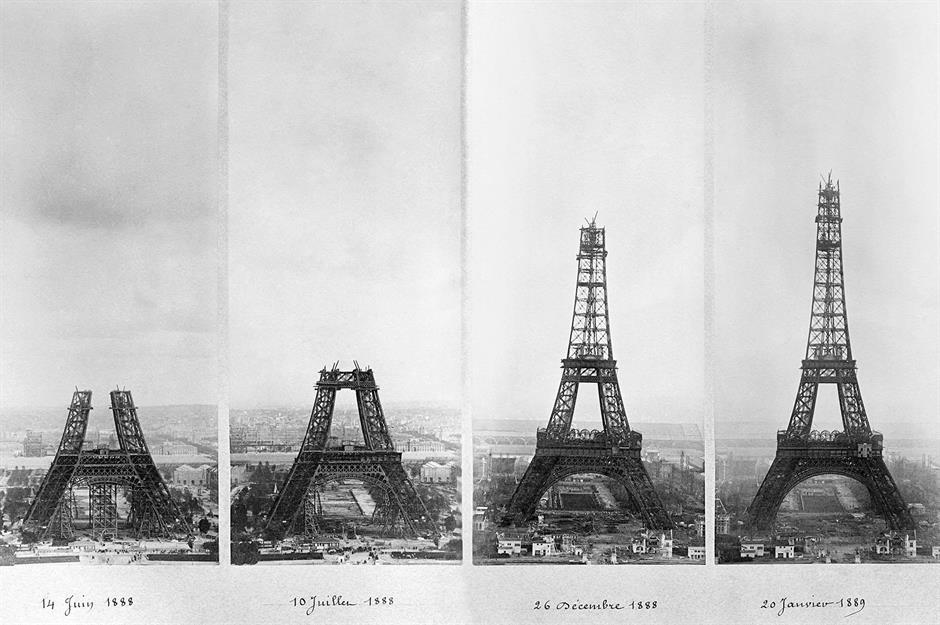
#OnThisDay in 1889, the Eiffel Tower was officially opened to the public. This iconic structure was inaugurated as part of the 1889 Exposition Universelle (World's Fair) held in Paris to celebrate the 100th anniversary of the French Revolution.
Standing at an impressive height of 300 meters (984 feet) at the time of its completion, the Eiffel Tower was the tallest man-made structure in the world until the completion of the Chrysler Building in New York in 1930.
The construction of the Eiffel Tower began in January 1887 and took just over two years. Over 18,000 iron parts were made in Eiffel's factory on the outskirts of Paris and then assembled on site with more than 2.5 million rivets.
Despite its eventual popularity, the Eiffel Tower was not without its critics. Many prominent Parisians and artists at the time decried the tower as an eyesore and felt that it detracted from the traditional beauty and aesthetic harmony of Paris. They petitioned against its construction and continued to voice their discontent even after its completion. However, over time, the structure became one of the most recognized and beloved landmarks in the world.
The Eiffel Tower was initially intended to be a temporary installation, to be dismantled after 20 years. However, its usefulness for communication purposes, particularly for radio broadcasting, secured its status as a permanent fixture on the Paris skyline. Over the years, it has served various functional roles, from a scientific platform to a military radio base during World War I.
#OnThisDay 47 BCE, Cleopatra was reinstated as the co-ruler of Egypt alongside her younger brother Ptolemy XIV. This political restoration followed a tumultuous period of civil war and internal strife with her other brother, Ptolemy XIII. Cleopatra's return to power was significantly aided by the military and political support of Julius Caesar, the Roman dictator and her influential lover.
Cleopatra initially co-ruled with Ptolemy XIII after the death of their father, Ptolemy XII, in 51 BCE. However, frictions quickly emerged between the siblings, largely due to Cleopatra's desire to rule independently and her subsequent dismissal as co-regent by court officials who favored her brother. The power struggle escalated into open conflict, with Cleopatra being forced to flee to Syria in 48 BCE, where she raised an army to challenge her brother's authority.
The pivotal moment in Cleopatra’s quest to regain her throne came with the arrival of Julius Caesar in Alexandria in 48 BCE, during his pursuit of a rival Roman general, Pompey. Upon his arrival, Caesar became embroiled in the Egyptian conflict, seeing it as an opportunity to extend Roman influence over the wealthy and strategically significant kingdom. Cleopatra famously had herself smuggled into Caesar’s presence wrapped in a carpet—an act that underscored her resourcefulness and determination. She quickly secured Caesar’s support, both politically and romantically, which proved decisive.
The civil war reached its climax with the Battle of the Nile, also known as the Battle of Alexandria, where Caesar’s legions defeated the forces loyal to Ptolemy XIII. Ptolemy XIII drowned in the Nile while attempting to escape after the battle, which effectively ended his reign and opposition to Cleopatra. Following her brother's death, Cleopatra was reinstated as queen, this time with her younger brother Ptolemy XIV as her co-regent, though she was undoubtedly the dominant force in the government.
#OnThisDay 1811, Percy Bysshe Shelley was expelled from the University of Oxford for his authorship and distribution of a pamphlet titled "The Necessity of Atheism."
Shelley, who was only 18 years old at the time and a student at University College, Oxford, had already begun to show signs of his radical and nonconformist views. "The Necessity of Atheism" was one of his earliest published works, and it challenged existing norms and beliefs with a boldness that was both provocative and ahead of its time. The pamphlet questioned the existence of God and argued for religious skepticism, presenting a series of logical arguments that questioned the basis of faith in divine authority.
The distribution of the pamphlet was an act of deliberate provocation. Shelley sent copies to all the bishops and heads of colleges at Oxford, effectively ensuring a swift and dramatic response. The university authorities were outraged by the pamphlet’s content, which they considered blasphemous and a direct challenge to the religious orthodoxy that underpinned much of academic and social life in England at the time.
Shelley was summoned before the college's fellows, where he was asked to publicly deny his authorship of the pamphlet. Shelley refused, standing by his principles and asserting his right to free expression. As a result, he was immediately expelled from Oxford without a degree.
#OnThisDay in 1860, The Sakuradamon Incident took place. Ii Naosuke, the Tairō (Chief Minister) under the Tokugawa shogunate, was assassinated by a group of rōnin, masterless samurai, outside the Sakurada Gate of Edo Castle (present-day Tokyo Imperial Palace).
Ii Naosuke had risen to the position of Tairō in 1858 and quickly became one of the most influential and controversial figures in Japan. He was primarily known for two major policies: the signing of the Harris Treaty with the United States, which further opened Japan to foreign trade and influence, and his enforcement of the Ansei Purge, a ruthless political purge that solidified his power but also made him numerous enemies.
The Harris Treaty was particularly contentious because it was seen as capitulating to Western pressures, undermining Japan's sovereignty. This was at a time when the country was deeply divided over the issue of foreign relations. The "kōbu gattai" faction, which Ii belonged to, favored a strong alignment between the imperial court and the shogunate to consolidate power and modernize the state in response to Western encroachment. However, his autocratic style and the perceived overreach in signing treaties without imperial consent alienated many, including powerful daimyōs (feudal lords) and their samurai.
The Ansei Purge further inflamed tensions. Initiated by Ii Naosuke, the purge targeted over 100 officials and intellectuals who opposed his regency and his foreign policies. Many were executed or forced into retirement, which stoked the anger of those who believed Ii was overstepping his authority and betraying traditional samurai values.
These actions set the stage for the Sakuradamon Incident. On that fateful day, a group of 18 rōnin from the Mito Domain, which had been a center of anti-shogunate sentiment and one of the domains most affected by the purge, attacked Ii Naosuke. The rōnin ambushed him as he was entering the castle, delivering a fatal blow that killed him instantly. The assassination was a dramatic statement against the shogunate’s policies and Ii’s personal leadership.
The aftermath of the incident was swift and severe. The Tokugawa shogunate launched a crackdown on the assassins and their sympathizers, leading to further arrests and executions. However, the assassination of Ii Naosuke also weakened the shogunate, exposing its vulnerabilities and deepening the national crisis. It galvanized the opposition, contributing to the increasing unrest that would eventually lead to the Meiji Restoration in 1868, which restored imperial rule and transformed Japan into a modern state.
#OnThisDay 1760, a catastrophic event struck Boston, one of the major cities in the American colonies at the time. The Great Boston Fire of 1760, resulted in the destruction of 349 buildings.
The fire began early in the evening and quickly spread through the densely populated areas of the city. Boston's buildings, closely packed and largely constructed of wood, provided ample fuel for the flames, which were further aided by strong winds that evening. The lack of an organized fire fighting service meant that the colonists were largely unprepared for a disaster of this magnitude. Residents formed bucket brigades, passing water hand to hand from the town’s wells and the harbor, but their efforts could not contain the rapidly spreading flames.
The fire started near the area of what is today Downtown Crossing and the Financial District, then spread towards the harbor. It consumed homes, businesses, and several key public buildings, including the town’s meetinghouse. The economic toll was severe, with many families losing their homes and livelihoods. The disaster laid bare the inadequacies of the city’s ability to manage large-scale emergencies and led to significant changes in urban planning and public safety measures.
#OnThisDay in 1931, a legislative decision was made in Nevada that would ultimately reshape its economic landscape and set the stage for the state to become one of the world's premier entertainment destinations.
The legalization of gambling by the Nevada Legislature was a strategic move during a time when the state was grappling with the economic strains of the Great Depression. This decision not only provided a new revenue stream but also marked the beginning of an era that would see Nevada, and particularly Las Vegas, transform into a thriving hub of casino and entertainment industries.
#OnThisDay in 1990, 2 men disguised as police officers executed the world's largest art heist at the Isabella Stewart Gardner Museum in Boston, Massachusetts. The theft resulted in the loss of 13 invaluable works of art. The total value of the stolen artworks is estimated to be around $500 million.
The heist began in the early hours of the morning, shortly after midnight, when the 2 men approached the museum's side door. Dressed in police uniforms, they buzzed the intercom and explained to the security guard on duty that they were responding to a disturbance call. Citing museum policy against admitting police without verification, the guard initially hesitated but eventually relented, believing the officers' presence was necessary due to an emergency. Once inside, the thieves quickly overpowered the guards, handcuffing and duct-taping them in the basement of the building—a location where they would remain for the duration of the crime.
With the security team incapacitated, the thieves had unfettered access to the museum's treasures. They spent approximately 81 minutes inside, moving through the galleries with a chilling precision that suggested familiarity with the museum's layout and the specific artworks they intended to steal. The stolen pieces included Vermeer's "The Concert," one of only 34 known works by the artist and considered one of the most valuable stolen paintings in the world; Rembrandt's "The Storm on the Sea of Galilee," his only seascape and equally priceless; along with a Chinese vase and a finial from a Napoleonic flag, among others.
The thieves' methodical approach extended to their departure. They left no clear forensic evidence behind and even took the surveillance tapes, further complicating the investigation. The method of their exit and the direction they took after leaving the museum remains unknown.
The investigation into the heist has been extensive and ongoing, involving multiple agencies including the FBI. Despite numerous leads, tips, and false confessions over the years, no arrests have been made, and none of the artworks have been recovered. The museum still has the empty frames on display, a haunting reminder of the cultural heritage that was lost and an open invitation for the return of the artworks.
The museum maintains a standing offer of a $10 million reward for information leading directly to the recovery of all the stolen works in good condition.
@fasc1nate In her later years, Maria has spoken out about the devastating impact of the drug trade on families and communities, advocating for peace and reconciliation in Colombia, and warning against the glamorization of the narco lifestyle promoted in popular culture.
@fasc1nate Throughout her life, Maria struggled with the public perception of her as an accomplice to Escobar’s crimes, which she has consistently denied, claiming she was unaware of most of his activities.
@fasc1nate Throughout Escobar's reign as the head of the Medellín Cartel, Maria remained loyally by his side. She claimed in later interviews that she was unaware of the extent of his criminal activities for many years and saw him primarily as a husband and father.
#OnThisDay 1881, Tsar Alexander II of Russia was assassinated in St. Petersburg.
The assassination was carried out by members of the People's Will (Narodnaya Volya), a radical revolutionary group that advocated for political reform, including the establishment of a constitution and the introduction of democratic liberties. The group believed that the assassination of the Tsar would spark a popular uprising and the overthrow of the autocratic regime, leading to social and political transformation in Russia.
On the day of his assassination, Tsar Alexander II was traveling through the streets of St. Petersburg in a closed carriage. The first bomb thrown by a member of the People's Will failed to kill the Tsar but injured several of his Cossack guards. The Tsar emerged unscathed and, despite the advice of his entourage to leave the area immediately, he insisted on checking on the wounded. A second bomber took this opportunity to throw another bomb, which landed near the Tsar's feet. The explosion was fatal, mortally wounding Alexander II, who died from his injuries shortly after.
#OnThisDay in 1950, one of the most tragic aviation accidents of its time occurred near Sigingstone, in the Vale of Glamorgan, Wales. The Llandow air disaster, as it became known, resulted in the deaths of 80 people, making it the world's deadliest air disaster at that time. The crash involved a chartered Avro Tudor V aeroplane, operated by Fairflight Ltd, which was returning from a rugby match in Ireland to Llandow Aerodrome.
The aircraft was carrying 83 passengers, most of whom were Welsh rugby fans returning from watching a match between Ireland and Wales in Dublin. The Avro Tudor V was originally designed as a commercial airliner post-World War II but had struggled commercially and was mostly used by charter services by the time of the accident. On that fateful day, the plane was severely overloaded; it was carrying five more passengers than it was certified to hold, which became a crucial factor in the disaster.
As the plane approached Llandow Aerodrome for landing, it faced difficulty during the final approach. Eyewitnesses and subsequent investigations suggested that the aircraft was unable to maintain a proper glide path to the runway. Just a few hundred yards short of the runway, the plane's tail reportedly struck the ground, causing the aircraft to break apart and burst into flames upon impact. This catastrophic crash resulted in 80 fatalities; only 3 passengers survived.
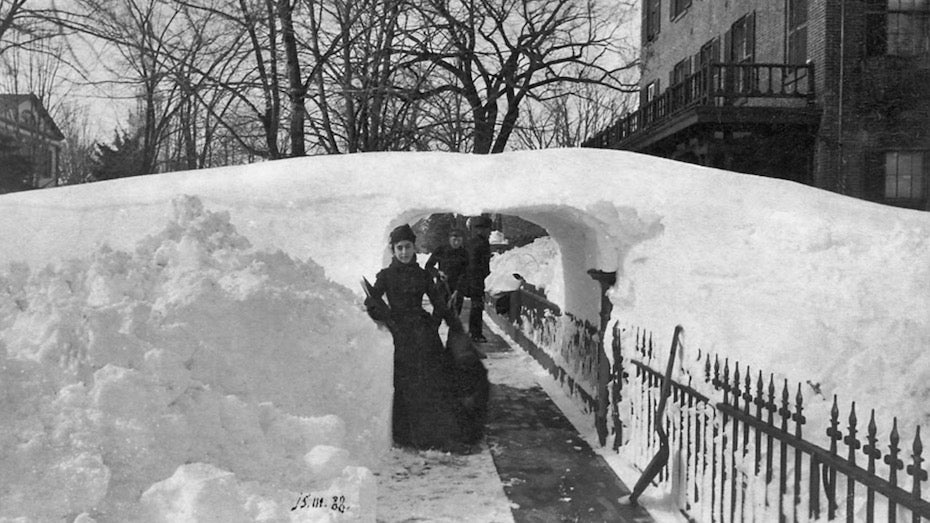
#OnThisDay 1888, a massive winter storm struck the eastern seaboard of the United States, unleashing unprecedented snowfall and ferocious winds across the region. This storm, which would later be known as the Great Blizzard of 1888, became one of the most severe weather events in the history of the United States. The blizzard brought life to a standstill, burying cities from Chesapeake Bay to Maine in deep snow, and it stands out as a catastrophic event that not only caused extensive loss of life and property damage but also changed the way cities approached urban planning and public utility management.
The blizzard began suddenly, following a spell of unseasonably warm weather, catching the entire region off guard. Over the course of 36 hours, New York City was blanketed with 22 inches (550 mm) of snow, while other parts of the region received as much as 50 inches (1,250 mm). The snow was accompanied by winds reaching up to 45 miles per hour, creating drifts as high as 40 to 50 feet in some areas. The combination of heavy snow and fierce winds proved deadly, disrupting telegraph lines, toppling railroads, and immobilizing the cities under its grip.
The blizzard was particularly devastating due to the timing and the density of the population in affected areas. In 1888, New York City and the surrounding region were bustling with activity and largely unprepared for such a severe weather event. The storm resulted in over 400 fatalities, including many who died from hypothermia, being buried under collapsed structures, or being lost in the snow.
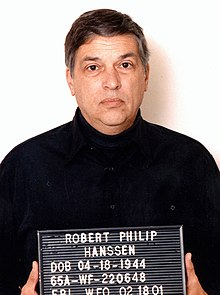
#OnThisDay in 2001, one of the most notorious espionage cases in American history reached a critical juncture when FBI agent Robert Hanssen was arrested for spying for the Soviet Union, and later Russia, over a period of more than two decades. Hanssen's actions were considered one of the most damaging intelligence breaches in the United States, profoundly impacting national security and shaking the foundations of the American intelligence community.
Robert Hanssen, a counterintelligence expert within the FBI, began his clandestine activities in 1979, only three years after joining the agency. He initially approached the Soviet Intelligence Service voluntarily and continued to provide classified information to the Soviets, and later the Russians, until his arrest in 2001. Throughout his career, Hanssen sold thousands of documents containing sensitive U.S. national security information, which included details of the United States’ nuclear operations, methods for electronic intelligence gathering, and identities of Soviet agents working for the United States.
The materials Hanssen passed to the Soviets included some of the most closely guarded U.S. intelligence secrets. His actions directly led to the execution of at least three Soviet intelligence officers working for the U.S. by the Soviet government after their identities were compromised. His betrayal not only endangered lives but also compromised numerous FBI and U.S. intelligence operations.
Hanssen’s motive appears to have been primarily financial. He received over $1.4 million in cash and diamonds over the years for his espionage activities. Remarkably, he managed to avoid detection for years due to his deep understanding of American counterintelligence techniques, his methodical approach to espionage, and his employment of sophisticated clandestine communication methods with his handlers.
The end came for Hanssen while he was still active within the FBI. His arrest was made at Foxstone Park in Vienna, Virginia, where he had gone to drop a package of classified information for his Russian handlers. This arrest was the result of a painstaking FBI investigation, which had been intensified in the late 1990s when U.S. intelligence agencies became increasingly aware of a mole within their ranks through intelligence operations and the defection of a Russian intelligence officer who provided crucial information.
Following his arrest, Hanssen faced charges related to espionage and was tried in a federal court. He entered into a plea agreement to avoid the death penalty, providing full cooperation with federal investigators in exchange for a life sentence without the possibility of parole. He was also required to forfeit any profits from his spying activities.
Robert Hanssen was sentenced to life imprisonment in 2002 and is currently serving his sentence at the ADX Florence, a federal supermax prison in Florence, Colorado.
#OnThisDay in 1779, Captain James Cook met a tragic end during his third exploratory voyage in the Pacific. The incident occurred in Hawaii at Kealakekua Bay and stemmed from a conflict over the theft of a cutter—a small boat used by his ship, the HMS Resolution.
Captain Cook had initially visited the Hawaiian Islands in 1778, during the course of his third voyage, and was the first European to have formal contact with the Hawaiian Islands. He was received with much curiosity and initially treated with respect, possibly even reverence, by the native Hawaiians, who called him Lono, associating him with one of their gods due to his arrival coinciding with an important festival dedicated to that deity.
After spending a month in the Hawaiian Islands, Cook departed but was forced to return to Kealakekua Bay shortly due to a broken mast on the HMS Resolution. His return was not met with the same warmth as his initial visit. The relations between the crew and the Hawaiians had become strained. The turning point came when a cutter from the HMS Resolution was stolen by the Hawaiians, an act that significantly escalated tensions.
Captain Cook decided to take the Hawaiian King Kalaniʻōpuʻu hostage to leverage the return of the cutter, a tactic he had used successfully in other parts of the Pacific. However, this strategy proved disastrous in Hawaii. When Cook went ashore to take the king, a large crowd of Hawaiians gathered, and a tense standoff ensued. The situation deteriorated rapidly, leading to a chaotic clash.
During the melee, Captain Cook was struck on the head and then stabbed, leading to his death on the beach. Cook's body was initially taken by the Hawaiians, who traditionally preserved the remains of high-ranking individuals as part of their funerary customs.