This week’s #ImageOfTheWeek takes us to Egypt’s Suez Canal, where Open Cosmos Hyper-500 highlights a powerful tool for global maritime security: dark vessel detection.
When vessels turn off their transponders to evade traditional tracking, satellite data provides a verifiable and unalterable source of orbital observation. This false colour image captures an active Ship-to-Ship (STS) transfer directly in the channel, pinpointing the exact physical presence of the ships.
The data also captures the broader environment, mapping the geometric grids of the nearby Port Said aquaculture project and tracking water turbidity plumes to see how this heavy traffic impacts the coastline.
By cross-referencing real-time hyperspectral imagery with AIS tracking logs, maritime operators can instantly check if transponders are off and flag anomalies keeping global supply chains transparent and secure.
#OpenCosmos #SuezCanal #EarthObservation #MaritimeSecurity
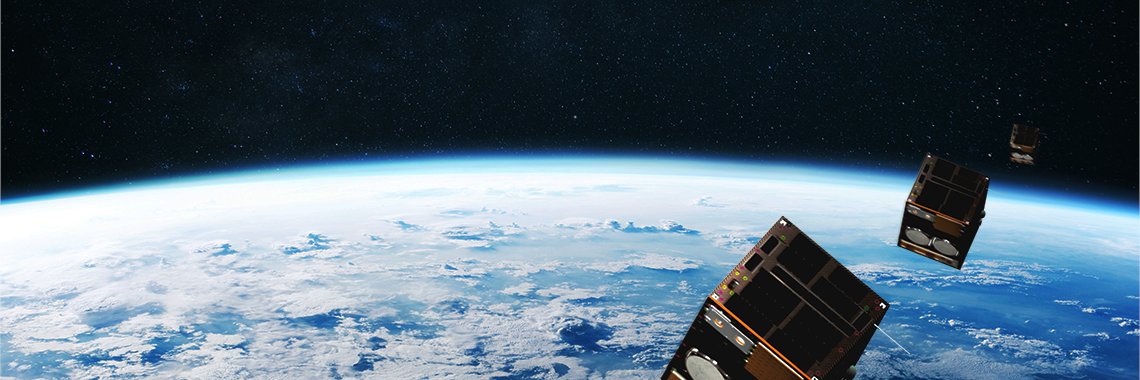
The next phase of the ConnectedCosmos constellation is a go! Our factories are now filled with the latest completed broadband satellites as they await liftoff.
Production across our 24/7 operational satellite factories in the UK, Spain, Portugal, and Greece continues at pace, maintaining our position as Europe's highest-volume satellite manufacturer.
Even for our teams, it is remarkable to see what these platforms will achieve. Once in orbit, they will enable direct point-to-point communications, delivering a truly sovereign capability across the globe. This architecture bypasses undersea cables entirely, with no need to touch the public internet if a client requires it-introducing a level of network resiliency new to the industry.
Turning this capability into a reality and advancing the satcom sector represents an incredible effort from the entire Open Cosmos team.
#OpenCosmos #ConnectedCosmos #SatelliteManufacturing #NewSpace #SatCom
We are excited to announce that we’ll be exhibiting at Critical Communications World 2026!
CCW is all about uniting the sector, and we are looking forward to connecting with partners and industry leaders from across the globe. Stop by to meet our team and talk about the future of critical comms.
Location: ExCeL London
Booth: UK Pavilion, Stand F1 (Halls N11-N17)
Dates: June 16-18, 2026
#CCW2026 #CriticalCommunications #OpenCosmos
This week’s Image of the Week takes us to the Netherlands. With a relatively small landmass, maximising the efficiency of every square metre of agricultural land is essential. Satellite data provides the clear, actionable insights needed to monitor crop health and manage these vital resources sustainably.
Captured by Open Cosmos' Hyper-500 satellites, this sequence of Mijdrecht shows how targeted spectral insights uncover what is happening beneath the surface, giving growers the exact data needed for precise crop management:
Image 1: Advanced Metrics (Red Edge) - Evaluates how crops reflect a narrow wavelength of light called the Red Edge. By using advanced tools like the Chlorophyll Index (CIre) and Red Edge Position (REP) Proxy to track the shift between absorbed and reflected light on the electromagnetic spectrum, this layer can pinpoint early chlorophyll loss and nitrogen deficiencies before symptoms are even visible.
Image 2: Canopy Health (GNDVI) - Maps the crop using GNDVI to track subtle, moisture-induced canopy changes and variations in photosynthetic activity well before physical wilting begins.
Image 3: True-Colour Image - Captures the landscape in the red, green, and blue bands, representing how the human eye would interpret the scene. Healthy vegetation typically reflects green light whilst absorbing red light, giving the ‘natural colour’ that we expect from agricultural fields.
#OpenCosmos #EarthObservation #PrecisionAgriculture #Sustainability #Hyper500
Infinite Orbits selects two Open Cosmos platforms for its “Tom & Jerry” Low Earth Orbit SDA demonstration in 2027
This partnership advances Low Earth Orbit RPO, in-orbit inspection and Space Situational Awareness capabilities in Europe. Infinite Orbits and leading space company Open Cosmos have announced their partnership on a new Infinite Orbits’ Low Earth Orbit (LEO) mission designed to advance autonomous inspection and operational Space Situational Awareness (SSA) capabilities.
Nicknamed “Tom & Jerry”, the project will see two satellites, “Tom”, a larger satellite, and “Jerry”, a smaller satellite, work together to demonstrate close-range manoeuvres and in-orbit interaction scenarios. Under the collaboration, Infinite Orbits has contracted Open Cosmos to design, build and deliver the programme infrastructure, including the manufacture of the satellites and the integration of IOs’ vision based RPO solution, inspection and Space Situational Awareness (SSA) subsystems.
“Tom & Jerry represents an important next step in the evolution of operational in-orbit servicing capabilities in Europe,” says Adel Haddoud, CEO of Infinite Orbits.
“By combining advanced Space Situational Awareness technologies with close-range inspection capabilities, this partnership will help lay the foundations for a new generation of intelligent and secure in-orbit services,” says Rafel Jorda Siquier, CEO at Open Cosmos.
Full release: https://t.co/UfQQ9JMeZP
@Infinite_Orbits
#OpenCosmos #InfiniteOrbits
Today, we were pleased to welcome Deputy Prime Minister of Greece Kostis Hatzidakis to Open Cosmos Aegean’s facilities in Pallini.
The visit was an opportunity to present our work under the National Microsatellites Programme: the seven Greek Hyperion / Hyperion GR satellites being built in Greece, the ground station that has already been installed, and the launch schedule starting in July.
“What is happening here is impressive and extremely useful for our economy, agriculture, defence, and international standing," stated Deputy Prime Minister Kostis Hatzidakis. "Open Cosmos is a highly dynamic company, and the Government has every reason to support efforts of this kind.”
For us, this project is particularly important because it is not only about acquiring these satellites. It is also about building real industrial and technological capability in Greece, across the design, manufacturing, testing and operation of space systems.
The Greek Hyperion GR satellites will support critical applications in civil protection, environmental monitoring, precision agriculture, maritime surveillance, urban planning and faster public-sector decision-making.
But the value of this investment goes beyond the National Microsatellites Programme. The infrastructure, cutting-edge technology and talent we have developed in Greece are already giving Open Cosmos Aegean strong export momentum, with satellite infrastructure and services being developed in Pallini for international markets.
We thank Mr Hatzidakis for his visit, his interest, and the discussion on the next steps for scaling Greece’s role in the European and global space ecosystem.
Built in Greece, for Greece - and for the world.
Read More: https://t.co/jqLUUPqwHZ
#OpenCosmos #OpenCosmosAegean #HyperionGR
Our Pan-European facilities are engineered for high-throughput production and precision at scale. With our production now at an all-time high, we are meeting global demand with unprecedented pace-ensuring that every satellite we build is mission-ready without compromise.
To ensure every mission is a success, each satellite undergoes a rigorous testing process. While this represents just a fraction of our comprehensive testing suite, milestones like end-to-end functional testing and vibration testing for structural integrity are essential. We also leverage our Walk-in TVAC chamber to simulate the extreme thermal gradients of space, validating hardware performance under vacuum to ensure every satellite is ready for the journey ahead.
It is this level of industrial rigour that allows us to scale rapidly while maintaining our 100% mission success rate in orbit.
#ImageofTheWeek #OpenCosmos #SatelliteProduction #LEO #SatelliteManufacturing #cleanroom
Jack Bowden, Future Mission Manager at Open Cosmos, has just wrapped up an insightful session at SmallSat Europe 2026 in Amsterdam.
Participating in the panel “The Flexible Factory,” Jack discussed the practical shift from bespoke integration to high-cadence production. As we continue to scale our production of satellites, the conversation focused on the friction points that come with moving toward a 24/7 workflow.
Jack shared perspectives on the hurdles involved in this transition, including:
• Trusting factory floor feedback and deploying engineering directly on the floor.
• Recognising that scaling production involves far more than increasing floor space.
• Identifying the specific constraints that emerge as manufacturing volume increases.
Addressing these bottlenecks is how we continue to scale. It was great to connect with the community at the RAI this week to discuss the future of European satellite manufacturing.
#SmallSatEurope #OpenCosmos #SatelliteProduction #Amsterdam
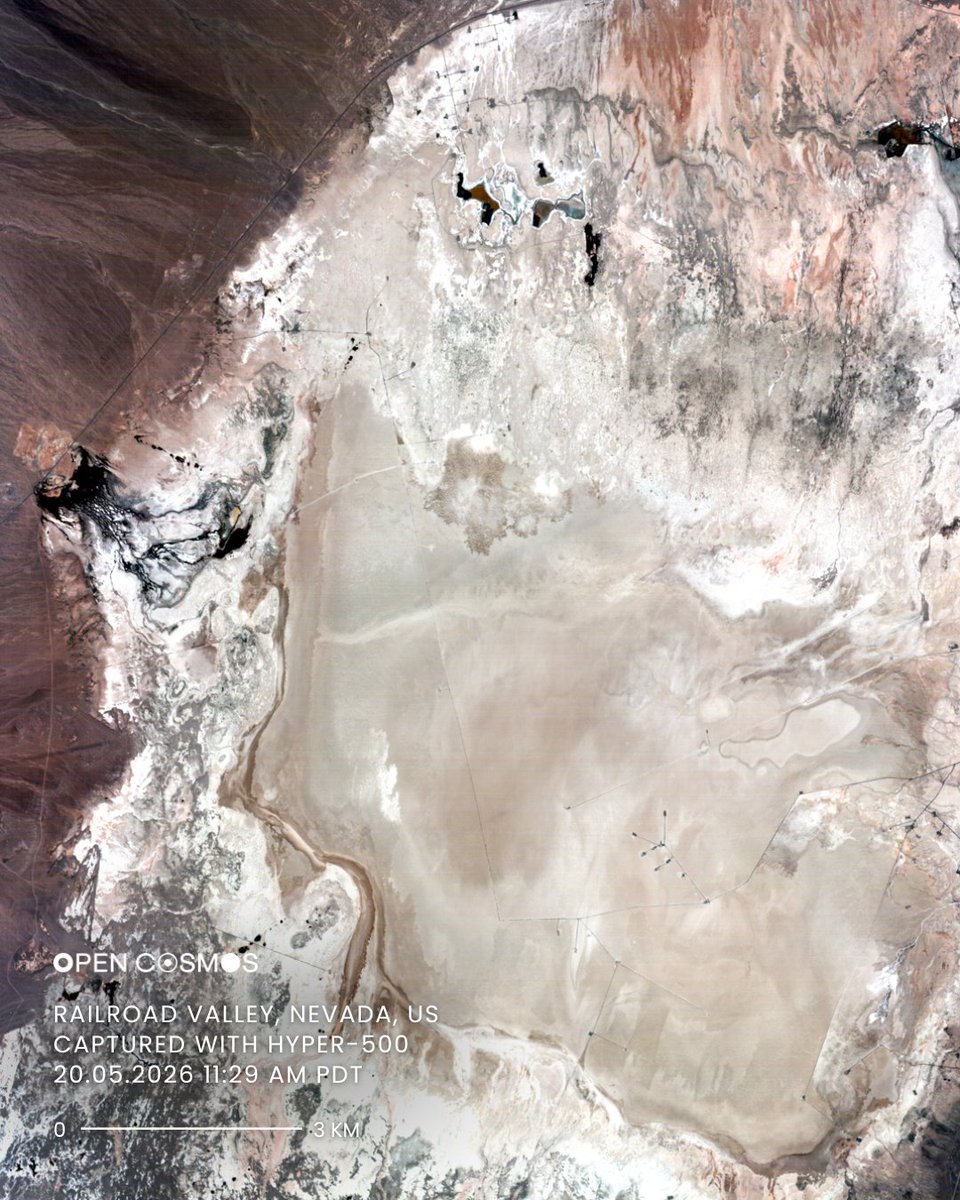
This week’s #ImageOfTheWeek takes us to Railroad Valley, Nevada - the prime location for satellite calibration on Earth.
Out of the small handful of elite global calibration sites, Railroad Valley is the most consistent. Its isolation and stable weather patterns provide a near-constant environment that rarely changes, making it a world-class reference point for the space industry and a core member of RadCalNet (The Radiometric Calibration Network).
The dry lakebed’s extreme flatness and uniform surface provide the perfect "ground truth" for our sensors. We leverage these unique conditions to run automated radiometric campaigns - linking our measurements to SI-traceable ground data while carefully managing the uncertainty budgets of our Top of Atmosphere (TOA) observations.
This ensures our instruments stay perfectly tuned and our data remains consistent, accurate, and reliable across our entire constellation.
#OpenCosmos #EarthObservation #SatelliteData #RadCalNet #Calibration
The Open Cosmos Newsletter has Landed
The first edition of our brand-new newsletter, The OC Downlink, officially goes live next Tuesday, May 26th at 2:00 PM BST.
We are providing a look into our day-to-day operations with behind-the-scenes access to the Open Cosmos facilities, alongside the latest updates and key upcoming dates.
As a thank you for subscribing, you will also receive exclusive, high-quality Earth Observation imagery to use as backgrounds for your devices. 🛰️
Subscribe to The Downlink here 🌏
https://t.co/tO0B8xfjH5
Join the community to receive the first edition this Tuesday!
#OpenCosmos #TheDownlink #SpaceNews #EarthObservation #newsletter
Pedro Mier appointed President of Open Cosmos Spain
We are proud to announce the appointment of Pedro Mier as the new President of Open Cosmos Spain.
Pedro joins us with over 30 years of experience as an entrepreneur in the space sector and has been recognised as ‘Engineer of the Year’ by COIT. Pedro’s arrival reflects our commitment to our presence in Spain and to driving collaboration and growth within the space community across Europe.
"My objective is to enhance the company's capacity to generate value through digitalisation based on spatial data and to strengthen ties with the Spanish industry and public institutions." - Pedro Mier
Spain is a critical part of the Space community. With the recent expansion of our manufacturing facilities, we are committed to helping continue this growth. This strategic move strengthens our structure and positioning at a crucial moment for the sector.
https://t.co/Vr1oJ27RXA
#OpenCosmos #OpenCosmosSpain #SpaceSector #SatelliteManufacturing #Satcom
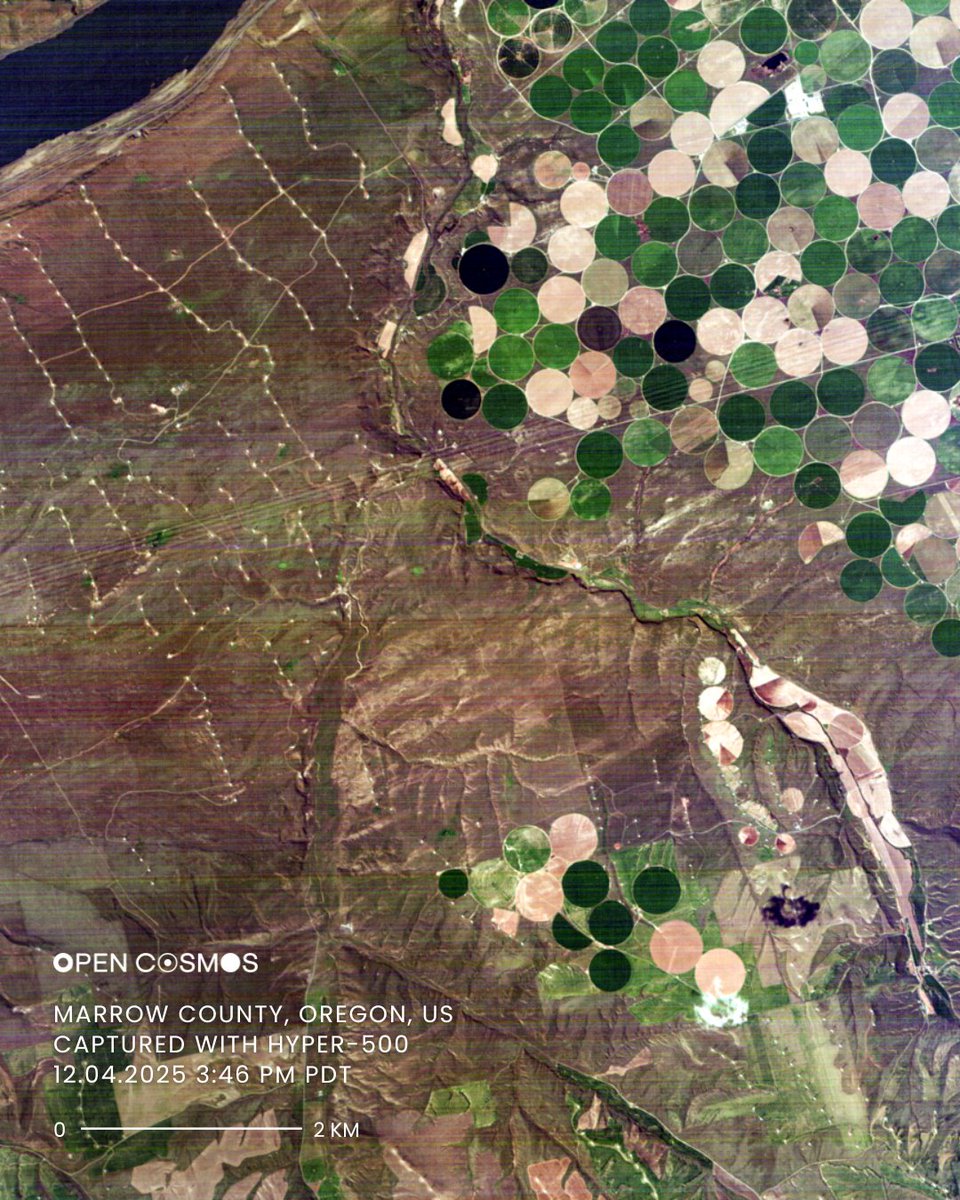
This week's #ImageOfTheWeek highlights one of agriculture's most recognisable patterns from orbit - center-pivot irrigation systems.
Captured across four locations, these circular fields are impossible to miss in our EO imagery. Each disc represents a single pivot arm rotating around a central water source. Valued for their ability to efficiently maximise crop yield across large areas of land, these systems also help reduce water runoff and soil erosion associated with traditional ground irrigation.
Open Cosmos multispectral and hyperspectral imagery reveals how well these systems are performing - detecting variations in crop health, nitrogen-content, water distribution and stress across individual circles, giving farmers the actionable intelligence to optimise fertiliser and water consumption and reduce costs.
#OpenCosmos #EarthObservation #Agriculture #Irrigation
Inside our UK satellite factory. 🛰️
Watch as our teams mount external panels and add the final touches to the latest batch of ConnectedCosmos satellites. This new LEO constellation will provide sovereign and secure communications, alongside resilient capabilities for businesses and government bodies across the globe.
We’ve established a 24/7 production flow in one the most advanced satellite hubs in Europe. This timelapse shows the team in action as we rapidly expand our operations.
#OpenCosmos #ConnectedCosmos #SatelliteProduction #Cleanroom
We’re hiring across the Open Cosmos Data Division 🛰️
We’re looking for engineers and specialists who know that great Earth Observation data depends on the systems behind it.
Join us in building the infrastructure that turns raw satellite imagery into insights that help tackle some of Earth’s biggest challenges.
"In the DataCosmos team, we bridge the gap between web engineering and orbital mechanics. We build the interfaces for our Catalogue collection and the backend logic for constellation acquisition optimisation. By automating tasking Activities, we solve the complex challenge of turning orbital simulations into a reliable, user-facing data pipeline." - Pep, Data Platform Technical Lead
This opportunity is about depth, ownership, and real-world impact.
You'll be trusted to build the systems that make satellite data actionable.
We're scaling fast. We've put hardware in orbit, and it works. (100% success rate so far.)
🔗 Explore Data roles here: https://t.co/ZMg0StV2Mi
#OpenCosmos #DataCosmos #SoftwareEngineering #Python #EarthObservation #SpaceJobs
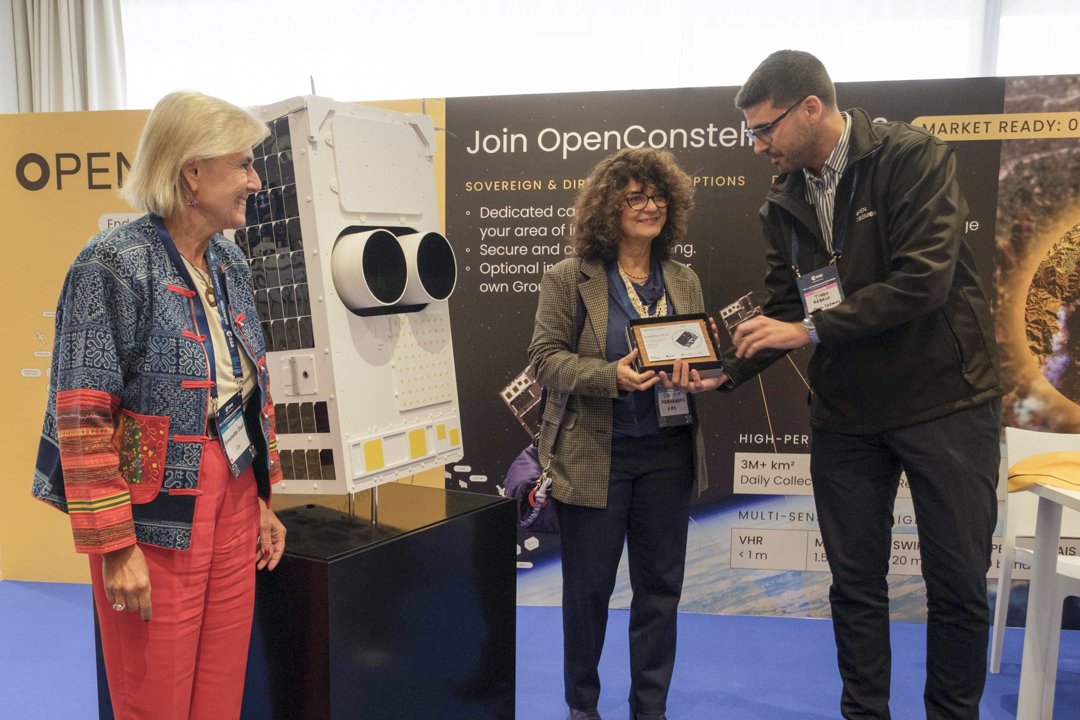
The final design for eight new Earth observation satellites for the Atlantic Constellation (ESCA) was presented by Tiago Rebelo (CRO), Cecilia Hernández (AEE), and Simonetta Cheli (ESA).
This €30 million programme, managed by the Spanish Space Agency with ESA, will deliver 16 state-of-the-art satellites to strengthen Europe’s Earth observation capabilities.
Passing the Critical Design Review (CDR) confirms the system is ready for the production phase. These 100kg microsatellites integrate VNIR, AIS, IoT and GNSS-R payloads for high-value services like emergency management and maritime monitoring.
"Passing the CDR is a key milestone... It confirms that the system is ready to make the leap to the production phase," says Tiago Rebelo.
Read the full release: https://t.co/soA8qTxIln
@esa@aee_gob
#OpenCosmos #ESCA #EarthObservation
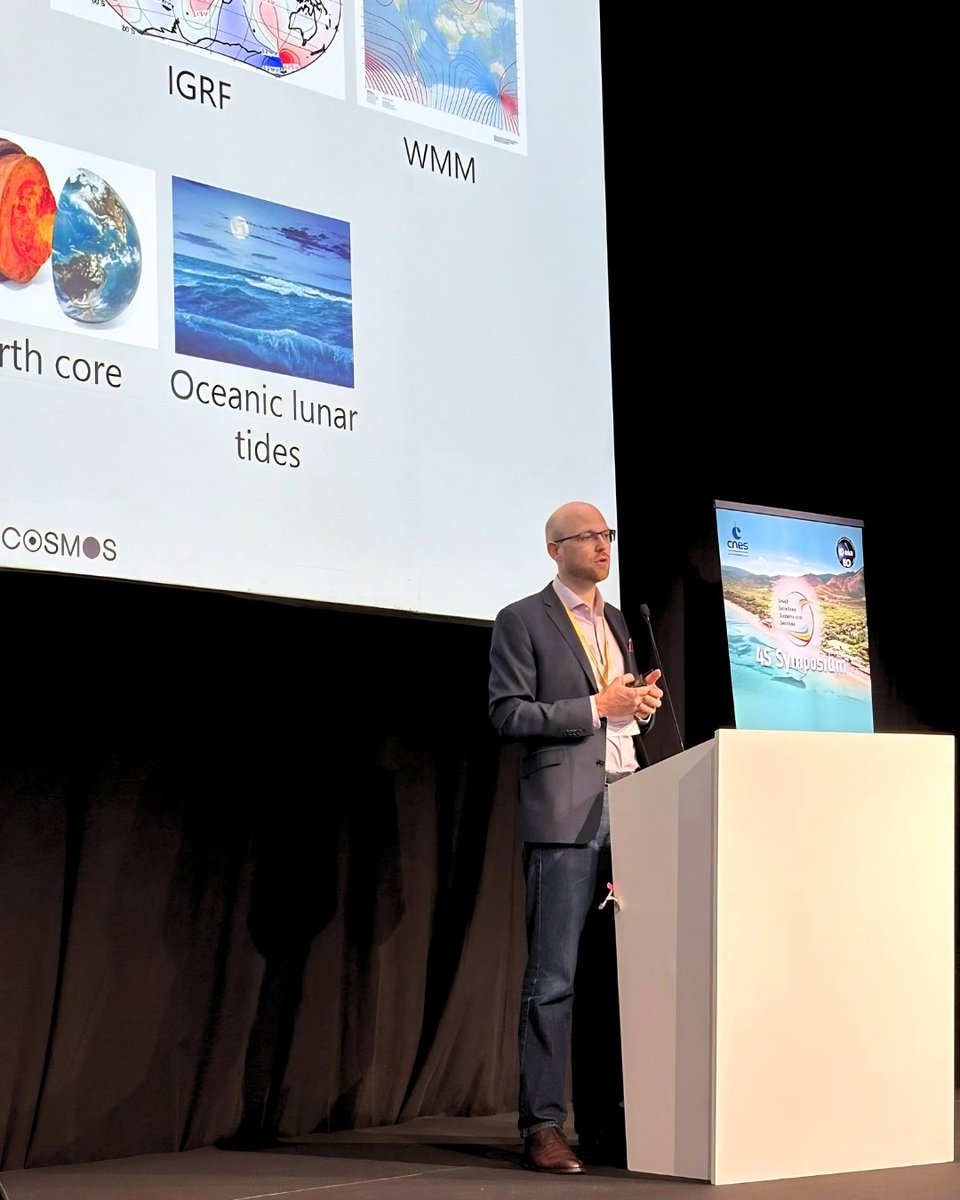
The 4S Symposium has officially come to a close. VP of Growth Florian Deconinck presented the latest developments on NanoMagSat, a mission to better understand the invisible shield that makes life possible on Earth.
• A 3x16U CubeSat constellation to monitor the Earth's magnetic field and ionospheric environment with unprecedented spatio-temporal coverage.
• Latest tests: deployable solar panels, multi-needle Langmuir probes, star tracker baffles, and an impressive 3m boom.
• InterMagSat: a proposed worldwide collaboration answering the IAGA’s call for new LEO missions for sustained global observations.
Thank you to the 4S Space Symposium for championing the use of small satellites and services.
@esa@CEA_Leti@dtuspace_geodyn@tudelft@IAGAIG
This week’s Image of the Week takes us to the eastern edge of Egypt’s Nile Delta, where the Multi-500 satellite has captured the striking geometry of 10th of Ramadan City.
As one of Egypt’s largest industrial hubs, the city creates a sharp divide between the built environment and the vast natural landscape.
#OpenCosmos #10thOfRamadanCity #Egypt #SatelliteImagery #EarthObservation
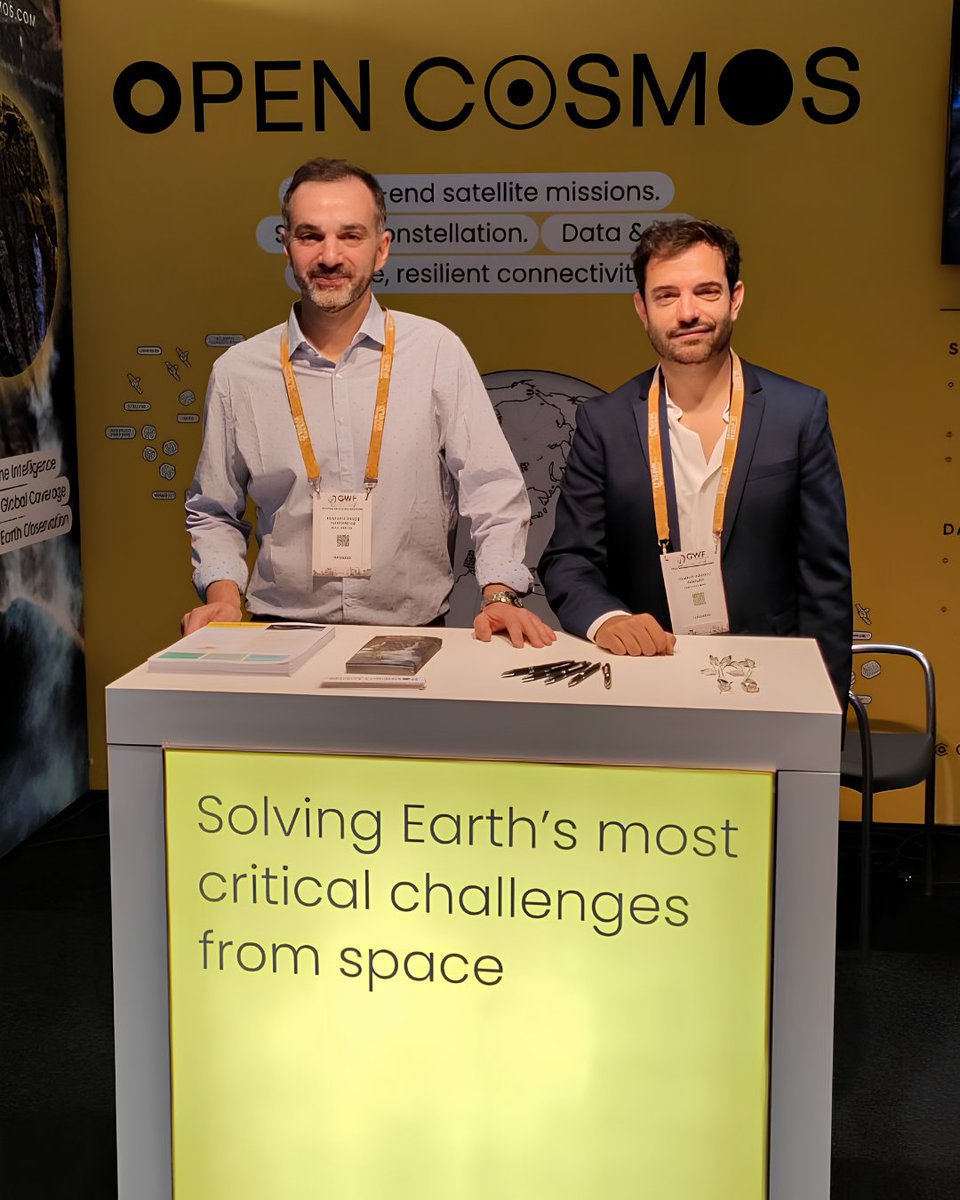
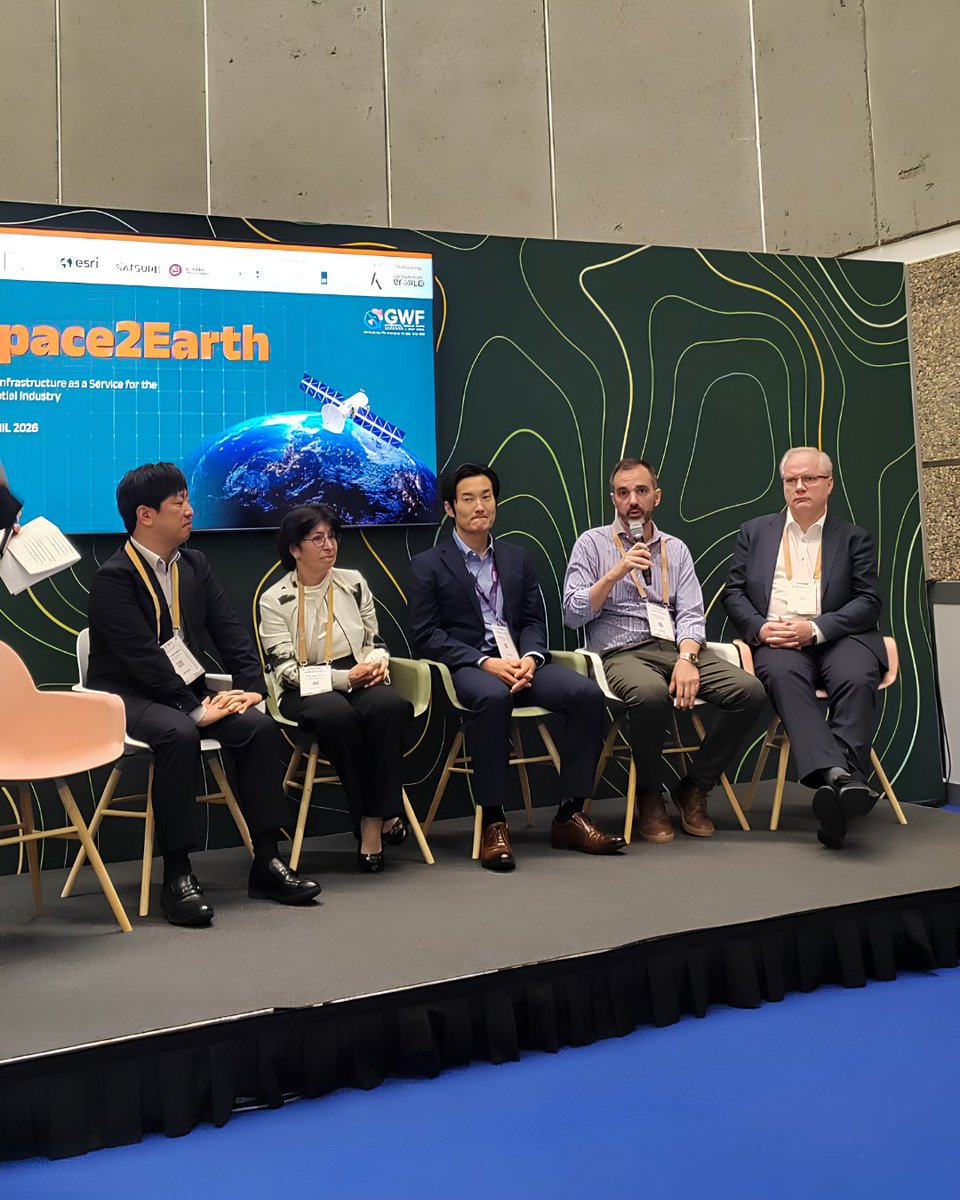
The team was in Amsterdam last week for the Geospatial World Forum - a great opportunity to reconnect with partners and discuss the future of resilient space infrastructure.
Our VP of Data, Alberto Perez Cassinelli, took the stage at the Space2earth Seminar alongside speakers from Axelspace, Warpspace, @UNOOSA, and @isprs. Alberto introduced DataCosmos and OpenConstellation’s latest services, featuring near real-time, high-resolution, and hyperspectral data. He highlighted how our open architecture, AI-ready API, and transparent pricing are designed specifically to empower our ecosystem of AI and Solution Partners.
It was a productive week spent engaging with the community and sharing our strategy for scaling the OpenConstellation network. We're looking forward to building on the momentum from these discussions.
#GWF2026 #SpaceInfrastructure #EarthObservation #OpenCosmos