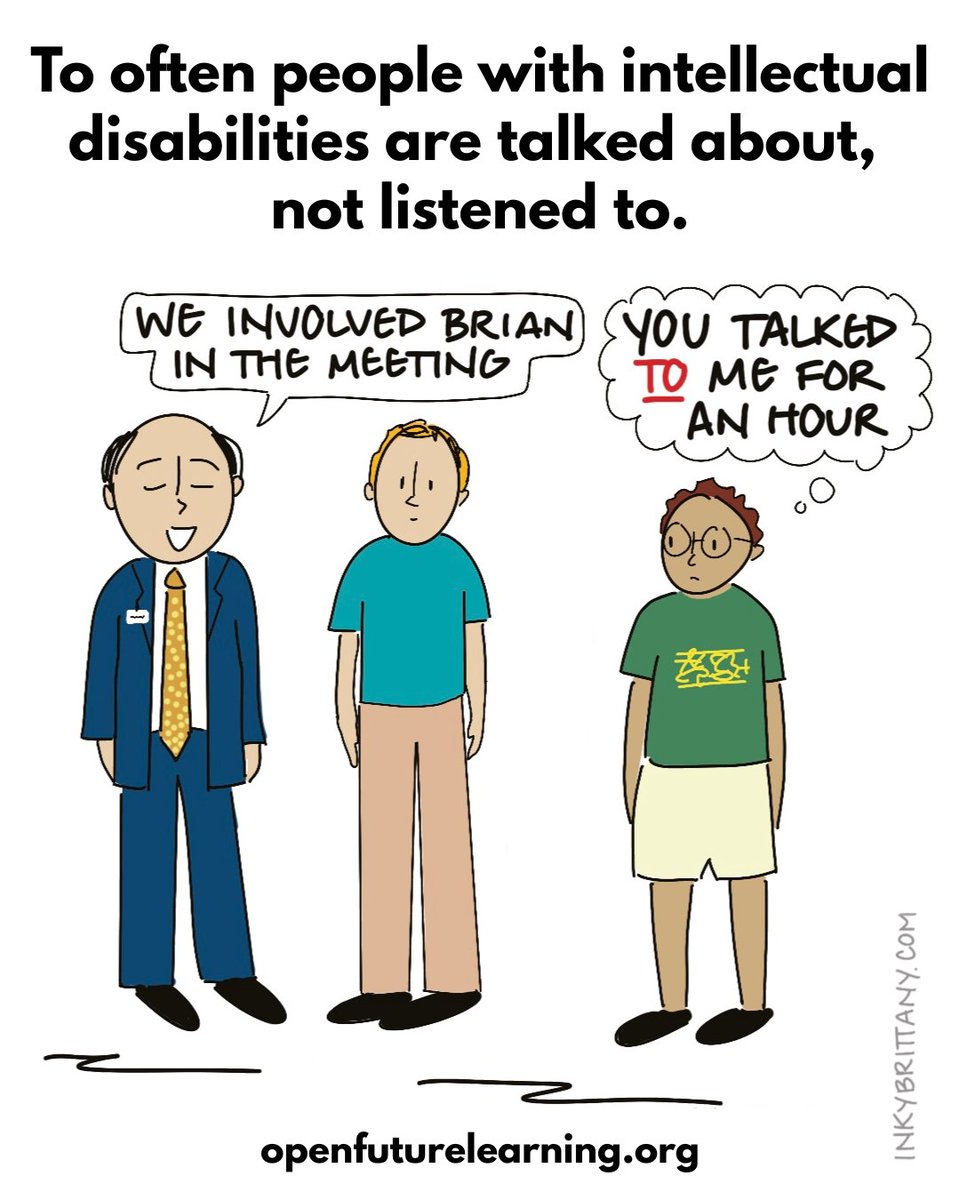
Inclusion is measured by whether someone is given a real way to be understood, and whether others take the time to listen. If you want to know whether someone was included, don’t ask if they were there. Ask if they were respected, heard, and able to influence what happened next.
Too often, we mistake presence for participation. We invite people with developmental and intellectual disabilities into rooms, have people sit at tables, and then move ahead without really making space for their thoughts, choices, or feelings.
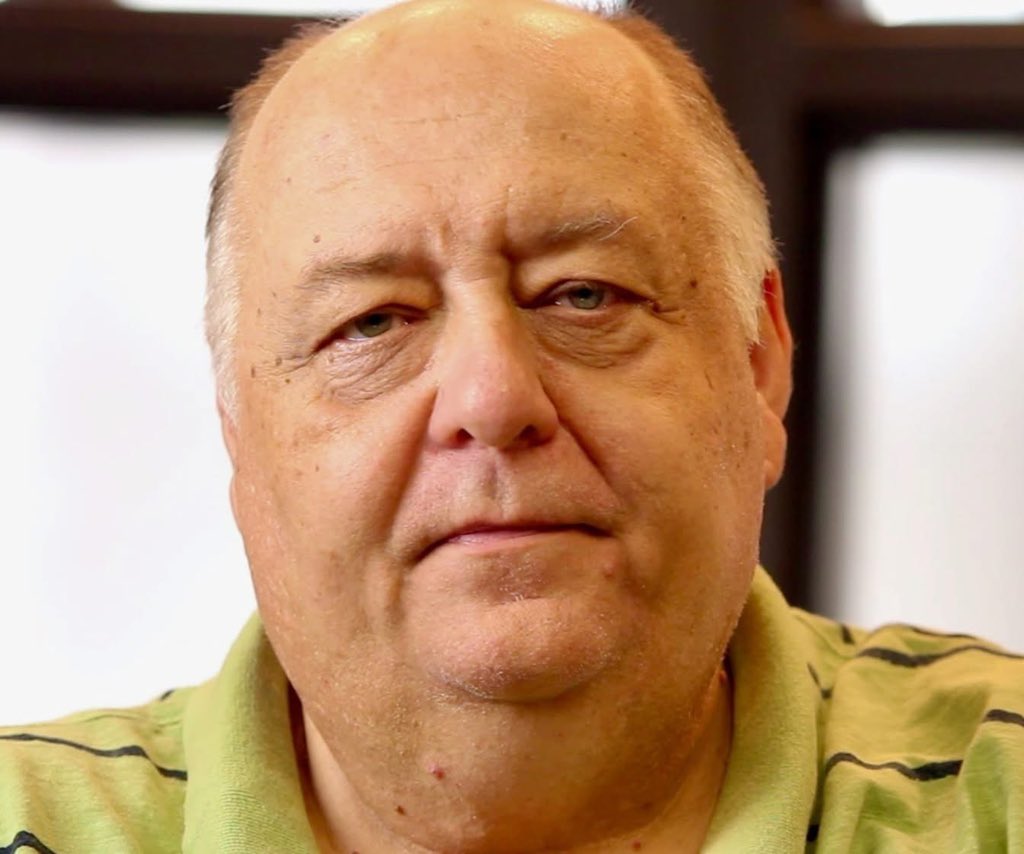
A good day is not the same as a compliant day. Too often, people with intellectual disabilities are praised for being “good” simply because they followed directions and caused no problems. Doing everything you are told is not the same as living a meaningful life.
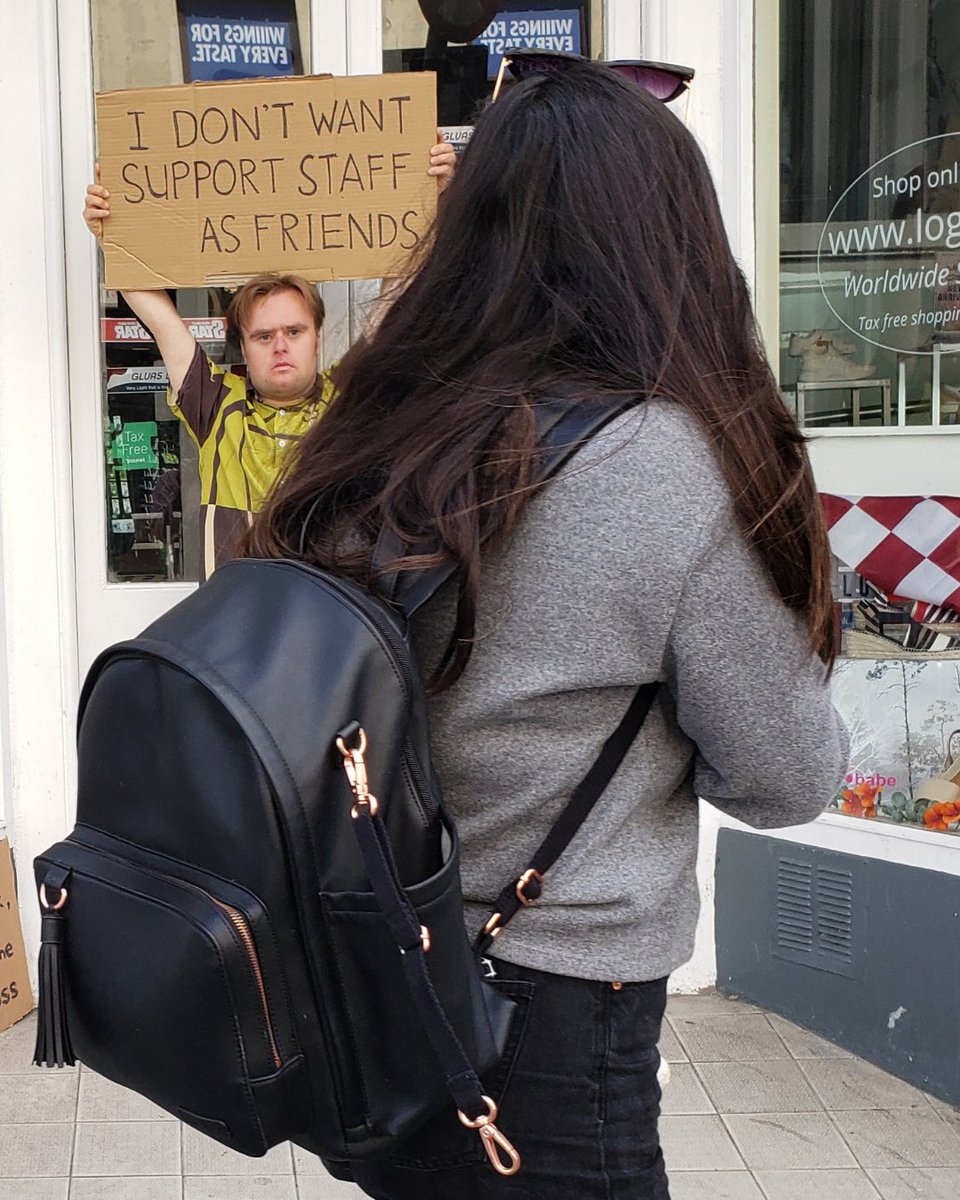
Real support should make friendship possible, not replace it.
...
ID: Fionn holds a cardboard sign above his head that reads "I don't want support staff as friends" - a person walking by has stopped to read the sign.
Great support doesn’t mean stopping people from choosing wrong. It means being there with them when they choose, and staying if things don’t turn out well.
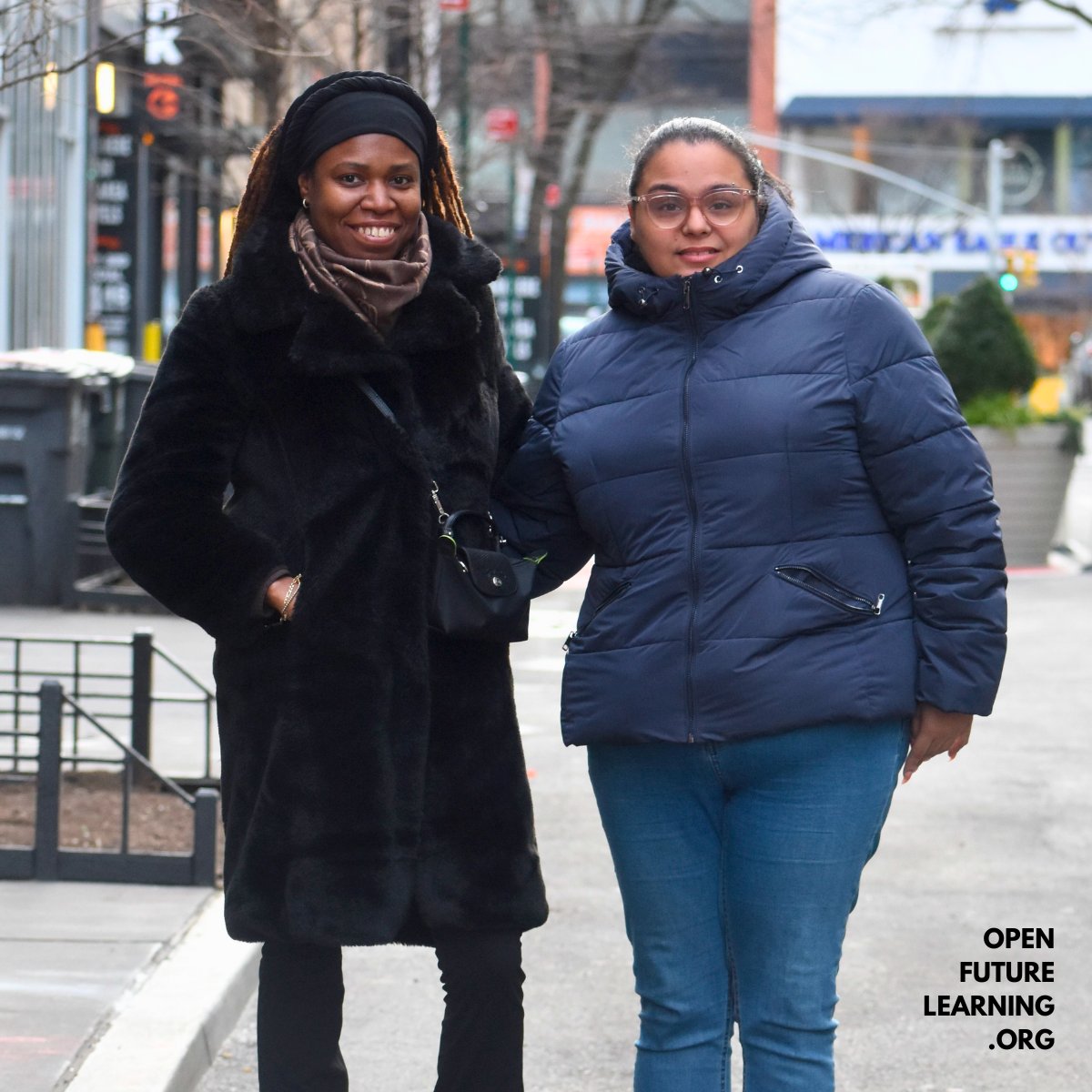
“I found this job at a moment when my life felt dark. I’ve struggled with depression and anxiety since I was young. I’d just left my home health aide job that didn’t feel meaningful anymore. I needed something that felt more fulfilling."
Read: https://t.co/dqRCNhDqKV