🔔 Reminder! We need your input and feedback! Take 5 minutes to fill out our survery and help us improve outreach and support for Miniscopes and expand the surrounding open-source ecosystem. https://t.co/KmGEBhzbrI
#Neuroscience#OpenScience
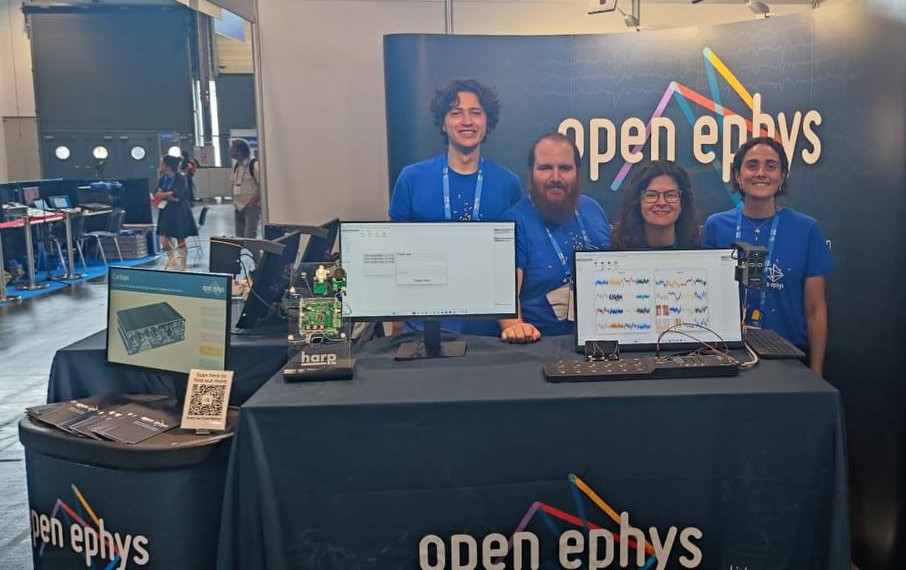
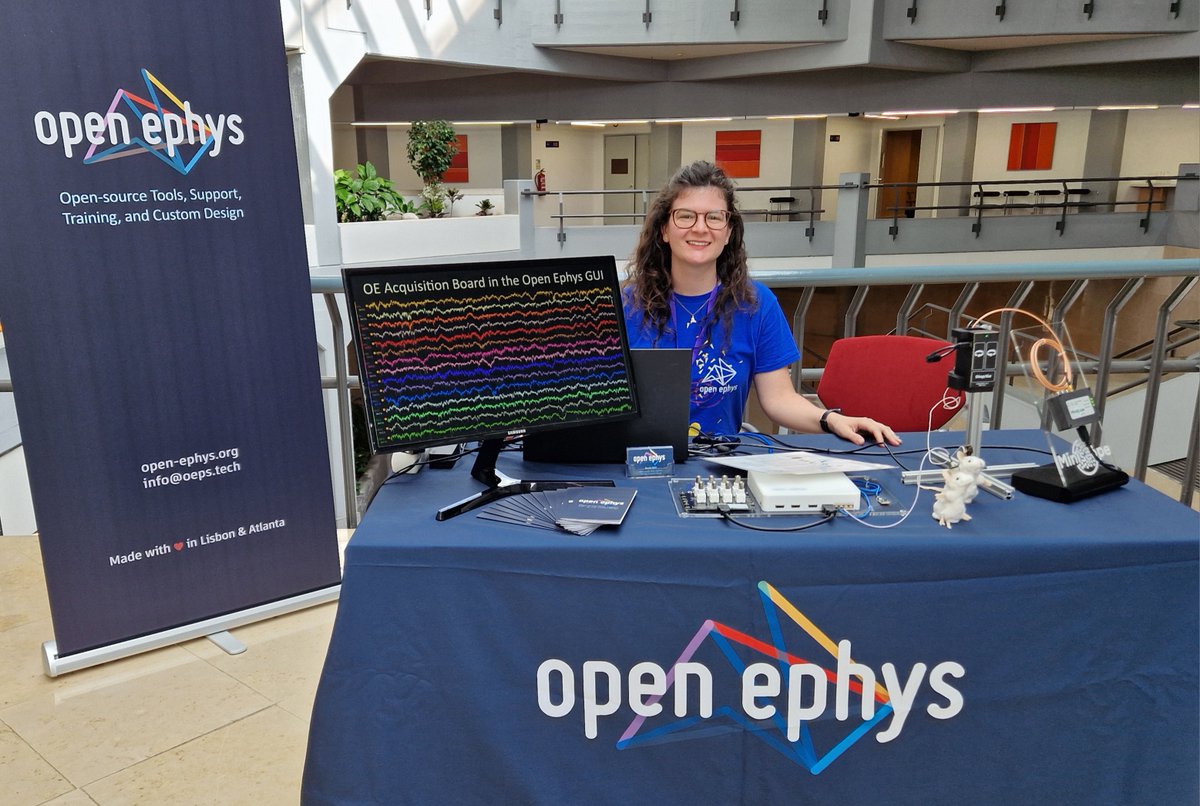
What a great first day at #FENS2024! Come see the open source tools we make in action: our extracellular ephys acquisition board, the UCLA Miniscopes, our new ONIX multimodal system (for neuropixels probes!), the HARP behavior board, and more!
@ChuckleScience taught about this at the fantastic workshop organized by @GattoGraziana of the @crc1451 in Cologne with Sam Sober and Amanda Jacob.
Reach out if you want to give this technique a try!
Looking for a high-resolution readout of motor neuron activity to study fine details of behavior?
Check out what you can do with @CAMBER_Atlanta#myomatrix arrays and our Acquisition Board in this blog post.
https://t.co/IBZh4R2bpG
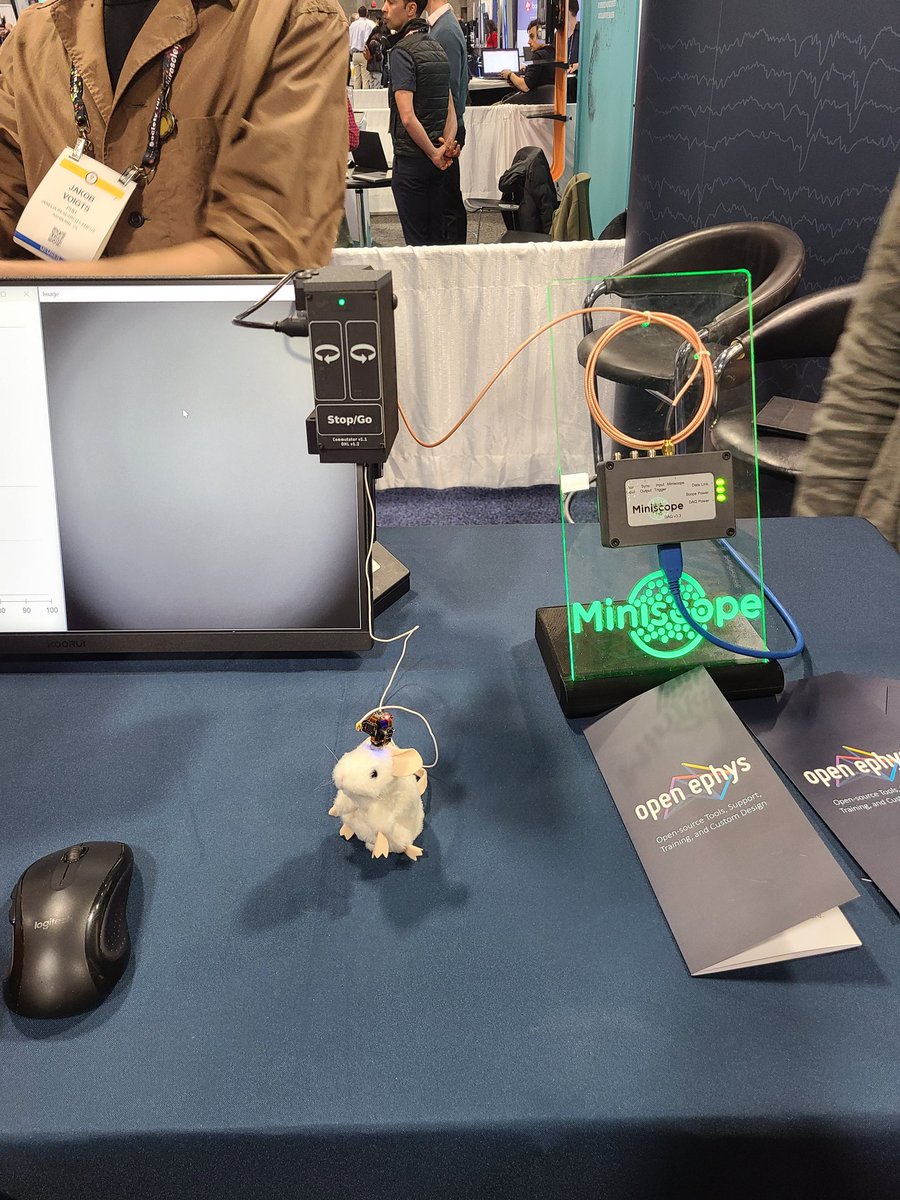
We're presenting the first fully-wireless Miniscope at #SfN2023! Wireless power/data enables long-term neural recording! @MiniscopeTeam
Stop by our poster on Nov. 13, 8-12am, WW66.
Untethering open-source Miniscopes with wireless power and data transfer
https://t.co/61IIHDTV5F…
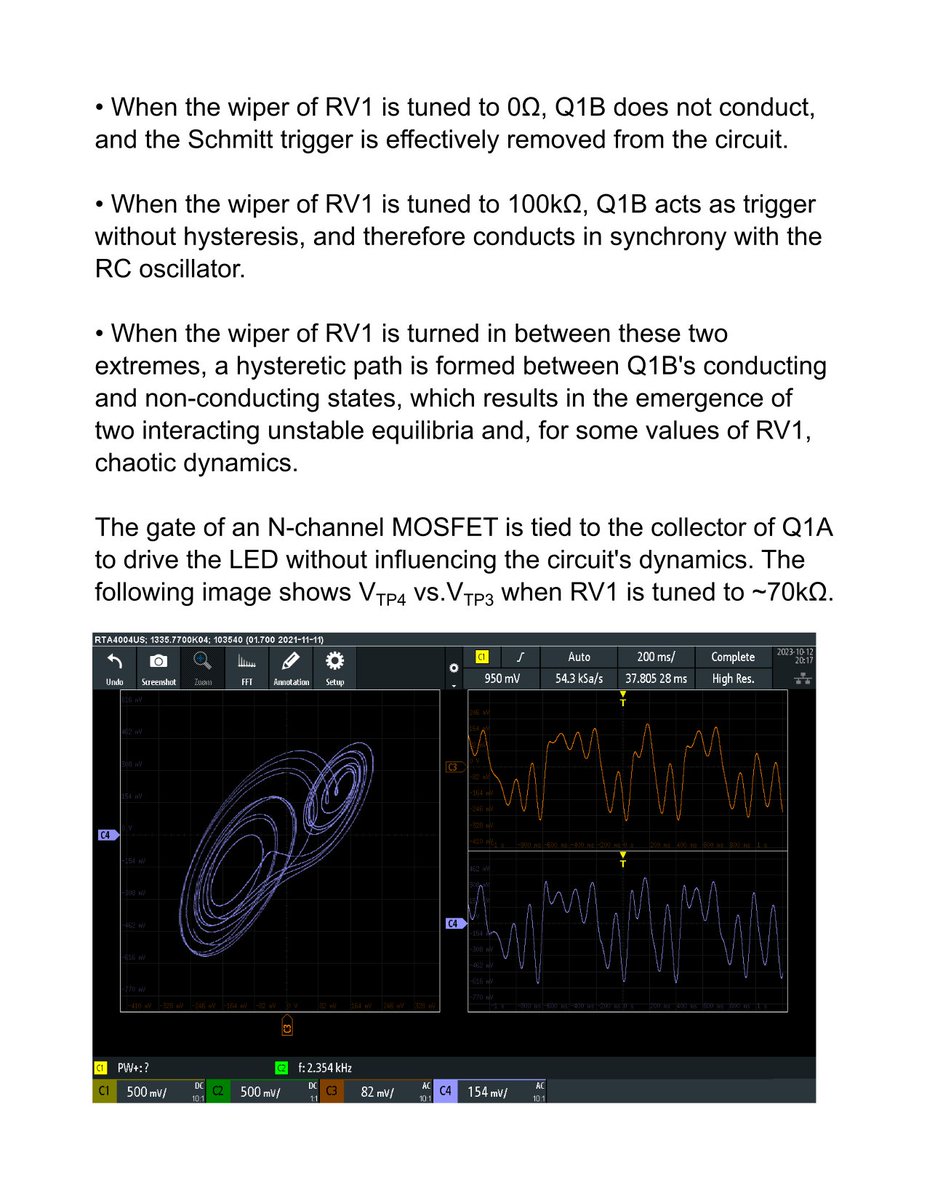
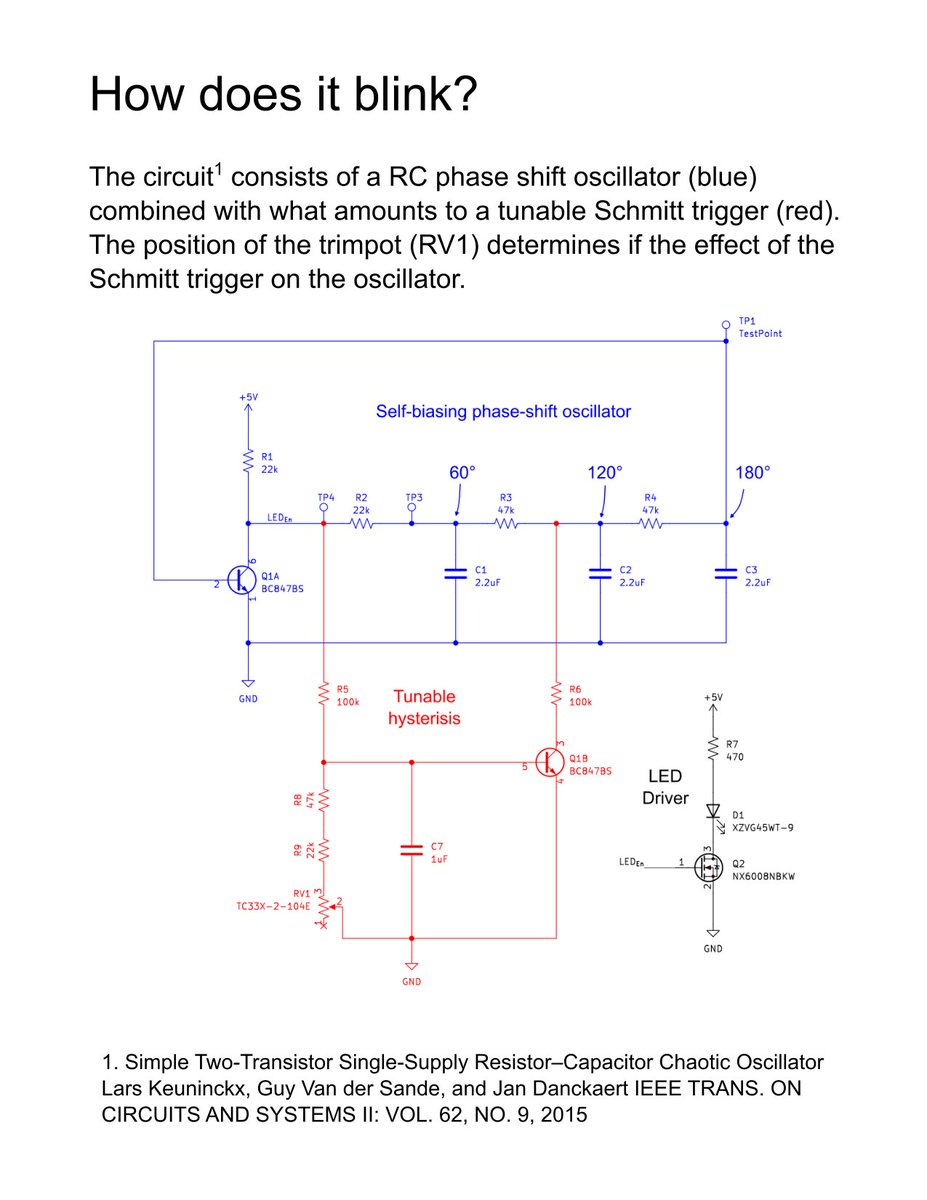
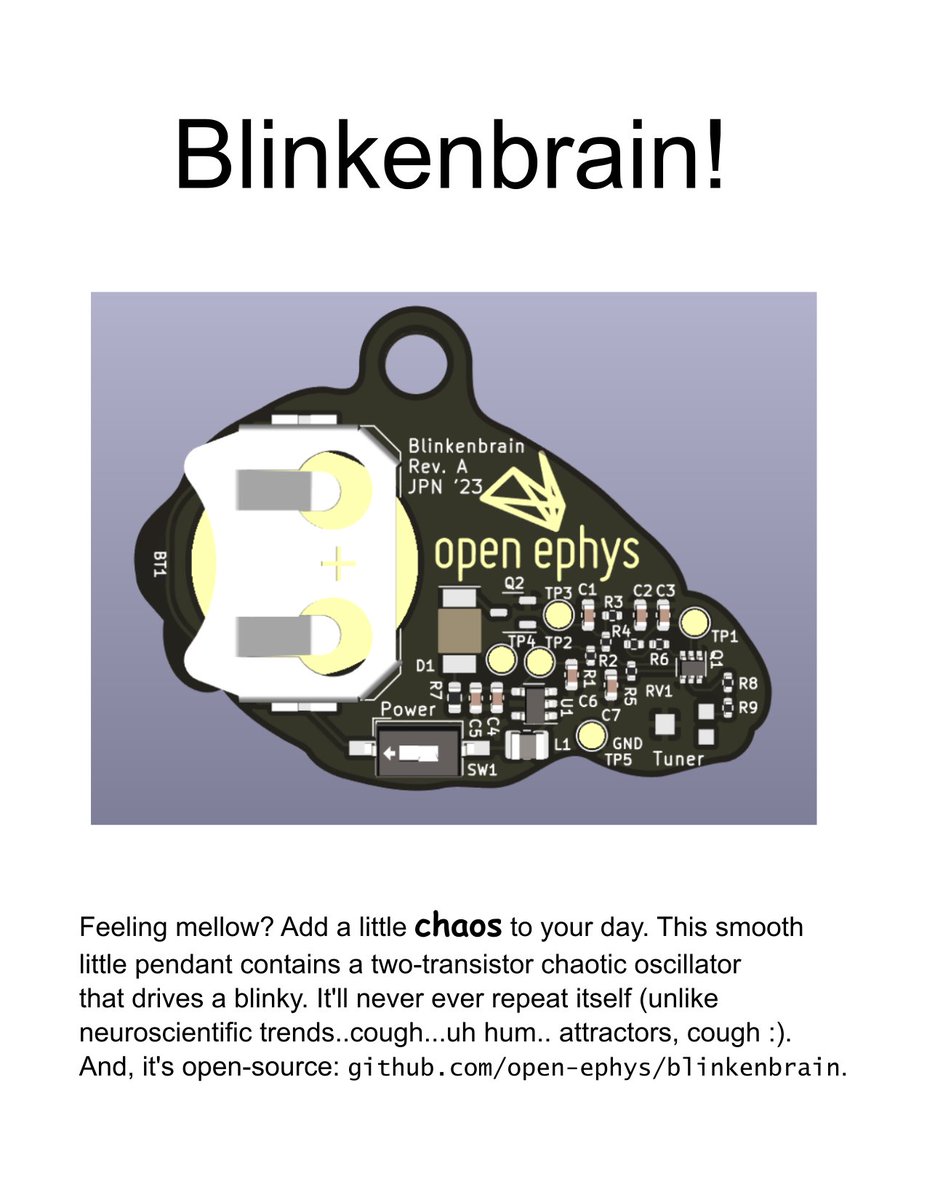
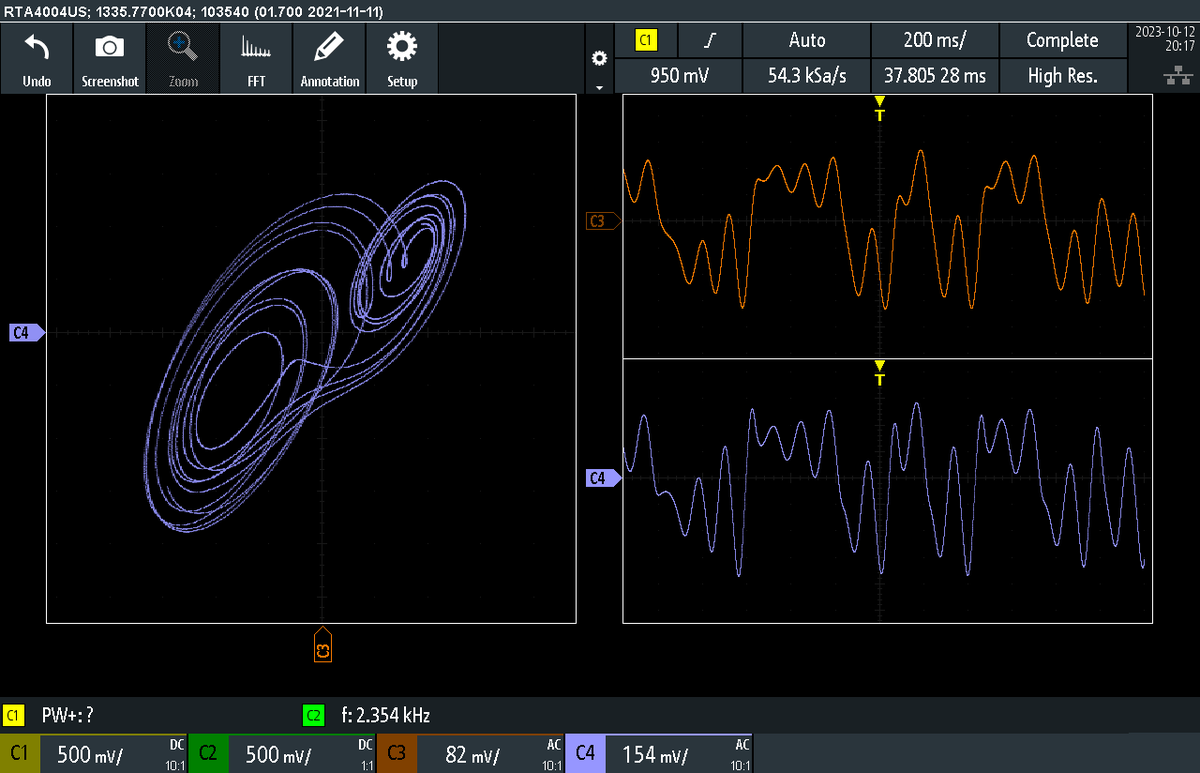
1/3 In case you missed the Open Ephys SfN booth this year, here are the designs for our Blinkenbrain chaotic key chain swag: https://t.co/36bFH37v6y. It's a smooth-brained, analog, chaotic (in the formal sense) blinky!
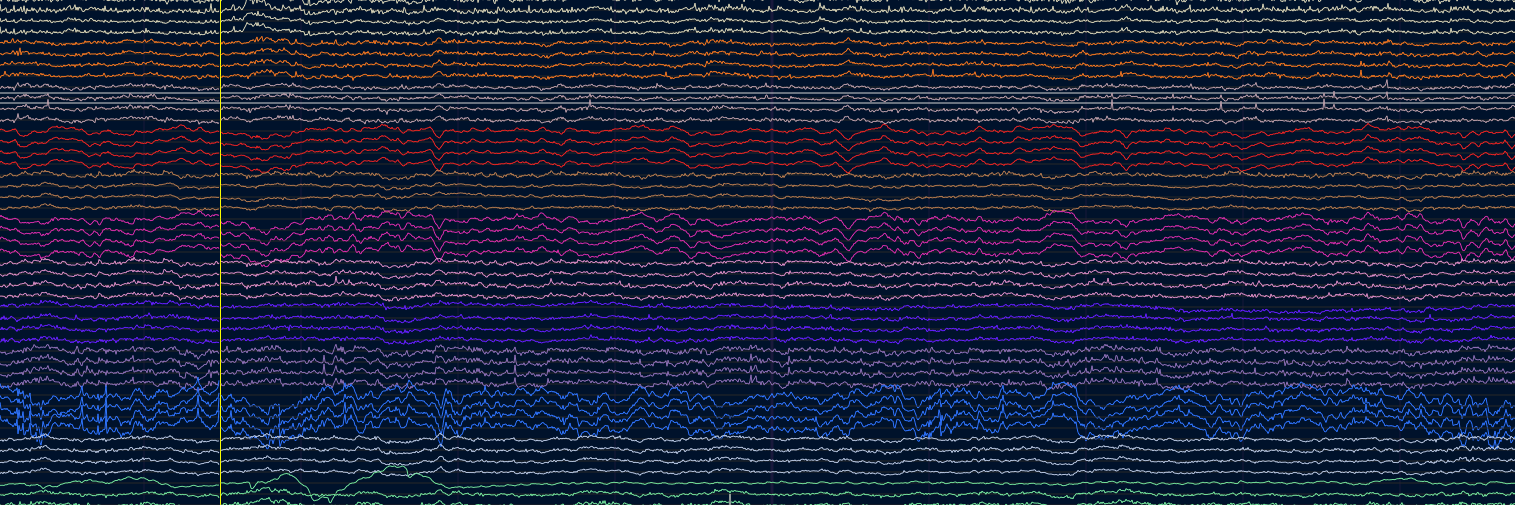
Neuropixels may be all the hype, but good old tetrodes still get the job done, especially when your areas of interest are not arrayed in a line! Recording from @ant_blot featuring the ONIX acquisition system from @OpenEphys.
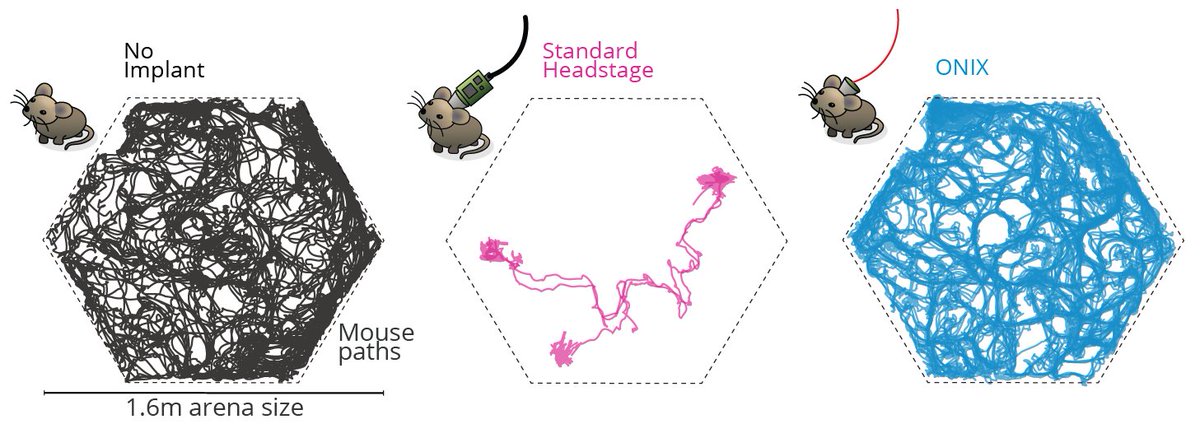
It's an unspoken fact that freely moving lab mice are not really freely moving. We came up with a method to change this. See the preprint: https://t.co/9oNUWBjZo2 (1/3)
This is all built on an open hardware standard and API (https://t.co/2LMNpc33Hf) that is flexible enough to work, even simultaneously, with passive electrodes, Neuropixels, or @MiniscopeTeam scopes, and whatever other sensors, actuators, or software you might want use. (3/3)
This system by @OpenEphys, @__jonnew, @jiejackzhang, Aarón Cuevas-López, @jvoigts et al. uses an extremely thin tether that streams a ton of data but keeps behavior intact. Through a lot of engineering it also provides sub-ms closed-loop latencies, 3D-tracking and more. (2/3)
⏱️Deadline extended!
Come join us remotely for a week of learning the basis of ephys acquisition with an electronics #NeuroKit.
Understand all the parts of your setup, build one and learn about:
✔️Amplification
✔️Ground vs Ref
✔️Impedance
✔️Noise reduction
✔️Data synchronization
With the latest upgrade, you can watch live as your micro-manipulator inserts the probe into the brain! Pinpoint sends anatomical information about your probes directly to the Open Ephys GUI or SpikeGLX and this info is shown alongside the live stream from the probes.