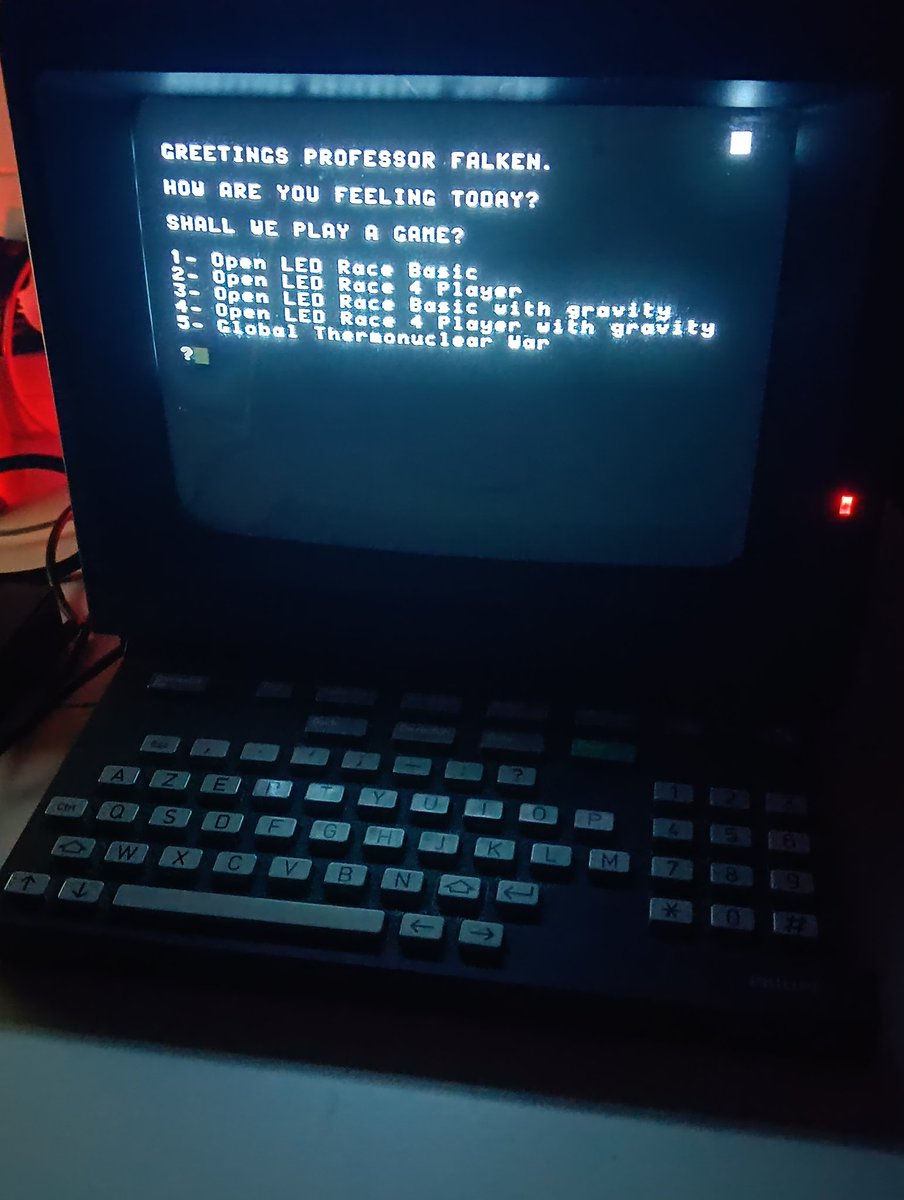
43 years ago Today, the movie WarGames was released.
A fascinating snapshot of Western popular culture in the 1980s, celebrating the home computing pioneering years
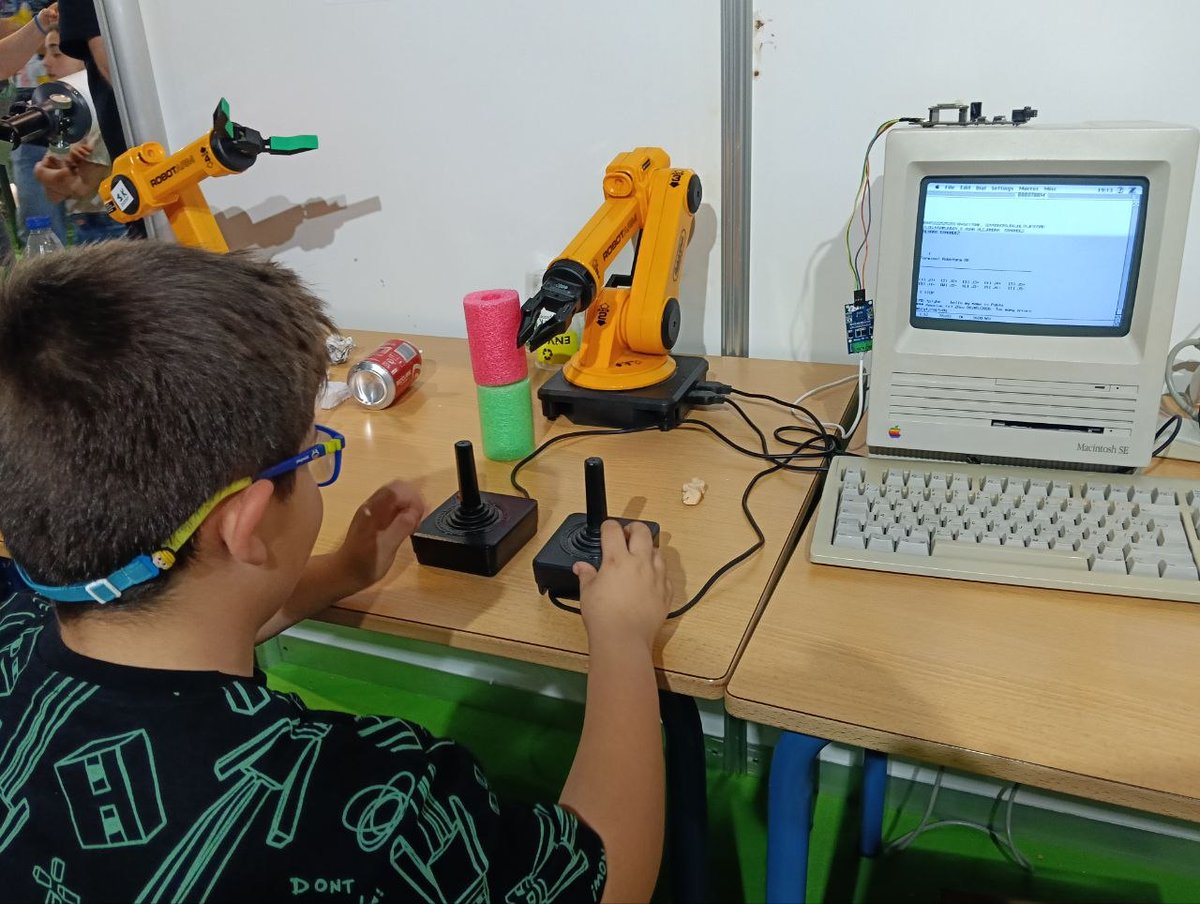
hoy lleve al cole de mi hija @openledrace y los nanos se volvieron locos, esta clase ya disfruto en 2019 de la novedad de este proyecto ⚙️🔝cuando estaban en infantil, 7 años despues @gbarbarov siguen flipando con el 🤩 👏👏👏
🟤🇦🇹 En Autriche, pour environ 2 €, vous pouvez acheter une petite boule en bois… puis la regarder parcourir une gigantesque piste de 87 mètres remplie d’obstacles 😳
L’installation se trouve près des montagnes russes alpines d’Imst et ressemble à une version géante d’un circuit de billes.
Movimiento de un LED partícula con gravedad. Con el pulsador se lanza la partícula, y por efecto de la gravedad cae y regresa al punto de partida
#FPGAwars
https://t.co/fsowTxKlwv
@nerdearla Y en su paso por MIT inventó la programación tangible para niños , un sistema de tarjetas para robots con lenguaje LOGO. https://t.co/vwEoUjdBvv
"Persistence of vision display" or POV display are LED devices that compose images by displaying one spatial portion at a time in rapid succession.
One example are Hologram Fans.
Full-circle Test-driven Firmware Development with OpenClaw
Ladyada: "I've only had OpenClaw installed on this Raspberry Pi 5 for a couple of days, but boy, have we burned through a lot of tokens and learned a lot. Including what I think is a really fun improvement in my development process: “Agentic test-driven firmware development.”
I've used LLMs for writing code as a sort of pair-programming setup, where I dictate exactly what I want done. But this is the first time that I'm giving full access to the hardware to the LLMs and letting Claude Opus 4.5 as a manager to control Codex subagents. Not only does it parse the datasheet for the register map and functionality, Claude also comes up with a full development and test plan, writes the library, tests it on existing hardware, and then also works up a test suite that covers all of the hardware registers to make sure that the library is exercising the entire chip capability.
For example, here I give it an APDS-9999 color sensor and a Neopixel ring and tell it, “hey use the Neopixel ring to verify that we're really reading red, green, and blue data properly from the sensor,” and it will do the whole thing completely autonomously… no humans involved!
I still review the final code and ensure the tests genuinely validate the functionality, not just take shortcuts. There is a phenomenon known as "reward hacking" (also called "specification gaming"). The model may optimize for passing tests as a metric, rather than ensuring the code truly works as intended.
So far, the results have been excellent... no surprise, since these LLMs are trained on Adafruit open-source GitHub repositories!"