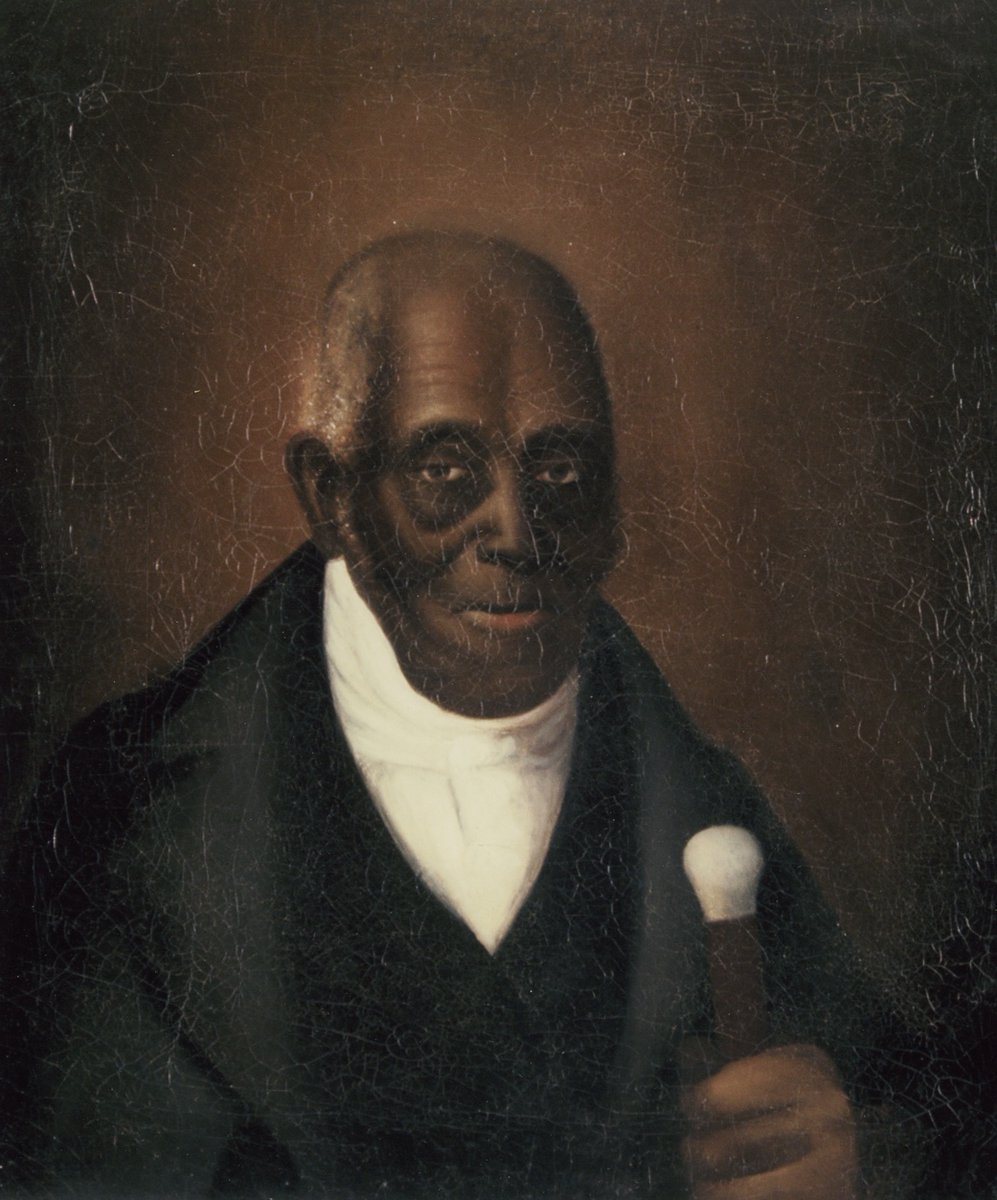
At only twenty years old, Agrippa Hull was tasked with serving as an orderly to General Tadeusz Kościuszko, the Polish-Lithuanian chief of engineers in the Continental Army. Already familiar with military life after fighting at the Battle of Freeman’s Farm and wintering at Valley Forge in 1777-1778, Hull followed the general to the Southern Theatre in 1780. He supported Kościuszko with administrative tasks, as the general used his engineering expertise to help the Continental Army escape across the Dan River between North Carolina and Virginia during the Race to the Dan. He also fought with Kościuszko during the Siege of Ninety Six and the Battle of Cowpens, and later served in the medical corps after the Battle of Eutaw Springs.
Impressed with his skills, Kościuszko invited Hull to settle in Poland with him, but he declined. Instead, Hull returned to his home in Stockbridge, Massachusetts, married, and became the largest Black landowner in the area. He sat for a daguerreotype in 1844, from which the portrait below was based. #BlackHistoryMonth
Learn more: https://t.co/sNU3DF4Nir
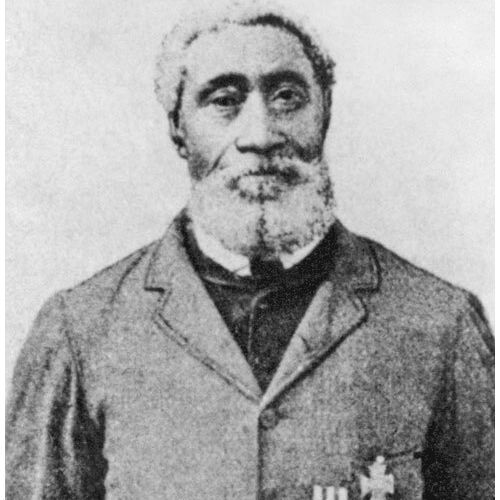
On Nov. 18, 1857, William Hall fought at the Siege of Lucknow and showed immense bravery in breaching the wall. For his actions, he became the first Black recipient of the Victoria Cross and the first person from Nova Scotia.
This is his story.
🧵 1/8
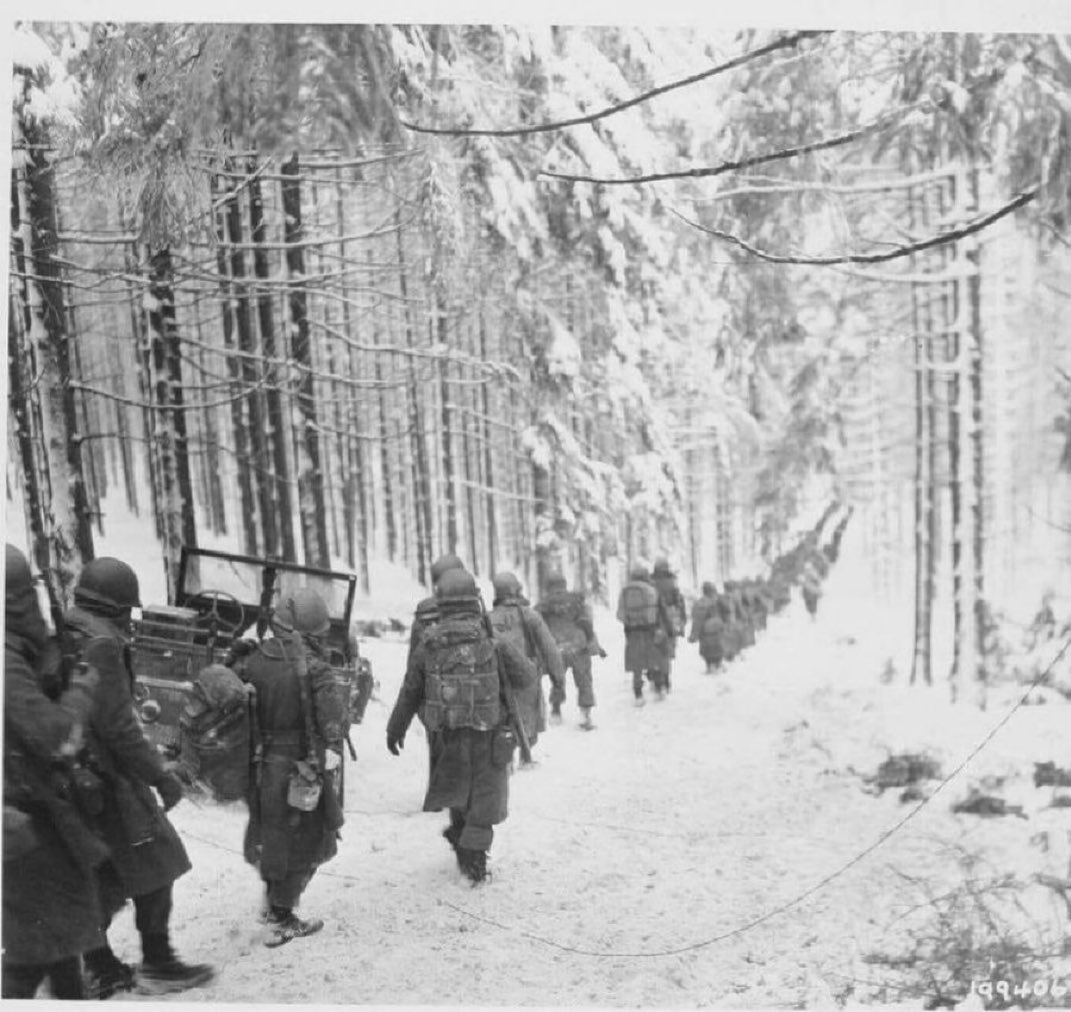
Today marks the anniversary of one of the most notorious battles of WWII "The Battle of the Bulge". American forces faced one of the most brutal and costly battles of WWII. It tested the strength and endurance of U.S. troops during some of the harshest winter conditions of the war.
Boston shoemaker and sailor George Robert Twelves Hewes was the last surviving participant of the Boston Tea Party, which occurred #onthisday in 1773. He died in 1840 at 98 years old.
Read about Hewes in Alfred F. Young's The Shoemaker and the Tea Party: https://t.co/2qe7WJuDUH
After the Dartmouth, the first tea ship to arrive in Boston Harbor, Dr. Joseph Warren along with John Hancock, Samuel Adams, Dr. Thomas Young, and John Scollay organized a meeting that was called the “Body” instead of a Boston town meeting because the Sons of Liberty wanted people from the countryside to attend to decide what to do about the tea on board the three ships that arrived in Boston Harbor. They and thousands of others spent weeks meeting at Old South Meeting House trying to encourage the owner of the Dartmouth, Francis Rotch, to send his tea back to England. But Rotch couldn’t do that without a pass from Governor Thomas Hutchinson, who would not issue that pass until Rotch claimed his cargo with the custom house. It was an endless circle of coercion until on December 16, 1773, Dr. Thomas Young pronounced, “Mr. Rotch is a good man who has done all in his power to gratify the people. We should do no harm to his person and dismiss him.” The Body agreed. Samuel Adams announced, “We have now done all we could for the salvation of our country. Mr. Rotch you are free to go home.”
Josiah Quincy, Jr. rose and made a speech from the gallery. When he was done, a new group of men appeared at the meetinghouse front door. John Hancock proclaimed to the people, “Let every man do what is right in his own eyes.” War whoops emanated from the doors and streets, echoed by the cheering throng inside the meeting house. The moderator tried to bring the meeting to order as the pews and the gallery emptied and thousands of people spilled into the streets and followed the “Mohawks.” They rumbled toward Griffin’s Wharf to witness what was going to happen. One hundred people stayed behind including Joseph Warren, John Hancock, Samuel Adams, and Thomas Young.
There were dozens of men already at Griffin’s Wharf when the “Mohawks” and the crowd descended upon it. Under the weak light of the waxing crescent moon, the destroyers of the tea boarded the Dartmouth and then the Eleanor and the Beaver. Each man had a duty to do almost like a military operation. They opened the hatches, jumped into the hold, and tied ropes to the tea chests to hoist them upon deck. For two hours men performed the backbreaking work—hacked open the chests, gathered up the tea and threw it overboard. In all, 342 chests went into the harbor. Not a ship or any other cargo on board was damaged. Within hours of the destruction of the tea, Paul Revere rode to New York and Philadelphia with the news.
Fresh off the press, featuring a range of great chapters on this lesser-known aspect of the Napoleonic Wars. My chapter examines the siege warfare in the Danubian Principalities.