Phase 1 of the stake based experiment has been running as expected since May 26 10am EST. We've now moved to Phase 2.
NOTE: This is a time-boxed experiment: four weeks maximum, after which OP Mainnet reverts to standard PGA ordering.
Full notice and disclosure before you participate: https://t.co/WbmkWBup51.
Sepolia testing for stake-based priority order experiment will complete today. Phase 2 of the experiment has been running as expected since May 7.
We’ll be deploying to OP Mainnet tomorrow, May 26 at 10am EST.
This is a time-boxed experiment: four weeks maximum, after which OP Mainnet reverts to standard PGA ordering. Full notice and disclosure before you participate: https://t.co/WbmkWBup51
Rotating npm tokens doesn't fix the problem. It resets the clock.
We migrated 3 repos and 6 packages to OIDC Trusted Publishing on CircleCI, then deleted every static token on the account.
Big day for the Superchain. 🔴✨
We’re integrating ZK more deeply into the OP Stack, and are excited to announce that @SuccinctLabs is our first preferred proving partner in this area. Validity proofs are going — and withdrawals are about to get faster.
Here's what that means.
⸻
THE 7-DAY PROBLEM
Optimistic rollups have a 7-day challenge window. Anyone can challenge a bad state transition during that period. For most users, this is abstracted away with app-layer bridges.
For institutions? Different story.
Custody providers can't lock capital for a week every time they move funds off L2. Market makers need capital efficiency across positions. Treasury teams need faster withdrawal finality that matches traditional infrastructure expectations.
The 7-day window was always a tradeoff. Now we're addressing it.
⸻
ZK CHANGES THE MATH
With validity proofs, we don't wait for challenges. We prove the state transition cryptographically. When the proof verifies on L1, the withdrawal is final.
The goal: instant, real-time withdrawals.
⸻
WHY SUCCINCT
Their proving system works — fast proving, low costs, compatible with our existing architecture. @SuccinctLabs secures billions in TVL across the ecosystem.
OP Succinct, their proving engine for the OP Stack, is a drop-in upgrade. Deploy one smart contract, spin up a lightweight proposer service. Everything else — sequencer, batcher, op-node — stays the same.
We built the OP Stack to be modular for exactly this reason.
⸻
THIS ISN'T ABOUT CHEAP TRANSACTIONS
L2s were never just "cheaper Ethereum." That framing missed it.
The best Superchain deployments aren't discount L1s. They're doing things L1 structurally can't:
* Sub-200ms blocks for real-time apps
* Embedded distribution (Base: 110M Coinbase users)
* Custom sequencing for specific use cases
* Native identity infrastructure (World Chain)
* Exchange-integrated DeFi (Ink)
These bring real users, real distribution, real use cases that didn't exist before.
ZK validity proofs unlock real economic efficiency for users & institutions.
⸻
WHAT THIS UNLOCKS
* Custody providers can move client assets without locking capital for a week
* Market makers gain capital efficiency across L2 positions
* Treasury operations get faster withdrawal finality, matching expectations from traditional infrastructure
⸻
MULTI-PROOF FUTURE
This is step one.
The vision: OP Stack chains choose the prover networks that fits their needs. Different security tradeoffs, different cost profiles. Modular infrastructure, sovereign choices.
After ZK goes live on OP Mainnet, every OP Stack chain can upgrade seamlessly. We’re bringing fast withdrawals with strong cryptographic security to the Superchain!
⸻
The OP Stack was designed for this moment! ZK for your Blockchain. Your Revenue. Enterprise Guarantees.
Thanks to @SuccinctLabs and @pumatheuma for building what we needed.
Full announcement: https://t.co/Co0tyEvwtd
We're moving OP-Reth specific crates fully to OP Labs ownership!
OP Reth was co-built by @OPLabsPBC and @Paradigm engineers to scale the impact of the OP Stack, using the Reth SDK. OP Reth is the primary high-performance execution client across the Superchain, and as this infrastructure becomes more critical, direct stewardship ensures reliable releases and continued development.
We're committed to a cohesive Ethereum ecosystem and will continue contributing upstream.
→ https://t.co/vfFtykQO74
LISTEN UP EVERYBODY! Today we're launching OP Enterprise.
We all know that crypto is at the cusp of major mainstream adoption. Nearly every major enterprise has a crypto strategy.
We're the only team that has successfully launched chains for multiple companies. We've packaged up all of our learnings into a product offering that will onboard the next wave of enterprises.
OP Enterprise is production-grade blockchain infrastructure for companies that want to build businesses, not become blockchain experts.
𝗬𝗼𝘂𝗿 𝗯𝗹𝗼𝗰𝗸𝗰𝗵𝗮𝗶𝗻. 𝗬𝗼𝘂𝗿 𝗿𝗲𝘃𝗲𝗻𝘂𝗲. 𝗘𝗻𝘁𝗲𝗿𝗽𝗿𝗶𝘀𝗲 𝗴𝘂𝗮𝗿𝗮𝗻𝘁𝗲𝗲𝘀.
—
𝗧𝗵𝗲 𝗽𝗿𝗼𝗯𝗹𝗲𝗺
Here's what we keep hearing from enterprises:
They're building on infrastructure where the incentives don't align with their own. They're competing for mindshare, fighting to keep users, working against platform economics that extract value from everything they build.
Most blockchain platforms don't care if you're successful. Their focus is on their own TVL and metrics - not yours. You launch your stablecoin into an environment that competes with everyone else's stablecoin and hemorrhage capital to onboard your users onto a blockchain you have zero control over.
And even if you decide to own your chain, you hit the real bottleneck—onboarding the ecosystem partners you need to go live. Stablecoins, oracles, bridges, wallets, indexers. Each negotiation takes months. Costs hundreds of thousands to millions of dollars. Vendors pick off blockchain teams one by one.
We've seen this movie before. Many times.
—
𝗢𝗣 𝗘𝗻𝘁𝗲𝗿𝗽𝗿𝗶𝘀𝗲 𝗳𝗶𝘅𝗲𝘀 𝗯𝗼𝘁𝗵
𝗥𝗲𝘃𝗲𝗻𝘂𝗲 𝗰𝗼𝗻𝘁𝗿𝗼𝗹 — When you own your chain, your infrastructure becomes a revenue-generating asset. Not a cost center. DeFi protocols deploy on your rails. The economic activity you enable accrues to you.
This isn't about saving on fees. It's about owning the infrastructure layer where financial value is created.
𝗩𝗲𝗻𝗱𝗼𝗿 𝗺𝗮𝗻𝗮𝗴𝗲𝗺𝗲𝗻𝘁 𝗮𝘁 𝘀𝗰𝗮𝗹𝗲 — We've onboarded tier-one partners across 50+ production chains. They're already integrated, contracted, ready to deploy. We negotiate standard terms, manage costs down, and fast-track partnerships that would otherwise delay your launch by 6-12 months.
We've done this work already. You don't have to.
—
𝗪𝗵𝗮𝘁 𝘆𝗼𝘂 𝗴𝗲𝘁
𝗙𝘂𝗹𝗹𝘆 𝗠𝗮𝗻𝗮𝗴𝗲𝗱: We run your chain end-to-end. 24/7 monitoring, incident response, security ops, upgrade orchestration. You focus on product.
𝗦𝗲𝗹𝗳 𝗠𝗮𝗻𝗮𝗴𝗲𝗱: You operate, we support. Architecture guidance, security assessments, priority patches, direct access to core engineers.
𝗢𝗣 𝗠𝗮𝗶𝗻𝗻𝗲𝘁: Start on our flagship public network with enterprise support. Graduate to your own chain when ready. Same codebase, seamless migration.
First conversation to production: 8-12 weeks.
—
𝗧𝗵𝗲 𝘀𝗽𝗲𝗰𝘀
99.99% uptime SLO
15-minute P1 incident response
Up to 5B RPC requests/month with multi-provider redundancy
10 Mgas/sec baseline, 100+ Mgas/sec for high-volume applications
Sub-200ms block times
20k requests-per-second burst capacity
Stage 1 security with permissionless fault proofs
Optional ZK fault proofs for faster finality
—
𝗪𝗵𝘆 𝗻𝗼𝘄
The window for enterprise blockchain has shifted from "if" to "how fast."
MiCA is live in Europe. US policy is stabilizing. The enterprises that spent 2023-2024 in exploratory mode are now greenlighting production builds.
Enterprise deals are now a competitive space. When we talk to enterprises, we see everyone trying to help them come onchain.
But the OP Stack is the only stack that has successfully brought and scaled multiple enterprises onchain. We've seen what works and what doesn't. We've earned this knowledge by building alongside the fastest-growing enterprises in web3. We've encountered every failure mode because we've been doing this longer than anyone else.
At the end of the day, enterprises want to control their own economics. They don't want to rent infrastructure from platforms that compete with them.
The OP Stack vision will win. Shared standards balanced with chain autonomy.
—
𝗪𝗵𝗮𝘁 𝗺𝗮𝗸𝗲𝘀 𝘂𝘀 𝗱𝗶𝗳𝗳𝗲𝗿𝗲𝗻𝘁
𝗘𝗻𝘁𝗲𝗿𝗽𝗿𝗶𝘀𝗲 𝘁𝗿𝗮𝗰𝗸 𝗿𝗲𝗰𝗼𝗿𝗱 — 50+ chains launched. Not pilots. Production systems serving millions.
𝗜𝗻𝗻𝗼𝘃𝗮𝘁𝗶𝗼𝗻 𝘃𝗲𝗹𝗼𝗰𝗶𝘁𝘆 — We control the entire stack. When we discover vulnerabilities, customers get patches within hours. Not weeks.
𝗗𝗶𝗿𝗲𝗰𝘁 𝗮𝗰𝗰𝗲𝘀𝘀 𝘁𝗼 𝘁𝗵𝗲 𝘀𝗼𝘂𝗿𝗰𝗲 — Questions go to the engineers who wrote the code. Feature requests go to the people who can actually implement them. No translation layer.
𝗘𝘁𝗵𝗲𝗿𝗲𝘂𝗺 𝗰𝗿𝗲𝗱𝗶𝗯𝗶𝗹𝗶𝘁𝘆 — We've worked on Ethereum's core protocol. Defined its scaling roadmap. Invented the L2 architecture that powers the industry.
𝗡𝗼 𝘃𝗲𝗻𝗱𝗼𝗿 𝗹𝗼𝗰𝗸-𝗶𝗻 — Open source. Fork if you want. Most teams discover they'd rather work with us—but the choice is always yours.
—
Our first customers:
Unichain — Uniswap needed their own chain. They chose us. Uniswap Labs operates Unichain with Mission-Critical Support—priority response for high-stakes moments where downtime isn't an option.
Celo — Scaling mobile payments across Latin America and Africa. Millions of users. Celo operates their network with Mission-Critical Support, ensuring enterprise-grade backing in emerging markets.
Different use cases. Same infrastructure. Same commitment to their success
We are here today because partners like these rolled up their sleeves and built together with us.
—
𝗪𝗵𝗼 𝘁𝗵𝗶𝘀 𝗶𝘀 𝗳𝗼𝗿
Fintechs building next-generation financial services Centralized exchanges launching tokenized products Payments companies building cross-border rails Financial institutions exploring tokenization and digital assets
If you need infrastructure that performs without the operational burden—and you want to own your economics instead of renting them—OP Enterprise is for you.
—
OP Enterprise is a major focus for us in 2026.
We have active engagements across fintech, exchanges, payments, and financial services. The direction is clear: the OP Stack is becoming the standard for the next generation of financial systems.
This is the first of many announcements to come.
If you're serious about building onchain, we should talk.
This is such an incredible step for the OPStack. Kona is becoming a viable alternative to the op-node - it is more maintainable, faster and safer than the go client. Really excited about what’s next, this is the beginning of a new chapter
The Kona repo has been migrated into the @Optimism monorepo.
What @vex_0x and @refcell began in early 2024 is now a stable alternative OP Stack implementation. Thanks to everyone who pitched in, and please keep contributing here: https://t.co/lLGMhc4xLq
In 2026 we’re increasing support for Rust. Work like op-reth and other Rust implementations bring better modularity and performance.
More Rust repo migrations are coming soon.
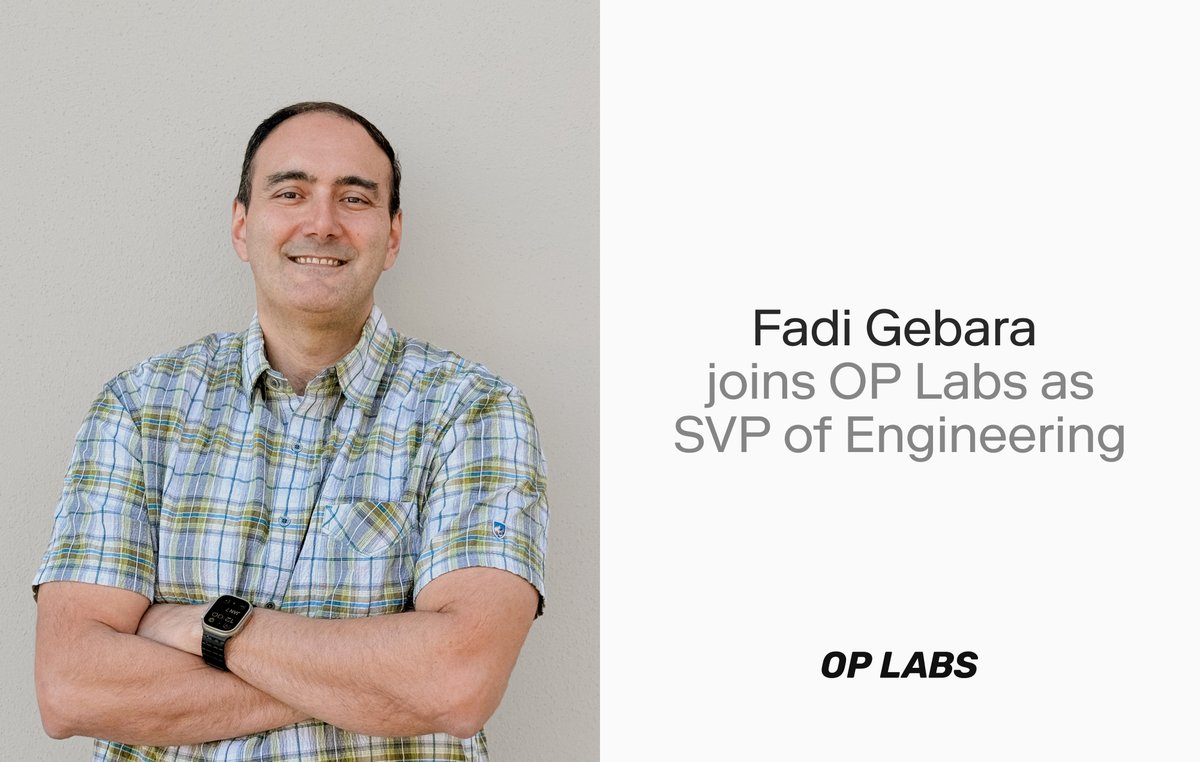
Welcoming Fadi Gebara as SVP of Engineering at OP Labs.
Fadi brings decades of senior engineering leadership across cloud, payments, and distributed systems—most recently at Elastic, with prior roles at Meta, State Street, and IBM.
He’s led global teams operating mission-critical infrastructure, with a long-standing focus on reliability, security, efficiency, and performance at scale.
At OP Labs, Fadi will lead engineering efforts that advance the @Optimism protocol, ensuring the network continues to meet the demands of enterprise-grade, onchain workloads.
Happy new year everyone! In November last year, I wrote about the changes we were making to refocus the team on what comes next for crypto.
Today, the @Optimism Foundation is proposing a token buyback. The goal is to unify the broader ecosystem outside of just our internal teams to prepare for the next wave of adoption.
Here’s where we are today: The Superchain is globally adopted infrastructure. It processes 13% of all blockchain transactions, with 61.4% of L2 fee market share.
Foundation and Labs are not solely responsible for this success. Legends like @base, @unichain, @inkonchain, @worldcoin, @Celo, @build_on_bob, @zora, @modenetwork and @Soneium chose the OP Stack and their growth demanded that we scale the infrastructure to support them. We are here today because our partners and integrators rolled up their sleeves and built together with us.
The OP token has historically had no tie to the performance of the Superchain, and we’d like to change that. OP should be an incentive alignment mechanism to unify all of us who are working towards the shared goal of innovating on the OP Stack and accelerating Superchain growth.
Every OP Chain contributes sequencer revenue to Optimism. In the past twelve months, Optimism has collected 5,868 ETH. This proposal directs 50% of incoming revenue to buy OP tokens monthly for the next year. OP tokens bought through this program flow back into the token treasury ecosystem. Governance retains oversight over buyback parameters and treasury management. The remaining ETH will be actively managed by the Foundation to fund operations, and grow the Superchain.
If approved, this proposal will transition OP from a pure governance token to a token tightly aligned with network growth. When an enterprise builds a new chain, the utility of the token increases and OP benefits. When builders choose the Superchain, the flywheel accelerates. Every transaction expands the base from which buybacks operate.
The governance proposal moves to vote on January 22. If approved, buybacks begin in February. We will be hosting a Twitter space with myself, @karl_dot_tech & @ben_chain on Jan 12th, 12pm EST for all your questions.
This program starts small and scales as we scale, and the role of the OP token will continue to evolve. But the direction is clear: the OP Stack is becoming the standard for the next generation of financial systems. This change aligns the OP token with that momentum, ensuring those building the most important financial infrastructure in crypto capture its impact.
This is a new era for OP, and the first of many announcements to come on our plans for 2026. Looking forward to the discussion!
We're excited to welcome Daniel (@danieldmd) as OP Labs' new VP of Partnerships.
He brings deep experience across global payments and financial infrastructure — previously leading Partnerships & BizDev at Remitly, with leadership roles at Meta, Intuit, Plaid, and Mastercard.
As @Optimism grows, Daniel will help scale the partnerships that bring real-world applications onchain.
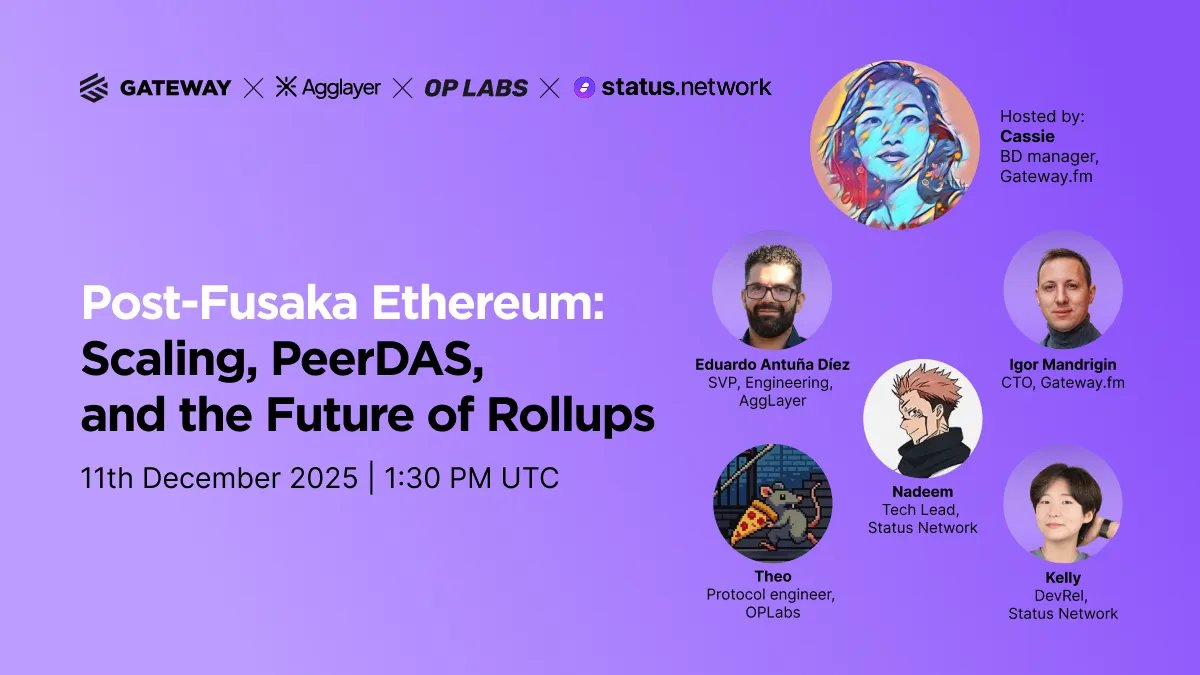
Ethereum is entering a new phase after the Fusaka upgrade, and the implications for rollups, data availability, and ecosystem scalability are significant.
Join us as we break this down with teams building the core infrastructure.
🟣 Post-Fusaka Ethereum: Scaling, PeerDAS, and the Future of Rollups
🗓️ 11 December 2025
⏰ 1:30 PM UTC
Host:
@cassiemme — BD Manager, https://t.co/9e25xNe8EV
Speakers:
- @mandrigin — CTO, https://t.co/9e25xNe8EV
- @eduadiez — SVP Engineering, @Agglayer
- @tchapchkai — Protocol Engineer, @OPLabsPBC
- @yjkellyjoo — DevRel, @StatusL2
- @0xnadeem — Tech Lead, @StatusL2, @ethstatus
Set your reminder and join the conversation. 👇