Rising memory/GPU prices sound bearish for neoclouds $IREN, $NBIS & $CRWV.
If Nvidia servers are becoming more expensive, surely that hurts the companies buying thousands of them?
Not necessarily.
It all comes down to when you bought the hardware and when you sell the compute.
Nvidia has told major customers that prices for Grace Blackwell and Vera Rubin servers shipping in early 2027 will rise by more than 15%. Nvidia could absorb some of that increase, but why would it? Demand remains above supply and customers still have very little negotiating power.
Compute prices were already moving higher before this. AWS has raised prices for some of its GPU capacity twice this year, H100 contract pricing has strengthened and IREN recently said its contracted pricing continues to improve.
When the cost of building new capacity rises, the price of compute eventually needs to follow. However, not every neocloud benefits equally.
A company that has not ordered its GPUs will pay more for the equipment and then charge more for the compute. Its margin may not improve at all.
A company that bought its GPUs cheaply (before price hike) but already contracted nearly all of the capacity cannot fully benefit from higher market prices either.
The best position is owning hardware purchased at the old cost while still having capacity available to contract after compute prices move higher.
That is where IREN becomes interesting.
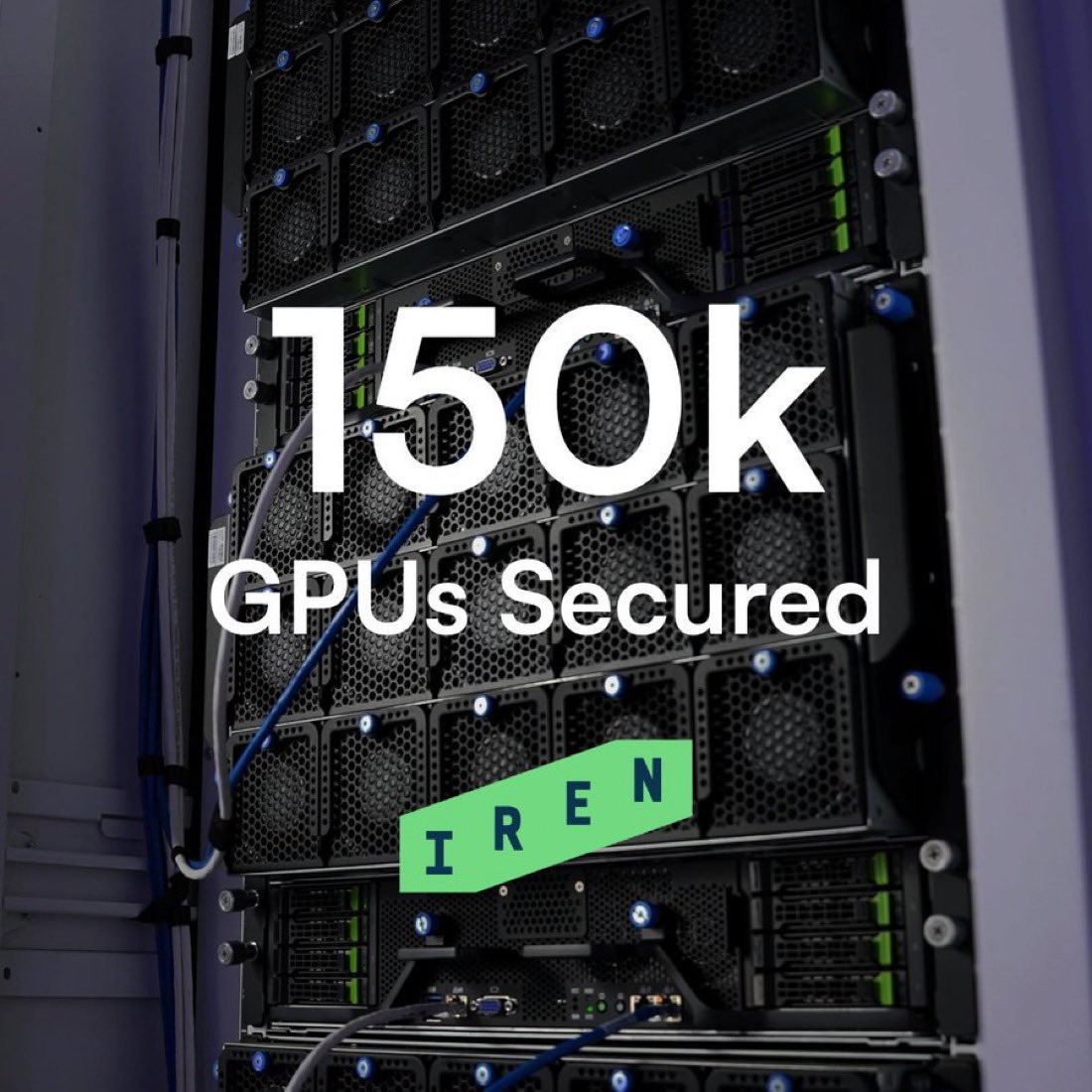
IREN secured purchase agreements taking its planned fleet to 150,000 GPUs, including more than 50,000 additional B300s scheduled for phased deployment throughout H2 2026.
Management bought early because time-to-compute is becoming more valuable. Customers do not just want GPUs. They want them delivered on time, with certainty.
These orders were signed months before Nvidia’s early-2027 price increases. Much of IREN’s 2026 fleet should therefore arrive below the replacement cost of comparable capacity delivered next year, while part of the revenue side remains open.
IREN bought the hardware before prices increased but will contract some of that capacity after the increase. That is what the investors should pay attention to.
There is another part of this thesis that I think is being overlooked.
Higher replacement costs also weaken the GPU depreciation bear case.
The bear argument assumes GPUs rapidly lose their value because Nvidia releases a new architecture almost every year. Blackwell replaces Hopper, Rubin replaces Blackwell and so on.
Current evidence is not supporting that argument yet.
CRWV recently rebooked H100 capacity at around 95% of its previous contract price. It has also contracted older A100 systems into 2029, despite that architecture first being released in 2020.
Important to note that an older GPU does not need to compete directly with Rubin to remain valuable. It only needs to handle workloads that do not require the newest and most expensive hardware.
If replacing that GPU becomes considerably more expensive, customers have even more reason to continue renting it.
That extends the useful life of the existing fleet, supports its residual value and makes aggressive depreciation assumptions harder to defend.
This also very important when it comes to financing.
Neoclouds use customer contracts and GPU-backed loans to finance enormous equipment purchases. Lenders care about what those GPUs will still be worth if a contract ends early or the borrower runs into trouble.
If older systems remain productive for longer while new systems become more expensive, the collateral becomes easier to underwrite. Stronger residual values should support better financing terms.
The benefit still differs across the three main neoclouds.
CRWV receives the largest residual-value benefit. Older GPUs remaining productive directly challenges the idea that its fleet becomes worthless after only a few years. However, around 96% of its revenue is already covered by long-term take-or-pay agreements. Most of its repricing opportunity therefore sits in renewals and future contracts rather than its existing book.
NBIS sits in the middle. It has deliberately kept some capacity available for shorter agreements, giving it more exposure to rising compute prices. Customer prepayments and its cash position also give it more room to hold that capacity while waiting for better pricing.
IREN has the cleanest exposure to the gap between 2026 equipment costs and 2027 replacement costs. It bought early, has GPUs arriving throughout 2026 and still has capacity available to contract after market prices have moved higher.
So in short, expensive memory/GPUs is not automatically bullish for every neocloud. It rewards the operators that ordered early, preserved some pricing flexibility and can convert higher replacement costs into stronger contracts.
For this setup: IREN > NBIS > CRWV
$IREN ⚡️Update⚡️Big week for IREN! Aside from the tremendous progress they've made with Childress, SW1 is moving along really well! We have earnings this Thursday 27th after market close. Will it break $50 and climb from there?
$IREN’s PAIN TO SECURE THESE GPUs IS ABOUT TO TURN INTO HUGE GAINS FOR THE REST OF THE YEAR.
I REPEAT $IREN CAN CHANGE YOUR LIFE IN NEXT 12 MONTHS ✅ NFA
$IREN’s PAIN TO SECURE THESE GPUs IS ABOUT TO TURN INTO HUGE GAINS FOR THE REST OF THE YEAR.
I REPEAT $IREN CAN CHANGE YOUR LIFE IN NEXT 12 MONTHS ✅ NFA
Want to be anti data center? Here is the pledge.
• No streaming
• No online banking
• No cloud photos
• No GPS
• No remote work
• No email
• No card payments
• No weather alerts
• No 911 dispatch
Sign it. Then tell me data centers are the problem.
Today, the Kentucky Public Service Commission, approved $WULF’s 482 MW Justified power agreement, clearing a key state regulatory condition. It puts an approved utility contract behind the 20-year @AnthropicAI lease.
A testament to the true partnership between @TeraWulfInc team and the local and state governments in which we operate.
https://t.co/Jh0iZaiwYw
🚨 $IREN 𝗺𝗮𝘆 𝗵𝗮𝘃𝗲 𝗷𝘂𝘀𝘁 𝘀𝗲𝗰𝘂𝗿𝗲𝗱 𝗮 𝗠𝗔𝗦𝗦𝗜𝗩𝗘 𝗵𝗶𝗱𝗱𝗲𝗻 𝗮𝗱𝘃𝗮𝗻𝘁𝗮𝗴𝗲 𝗶𝗻 𝗔𝘂𝘀𝘁𝗿𝗮𝗹𝗶𝗮.
Its 𝟴𝟬𝟬𝗠𝗪 𝗔𝘂𝘀𝘁𝗿𝗮𝗹𝗶𝗮𝗻 𝘀𝗶𝘁𝗲 could potentially save $𝟲–𝟭𝟬𝗕 versus building an equivalent AI data-centre campus in the US.
Why?
🇦🇺 𝟴𝟬𝟬𝗠𝗪 powered shell / non-silicon build: ~$𝟭𝟬𝗕 estimated
🇺🇸 Comparable US build: ~$𝟭𝟰–𝟮𝟬𝗕
That’s potentially $𝟲–𝟭𝟬𝗕 of avoided capital cost.
And now Jensen is telling us 𝗟𝗮𝗻𝗱 + 𝗣𝗼𝘄𝗲𝗿 + 𝗦𝗵𝗲𝗹𝗹 (𝗟𝗣𝗦) are becoming some of the most critical resources for AI factories.
$IREN didn’t just secure power.
It secured scarce AI infrastructure at potentially a massive cost advantage. 👀