Plenty of technological breakthroughs never make it out of the lab.
Turning one into a company takes capital, partners and conviction.
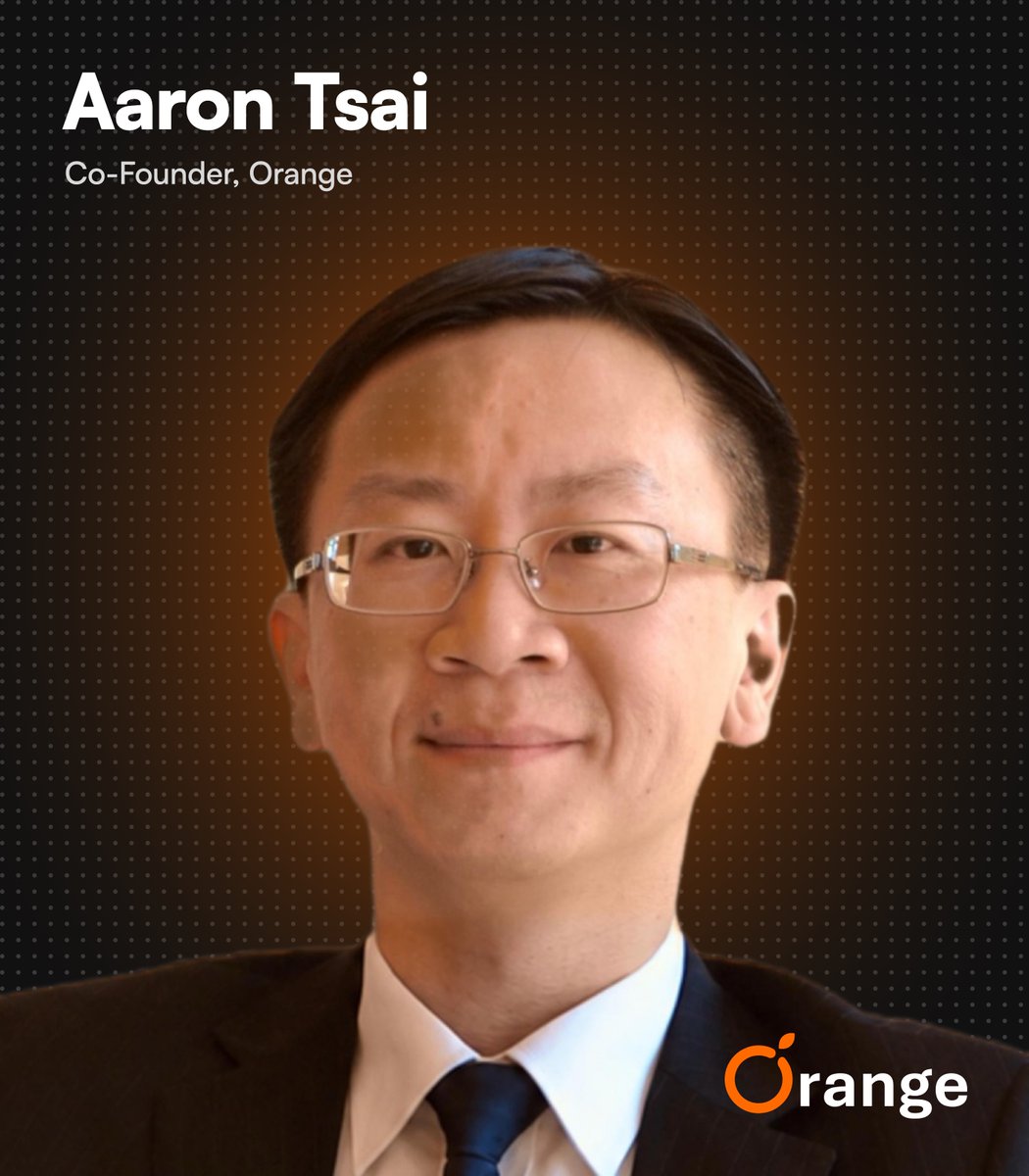
Aaron Tsai, Co-Founder of Orange and Huaxia, Chief Capitalist of MAS Capital and Founding Chairman of the North American Venture Capital Association (NAVCA) is known as the “King of Shells” on Wall Street for creating 101 public shell companies in the 1990s.
His work spans investment banking, venture capital and public listings with emphasis on deep tech and biotech companies.
He has guided more than 30 companies to US public markets.
At Orange, he works at the crossroads of financial strategy and technical innovation, helping turn patented Polarization Volume Hologram (PVH) optics into the next generation of AI XR glasses, which he believes will eventually replace smart phones.
Generative AI hit 53% adoption in just three years, faster than the PC or the internet.
But speed alone has never built a company that lasts.
@RichardRobinson, Director of Orange, has spent nearly 30 years as an entrepreneur, investor and technology executive across Asia, including time as Entrepreneur-in-Residence at Animoca Brands.
He teaches entrepreneurship as a Clinical Professor at Peking University's Guanghua School of Management.
He is also Founding Chair of the Intercognitive Foundation, which works on making the physical world accessible to AI.
His work sits at the edge of where AR and smart glasses are heading, a future where AI reads the world around you, not just the screen in your hands.
Orange AI AR smart glasses are designed to put that AI right in your line of sight, wherever you are.
Over 2 billion people use Google Maps every month.
Yet in dense cities, Google says a phone's compass can be off by up to 180 degrees.
So you come up out of the subway and walk half a block the wrong way, eyes on your phone.
With Orange AI AR smart glasses, your eyes stay up and real-time directions appear right in your line of sight.
Day or night, Orange's Polarization Volume Hologram (PVH) optics are designed to give you 2 ultra-bright full-HD displays, up to 5,000 nits.
Many companies are working to bring AI into glasses.
Investment in AI reached $581.7 billion last year, more than double the year before.
One of the hardest parts is still the display.
It needs to be small, bright and light enough to wear all day.
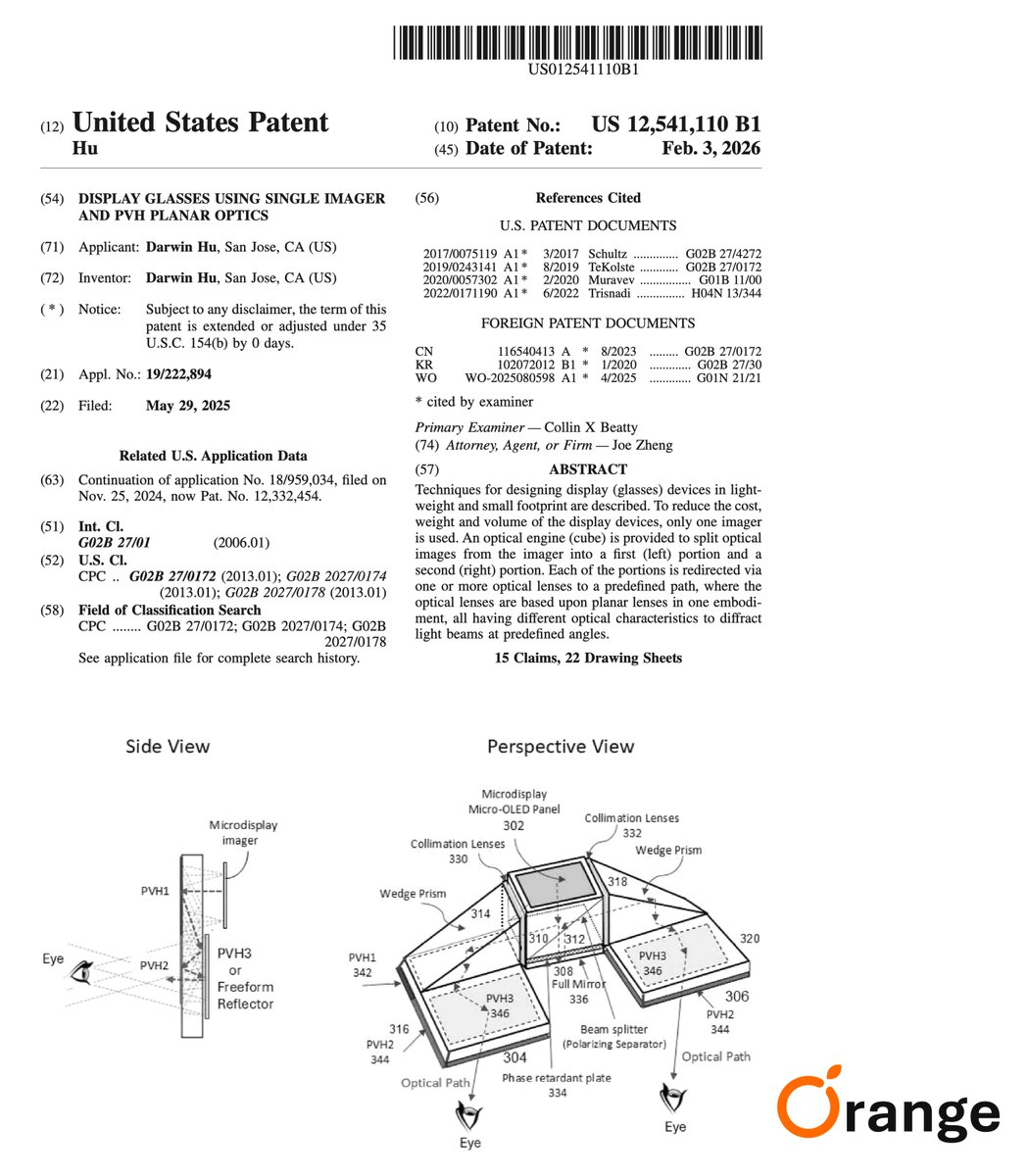
Darwin Hu, Orange's Co-Founder and CEO, has worked on display technologies for 40+ years, with 4 IPOs and exits along the way:
• Syscan listed in Hong Kong in 2000, and Document Capture Technology on Nasdaq in 2005.
• Jasper Display Corp, a micro-display company, was later acquired by HOLOEYE Photonics and others.
• He is also the inventor of 100+ patents across micro-displays, image sensors and AR glasses.
His recent research follows the same goal: making display glasses practical to wear.
At ICDT-SID China in March 2025, his co-authored paper “Design of Affordable and Comfortable AR Glasses with Optics based on Polarization Volume Hologram” received the Distinguished Paper Award.
He followed this at SID Display Week in California, in May 2025 with “AR Glasses with Single Microdisplay and Optics Based on Polarization Volume Hologram (PVH)”.
The work expanded into wireless connectivity at ICDT-SID China in April 2026, where “Prospective Wearable Display Glasses Built-in with Terahertz Wireless Communications” also received the Distinguished Paper Award.
At Orange, he's working on patented Polarization Volume Hologram (PVH) optics, designed to:
• Replace bulky display optics with ultra-thin PVH film
• Drive two full-HD displays from a single imager and enhance optical efficiency.
• Fit a 200-inch view into AI XR glasses with wide field of view
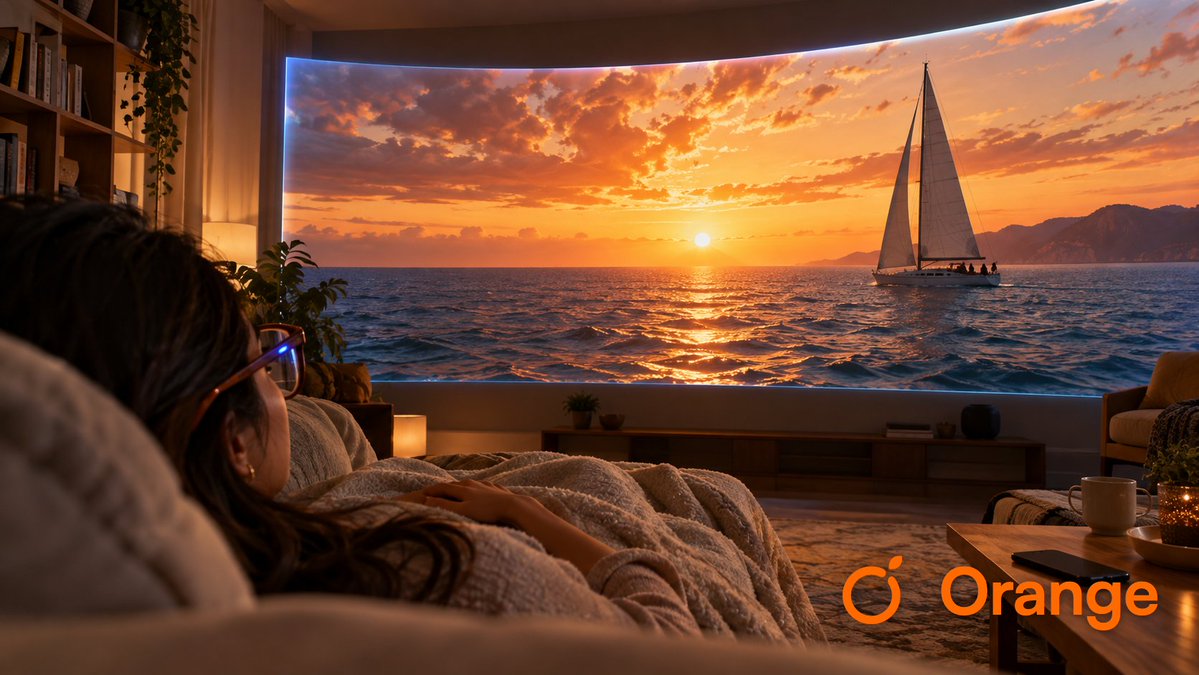
Ever dropped your phone on your face while watching on the sofa? Yeah, us too.
Orange AI AR smart glasses fix that for good.
Two full-HD micro-OLED displays give you a 200-inch screen experience.
Designed for lightweight comfort at 35g, so you can lie back and enjoy.
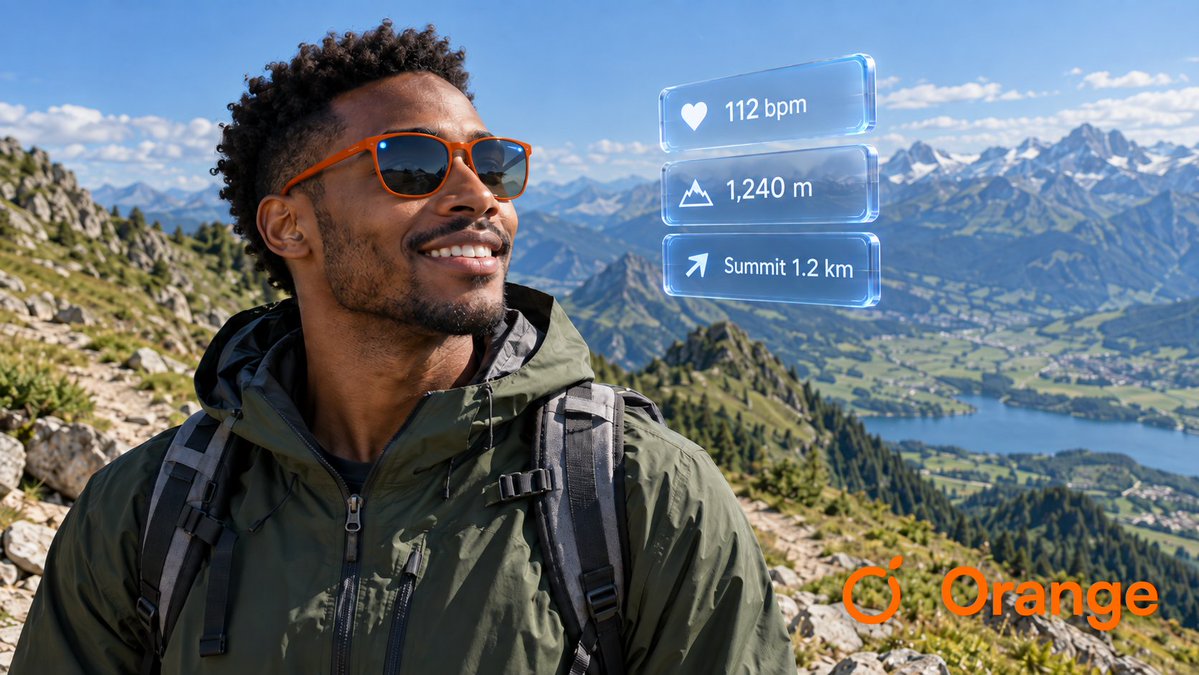
A record 63.4 million Americans went hiking in 2024.
Hiking is about being in the moment. But checking a smartwatch means looking down at your wrist, and finding the trail map means pulling out your phone.
Orange AI AR smart glasses keep the essentials in your line of sight for both indoor and outdoor: heart rate, elevation, the next trail marker. No overload, no stress.
Designed to look like everyday sunglasses, with full-HD displays in both lenses and a single power-efficient imager built to last the whole hike.
That's 63.4 million chances to stay fully in the moment.
Meta's Muse just climbed to the top of the App Store.
It's a personal AI agent built to handle tasks for you, not just answer questions, and Meta is bringing it to its smart glasses.
Which raises a new question: when your agent comes back with options, how do you choose?
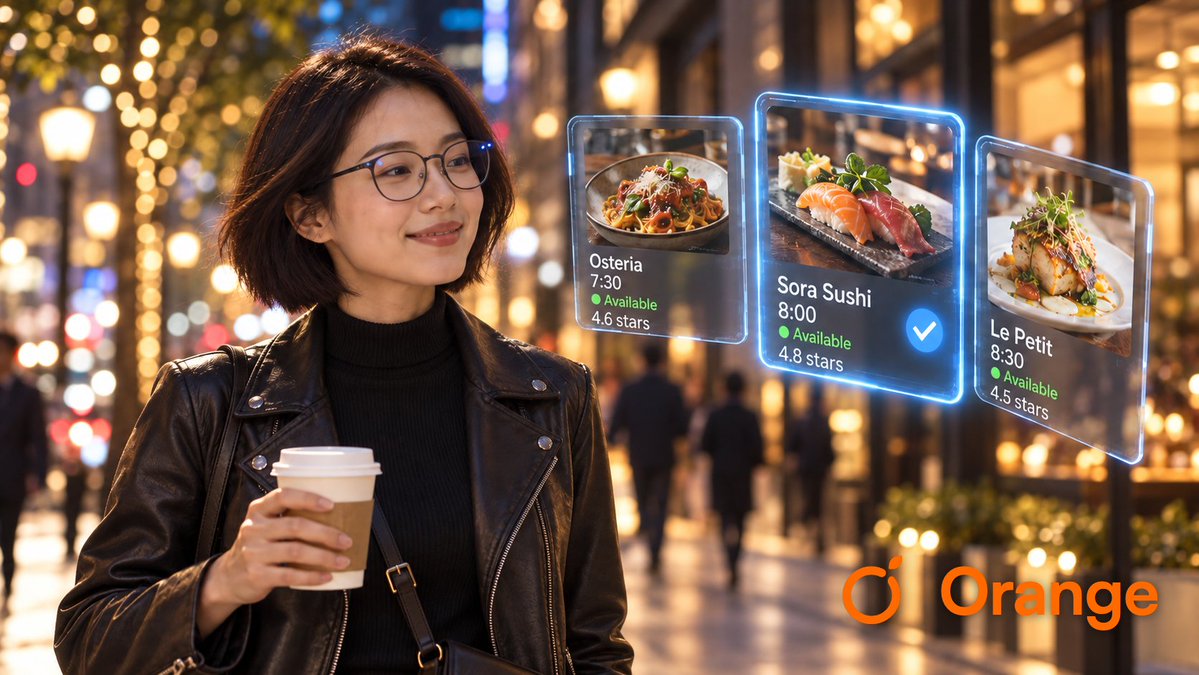
Walking home from work, coffee in one hand, bag on your shoulder. Your agent has found three spots for Friday dinner.
Hear them read out, and you've forgotten the first by the third. Pull out your phone, and you have to stop.
With Orange AI AR smart glasses, they appear right in your line of sight. Pick one with a word, and it's booked.
Powered by full-HD micro-OLED displays designed for up to 5,000 nits, sharp at night and clear even in the brightest sunlight.
That's where a great display pays off: faster, more accurate, more productive decisions with your AI agent.
That last-minute moment at the airport: both hands full, gate far away, and every second counts.
Orange AI AR smart glasses show you exactly which gate to head to and when you need to be there.
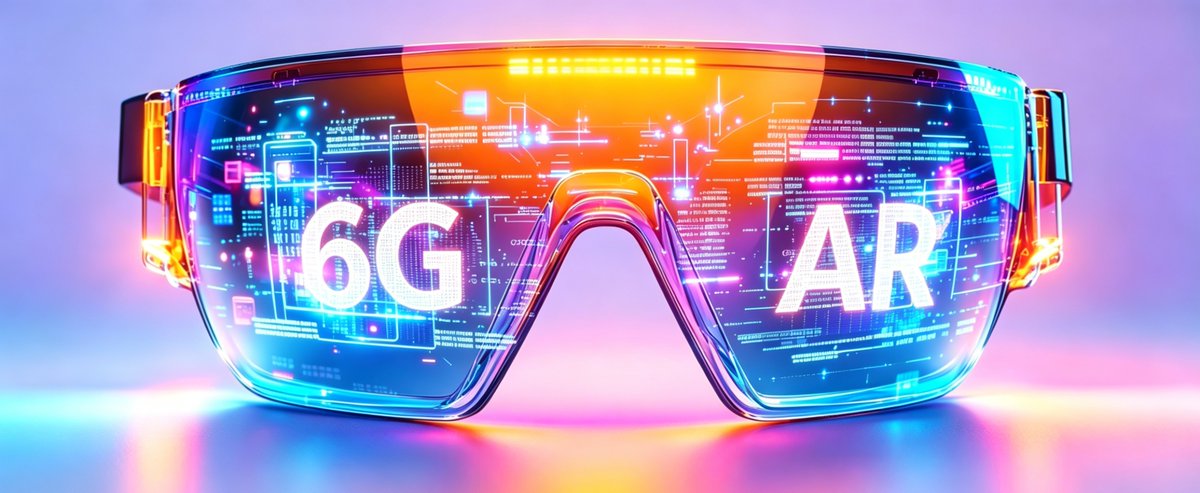
With lightning-fast 6G terahertz connectivity, Orange's AI AR smart glasses give you real-time information, without slowing you down.
Make quick decisions, right in line of your sight.
Your friend shows up to the meetup with a new friend. But you don't speak the same language.
Meta's new Ray-Ban Meta Audio glasses can already translate speech out loud. Pretty handy.
Now imagine reading it instead, with no second voice in your ear.
With Orange AI AR smart glasses, their words pop up as captions in your language, right where you're already looking.
Eye contact stays. The joke lands. You both have a smooth, real time conversation for both indoor and outdoor.
Of course, that only works if you actually want to keep them on.
Orange's patented Polarization Volume Hologram (PVH) optics do the heavy lifting in an ultra-thin film, so the glasses are designed to stay light and look like your everyday pair.
And a single power-efficient imager drives both displays, designed so you're not interrupted mid-conversation to go charge your AI glasses.
Sunglasses are cool right up until you walk indoors.
Existing smart glasses are the opposite: displays are visible when indoors, but washes out the moment you step into the sun.
Orange is building the best of both. How?
A new class of smart glasses with vivid full-HD micro-OLED displays, designed for up to 5,000 nits. Comfortably visible even in the brightest sunlight.
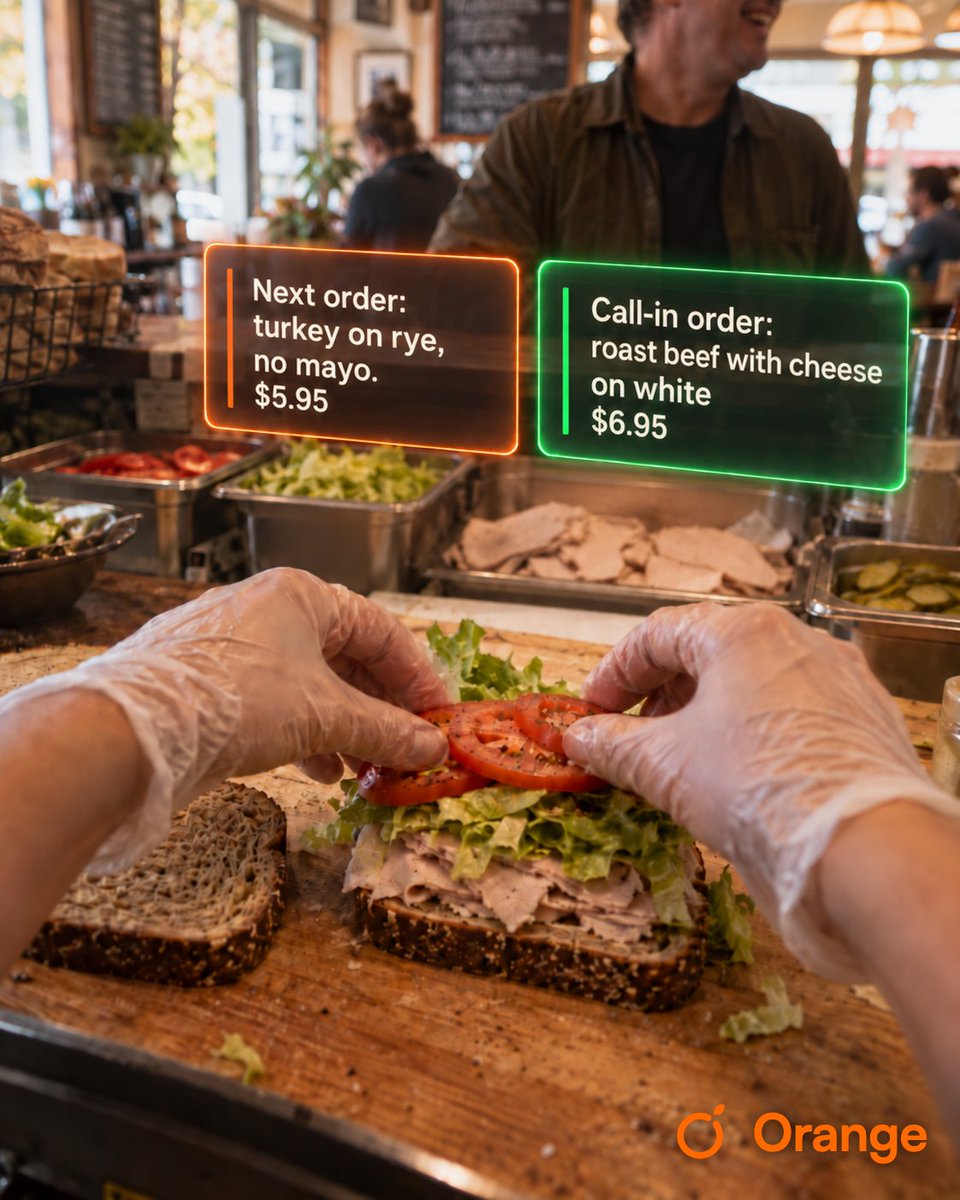
From a deli counter in Prescott, Arizona, the owner just wore AI AR camera glasses while she made sandwiches and talked to her regulars. No crew, no script.
AI AR Smart glasses are already good at showing the world what you see. The harder part is showing you something useful back. Using Orange AI AR Smart glasses, the owner is handling a customer order, while an AI Agent is taking a call in order.
That's the important half Orange is solving: AI AR smart glasses with full-HD micro-displays designed for up to 5,000 nits. Usable both indoors and outdoors. The owner can see her customer, as well as the screen display, when standing outside of her store handing over the to go order.
Your biggest home screen doesn't move, so your best entertainment stays stuck in one room.
What if you could take that experience anywhere you travel?
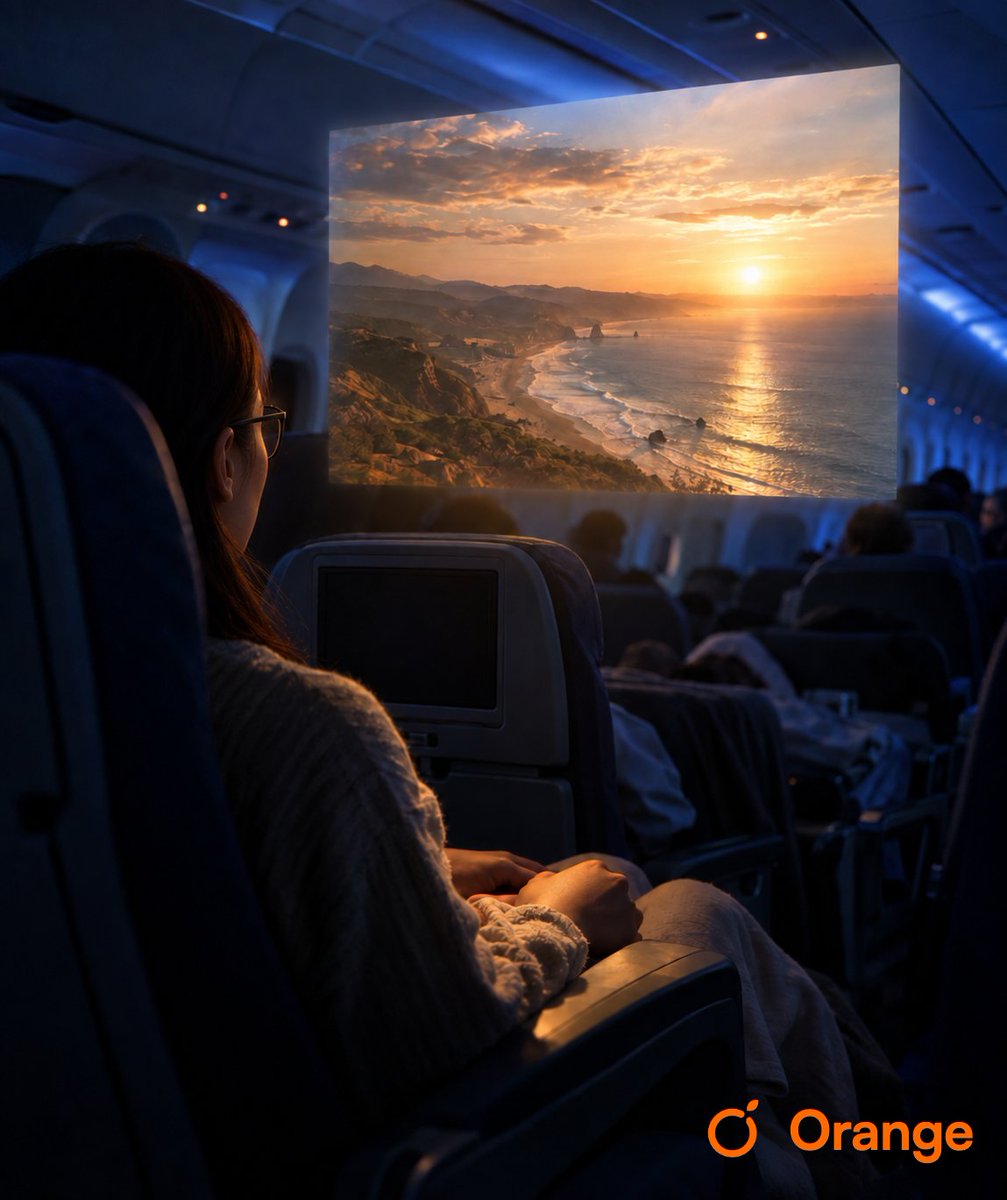
Smart glasses can put a 200-inch display in front of you on a plane seat.
The catch: typical smart glasses weigh around 3x heavier than ordinary glasses, which gets uncomfortable over a long flight.
Orange’s lightweight smart glasses target just 35 grams, the weight of normal glasses.
It’s powered by a new generation of patented Polarization Volume Hologram (PVH) optics built with ultra-thin films, rather than bulky micro-displays.
For the best visual cinematic experience, wherever you go.
The promise of AR smart glasses is that you stop taking your phone out.
The reality is a display that dims in bright light, a heavy frame, and a battery that quits before you do.
The core reason boils down to one shared challenge and opportunity:
https://t.co/1dQ11ZbXEZ
Five of best-funded AR startups collectively raised over $4 billion.
Three shut down. One sold for less than it raised. The survivor lost most of its peak value.
It was not for lack of talent or capital. Even the giants, spending at a scale no startup can match, keep meeting the same wall.
Every headset makes the same tradeoff: comfort, or a display worth wearing.
That wall is rooted in the display hardware.
Every useful thing you do before you leave the house takes both hands.
Coffee. Breakfast. The bag that should have been packed last night.
Your phone wants one of those hands back.
Smart glasses do not ask. You glance up, schedule appointments, and reply to emails without putting anything down.
Imagine driving your day like that, on Orange's AI-powered smart glasses.
Ultra-fast 6G terahertz connectivity at 150 gigabits per second.
AI-powered smart glasses designed for all-day wear.
Every AI product of the last three years has been something you look at on a screen in your hand.
Smart glasses still make you choose: a picture worth looking at, or a pair you can stand to wear all day.
The one that wins will be the pair you stop noticing:
https://t.co/QNv4RogQHY
AI glasses can hear you, answer you, translate for you, and remember what you said.
They cannot show you anything.
That is not a software gap. Running an AI model got roughly 280 times cheaper in 18 months. The models stopped being the bottleneck.
The bottleneck is measured in weight.
Google Glass shipped in 2013 at 36 grams with a small monocular display. The lightest display glasses on sale in 2026 weigh the same 36 grams and still run a monochrome heads-up display.
Everything above that trades weight for picture. Around 49 grams for a micro-LED display. Around 75 grams once the computing moves to a separate device. Around 90 grams for a large virtual screen, with the battery left out of the frames.
Thirteen years of Augmented Reality (AR) glasses, and the trade has not changed. None of these got it wrong. They are honest answers to the same optical hardware limit.
Orange takes a new optical architecture: patented Polarization Volume Hologram (PVH) optics.
It is the jump from a brick phone to a smartphone. Not a lighter brick.
Most of the light an AR display makes never reaches your eye, and PVH is designed to tackle this light inefficiency directly rather than mask it with a brighter panel.
It does that work in ultra-thin film rather than bulk glass, so the optical path is designed to fit inside a conventional glass lens.
The design target is 35 grams, carrying two full-HD displays and a roughly 200-inch view, at a target retail price of $129.
At that weight, comfort stops being the thing people complain about.
For thirteen years the display decided what a pair of glasses could look like.
The vision was always clear. The optics hardware is finally catching up.
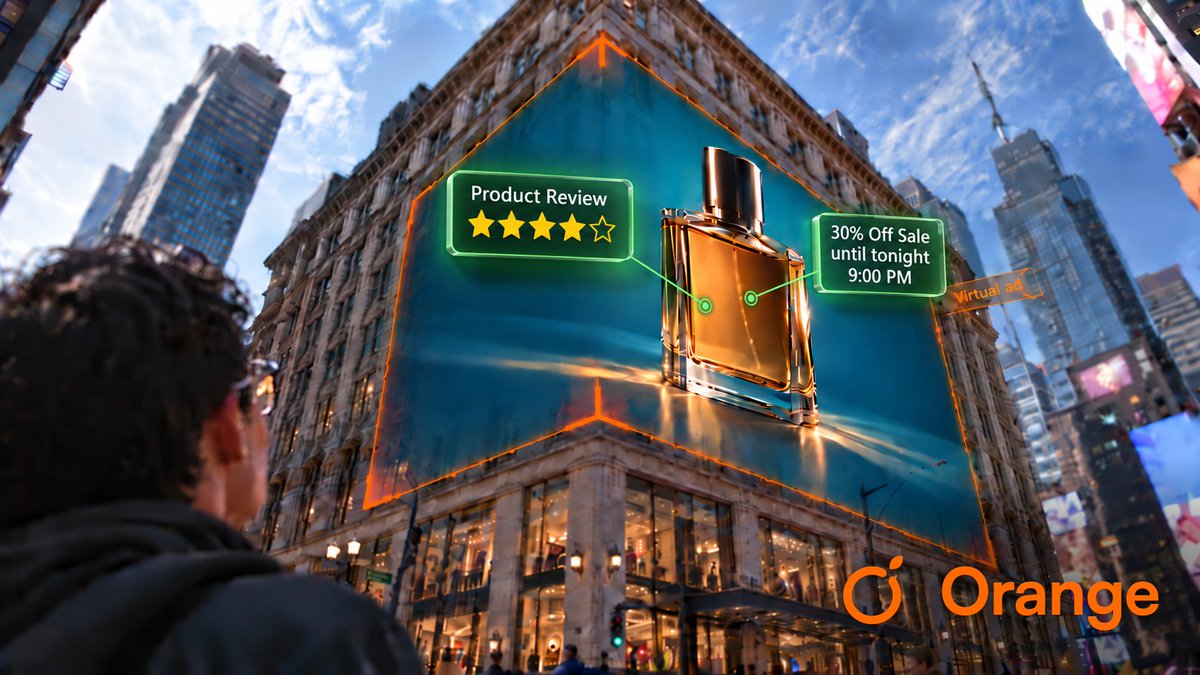
You do not need more notifications. You need the two or three that matter, at the moment they matter.
On a busy street that means the place you are walking past, and the cafe you would never have known was one street over.
A phone has to interrupt you to tell you. Smart glasses can show you and let you ignore it.
That is what Orange is building. AI AR smart glasses with full-HD micro-OLED displays at up to 5,000 nits.
Bright enough to read outdoors, and designed for all-day wear.
Smart glasses are not so smart if you can only use them indoors.
Most look sharp in a dim room, then fade into a ghost the moment real sunlight hits them.
The image is still playing. You just cannot see it.
Orange's AI AR smart glasses are designed to be bright even in direct sunlight.
With 2 micro-OLED HD displays, up to 5,000 nits, Orange is designed to stay bright wherever you go, indoors or out.
Reading a food menu in a language you don't speak?
Orange's AI smart glasses are designed to translate it in place, right in your line of sight, without taking out your phone.
With 6G terahertz connectivity, the translation keeps up as fast as you can read.