This is a real-world practical example of a medical device regulatory inquiry posed to Orca1 AI.
𝐐𝐮𝐞𝐬𝐭𝐢𝐨𝐧:
In the US, for design verification samples that will not go into distribution, is it mandatory to conduct final QC and lot release like the real commercial product? Or is it acceptable to conduct final QC with only some of the test items? Or is it acceptable to not conduct final QC and lot release at all?
𝐀𝐧𝐬𝐰𝐞𝐫:
In the US, for design verification samples that will not go into distribution, it is not mandatory to conduct final QC and lot release like the real commercial product. However, design validation must be completed before commercial distribution of the device, and it involves the performance of clinical evaluations and includes testing under actual or simulated use conditions (FDA QSIT, Guide to Inspections of Quality Systems, Purpose/Importance, 99).
Design validation should be performed on initial production units, lots, or batches, or their equivalents to ensure proper overall design control and proper design transfer (Medical Devices; Current Good Manufacturing Practice (CGMP) Final Rule; Quality System Regulation, 61 FR 52602 (V)(C)(81)). Finished devices must be tested for performance under actual conditions of use or simulated use conditions (Medical Devices; Current Good Manufacturing Practice (CGMP) Final Rule; Quality System Regulation, 61 FR 52602 (V)(C)(80)).
It is important to note that design validation follows successful design verification. Certain aspects of design validation can be accomplished during the design verification, but design verification is not a substitute for design validation (Medical Devices; Current Good Manufacturing Practice (CGMP) Final Rule; Quality System Regulation, 61 FR 52602 (V)(C)(81)).
In summary, while it is not mandatory to conduct final QC and lot release for design verification samples that will not go into distribution, design validation must be completed before commercial distribution, and it involves testing under actual or simulated use conditions.
----- ----- ----- ----- -----
Orca1 AI can unlock efficiencies 𝐧𝐨𝐰 in regulatory research, document searches and responses within 𝐞𝐧𝐭𝐢𝐫𝐞 𝐜𝐨𝐥𝐥𝐞𝐜��𝐢𝐨𝐧𝐬 𝐨𝐟 𝐮𝐬𝐞𝐫 𝐮𝐩𝐥𝐨𝐚𝐝𝐞𝐝 𝐟𝐢𝐥𝐞𝐬, and much more. You can imagine some of the possibilities.
Voluntarily user submitted feedback in the form of thumbs up and thumbs down contributes towards training the AI for increasingly improved answers as time progresses.
One of the most important factors about Orca1 AI is that it cites the sources and information it uses to determine its response, allowing for unambiguous verification by the informed user.
To sign up for Early Access, visit: https://t.co/iPRq8WXbMG
----- ----- ----- ----- -----
#medicaldevices #ai #fda #regulatoryaffairs #artificialintelligence #generativeai
@FederalistNo_22@0xLewis_gg@LindellYehuda I agree with you but that doesn’t mean the different organizations don’t have interests in ensuring potential movements do not affect their businesses adversely.
Drake, the person Yehuda reposted, is the core researcher for Ethereum's scaling and cryptographic roadmaps, and is part of their post-quantum security and research team. So there’s appeal to authority on both sides.
Separately though, Coinbase and Yehuda have a vested interest in making sure their users don’t move their assets to a secure cold storage wallet. It’s basically them arguing that there should not be a run on their bank. So there’s that to consider as well.
I don’t have a dog in this fight, but the math is straight forward. What are the tokens per task for each of the providers, and how many tokens do you get per week from each of the providers, divided by each other, to know how many tasks per week you get from each.
https://t.co/PTguoDh5tI
Anthropic recently released a connector for https://t.co/bcPmDN97Vk inside Claude (https://t.co/UoKaApPvNE), which is supposed to allow it to better research the trials. It’s an exciting development and getting a lot of attention, but it also illustrates an important point: when using AI for professional and scientific work, you should expect repeatable correctness, and you should require an audit trail so every result can be objectively verified.
Below we ran two simple NIH clinical-trial queries against Claude and against https://t.co/tvhoaL71gQ and compared the outputs.
1) "Find the most recently updated NIH clinical trial for a deep brain stimulation medical device. Provide the exact date and some basic information."
- Claude incorrectly returned a trial dated July 16, 2025.
- https://t.co/tvhoaL71gQ correctly located the most recent trial (updated February 13, 2026) and supplied verifiable sourcing.
2) "How many clinical trials involved deep brain stimulation in 2025? Also, show the monthly counts in a bar chart."
- Claude produced an attractive visualization showing 51 trials and named November as the peak month, but that result was an inaccurate and misleading.
- https://t.co/tvhoaL71gQ retrieved 852 matching NIH trials from 2025, aggregated them by month, generated a bar chart, and provided an audit trail plus a direct link and button for the source of truth so the result can be confirmed.
Key takeaway: different AI systems have different strengths. If your work depends on reliable, auditable data, prioritize tools that deliver accuracy plus proof, not just attractive answers. At Orca1, we build for verifiable data and research-first workflows. Proof, not trust !
Want to learn more? Reach out at [email protected]
#AI #NIH #ClinicalTrials #Claude #ClinicalIntelligence
Orca1 has expanded its global inspection and compliance coverage to include WHO Public Inspection Reports (WHOPIRs) and Uganda NDA GMP compliance and inspections.
All WHO inspection reports and supporting documents are fully indexed, searchable, and easy to explore within Orca1 — with filtered alerts available so you can stay updated as new information becomes available.
Inspection & compliance intelligence now covered in Orca1:
- WHO Public Inspection Reports (WHOPIRs)
- Uganda GMP Compliance
- Switzerland’s Swissmedic GMDP
- Japan PMDA Inspections and Compliance
- Health Canada Compliance
- EMA / EudraGMDP
- UK MHRA GMDP
- and US FDA Compliance
Interested? Reach out at [email protected]
or visit https://t.co/1LWxSCwilg
If you’re looking for compliance information not listed here, let us know — we’re always expanding coverage.
#WHO #FDA #EMA #MHRA #HealthCanada #PMDA #NDA #Swissmedic #GMP #GDP #RegulatoryIntelligence #Compliance
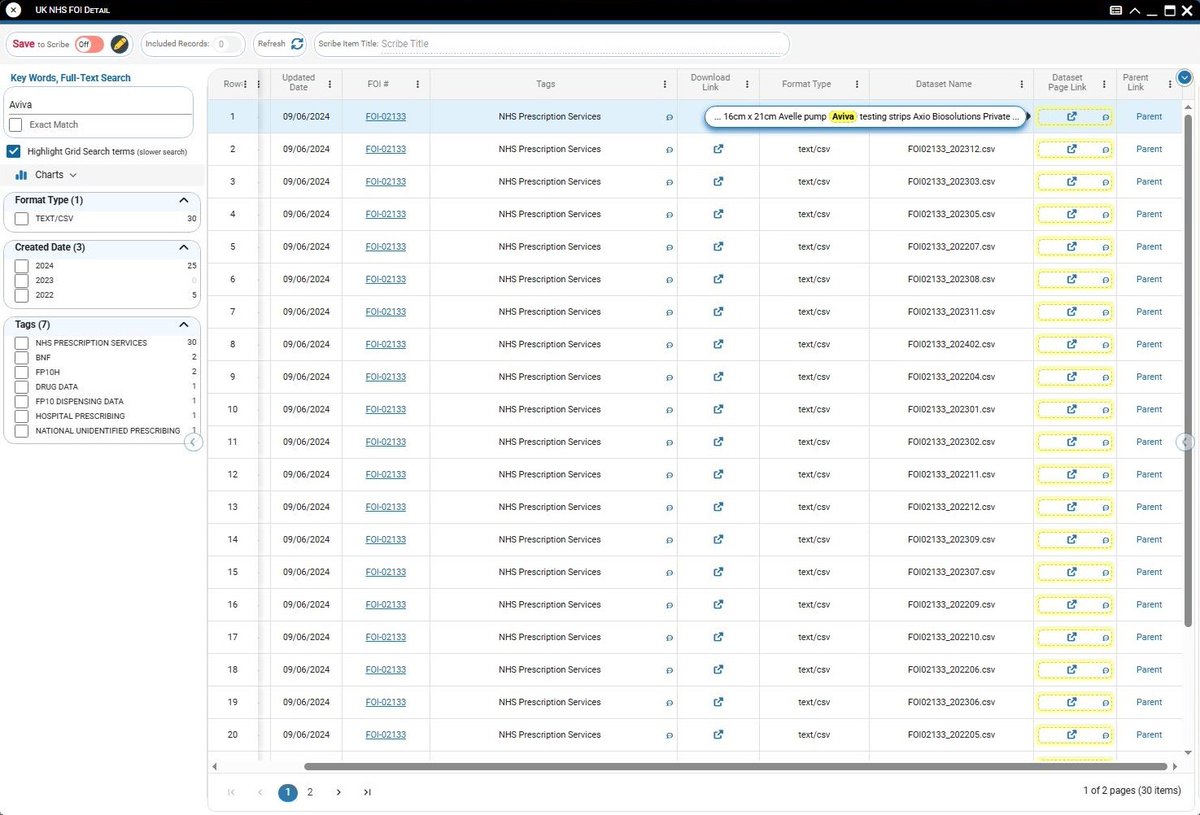
The UK's Freedom of Information Act 2000 gives the public the right to request recorded information from public authorities.
Since December 2021 and up to January 2026, nearly 2,500 FOI requests have been submitted to the UK NHS.
All of this data—requests, responses, and underlying information—is now accessible on the Orca1 platform. Over 170 GB of NHS FOI data, searchable in seconds.
Sign up at https://t.co/1LWxSCwilg or talk with us at [email protected]
#UK #NHS #FOIA #FOI #RegulatoryIntelligence
Swissmedic GMDP and compliance data is now live in Orca1.
Access full-text Swiss compliance documents and certificates, searchable by document and by the specific operations a company is certified to perform.
All Swiss establishments and inspections are also viewable on interactive maps — including ~1,400 inspections for Medicinal and Transplant Products dating back to 2017.
Explore them in Orca1: https://t.co/1LWxSCwilg
or contact us at [email protected]
#RegulatoryIntelligence #Swissmedic #LifeSciences #Compliance #MedTech
Japan PMDA inspections, establishments, and PMDA approved device and drug products are now live in Orca1 — with documents, fully translated into English, fully searchable, and geo-mapped. It includes 3,000+ inspection records and ~20,000 current & historical establishment entries.
Explore them in Orca1: https://t.co/1LWxSCwilg
#RegulatoryIntelligence #PMDA #LifeSciences #Compliance #MedTech
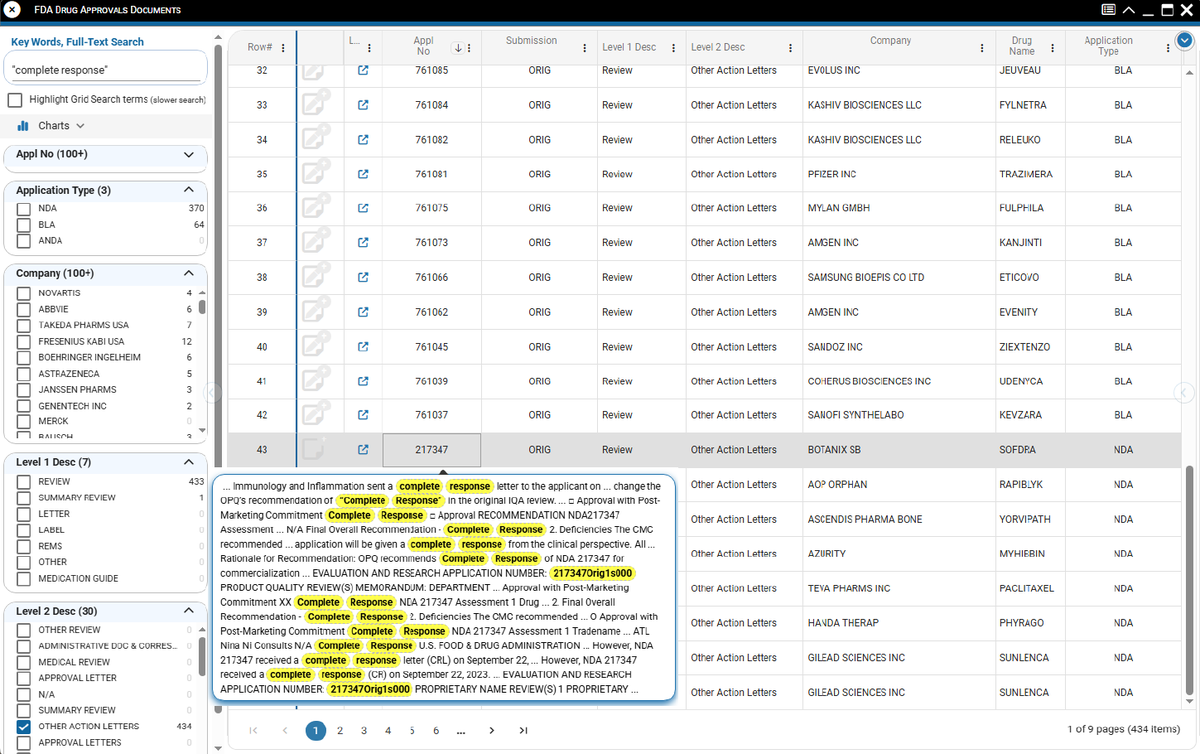
The release of 202 CRLs (Complete Response Letters) several months ago by the FDA under the title "Radical Transparency" has created a renewed level of interest in this subject, especially in recent public discussion on LinkedIn. FDA Press Release: https://t.co/ubIH9gng3G
Despite the excitement in public discussion surrounding this subject, the CRLs have actually been public for quite a while, not only available through FOIA requests, but also embedded deeply within the publicly accessible FDA portals for FDA drug approvals. For example, here is a direct link to a CRL on the FDA website: https://t.co/luMAZTZFPv
Prior to the recent FDA release of 202 CRLs, Orca1 already developed a robust solution to access them, housing around 500 identified CRLs, and updating them in real-time. Users are enabled to comprehensively search and perform analysis over this documentation with links to both the involved drugs and any involved FDA inspections.
The Orca1 AI agents are also capable of interacting with and analyzing the Complete Response Letters, unlocking significantly faster insights.
Reach out to us at [email protected] or sign up at https://t.co/1LWxSCwilg to learn more.
#FDA #RegulatoryIntelligence
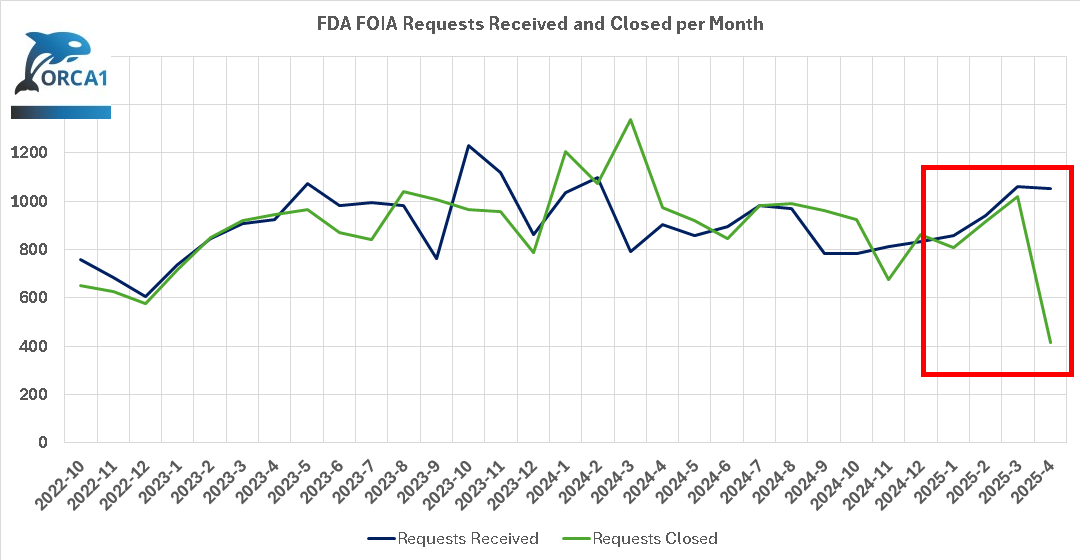
April 2025 saw one of the lowest numbers of FDA FOIA requests closed in a single month, based on historical data from the FDA's FOIA log.
Every month, the FDA releases logs of what FOIA requests they have received and which ones have been processed or closed.
The FDA's FOIA log is located here: https://t.co/iG5NUDnNz2
The attached graph illustrates the monthly volume of FDA FOIA requests received and closed since the start of FDA FY 2023. Typically, these figures trend together.
However, a significant divergence occurred recently:
- March 2024: 1,062 requests received, 1,019 requests closed.
- April 2024: 1,054 requests received, only 414 requests closed -- a drop of nearly 60% in closures despite similar intake.
We recently discussed the FDA's reduction-in-force and its impact on agency professionals: https://t.co/Kd9pbz96cw
This sharp decline in closed FOIA requests suggests the reduction-in-force is creating significant backlogs, which also directly affects industry and public access to information.
We hope this is a short-term issue and we will continue to monitor the FDA's FOIA processing throughput.
#FDA #FOIA
The FDA has issued an early alert for BD catheters due to leaks, following a recall by BD after reports of 10 serious injuries linked to cracks from "material fatigue" which can cause the devices to leak. This is a critical issue, and it’s alarming that these problems have impacted patient safety. https://t.co/Lark52NNSG
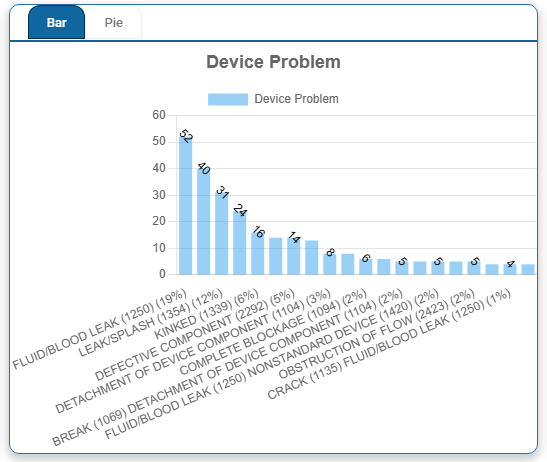
This recent FDA alert highlights a critical point: reactive measures often follow significant signals. Orca1 had already flagged early warning signals for this BD device -- specifically the PowerPICC Provena Catheters (K162443) -- well before this FDA alert. The Orca1 Risk Profile (ORP) report for this device shows a steady increase in the device’s risk score for several years, climbing to a significant number relative to its product code (LJS). This upward trend highlighted recurring issues with cracks and leaks, including problems like "Material Deformation", "Material Frayed", and "Fluid/Blood Leak", identified in MAUDE reports dating back years.
Even more telling, the data reveals that these same issues -- cracks and leaks -- were present in the device’s predicate device all along. This isn’t just a one-off problem; it’s a pattern our platform detected long before it reached this point.
This underscores the power of proactive monitoring and early detection. By spotting these trends early, we can help address potential device issues before they escalate into patient harm or widespread recalls.
If you’d like to learn more about how Orca1 identifies risks like these ahead of time, feel free to reach out to us at: [email protected]
#FDA #MedicalDevices #MedicalDeviceSafety #EarlyDetection #PatientSafety #SafetyMonitoring #PostmarketSurveillance
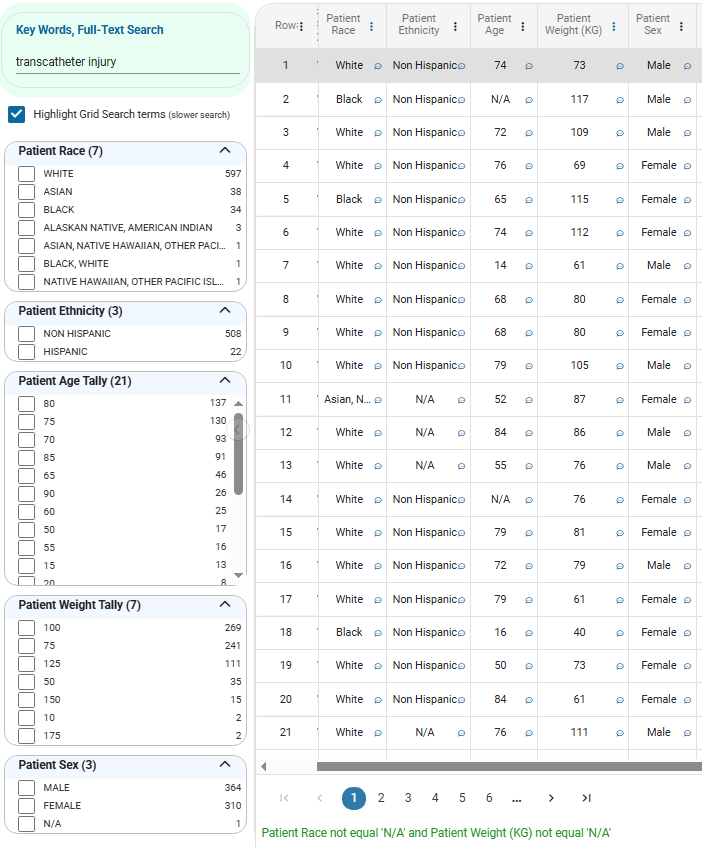
Going beyond just reporting events - analyzing MAUDE demographics allows for proactive identification of risks in specific patient groups.
The FDA's Manufacturer and User Facility Device Experience (MAUDE) database reveals a layer of insight (since 2023-10-23) that most overlook - patient demographics affected by device adverse events.
This information is a powerful resource for understanding who is affected and why it matters.
Some examples of what can be uncovered are:
- Demographics most affected by your devices
- Device trends by demographics, highlighting which product codes significantly impact specific groups
- Implant failures most prevalent within specific patient age groups
- Vulnerable populations in relation to specific devices and events
The FDA provides access to demographic information on their website such as on this event, at the bottom, however that information is not searchable or trendable.
https://t.co/1Y6YLIZPQe
Orca1 provides tools like visualizations and analytics to make sense of this data. If you’re a device manufacturer, clinician, researcher, or otherwise involved in the TPLC, it offers a way to look closer at these patterns. You can check out the attached charts to get a glimpse of how easy it is to access this information in the Orca1 platform.
Reach out to us at [email protected] or sign up at https://t.co/1LWxSCwilg if this is of interest for you or your organization.
#MedicalDevices #FDA #MAUDE #PatientSafety #PostmarketSurveillance #SafetyMonitoring