@somilagrawal The collapse began at about 5,200 metres and reached Gyirong Port at roughly 1,800 metres in only7 minutes. In destruction this extreme, victims may be fragmented, deeply buried, swept away or impossible to identify. Mocking the provisional toll is both ignorant and inhuman.
@WSJ@WSJFreeEx@WSJopinion@MattHennessey The disaster did not strike both sides in identical ways. Gyirong Port of China was hit by a high-energy debris flow carrying ice, boulders and mud after a vertical fall of more than a kilometre. Victims cannot simply be counted on demand. Mocking a provisional figure is cruelty.
@WSJ@WSJFreeEx@WSJopinion@MattHennessey Independent satellite analysis located the glacier collapse near Langtang Lirung on the Nepal side. WSJ offers no evidence connecting it to any Chinese construction project. If this is genuinely a ��legitimate question,” name the project. How close is it to the glacier collapse?
@Reuters Ahh no wonder. Reuters posts and stories blaming China for collapse originated in Nepal were written largely by India-based journalists and edited in part by its India politics editor. It help explain why a familiar Indian geopolitical frame displaced the actual geography.
@Reuters@Reuters repeatedly blames China for failing to predict a sudden glacier collapse inside Nepal while Chinese victims were pushed out of view. Stop repeating a blame-leaning frame that your own evidence does not establish. What a failure of both journalism and empathy!
@Reuters Twice posted, twice misleading. The glacier collapsed in Nepal. China had warned of cascading hazards 12 days earlier. Reuters’ own sources said cooperation gaps were not a significant factor. Why did none of that make the headline? Shame on you @Reuters
@BBCWorld The clip is so horrifying that even unrelated adults may remain disturbed for days. Yet the BBC treats its limited broadcast as suspicious, without asking what unrestricted circulation would do to children, survivors or families who might witness last moment of someone they love.
@Andy57506307@persimmontan@Reuters The disaster footage was more terrifying than the film 2012, because this was not fiction. Imagine a child encountering it through autoplay—or a family witnessing last moment of someone they love. Restricting indiscriminate circulation is an ethical necessity.
@Reuters Chinese people are mourning both Chinese and Nepali victims. Yet @Reuters and some commentators rewrite this shared tragedy as another morality play with China cast as the villain. Victims are human beings, not props for your geopolitical narrative.
@Reuters First erase the fact that the collapse occurred in Nepal. Then erase China’s prior hazard warning. Then erase the Chinese dead. What remains is the politically useful fiction that China must somehow be guilty even when it is also a victim.
Sorry @Timcast but your video was filled with lies, misinformation and broken logic. And I decided to call you out on it. You owe your viewers more.
Part 1 - Outright lies that Tim is spreading about COVID-19.
https://t.co/SDlN9efESe
@NathanRichHGDW@Timcast When China first got 80.000 cases WITH proper measures taken, westerners think: Whoa, this virus sure is dangerous.
When western countries got more people infected than China WITHOUT proper measures they think: That can't be, China must be lying about the numbers!!
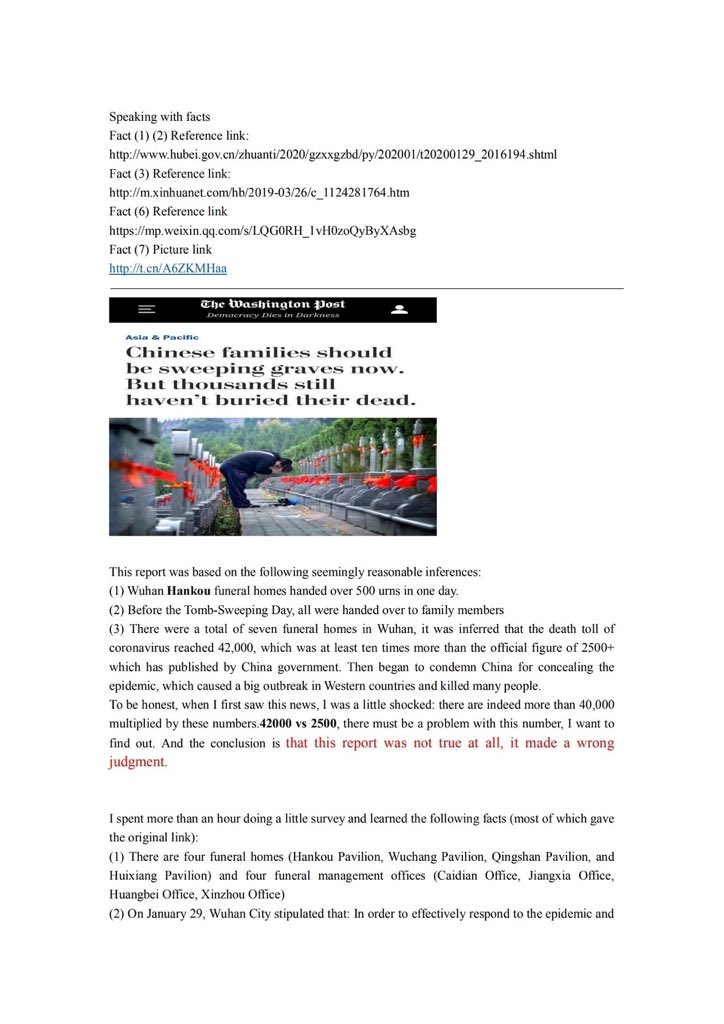
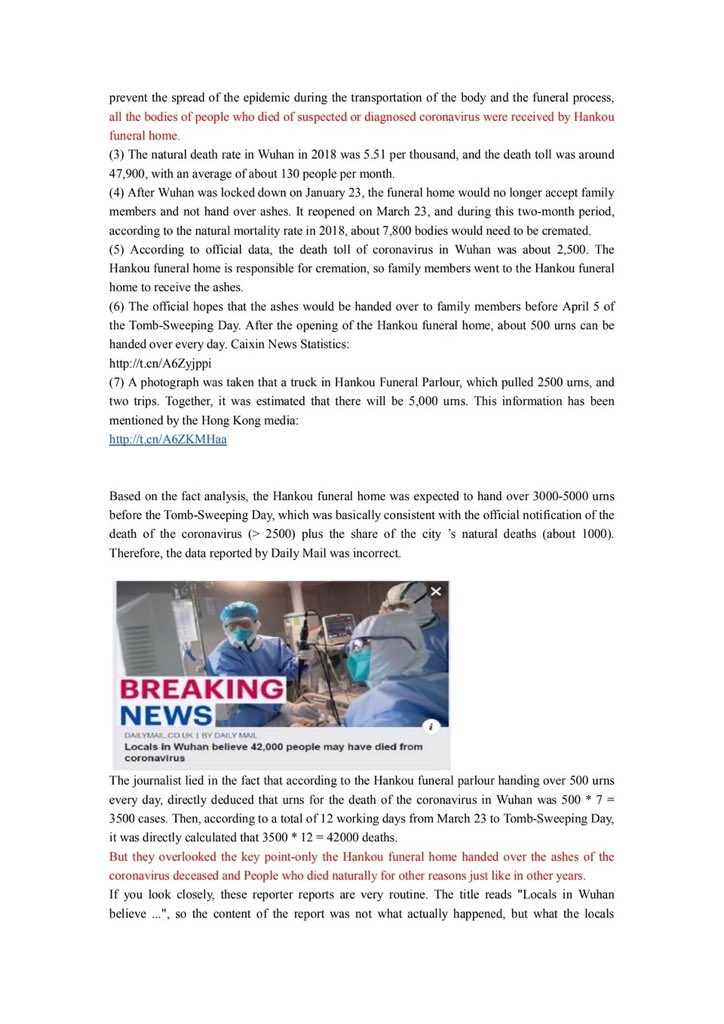
The Daily Mail overlooked the key point:the ashes of the coronavirus deceased were all kept in the Hankou funeral home. DM also is too lazy (or too dumb)to recognize that there are people who died naturally for other reasons, just like in other years.#FakeNews#COVID2019
@RedRaiderArms @XHNews Thank you, but I know my country far better than you and those losers who blame CCP for everything. And I wish you safe and sound in this pandemic. Take care.