👀 Hyperiid amphipods need to see without being seen. Living in the deep-sea, a dim and uniquely challenging yet simple visual environment, has led to some extraordinary adaptations! 🌊 #UWA@MBARI_News@NMNH@UWAresearch@uwaoceans
https://t.co/IctX4daiLB
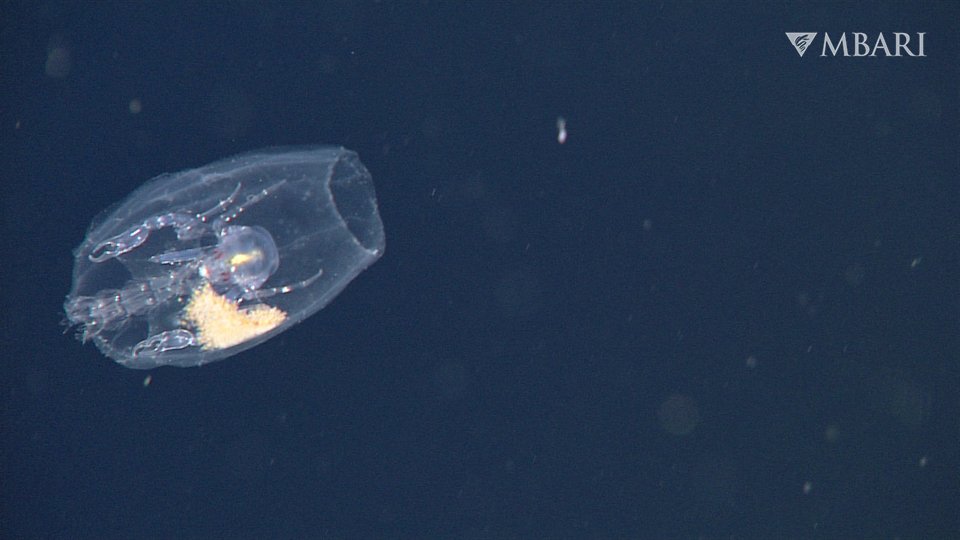
New research by scientists at @uwanews, @uwa_oceans, and @NMNH—including MBARI Adjunct Karen Osborn—has revealed the remarkable visual systems of hyperiid amphipods, shrimp-like crustaceans that live in the ocean’s twilight zone.
Learn more: https://t.co/ULGTgZLJOz
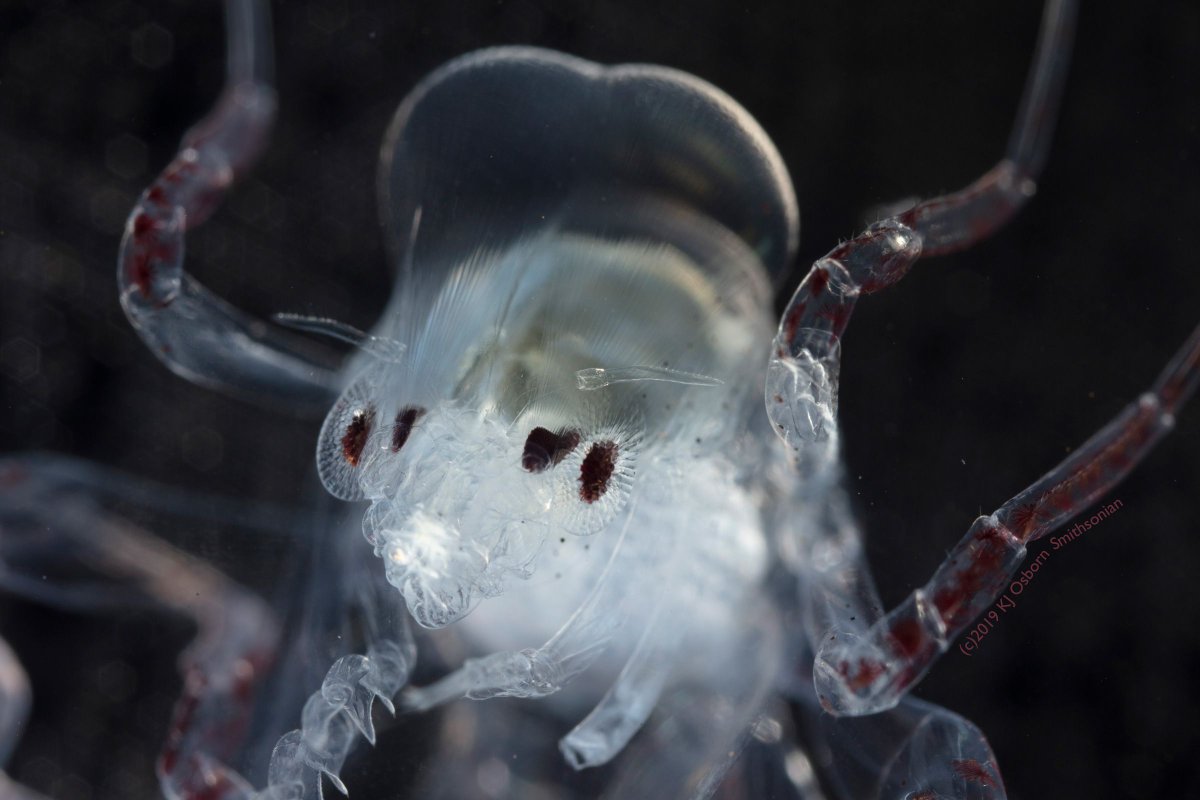
"What is unusual about Phronima is that as many as 60 eyelets in the larger eye look at the same point in space" says Dr Zahra Bagheri.
New research from OI Members addressing the age-old question of how animals see the world.
@UWAresearch@hemmi_lab@OsbornLab@NMNH
Have you ever wondered how deep-sea animals see the world? In our new study we developed a computational model for compound eyes and looked at the extraordinary eyes of Phronima https://t.co/haYOpnxKfm
@OsbornLab@uwanews@MBARI_News@BiolSci_UWA@uwaoceans@NMNH
The study, led by MBARI adjunct scientist @OsbornLab, with @hemmi_lab, @uwanews, @NMNH, @uwaoceans, and @InvertebratesDC, found one of the advantages of Phronima’s large eyes—they allow the tiny amphipod to see objects in the deep sea at longer distances over a wider depth range.
@OsbornLab@hemmi_lab@uwanews@NMNH@uwaoceans@InvertebratesDC Their smaller eyes are not useless, though—they provide low-resolution vision of nearly the entire sphere surrounding them, so they don’t miss anything close by.
Learn more about this fascinating deep-sea creature and see more videos and images: https://t.co/VCcJSRZbFt
@Crinoidea_hk That is great. Several species have stripes on their bodies and acicular cirri, but that is a new pattern to me. Any chance you have tissue from it and a specimen, or a few? Very beautiful!
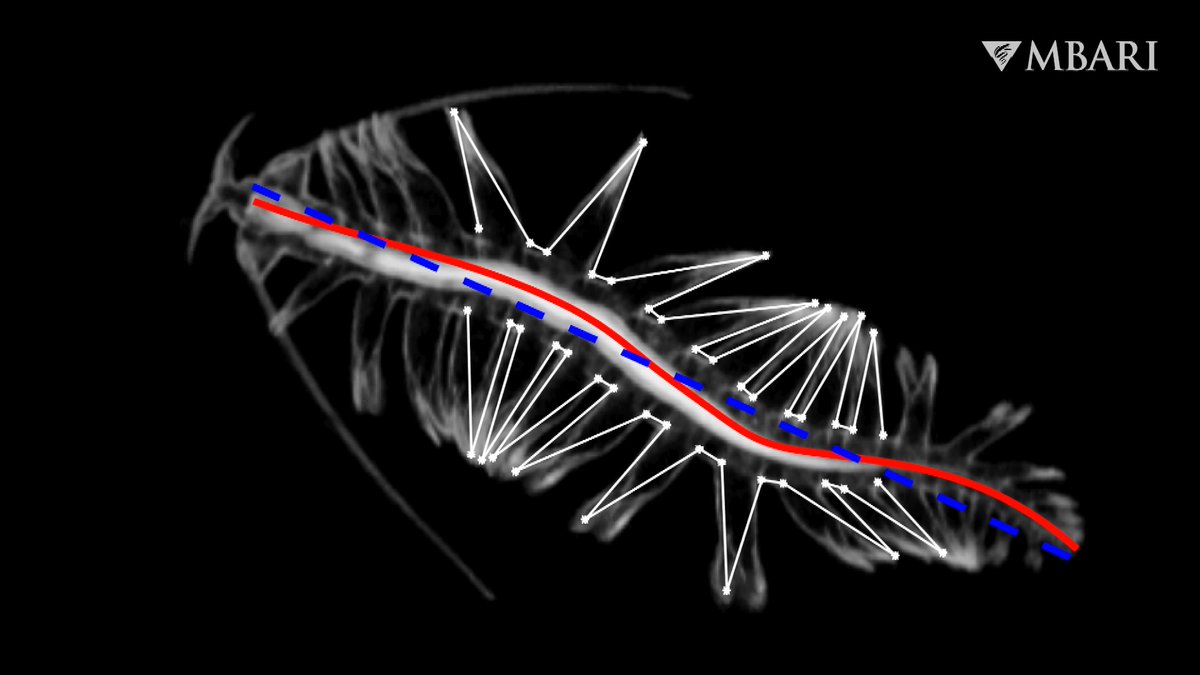
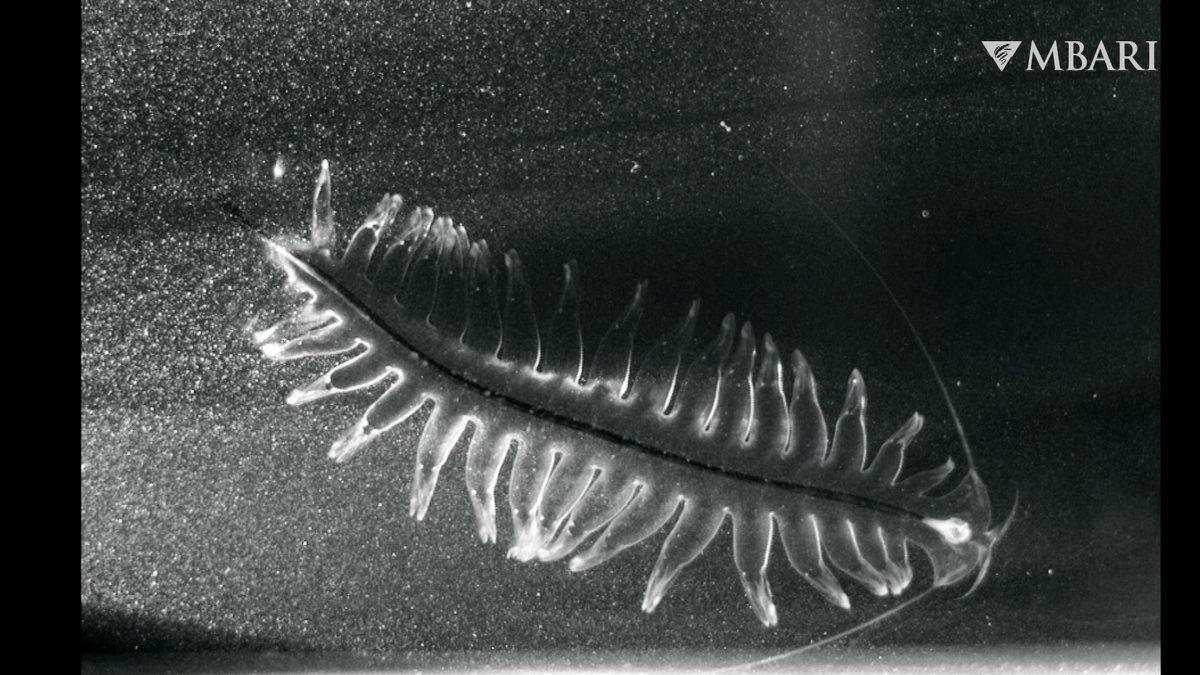
A great highlight of our Tomopteris swimming work - lots of awesome interns over 3 summers, and many, many hours in the rocking dark room with @BioinspirLab@MBARI_News and @NMNH . Thanks all! https://t.co/U9vdEnOlp4
In a new study, the @OsbornLab at @NMNH and @Hemmi_Lab at @UniversityWA investigated these eyes using a 3D-imaging technique known as ‘micro-computed tomography’ or ‘microCT’.
Read the article here: Metachronal swimming with flexible legs: A kinematics analysis of the midwater polychaete Tomopteris. Integrative and Comparative Biology, icab059. https://t.co/29pCPORzlp @OUPAcademic
In the future, this worm could inspire new designs for everything from underwater propulsion to medical technology.
Learn more about this incredible intersection of engineering and biology: https://t.co/fKhEIJnmIO
A flexible body plan allows Tomopteris to combine multiple modes of propulsion. This effective technique provides speed and maneuverability for life in the midwater—and makes the gossamer worm’s anatomy and swimming mechanics interesting for engineers.
The team recorded the animal’s swimming behavior in the field using MBARI’s ROVs. Back in the lab, high-speed cameras and sophisticated illumination systems offered an even closer look at the mechanics of the worm’s movements.
A study published by MBARI researchers and colleagues from @NMNH has revealed the effective, yet elegant, swimming behavior of gossamer worms in fine detail. @DanielsJoost@KakaniKatija@OsbornLab
@WPolyDb@echinoblog@Aquatilis_tv@YouTube I’ve never seen an alciipid swarm. This is very cool. Seems to be a nice selection of hyperiids zipping around in there as well.