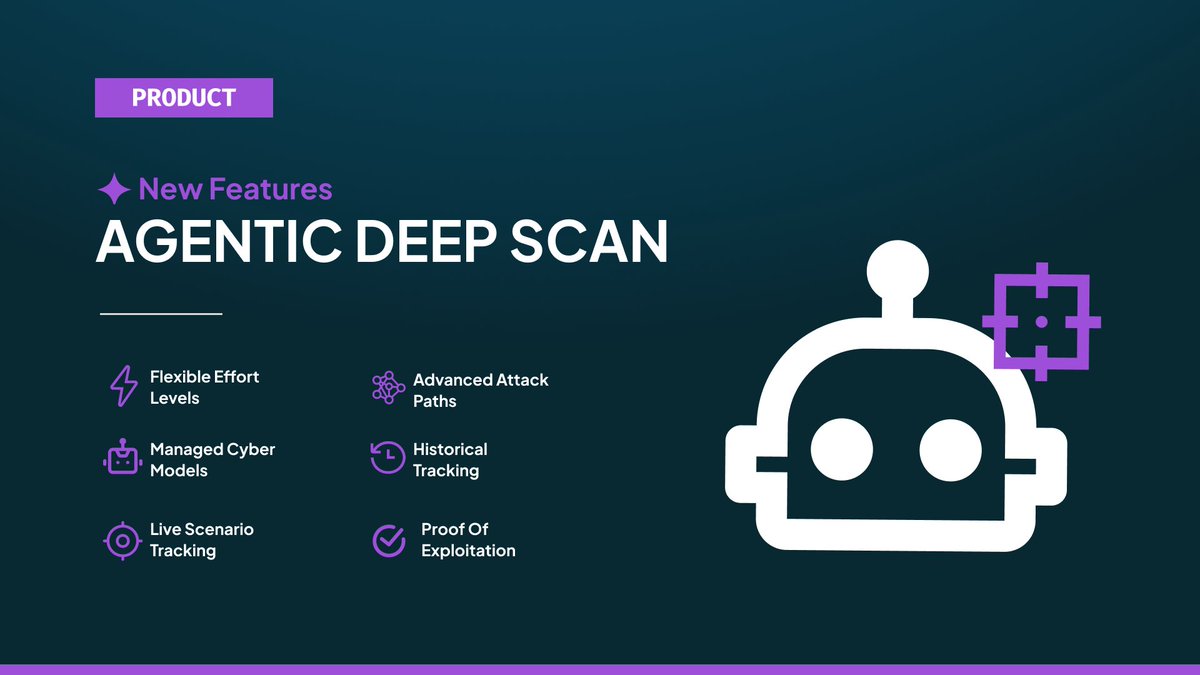
🚀 We’re launching Agentic Deep Scan
Our next-generation vulnerability scanner for web, APIs, and mobile apps (iOS, Android, soon HarmonyOS).
We’re the first and only platform delivering deep agentic scanning for mobile, while also covering web & APIs, helping security teams go beyond traditional scans with greater confidence and control.
This week’s Breach Brief looks at how exposed credentials become ransomware fuel, why FortiBleed matters, how YARA CLI helps with malware triage, and why JWT key revocation gets messy fast.
Read Issue 09 on Substack 👇
https://t.co/HhlSb8w0p3
Security teams need to know more than what was found.
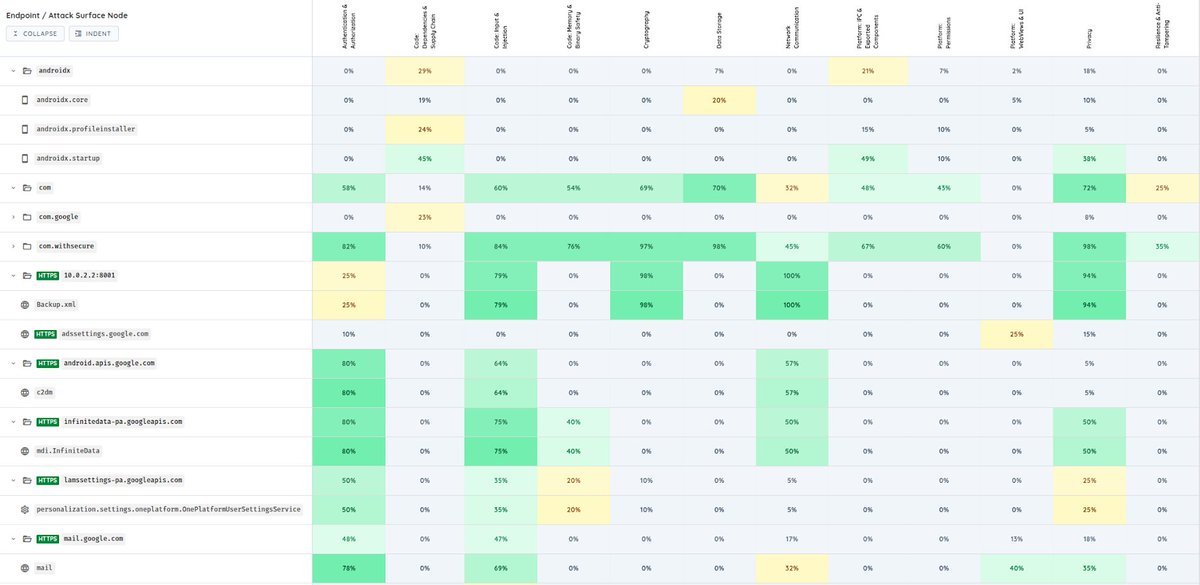
Ostorlab’s Scan Coverage Heatmap helps teams see what was tested, where coverage is still limited, and how each scan builds on the last through incremental coverage.
See what is covered. Track what is left.
Scans now build on history and follow risk paths
Improved historical scan processing supports incremental coverage, while vulnerability chaining helps prioritize risks that can lead to critical bugs first.
Read the announcement 👇
https://t.co/alumlaNNE2
Security scans do not only fail when they miss issues.
They fail when teams cannot tell what is exploitable and worth acting on.
Deep Agentic Scan’s latest updates are about faster mobile testing, deeper analysis, smarter detection, and cumulative coverage.
Better vulnerability detection
Improved planning and tooling help the scan decide which tests to run, which signals deserve follow-up, and where a finding is more likely to become exploitable.
That's exactly why we built Mobile Shielding Scan.
It goes beyond detection, interacting with apps on real devices and adapting its analysis based on how the application responds.
Test how your shielding holds up:
https://t.co/M97l9OI8dQ
Shielding is designed to make attackers miserable.
Your app may have anti-tampering, root detection, SSL pinning, and anti-debugging.
Your attacker has time.
Setting up protections is only one part of the challenge.
The harder question is: Do you have visibility into your protections after release ?
- Do they trigger?
- Do they hold?
- Does the app keep protecting itself?
Cybermodels bring deep AI-assisted security analysis into Ostorlab’s agentic scan profiles.
More context. More reasoning. More coverage. All inside the Ostorlab Portal.
Cybermodels are now live in the Ostorlab Portal.
We’ve integrated advanced cyber-capable AI models through trusted @AnthropicAI and @OpenAI programs to power deeper agentic security scans across Ostorlab. Built for authorized testing, designed for complex attack surfaces.
Step 3: Select effort
In Step 6: Effort, map compute depth to your attack surface:
- Core for priority-risk analysis
- Advanced for broader scenario coverage
- Elite for deep adversarial testing across complex environments
Then launch the scan against your approved assets.
App Vetting is available in Ostorlab today. Fully integrated into your DevSecOps pipeline via REST and GraphQL APIs to eliminate mobile supply chain blindspots with kernel-level telemetry.
👉 Try it Now: https://t.co/JT3PPZCS0r
Evaluating third-party mobile apps is a fragmented mess.
Security teams are constantly piecing together isolated vulnerability reports, privacy assessments, and malware signals from disparate tools.
Today, we are launching App Vetting in Ostorlab to fix this.
We also engineered this to eliminate collaboration friction. Forcing external partners, vendors, or third-party auditors to create enterprise credentials just to view a scan report completely stalls release pipelines.